Head-to-Head
Bluetooth speaker vs Alexa
One is a speaker you own. The other is a service with a speaker attached. That difference decides it.
By Ryder M.Published
 Field-tested picks · 2026
How we are funded: Thump & Tote earns a commission when you buy through our Amazon links, at no extra cost to you. It never changes which speaker we put first — see how we pick and our affiliate disclosure.
Quick picks
Ranked for value first. Tap any row to jump to the full write-up.
| # | Product | Best for | Price |
|---|---|---|---|
| 1 |  Illustrative IllustrativeJBL Flip 7Goes everywhere an Echo cannot, and needs nothing but a phone. | Best all-round alternative | Check price on Amazon |
| 2 | 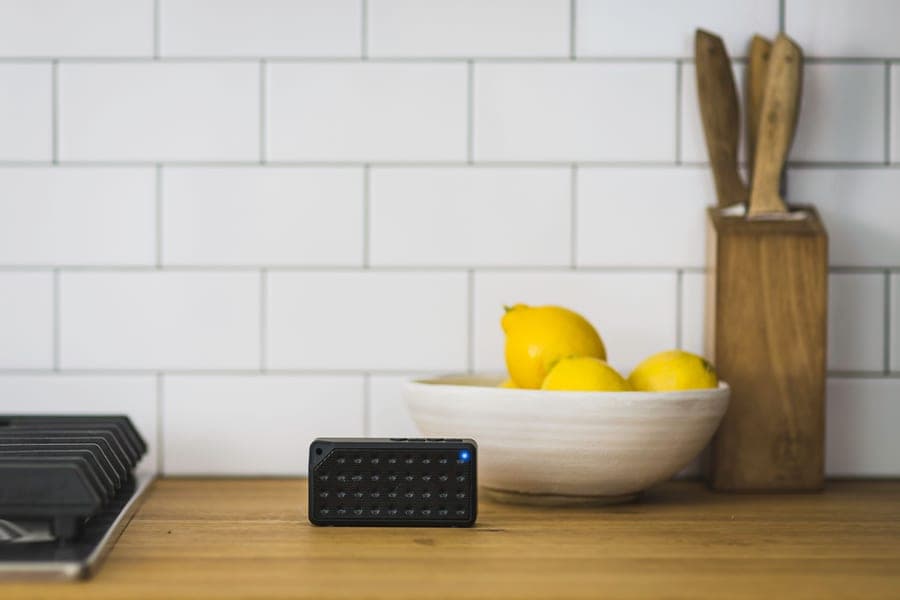 Illustrative IllustrativeSoundcore Motion 300The Echo-sized spot, done with stereo and a battery. | Best for a desk or counter | Check price on Amazon |
| 3 |  Illustrative IllustrativeUE Wonderboom 4IP67 and it floats — places mains power should not be. | Best for a bathroom or pool | Check price on Amazon |
| 4 |  Illustrative IllustrativeAvantree PowerByteFM, USB, microSD and a wired input. No network, no sign-in. | Best with no account at all | Check price on Amazon |
#ad — buy links go to Amazon and we earn a commission on qualifying purchases. Prices change constantly, so the live listing is always the price of record. Full disclosure.
Buy an Echo if you want voice control, multi-room audio and smart-home commands in a room that always has power and Wi-Fi. Buy a Bluetooth speaker if you want sound that goes where you go, works with no network and no account, and keeps working when the service behind it changes. For most people asking this question the honest answer is a portable — the JBL Flip 7 — because the Echo's advantages all evaporate the moment the speaker needs to leave the room.
These are not competing speakers; they are competing *models of ownership*. A Bluetooth speaker is a dumb, self-contained device: it has a battery, it pairs directly with a phone, and nothing about it depends on an account, an app, a network or a company continuing to support it. An Echo is a terminal for a service. The hardware is a means of reaching Alexa, and that is where its value sits.
Both are legitimate. But the trade-offs are structural rather than a matter of specification, so comparing them on watts and frequency response misses the entire point.
What an Echo does that a Bluetooth speaker cannot
- Voice control with nothing in your hands. This is the real feature, and no Bluetooth speaker replicates it. Cooking, cleaning, hands wet or full — you say a thing and music happens.
- Multi-room audio. Several Echos playing in sync across a house, grouped from one app. Bluetooth cannot do this; even linked portables are a loudness feature rather than a whole-house system.
- Smart-home commands, timers, alarms, questions. The speaker is one function among many, which is why comparing it to a speaker on sound alone is unfair in both directions.
- No pairing. It is always on and always connected, which is a genuine daily convenience over the Bluetooth handshake.
What a Bluetooth speaker does that an Echo cannot
- It leaves the house. A battery and a direct phone connection mean the beach, the garden, a hotel room, a campsite. An Echo needs mains power and a network it already knows.
- It works with no network and no account. No Wi-Fi, no sign-in, no subscription, no terms change. On a hiking trail or in a rental with unknown Wi-Fi, the portable just works.
- It goes places power should not. A bathroom, a poolside, a boat. Waterproof ratings are standard on portables and absent on mains-powered smart speakers for good reason.
- It does not listen. A Bluetooth speaker has no microphone array waiting for a wake word. For some people that is the whole argument, and it is a reasonable one.
- It outlives the service. A speaker that only needs Bluetooth will still work in ten years. A speaker whose primary interface is a cloud assistant is only as durable as that assistant's business case.
Side by side
| Bluetooth speaker | Alexa / Echo | |
|---|---|---|
| Power | Battery, 7 to 32 hours | Mains only |
| Needs Wi-Fi | No | Yes |
| Needs an account | No | Yes |
| Voice control | No | Yes — the main feature |
| Multi-room sync | No (linking is loudness, not sync) | Yes |
| Water rating | Commonly IP67 or IPX7 | Rarely any |
| Always-on microphone | No | Yes |
| Works when the service ends | Yes | Partly, at best |
The combination most people actually want
An Echo can act as a Bluetooth speaker for a phone, which sounds like it settles the argument and does not. It still has no battery, so it cannot go anywhere; it still has no water rating, so it stays out of the bathroom; and routing phone audio through it is a slower, flakier path than pairing directly with a portable. It is a fallback, not a feature.
The arrangement that works for most households is both: a mains-powered smart speaker in the kitchen for voice and timers, and one good portable that covers everywhere else. That is cheaper than it sounds, because the portable does not need to be the expensive one — the whole premise of this site is that most of the sound is available well below the premium tier.
The picks, if the answer is a portable
IllustrativeBest all-round alternative to an Echo
JBL Flip 7
The default mid-size pick, and the speaker every value brand is trying to undercut.
- What it does well
- Even tonality from quiet to loud, an IP68 shell that handles rain and poolside, and Auracast linking if you later want two. Fourteen hours and a direct phone pairing mean it needs nothing from your house at all.
- Where it cuts corners
- You pay the JBL premium in full, there is no aux input, and several speakers here run considerably longer for less money.
- Who it is for
- The household that wants one speaker that is competent everywhere rather than excellent in one room.
- Battery: 14 hours, plus up to 2 more in Playtime Boost mode
- Water rating: IP68 — submersible to 1.5 m for 30 minutes, dustproof
- Weight: 1.82 lb (about 560 g)
#ad — we earn a commission on qualifying purchases. How this is funded
IllustrativeBest for the spot an Echo would occupy
Soundcore Motion 300
Our default recommendation under $100 — stereo, slim, and honestly specified.
- What it does well
- Slim enough for a counter or a shelf, with genuine stereo separation that an Echo-sized single-driver puck cannot produce. IPX7 covers the kitchen spill, and the battery means it can also leave the kitchen.
- Where it cuts corners
- No voice control, no timers, no smart-home anything — if those are why you were considering an Echo, this does not replace it. Thirteen hours is short next to cheaper rivals.
- Who it is for
- Kitchens, desks and counters where you want the sound to be better and the device to be simpler.
- Battery: 13 hours
- Water rating: IPX7 — submersible to 1 m for 30 minutes
- Output: 30 W stereo (two 15 W full-range drivers)
#ad — we earn a commission on qualifying purchases. How this is funded
IllustrativeBest for a bathroom or poolside
UE Wonderboom 4
The one to buy if the speaker is going anywhere near water.
- What it does well
- IP67 and it floats, which puts it in exactly the rooms a mains-powered smart speaker has no business being in. The 360-degree output suits a tiled bathroom, where reflections are doing most of the work anyway, and it survives a five-foot drop onto hard floor.
- Where it cuts corners
- No aux input, no useful speakerphone, and no stereo imaging at all. Ultimate Ears charges close to JBL money for it.
- Who it is for
- Bathrooms, pools and boats — the rooms where the Echo comparison stops being a comparison.
- Battery: 14 hours
- Water rating: IP67 — submersible to 1 m for 30 minutes, dustproof, and it floats
- Weight: 14.81 oz (420 g)
#ad — we earn a commission on qualifying purchases. How this is funded
IllustrativeBest with no account and no network
Avantree PowerByte
A real radio first and a Bluetooth speaker second — which is the right way round here.
- What it does well
- FM radio, microSD, USB playback and a wired input as well as Bluetooth, with 30 W and bass radiators behind them. For a household that wants music without a sign-in, a subscription or a microphone in the room, this is the most complete answer here.
- Where it cuts corners
- No published IP rating, so it stays indoors or on a covered porch, and it is a considerably less refined listen than the mainstream portables. It is also the least portable speaker on this page.
- Who it is for
- Kitchens, workshops and anyone replacing a smart speaker with something that answers to nobody.
- Battery: 20 hours
- Water rating: No IP rating published — treat it as an indoor speaker
- Output: 30 W stereo with bass radiators
#ad — we earn a commission on qualifying purchases. How this is funded
If it is a Wi-Fi speaker you are weighing, not an assistant
Some people asking this question do not want voice control at all — they want the mains-powered, always-on, multi-room part. That is a different comparison and it has its own page: Bluetooth vs Wi-Fi speakers covers network topology, latency and why a Wi-Fi speaker is usually the better buy for a device that never moves.
And if the real goal is better sound from a television, neither of these is the answer. That is a soundbar question, and the lip-sync problem makes it a different argument entirely.
Frequently asked questions
Is a Bluetooth speaker better than an Alexa Echo?
Can an Echo be used as a Bluetooth speaker?
Does a Bluetooth speaker need Wi-Fi?
Do Bluetooth speakers have microphones listening to me?
Which is better for a bathroom, an Echo or a Bluetooth speaker?
Update log
- First publication. Written as a structural comparison — power, network, account and privacy — rather than a sound comparison, because the two devices do not fail or succeed on audio specifications.
Sources
Every specification quoted above comes from the manufacturer or retailer listing below. We publish no measurements of our own — see how we pick.
- Amazon — Alexa and Echo devices (official product information)
- Bluetooth SIG — Bluetooth technology overview (profiles, codecs, LE Audio)
- JBL — Flip 7 product page (manufacturer specifications)
- RTINGS — JBL Flip 7 measurements (independent test lab)
- Soundcore — Motion 300 product page (manufacturer specifications)
- Ultimate Ears — Wonderboom 4 product page (manufacturer specifications)
- Avantree — PowerByte FM radio Bluetooth speaker (manufacturer specifications)
Read next
Head-to-Head
Bluetooth vs Wi-Fi speakers in 2026
Range, quality, multi-room and what happens when the network goes down — with a clear verdict.
Head-to-Head
Bluetooth speaker vs soundbar in 2026
Sync, dialogue, placement and cost - and the one condition that makes a portable the better TV buy.
By Price
The best Bluetooth speakers for home in 2026
Indoor picks where tuning matters more than output — and why you can spend less here than outdoors.
Waterproof
The best Bluetooth speakers for the shower in 2026
Cheap works here — what a bathroom actually demands, and the mounting problem nobody solves.
Outdoor & Party
The best Bluetooth speakers with FM radio in 2026
The few speakers that still include a real FM tuner, and an honest look at the alternative.
By Price
The best easy-to-use Bluetooth speakers for seniors
Physical buttons, FM radio and long battery — speakers that work without an app or a sign-in.