Bluetooth speakers by price: what each tier actually buys
Five price bands, five genuinely different products. Start with the cheapest one that does your job.
 Field-tested picks · 2026
How we are funded: Thump & Tote earns a commission when you buy through our Amazon links, at no extra cost to you. It never changes which speaker we put first — see how we pick and our affiliate disclosure.
Most people should buy in the $50 to $100 band. That is where waterproofing, a full day of battery and enough output for a patio all become standard rather than exceptional. Below $50 you are trading loudness; below $30 you are trading loudness and refinement. Above $150 you are mostly buying brand, build quality and a bigger cabinet.
Shopping a portable speaker by price only works if you know what changes as the number goes up, because the specifications do not move smoothly. Some features appear at one tier and then stop improving entirely. Waterproofing is the clearest example: an IPX7 rating shows up on speakers costing well under $30 and does not get meaningfully better on a speaker costing six times as much. Paying more for water resistance past that point buys you a dust rating and very little else.
Battery life behaves the same way. The longest-running speaker on this site is not one of the expensive ones — it is a years-old budget model quoting twenty-four hours. What the money genuinely buys, as you climb, is output and cabinet volume: a bigger box moving more air, which is the only honest route to bass that survives being outdoors. That is the one thing you cannot fake with EQ, and it is the one thing that reliably tracks price.
What each tier gets you
| Tier | What becomes standard | What you are still giving up |
|---|---|---|
| Under $30 | IP67 or IPX7 waterproofing, 20 hours of battery, USB-C | Volume. These are one-room or one-tent speakers, and bass is largely absent. |
| Under $50 | 12-24 hours, real passive radiators, mounting straps | Outdoor headroom. Fine on a patio, embarrassed in wind. |
| Under $100 | True stereo, 30 W class output, app EQ, hi-res codecs | Deep bass and party-scale volume. |
| Under $150 | Brand-name durability, subwoofer-driven bass, speaker linking | Portability — the good ones here start getting heavy. |
| Under $200 | Genuine tonal refinement, power banks, 24-32 hour runtimes | Value. The sound gain over $100 is smaller than the price gap. |
Where the money stops working
There is a point on every one of these curves where another fifty dollars stops returning anything you will hear at a barbecue. For most buyers that point is around $100. Past it you are paying for materials, warranty, resale value and the confidence that the thing will survive four summers rather than two — all real, none of them audible.
That is why this site keeps a premium benchmark in almost every roundup even though it is not the value pick. You cannot tell whether a cheap speaker is good without something to measure it against, and knowing exactly what you are giving up is the whole point of buying down deliberately. When the expensive option genuinely wins, we say so — see is JBL worth it for the longest version of that argument.
Start here
If you have no strong constraint, start with the best Bluetooth speakers under $100. It is the tier with the most genuinely good options and the fewest compromises, and almost everybody who starts there stops there. If the budget is hard, go to under $50 — there is more real quality in that band than there has ever been, mostly because last year's mid-range models keep falling into it.
If what you actually care about is bass rather than a number, skip the tiers entirely and read cheap speakers with good bass, which explains why most budget speakers fake it and which ones do not. And before you buy anything, how to choose a Bluetooth speaker covers the four specifications that matter and the three that manufacturers print because they sound impressive.
Every by price page
Each card names its top pick so you can buy from here without digging.
Best under $100
The best Bluetooth speakers under $100 in 2026
The tier most people should buy in — six picks, ranked for value, with the compromises named.
Top pick: Soundcore Motion 300
Check price on Amazon
Best under $50
The best Bluetooth speakers under $50 in 2026
More speaker than this money used to buy. Five picks and an honest account of what you lose.
Top pick: Tribit StormBox Micro 2
Check price on Amazon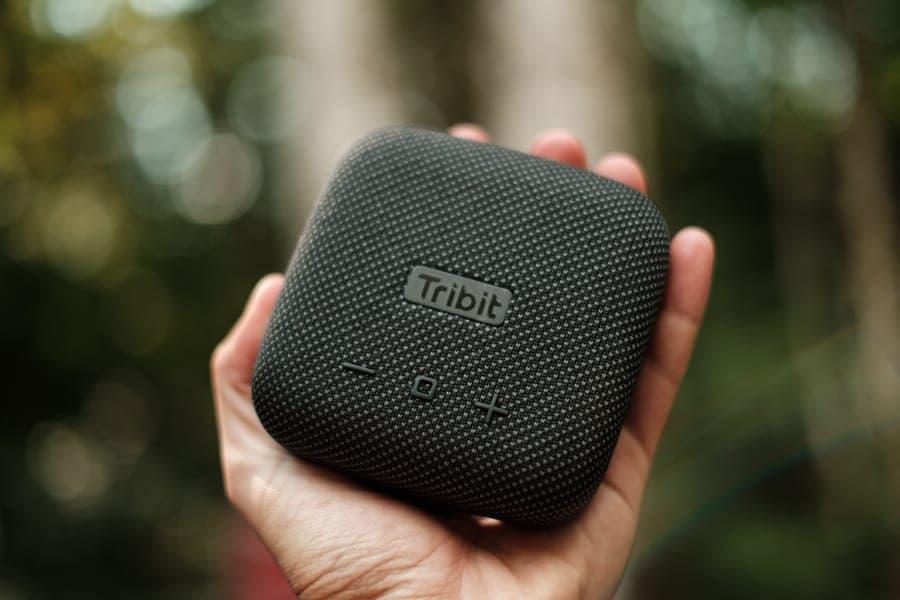
Best under $30
The best Bluetooth speakers under $30 in 2026
The cheapest speakers worth owning — and a clear account of what this money cannot buy.
Top pick: Soundcore Select 4 Go
Check price on Amazon
Best under $150
The best Bluetooth speakers under $150 in 2026
Where a bigger cabinet starts paying for itself. Four picks, and when to stay at $100 instead.
Top pick: Soundcore Boom 2
Check price on Amazon
Best under $200
The best Bluetooth speakers under $200 in 2026
Top of the value range — party-class output, long runtimes, and a candid word on diminishing returns.
Top pick: Tribit StormBox Blast
Check price on AmazonBest for the money
The best Bluetooth speaker for the money in 2026
The single best-value speaker at each price point, plus the two tactics that save the most money.
Top pick: Soundcore Motion 300
Check price on Amazon
Best cheap bass
Cheap Bluetooth speakers with good bass in 2026
Real low end on a budget — which speakers use hardware rather than EQ, and the size below which it is impossible.
Top pick: Soundcore Boom 2
Check price on Amazon
#ad — buy links go to Amazon and we earn a commission on qualifying purchases. Full disclosure.