By Price
The best Bluetooth speaker for the money in 2026
One pick per tier, chosen on what you get rather than what you pay.
By Ryder M.Published
 Field-tested picks · 2026
How we are funded: Thump & Tote earns a commission when you buy through our Amazon links, at no extra cost to you. It never changes which speaker we put first — see how we pick and our affiliate disclosure.
Quick picks
Ranked for value first. Tap any row to jump to the full write-up.
| # | Product | Best for | Price |
|---|---|---|---|
| 1 | 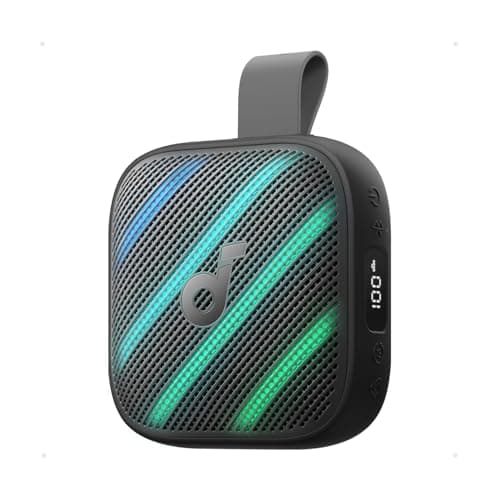 Soundcore Boom Go 3iThe speaker we recommend to more people than any other. | Best overall value | $59.98$79.9925% offView on Amazon |
| 2 | 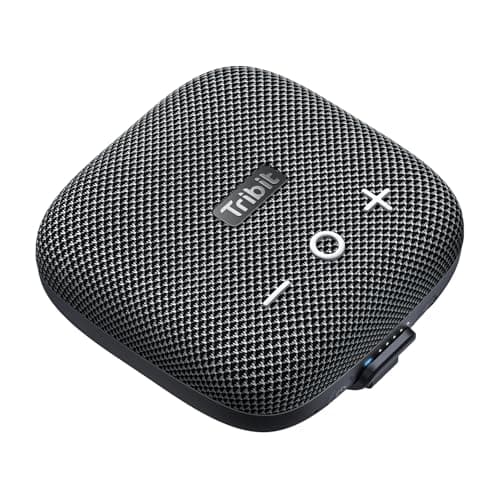 Tribit StormBox Micro 2Last-generation pricing, current-generation quality. | Best under $50 | $39.99$59.9933% offView on Amazon |
| 3 | 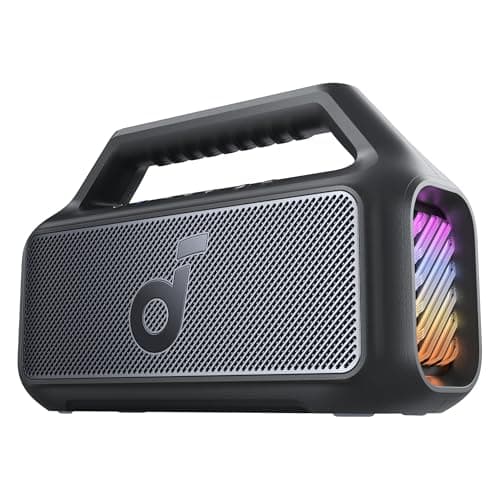 Soundcore Boom 2A real subwoofer at a price JBL does not match. | Best for a party | $99.99$129.9923% offView on Amazon |
| 4 | 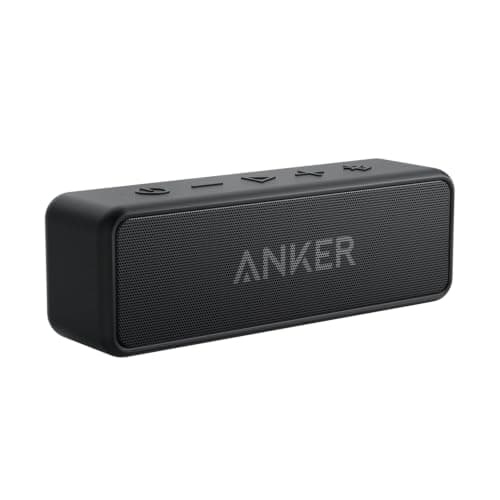 Anker Soundcore 2Twenty-four hours for very little money. | Best battery per dollar | $29.99$44.9933% offView on Amazon |
| 5 | 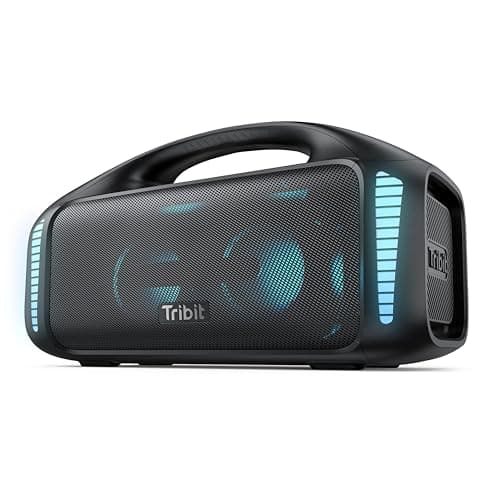 Tribit StormBox BlastThe most output per dollar anywhere on this site. | Best loud-for-the-money | $179.99$199.9910% offView on Amazon |
#ad — buy links go to Amazon and we earn a commission on qualifying purchases. Prices change constantly, so the live listing is always the price of record. Full disclosure.
The Soundcore Boom Go 3i is the best Bluetooth speaker for the money: IP68 sealing, a 1 m drop rating, twenty-four hours and a strap that clips to a pack, at a price well below the JBL it competes with. Value is not the cheapest speaker — it is the point where the next dollar stops buying anything you will actually notice, and for most buyers that point is here.
Best-for-the-money is a different question from best-under-a-number, and it is worth separating them. A price-tier page asks what the most you can get for $50 is. This page asks where the curve bends — the point on the price ladder where each additional dollar starts returning less, which is where a value buyer should stand regardless of what they can afford.
In this category that bend is unusually sharp, because the things that improve with price and the things that do not are cleanly separable. Water resistance plateaus almost immediately. Battery life does not track price at all. Only cabinet volume and tuning genuinely scale, and only one of those survives being taken outdoors.
The value pick at each tier
| Tier | Value pick | Why it wins on value |
|---|---|---|
| Under $30 | Soundcore Select 4 Go | IP67 and twenty hours where rivals offer neither. |
| Under $50 | Tribit StormBox Micro 2 | Superseded by a Micro 3, unchanged in quality, cheaper for it. |
| Under $100 | Soundcore Boom Go 3i | Only true stereo in the tier, and it undercuts the badge. |
| Under $150 | Soundcore Boom 2 | A dedicated subwoofer at a price JBL does not compete at. |
| Under $200 | Tribit StormBox Blast | More measured output and battery per dollar than anything above it. |
The two moves that save the most
1. Buy the outgoing generation
This is the single most effective tactic in the category and almost nobody uses it deliberately. Portable speakers iterate on a fast cycle, and generational changes are frequently confined to Bluetooth version, charging speed and colors — while the outgoing model's price falls sharply the moment its replacement is announced. The Tribit StormBox Micro 2 is exactly this case, and it is the reason it wins its tier.
The check before you commit: read the same-family comparison and confirm the new generation did not fix something that matters to you. Flip 7 vs Flip 6 and Charge 6 vs Charge 5 exist for precisely this decision.
2. Buy the specification, not the badge
The brand premium in this category is real but narrow. It buys build quality, tuning consistency and a warranty that gets honored — genuinely worth something if you use a speaker hard, and worth very little if it lives on a counter. The value brands match the headline specifications and give up finish, not function. JBL alternatives maps each model to its cheaper equivalent, one at a time.
Where paying more is genuinely right
Being a value site does not mean always recommending the cheap thing, and there are three situations where spending up is the correct call. If it will be abused — thrown in bags, dropped, taken to the beach weekly — JBL's build quality earns its premium over a few years. If you will sit and listen rather than use it as background, the Bose tonal advantage is real and audible. If you need genuine open-air volume, there is no cheap route to a big cabinet and trying to find one wastes money on a speaker that cannot do the job.
What is never worth paying up for: water resistance, Bluetooth version, quoted wattage, or a longer frequency-response range on paper. Those are either commoditized or unverifiable, and they are the specifications listings lead with precisely because they are cheap to claim. How to choose a Bluetooth speaker separates the four that matter from the ones that do not.
Value is also a timing question, and the discount badges are the least reliable guide to it - Bluetooth speaker deals: what is actually worth buying covers how to tell a real price cut from a staged one.
If one specification matters to you more than overall value, the site has dedicated rankings for it: the longest battery life ranks on runtime alone, and the best sound quality under $100 ranks the cheapest band worth buying in on tonal balance.
Frequently asked questions
What is the best bang-for-buck Bluetooth speaker?
Is it cheaper to buy last year's model?
Do expensive Bluetooth speakers sound better?
What should I never pay extra for?
Update log
- First publication. One value pick named per tier, with the value reasoning stated for each.
Sources
Every specification quoted above comes from the manufacturer or retailer listing below. We publish no measurements of our own — see how we pick.
- Soundcore — Boom Go 3i product page (manufacturer specifications)
- Tom's Guide — Tribit StormBox Micro 2 review
- TechRadar — Tribit StormBox Micro 3 review (confirms Micro 2 is superseded)
- Soundcore — Boom 2 product page (manufacturer specifications)
- Tribit — StormBox Blast product page (manufacturer specifications)
- Soundcore — Soundcore 2 product page (manufacturer specifications)
Read next
By Price
The best Bluetooth speakers under $100 in 2026
The tier most people should buy in — six picks, ranked for value, with the compromises named.
By Price
The best Bluetooth speakers under $50 in 2026
More speaker than this money used to buy. Five picks and an honest account of what you lose.
Brands & Alternatives
JBL alternatives: what you actually give up going cheaper
Each popular JBL mapped to its cheaper equivalent, with the real cost of each swap stated.
Head-to-Head
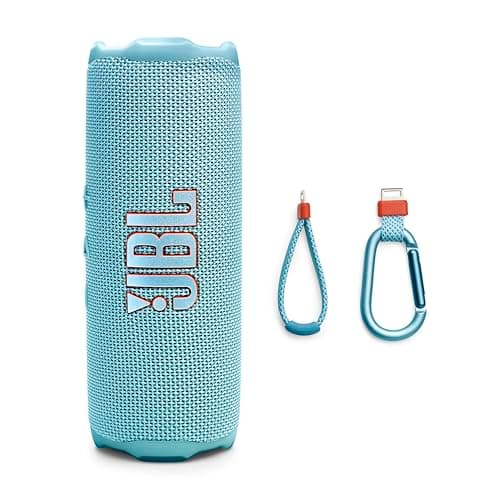
JBL Flip 7 vs Flip 6: is the newer one worth it?
Generation against discount — what the Flip 7 actually added and whether it justifies the gap.
Guides
How to choose a Bluetooth speaker
The complete buying framework — the four specs that matter and the three that do not.
Reviews
Our default recommendation — tough, long-running, honestly specified, and the compromises it makes to get there.
Reviews
The best Bluetooth speakers in 2026
Our flagship list — the best Bluetooth speaker at each size and budget, with the trade-offs named.
By Price
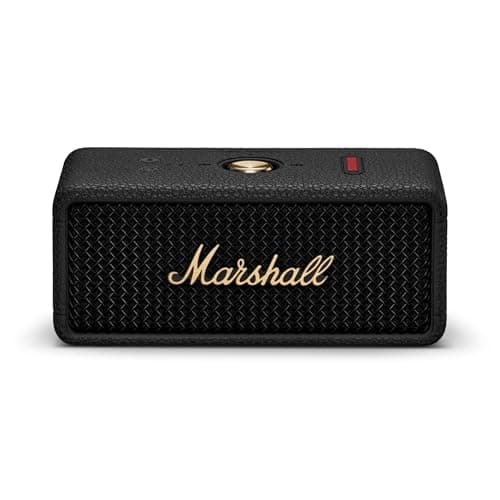
The best Bluetooth speakers under $300 in 2026
The premium end of what we recommend, with a clear argument for spending less.