Head-to-Head
Bose vs JBL: which portable speaker should you buy?
One wins on sound, one wins on everything else. Where you listen decides which matters.
By Ryder M.Published
 Field-tested picks · 2026
How we are funded: Thump & Tote earns a commission when you buy through our Amazon links, at no extra cost to you. It never changes which speaker we put first — see how we pick and our affiliate disclosure.
Quick picks
Ranked for value first. Tap any row to jump to the full write-up.
| # | Product | Best for | Price |
|---|---|---|---|
| 1 | Illustrative Bose SoundLink Flex (2nd Gen)Clearly the better listen, in a quiet room. | Best sound | Check price on Amazon |
| 2 | 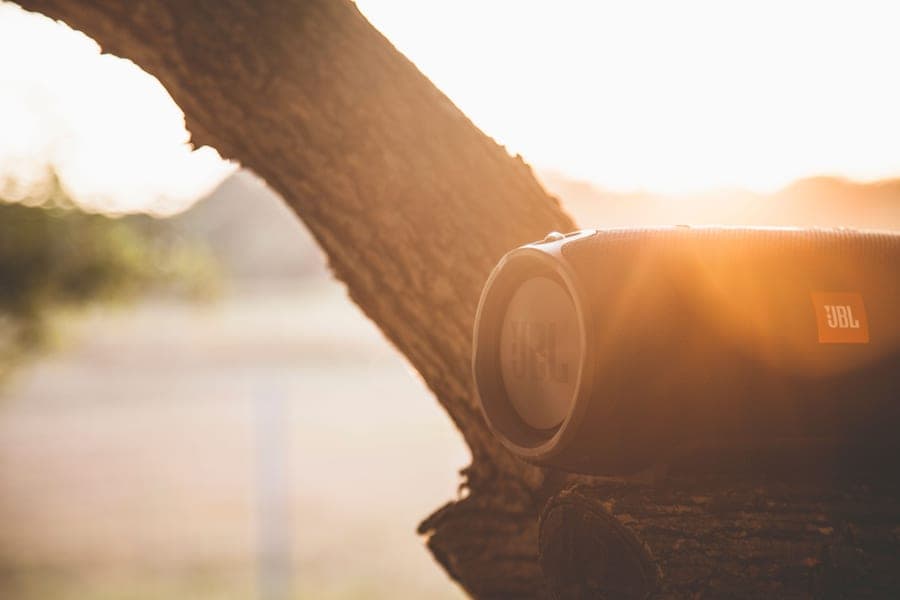 Illustrative IllustrativeJBL Flip 7Tougher, cheaper, longer-lived. | Best all-round | Check price on Amazon |
| 3 |  Illustrative IllustrativeJBL Charge 6More than double the Bose runtime. | Best battery | Check price on Amazon |
#ad — buy links go to Amazon and we earn a commission on qualifying purchases. Prices change constantly, so the live listing is always the price of record. Full disclosure.
Buy the JBL Flip 7 unless you specifically want the best sound in a quiet room. Bose wins clearly on tonal accuracy, but JBL wins on battery life, water rating, linking and price — and Bose's advantage largely disappears outdoors, which is where portable speakers spend most of their lives.
This is a comparison between two genuinely good products with different priorities, which makes it more interesting than most. Bose optimized for how the speaker sounds when you are listening to it. JBL optimized for the speaker being available, working and surviving wherever you take it. Neither is wrong; they are answers to different questions.
Head to head
| Bose SoundLink Flex (2nd Gen) | JBL Flip 7 | |
|---|---|---|
| Battery | Up to 12 hours | 14 hours, plus up to 2 in boost mode |
| Water and dust | IP67 | IP68 |
| Bluetooth | 5.3 | 5.4 |
| Multi-speaker linking | Within Bose's own system | Auracast, across the JBL range |
| Wired input | No aux; USB-C charging | USB-C lossless audio input |
| Tonal character | Accurate, vocals forward | Excited, bass-led |
| Build | Silicone-wrapped, excellent | Excellent |
| Price position | Higher | Lower |
Note that JBL wins or draws on every line except tonal character. That is the shape of this comparison: Bose is trading a broad set of practical advantages for one significant sonic one.
Where the Bose advantage is real
In a quiet room at moderate volume, the difference is not subtle. Voices sit forward and sound natural rather than scooped. Bass stops when the note stops instead of smearing into the next one. It is the kind of difference that becomes more obvious the longer you listen, which is exactly the opposite of a showroom trick.
| Setting | Audible difference? | Why |
|---|---|---|
| Quiet room, moderate volume | Clearly | Nothing masks the accuracy. |
| Kitchen with background noise | Somewhat | Ambient noise masks detail. |
| Patio with conversation | Barely | Voices mask the range Bose does best. |
| Open lawn, beach or party | No | No reflections; cabinet size decides output instead. |
The models
IllustrativeThe better listen
Bose SoundLink Flex (2nd Gen)
The premium benchmark on this site — included so you can see what the money buys.
- What it does well
- Tonally the most convincing speaker in this size class. Controlled bass, forward vocals, and a silicone-wrapped body that is genuinely beautifully made. IP67 sealing covers rain and a dropped-in-the-sink accident.
- Where it cuts corners
- Twelve hours is below speakers costing a third as much, there is no aux input, and the price gap to the JBL is larger than the sound gap in most real use. IP67 rather than IP68.
- Who it is for
- Listeners who sit and listen, indoors, at moderate volume.
- Battery: Up to 12 hours
- Water rating: IP67 — submersible to 1 m for 30 minutes, dustproof
#ad — we earn a commission on qualifying purchases. How this is funded
IllustrativeThe better buy for most people
JBL Flip 7
The default mid-size pick, and the speaker every value brand is trying to undercut.
- What it does well
- More battery, a tougher IP68 rating, Auracast linking that works across JBL's whole range, USB-C lossless input, and a lower price. Even tonality at every volume, which matters more outdoors than absolute accuracy does.
- Where it cuts corners
- Not as tonally refined as the Bose in a quiet room — more excitement, less accuracy. Mono, where cheaper rivals manage stereo.
- Who it is for
- Everyone whose speaker leaves the house regularly.
- Battery: 14 hours, plus up to 2 more in Playtime Boost mode
- Water rating: IP68 — submersible to 1.5 m for 30 minutes, dustproof
- Weight: 1.82 lb (about 560 g)
#ad — we earn a commission on qualifying purchases. How this is funded
IllustrativeIf battery is the deciding factor
JBL Charge 6
The battery-life benchmark, with a power bank built into the back.
- What it does well
- Twenty-four hours standard and up to twenty-eight with Playtime Boost — more than double the Bose — plus a power bank and a larger cabinet with genuinely more outdoor low end.
- Where it cuts corners
- Heavier and more expensive than the Flip 7, and nowhere near the Bose for tonal refinement. Using the power bank costs a large slice of playback.
- Who it is for
- Camping, tailgates and multi-day trips.
- Battery: 24 hours, or up to 28 hours with Playtime Boost enabled
- Water rating: IP68 — submersible to 1.5 m for 30 minutes, dustproof
#ad — we earn a commission on qualifying purchases. How this is funded
The honest recommendation
For a value buyer — which is who this site is for — the JBL is the better purchase, and it is not especially close. You get more battery, a better water rating, better linking, a wired input and a lower price, and you give up an advantage that only exists in quiet rooms.
The exception is real though. If your portable speaker is genuinely a listening device that happens to be portable — it sits on a shelf, you play albums through it, you notice tonality — then the Bose is the right purchase and the extra money buys something you will hear every day. Just be honest about which of those two you actually are.
If this has narrowed things toward JBL, the JBL brand page explains which model fits which use and Flip 7 vs Charge 6 settles the most common internal decision. If it has narrowed toward Bose, the Bose brand page covers where that premium does and does not survive.
Frequently asked questions
Does Bose sound better than JBL?
Is Bose or JBL better for outdoors?
Which has better battery life, Bose or JBL?
Is the Bose worth the extra money?
Update log
- First publication. Advantage assessed by listening environment rather than in the abstract.
Sources
Every specification quoted above comes from the manufacturer or retailer listing below. We publish no measurements of our own — see how we pick.
Read next
Brands & Alternatives
Bose: the best sound, and the least value
The premium benchmark — where the tonal advantage is real and where it evaporates.
Brands & Alternatives
JBL speakers: which one is actually worth buying
The JBL lineup decoded — what each model is for and which one a value buyer should pick.
Reviews
Bose SoundLink Flex (2nd Gen) review
The premium reference point — what careful tuning genuinely buys and where it stops mattering.
Reviews
JBL Flip 7 review
The benchmark speaker reviewed — what the premium buys and when it stops being worth it.
By Price
The best Bluetooth speakers under $200 in 2026
Top of the value range — party-class output, long runtimes, and a candid word on diminishing returns.
Head-to-Head
JBL Flip 7 vs Charge 6: which one should you buy?
JBL's two most popular portables compared — and why the answer is about carrying, not sound.