Head-to-Head
JBL Flip 7 vs Charge 6: which one should you buy?
Same tuning, same ecosystem, different sizes. This is a portability decision dressed as an audio one.
By Ryder M.Published
 Field-tested picks · 2026
How we are funded: Thump & Tote earns a commission when you buy through our Amazon links, at no extra cost to you. It never changes which speaker we put first — see how we pick and our affiliate disclosure.
Quick picks
Ranked for value first. Tap any row to jump to the full write-up.
| # | Product | Best for | Price |
|---|---|---|---|
| 1 | 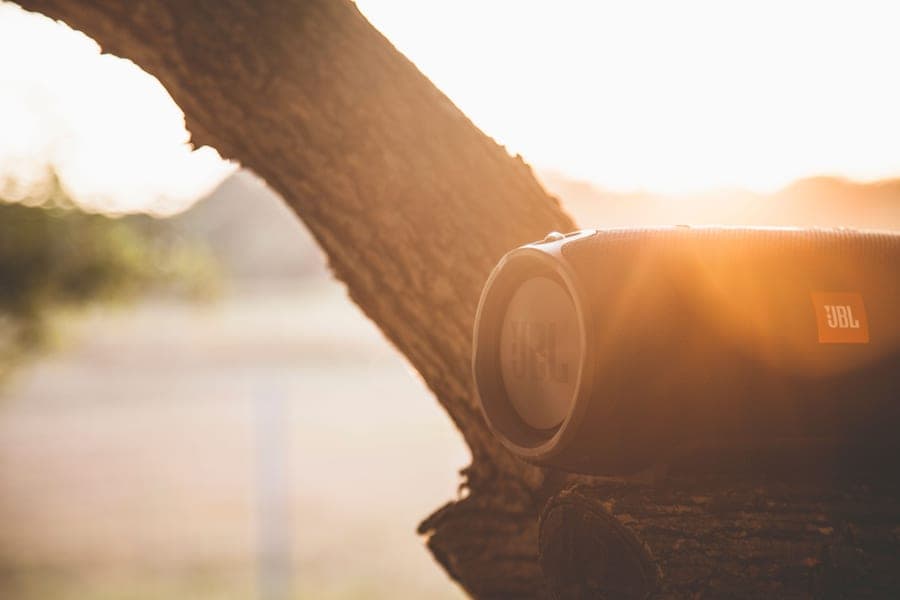 Illustrative IllustrativeJBL Flip 7The one you will actually take with you. | Most people | Check price on Amazon |
| 2 | Illustrative JBL Charge 6Nearly double the battery and a power bank. | Longer trips | Check price on Amazon |
#ad — buy links go to Amazon and we earn a commission on qualifying purchases. Prices change constantly, so the live listing is always the price of record. Full disclosure.
Buy the Flip 7 unless you specifically need multi-day battery or genuine outdoor volume. It is lighter, cheaper, and carries the same IP68 rating, tuning and Auracast linking. The Charge 6 wins on runtime — twenty-four hours against fourteen — and on low end, at a real cost in weight and price.
These two are the same product philosophy at two sizes. Identical water and dust sealing, the same Auracast ecosystem, the same tonal signature, both built to the standard that justifies JBL's premium. Which means the comparison is unusually clean: it comes down to how much speaker you are willing to carry.
And that is a question people consistently answer wrong in the shop, because the Charge looks like better value with the specification sheet in front of you. The speaker you leave at home because it is awkward is worth nothing, and the Flip is meaningfully more likely to come along.
Head to head
| Flip 7 | Charge 6 | |
|---|---|---|
| Battery | 14 hours, +2 with Playtime Boost | 24 hours, up to 28 with Playtime Boost |
| Water and dust | IP68 | IP68 |
| Bluetooth | 5.4 | 5.4 |
| Power bank | No | Yes, charges a phone |
| Weight | 1.82 lb (about 560 g) | Substantially heavier |
| Wired input | USB-C lossless audio | USB-C |
| Linking | Auracast | Auracast |
| Outdoor low end | Good for its size | Noticeably better |
| Price position | Lower | Higher |
The two speakers
IllustrativeThe one most people should buy
JBL Flip 7
The default mid-size pick, and the speaker every value brand is trying to undercut.
- What it does well
- Sits at the size where a speaker stops being a personal device and becomes a group one without becoming luggage. At about 560 g it goes in a day bag without thought, and IP68 plus a clip-on loop means you stop worrying about it. Fourteen hours covers a day out.
- Where it cuts corners
- Mono, and its bass runs out earlier outdoors than the Charge's does — noticeable on an open lawn, irrelevant on a patio. No power bank.
- Who it is for
- Day trips, patios, kitchens, travel — the default answer.
- Battery: 14 hours, plus up to 2 more in Playtime Boost mode
- Water rating: IP68 — submersible to 1.5 m for 30 minutes, dustproof
- Weight: 1.82 lb (about 560 g)
#ad — we earn a commission on qualifying purchases. How this is funded
IllustrativeThe one for longer trips
JBL Charge 6
The battery-life benchmark, with a power bank built into the back.
- What it does well
- Twenty-four hours standard and up to twenty-eight with Playtime Boost, which genuinely covers a weekend without a charger, plus a power bank that will revive a phone. The larger cabinet gives it low end that survives being outdoors.
- Where it cuts corners
- Heavy enough that it changes how often you take it anywhere, and using the power bank drains playback quickly. The Soundcore Boom 2 offers more bass hardware at a similar price.
- Who it is for
- Camping, tailgates and multi-day use away from power.
- Battery: 24 hours, or up to 28 hours with Playtime Boost enabled
- Water rating: IP68 — submersible to 1.5 m for 30 minutes, dustproof
#ad — we earn a commission on qualifying purchases. How this is funded
The decision, in one question
Will the speaker regularly be away from a charger for more than one day? If yes, the Charge. If no, the Flip, and spend the difference on something else. Almost every other consideration between these two is a draw, because JBL has deliberately made them consistent.
- Both are IP68 — beach, pool and rain are non-issues for either.
- Both run Auracast — you can link one of each, or add a second later, without compatibility concerns.
- Both share the tuning — they sound like relatives, which is JBL's real signature.
- Neither is stereo — if that matters, the Soundcore Motion 300 is the alternative.
The value caveat
That comparison is worth making explicitly before you commit, and Charge 6 vs Soundcore Boom 2 does it properly. The Flip 7 faces less of this pressure because there is no equally-priced rival with obviously more hardware — its closest value challenger, the Motion 300, competes on stereo rather than on size.
One more option worth considering: a previous-generation version of either. Flip 7 vs Flip 6 and Charge 6 vs Charge 5 cover what actually changed, and the outgoing model at clearance pricing is frequently the best buy in the whole range.
Frequently asked questions
Is the JBL Charge 6 worth it over the Flip 7?
Which is louder, the Flip 7 or the Charge 6?
Do the Flip 7 and Charge 6 work together?
Is the Charge 6 power bank useful?
Update log
- First publication. Framed as a portability decision, which is what it actually is.
Sources
Every specification quoted above comes from the manufacturer or retailer listing below. We publish no measurements of our own — see how we pick.
Read next
Reviews
JBL Flip 7 review
The benchmark speaker reviewed — what the premium buys and when it stops being worth it.
Reviews
JBL Charge 6 review
JBL's long-runner reviewed — class-leading battery, and the value problem it has.

Head-to-Head
JBL Charge 6 vs Soundcore Boom 2: which should you buy?
The cross-brand matchup most buyers actually face — a real subwoofer against a power bank.
Head-to-Head
JBL Flip 7 vs Flip 6: is the newer one worth it?
Generation against discount — what the Flip 7 actually added and whether it justifies the gap.
Brands & Alternatives
JBL speakers: which one is actually worth buying
The JBL lineup decoded — what each model is for and which one a value buyer should pick.
By Price
The best Bluetooth speakers under $200 in 2026
Top of the value range — party-class output, long runtimes, and a candid word on diminishing returns.