Brands & Alternatives
Is JBL worth it? A direct answer
Yes if the speaker will get abused, no if it lives on a counter. Here is where the line actually sits.
By Ryder M.Published
 Field-tested picks · 2026
How we are funded: Thump & Tote earns a commission when you buy through our Amazon links, at no extra cost to you. It never changes which speaker we put first — see how we pick and our affiliate disclosure.
Quick picks
Ranked for value first. Tap any row to jump to the full write-up.
| # | Product | Best for | Price |
|---|---|---|---|
| 1 | 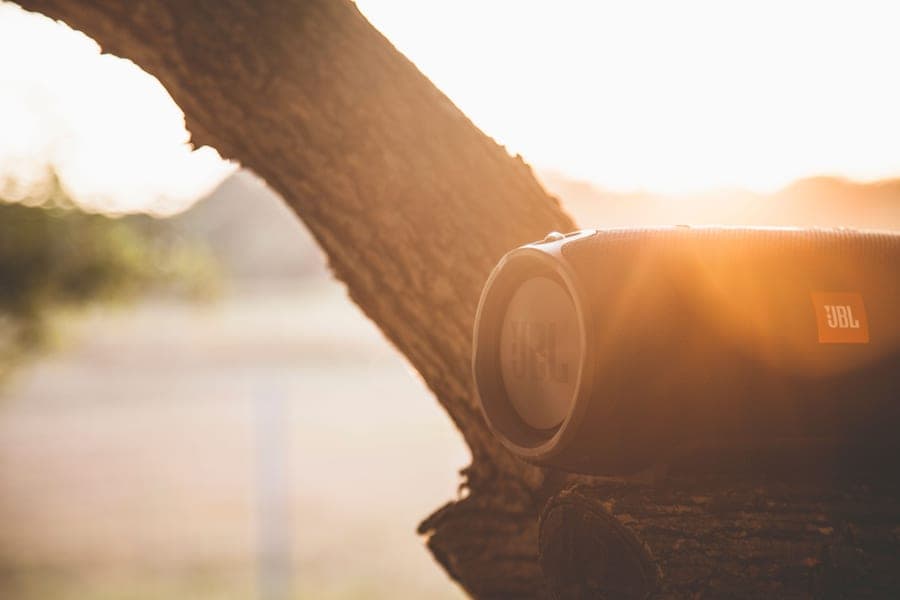 Illustrative IllustrativeJBL Flip 7You will carry, drop and soak it regularly. | Worth it if | Check price on Amazon |
| 2 |  Illustrative IllustrativeSoundcore Motion 300It lives indoors — buy this and keep the difference. | Not worth it if | Check price on Amazon |
| 3 |  Illustrative IllustrativeJBL Charge 6Up to 28 hours plus a power bank. | Worth it for battery | Check price on Amazon |
| 4 |  Illustrative IllustrativeSoundcore Boom 2More bass hardware for less money. | Not worth it for parties | Check price on Amazon |
#ad — buy links go to Amazon and we earn a commission on qualifying purchases. Prices change constantly, so the live listing is always the price of record. Full disclosure.
JBL is worth the premium if the speaker will be used hard — carried in bags, dropped, taken to beaches, used weekly outdoors — because build quality is genuinely where the extra money goes and it pays back over a few years. It is not worth it if the speaker will mostly sit indoors, because waterproofing, battery life and connectivity are all matched by cheaper brands.
Most answers to this question hedge, and the hedging is what makes them useless. The honest position is that there is a real premium, it buys real things, and whether those things apply to you is knowable in advance. So rather than "it depends", here is what it depends on.
What the premium actually buys
| Axis | Does JBL win? | Detail |
|---|---|---|
| Build quality | Yes, clearly | Better materials, tighter assembly, survives abuse longer. This is the premium. |
| Tuning consistency | Yes | Predictable voicing across the range — a Flip and a Charge sound like relatives. |
| Multi-speaker linking | Yes | Auracast works across the modern range and is less fiddly than rivals' pairing. |
| Water and dust sealing | Marginally | IP68 on the Flip 7 and Charge 6 beats the usual IPX7, but IP67 rivals are close. |
| Battery life | No | The Charge 6 is excellent; the Go 4 is beaten three times over. |
| Specifications per dollar | No | Soundcore and Tribit win this outright. |
| Sound quality | No | Bose is better in the same size class; value brands are close. |
Three wins, one draw, three losses — and notice that the three wins are all durability and ecosystem rather than performance. That is the shape of the JBL proposition, and it is why the answer turns entirely on how the speaker gets treated.
Where the line sits
Buy the JBL if
- The speaker goes in a bag more than once a week.
- It will spend time at beaches, poolsides or on boats where it gets knocked about.
- You expect it to still be working in four or five years.
- You plan to add a second speaker later and want linking that just works.
- You have already replaced a cheap speaker that failed.
Buy the cheaper one if
- It will live on a kitchen counter, a desk or a shelf.
- The main use is background music indoors.
- You want the most specification for the money and will accept ordinary build quality.
- You would rather buy two speakers than one.
- Battery life matters more than anything else — several cheaper speakers beat JBL outright.
The models, in and out
IllustrativeWorth the premium — conditionally
JBL Flip 7
The default mid-size pick, and the speaker every value brand is trying to undercut.
- What it does well
- IP68 sealing, even tonality at every volume, Auracast, and a shell that genuinely survives years of being thrown in bags. If a speaker is going to have a hard life, this is where the money is visible.
- Where it cuts corners
- You pay a clear premium for a smaller cabinet than rivals offer at similar money, and it is mono where the Motion 300 is stereo. Fourteen hours is good, not exceptional.
- Who it is for
- Heavy, outdoor, multi-year use.
- Battery: 14 hours, plus up to 2 more in Playtime Boost mode
- Water rating: IP68 — submersible to 1.5 m for 30 minutes, dustproof
- Weight: 1.82 lb (about 560 g)
#ad — we earn a commission on qualifying purchases. How this is funded
IllustrativeThe reason to not buy the Flip
Soundcore Motion 300
Our default recommendation under $100 — stereo, slim, and honestly specified.
- What it does well
- Genuine stereo, IPX7, thirteen hours and a slimmer shape, at a lower price. For indoor and light outdoor use it does everything the Flip does and one thing the Flip cannot.
- Where it cuts corners
- No dust rating, no Auracast, and build quality that will show its age sooner under rough handling.
- Who it is for
- Indoor-led use where the durability premium never gets called on.
- Battery: 13 hours
- Water rating: IPX7 — submersible to 1 m for 30 minutes
- Output: 30 W stereo (two 15 W full-range drivers)
#ad — we earn a commission on qualifying purchases. How this is funded
IllustrativeThe JBL that is easiest to justify
JBL Charge 6
The battery-life benchmark, with a power bank built into the back.
- What it does well
- Twenty-four to twenty-eight hours and a power bank is a combination the value brands do not match, and the IP68 build genuinely earns its keep on camping trips and at tailgates.
- Where it cuts corners
- Heavy and expensive, with less bass hardware than the similarly priced Boom 2. The power bank costs you a large slice of playback when used.
- Who it is for
- Multi-day trips away from power.
- Battery: 24 hours, or up to 28 hours with Playtime Boost enabled
- Water rating: IP68 — submersible to 1.5 m for 30 minutes, dustproof
#ad — we earn a commission on qualifying purchases. How this is funded
IllustrativeThe reason to not buy a party JBL
Soundcore Boom 2
The value answer to a party speaker: it floats, it is loud, and it lasts a day.
- What it does well
- A dedicated 50 W subwoofer and two tweeters deliver more outdoor bass than a similarly priced JBL, and it floats and carries by a strap.
- Where it cuts corners
- Build quality and finish are clearly a step below JBL, and the quoted runtime assumes settings you will not use at a party.
- Who it is for
- Parties and poolsides where hardware beats finish.
- Battery: Up to 24 hours at 50% volume with BassUp and lights off
- Water rating: IPX7 — submersible to 1 m for 30 minutes, and it floats
- Output: Up to 80 W peak output (a 50 W subwoofer plus two 15 W tweeters)
#ad — we earn a commission on qualifying purchases. How this is funded
How much is the cheapest JBL?
The JBL Go 4 is the entry point to the range, and it is the model we find hardest to recommend on value — roughly seven hours of battery when cheaper rivals quote twenty-four, in a size where the badge is a large share of what you are paying for. If the goal is simply to own a JBL cheaply, a previous-generation Flip on clearance is a much better use of the same money.
We do not print prices anywhere on this site, because street pricing on these models moves weekly and a number written today is misleading next month. Every pick links to its live Amazon listing, which is the only price worth quoting. More on that in our affiliate disclosure.
The summary
JBL is not overpriced and it is not a rip-off. It is a durability-and-ecosystem premium sold in a market where most buyers do not need either, which makes it simultaneously a fair price and the wrong purchase for a lot of the people who make it. Work out honestly how hard your speaker will be used, and the answer follows.
If you have decided against, JBL alternatives maps each model to its closest cheaper equivalent. If you have decided for, the JBL brand page covers which model in the range fits which use, and Flip 7 vs Charge 6 settles the most common internal decision.
Frequently asked questions
Is JBL worth the money?
Is JBL expensive compared to other brands?
How much is the cheapest JBL speaker?
Is JBL better than Soundcore?
Do JBL speakers last longer?
Update log
- First publication. Answers the question directly rather than hedging, with a per-axis comparison behind the verdict.
Sources
Every specification quoted above comes from the manufacturer or retailer listing below. We publish no measurements of our own — see how we pick.
- JBL — Flip 7 product page (manufacturer specifications)
- JBL — Charge 6 product page (manufacturer specifications)
- Soundcore — Motion 300 product page (manufacturer specifications)
- Soundcore — Boom 2 product page (manufacturer specifications)
- Bluetooth SIG — Auracast and Bluetooth LE Audio
- RTINGS — JBL Flip 7 measurements (independent test lab)
Read next
Brands & Alternatives
JBL alternatives: what you actually give up going cheaper
Each popular JBL mapped to its cheaper equivalent, with the real cost of each swap stated.
Brands & Alternatives
JBL speakers: which one is actually worth buying
The JBL lineup decoded — what each model is for and which one a value buyer should pick.
Brands & Alternatives
JBL dupes: the cheaper versions worth buying
Genuine cheaper equivalents versus outright knockoffs — and how to tell a fake listing apart.
Head-to-Head
Soundcore vs JBL: which should you buy?
Specifications per dollar against build quality — the decision that shapes most speaker purchases.
Head-to-Head
JBL Flip 7 vs Charge 6: which one should you buy?
JBL's two most popular portables compared — and why the answer is about carrying, not sound.
By Price
The best Bluetooth speaker for the money in 2026
The single best-value speaker at each price point, plus the two tactics that save the most money.