Head-to-Head
JBL Charge 6 vs Soundcore Boom 2: which should you buy?
Bass hardware against build quality and a power bank. The honest answer depends on where it lives.
By Ryder M.Published
 Field-tested picks · 2026
How we are funded: Thump & Tote earns a commission when you buy through our Amazon links, at no extra cost to you. It never changes which speaker we put first — see how we pick and our affiliate disclosure.
Quick picks
Ranked for value first. Tap any row to jump to the full write-up.
| # | Product | Best for | Price |
|---|---|---|---|
| 1 | Illustrative Soundcore Boom 2A real subwoofer, and it floats. | Parties and pools | Check price on Amazon |
| 2 | 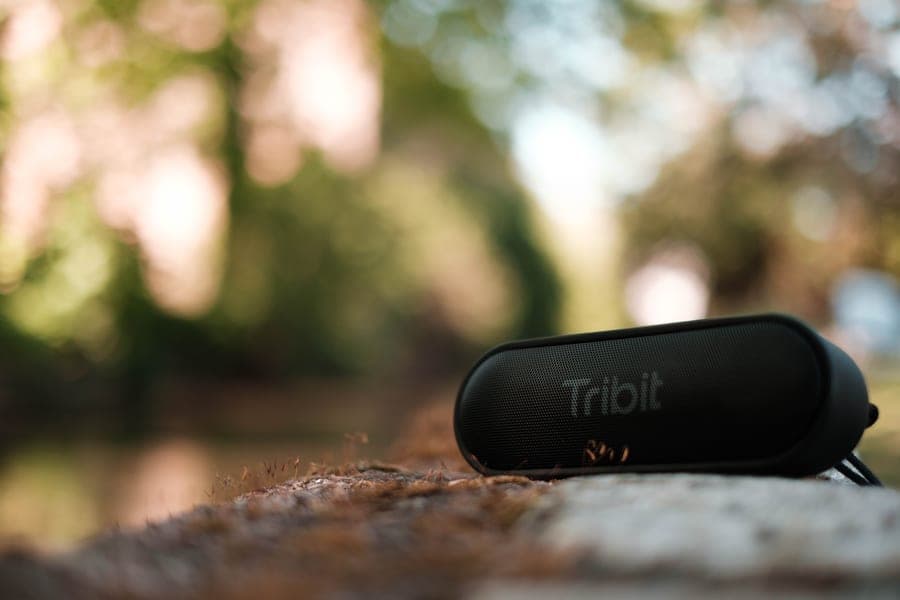 Illustrative IllustrativeJBL Charge 6IP68, a power bank, and JBL build. | Trips and durability | Check price on Amazon |
#ad — buy links go to Amazon and we earn a commission on qualifying purchases. Prices change constantly, so the live listing is always the price of record. Full disclosure.
Buy the Soundcore Boom 2 for parties and poolsides — it has a dedicated 50 W subwoofer where the Charge 6 uses passive radiators, it floats, and it costs less. Buy the JBL Charge 6 for trips and rough use: IP68 sealing, a built-in power bank, better build quality and up to twenty-eight hours of quoted runtime.
This is the most common cross-brand decision at this size and price, and it is genuinely close — which is unusual, because it means the two products were designed against different priorities rather than one simply being better. The Boom 2 spent its budget on drivers. The Charge 6 spent it on build quality and features.
Head to head
| Soundcore Boom 2 | JBL Charge 6 | |
|---|---|---|
| Bass hardware | Dedicated 50 W subwoofer + two 15 W tweeters | Passive radiators |
| Quoted output | Up to 80 W peak | Not quoted in comparable terms |
| Battery | 24 hours at 50% volume, BassUp and lights off | 24 hours, up to 28 in Playtime Boost |
| Water and dust | IPX7 | IP68 |
| Floats | Yes | No |
| Power bank | No | Yes |
| Lighting | Yes, a light ring | No |
| Linking | Within Soundcore | Auracast, across the JBL range |
| Build quality | Adequate | Clearly better |
| Price position | Lower | Higher |
One caution about that table: the wattage figures are not comparable and we are not going to pretend otherwise. Soundcore quotes peak system output including the subwoofer; JBL does not publish a directly equivalent number. Use the architecture — a dedicated bass driver versus passive radiators — as the meaningful signal, not the watts. Watts and loudness explains why.
The two speakers
IllustrativeThe bass and value answer
Soundcore Boom 2
The value answer to a party speaker: it floats, it is loud, and it lasts a day.
- What it does well
- A dedicated 50 W subwoofer with two 15 W tweeters produces low end the Charge's passive radiators cannot match outdoors, and the quoted response reaches down to 45 Hz. It floats, has a carry strap, and the light ring is genuinely pleasant after dark.
- Where it cuts corners
- The twenty-four hour figure assumes BassUp and lights off — not how anyone runs a party speaker. IPX7 rather than IP68, no power bank, and finish clearly below JBL's.
- Who it is for
- Backyard parties, pools and tailgates where output is the point.
- Battery: Up to 24 hours at 50% volume with BassUp and lights off
- Water rating: IPX7 — submersible to 1 m for 30 minutes, and it floats
- Output: Up to 80 W peak output (a 50 W subwoofer plus two 15 W tweeters)
#ad — we earn a commission on qualifying purchases. How this is funded
IllustrativeThe durability and features answer
JBL Charge 6
The battery-life benchmark, with a power bank built into the back.
- What it does well
- IP68 sealing, a build that genuinely survives years of being thrown in cars and bags, a power bank that will revive a phone, and Auracast linking across JBL's range. Twenty-four hours standard, up to twenty-eight in boost mode, under less caveated conditions than Soundcore's figure.
- Where it cuts corners
- Less bass hardware than the Boom 2 at a higher price, and it does not float. Using the power bank costs a large slice of playback.
- Who it is for
- Camping, travel and anyone who will use the speaker hard for years.
- Battery: 24 hours, or up to 28 hours with Playtime Boost enabled
- Water rating: IP68 — submersible to 1.5 m for 30 minutes, dustproof
#ad — we earn a commission on qualifying purchases. How this is funded
The decision in three questions
- Will it be near water? If yes, the Boom 2 floats and the Charge 6 does not. For a pool that settles it.
- Will it be away from power for days? If yes, the Charge 6's power bank and less-caveated battery figure win.
- Is the point bass at a party? If yes, the Boom 2's dedicated subwoofer is real hardware the Charge does not have.
If none of the three is decisive, buy the Boom 2 and keep the difference — that is the value-buyer default and this site's general position. If you have already replaced a cheap speaker that died, buy the Charge 6, because that experience is exactly what the build-quality premium is insuring against.
The battery figures are not comparable
That is the single most useful thing on this page, and it is invisible if you compare spec sheets side by side. Battery life covers how the industry produces these figures and what to expect in practice.
For the broader brand question this sits inside, Soundcore vs JBL is the general version. If you are also weighing the smaller JBL, Flip 7 vs Charge 6 covers that internal decision.
Frequently asked questions
Is the Soundcore Boom 2 better than the JBL Charge 6?
Which has better battery life?
Does the JBL Charge 6 float?
Which is louder?
Update log
- First publication. Battery figures presented with their differing test conditions rather than compared bare.
Sources
Every specification quoted above comes from the manufacturer or retailer listing below. We publish no measurements of our own — see how we pick.
Read next

Head-to-Head
Soundcore vs JBL: which should you buy?
Specifications per dollar against build quality — the decision that shapes most speaker purchases.
Head-to-Head
JBL Flip 7 vs Charge 6: which one should you buy?
JBL's two most popular portables compared — and why the answer is about carrying, not sound.
Reviews
Soundcore Boom 2 review
Party-class bass hardware for the money — and the battery claim that needs translating.
Reviews
JBL Charge 6 review
JBL's long-runner reviewed — class-leading battery, and the value problem it has.
Outdoor & Party
The best Bluetooth speakers for tailgating in 2026
Parking-lot speakers that stay audible — and the battery arithmetic to do before you buy.
Guides
Bluetooth speaker battery life, honestly
How quoted runtimes are produced, what to expect in reality, and the longest-lasting picks.