Guides
How long do Bluetooth speakers last?
Per charge and per lifetime are different questions. Almost every answer online merges them.
By Ryder M.Published
 Field-tested picks · 2026
How we are funded: Thump & Tote earns a commission when you buy through our Amazon links, at no extra cost to you. It never changes which speaker we put first — see how we pick and our affiliate disclosure.
Quick picks
Ranked for value first. Tap any row to jump to the full write-up.
| # | Product | Best for | Price |
|---|---|---|---|
| 1 | 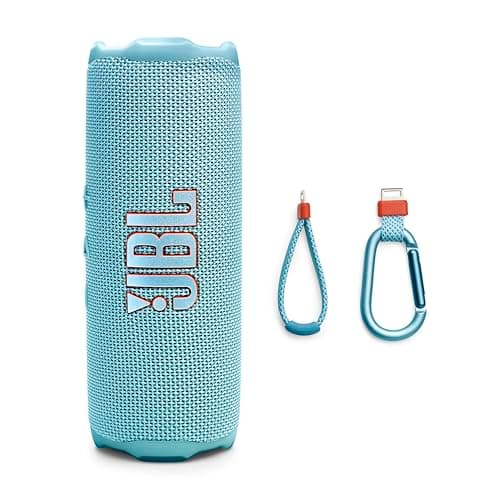 JBL Flip 7Build quality is what buys you years. | Longest-lived | $149.95View on Amazon |
| 2 | 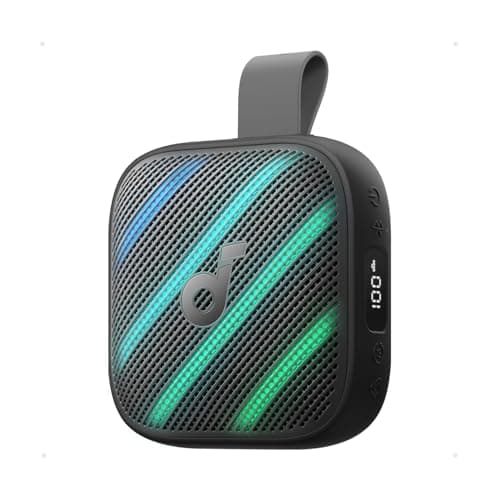 Soundcore Boom Go 3iWell enough made for ordinary use. | Best value that lasts | $59.98$79.9925% offView on Amazon |
| 3 | 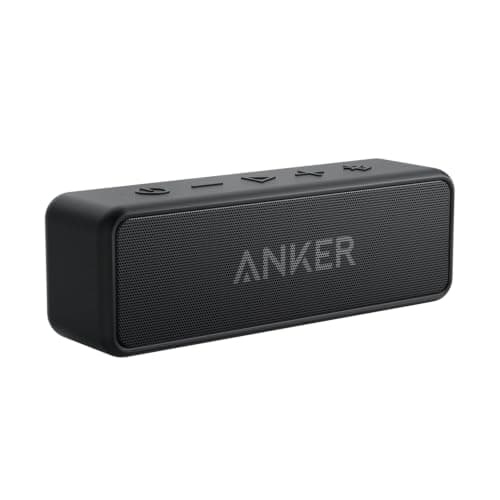 Anker Soundcore 2Still sold years after launch. | Proof of longevity | $29.99$44.9933% offView on Amazon |
#ad — buy links go to Amazon and we earn a commission on qualifying purchases. Prices change constantly, so the live listing is always the price of record. Full disclosure.
A portable Bluetooth speaker typically lasts three to five years before the battery holds noticeably less charge, which is the most common reason people replace them. That is separate from runtime per charge, which is eight to twenty-four hours depending on the model. Physical damage and a failed charging port are the other two common endings.
Search for how long a Bluetooth speaker lasts and you get two completely different answers mixed together: hours of playback, and years of ownership. They have different causes, different fixes and different buying implications, so this page keeps them apart.
For playback hours, battery life is the dedicated page. This one is about the product's lifespan — how long before you are shopping again, and what determines it.
What actually ends a speaker's life
| Cause | Typical timing | Preventable? |
|---|---|---|
| Battery capacity fade | 3-5 years of regular use | Partly — charging habits help |
| Charging port failure | Any time | Largely yes — see below |
| Physical damage | Any time | Mostly — a strap and a case do a lot |
| Water or salt corrosion | Months to years | Yes — rinse after sea and pool |
| Driver failure | Rare | Partly — avoid sustained maximum volume |
| Software or app abandonment | Varies by brand | No |
Battery fade is the usual ending
Lithium-ion cells lose capacity with charge cycles and with age, independently of each other. A speaker charged weekly for four years will hold meaningfully less than it did new — often somewhere around 70 to 80 percent — which is enough to be noticeable but rarely enough to make the speaker useless. Most people replace at that point rather than because anything broke.
- Do not store it fully flat. A deeply discharged lithium cell left for months can become unrecoverable.
- Do not store it fully charged either. Around half charge is kindest for long storage.
- Keep it out of heat. A speaker left in a hot car ages its cell far faster than one that is used hard.
- Partial charges are fine. Lithium-ion has no memory effect; topping up whenever is convenient does no harm.
The charging port is the preventable one
This matters most for speakers that live near water — pools, beaches and boats. The IP rating protects the speaker while the port cover is closed; it says nothing about what happens when you open it with wet hands.
Does build quality actually buy years?
Yes, but only against the failure modes it addresses. Better materials and tighter assembly protect against physical damage and water ingress, which is why the JBL premium genuinely pays back for speakers that get carried, dropped and soaked. They do nothing about battery fade, which happens to every brand at roughly the same rate.
So the honest version: if your speaker is likely to die of being dropped, buy the better-built one. If it is likely to die of battery fade on a kitchen counter, the cheaper one will reach the same end at the same time and you will have saved the difference.
Speakers that demonstrate the point
Built to survive the avoidable failures
JBL Flip 7
The default mid-size pick, and the speaker every value brand is trying to undercut.
- What it does well
- IP68 sealing and a genuinely robust shell address the two failure modes that are not battery fade: water ingress and physical damage. If a speaker is going to have a hard life, this is where the money shows.
- Where it cuts corners
- None of that protects the battery, which will fade on the same schedule as a cheaper speaker's. You are insuring against damage, not against time.
- Who it is for
- Speakers that get carried, dropped and soaked regularly.
- Battery: 14 hours, plus up to 2 more in Playtime Boost mode
- Water rating: IP68 — submersible to 1.5 m for 30 minutes, dustproof
- Weight: 1.82 lb (about 560 g)
#ad — we earn a commission on qualifying purchases. How this is funded · Price as of November 11, 2026
Evidence that cheap can last
Anker Soundcore 2
Years old, still sold, still the battery-life champion of the cheap shelf.
- What it does well
- Still manufactured and sold years after launch, which is itself a longevity signal — parts and firmware support have continued far longer than most budget products manage.
- Where it cuts corners
- No dust rating and a dated design, so it is more vulnerable to the environmental failure modes than a better-sealed speaker.
- Who it is for
- Indoor use where damage is unlikely.
- Battery: 24 hours
- Water rating: IPX7 — submersible to 1 m for 30 minutes
- Output: 12 W stereo
#ad — we earn a commission on qualifying purchases. How this is funded · Price as of November 11, 2026
The sensible middle
Soundcore Boom Go 3i
Our default recommendation under $100 — tough, long-running and honestly specified.
- What it does well
- IP68 against spills and dust, drop-tested from a meter, and from a brand with a consistent firmware and support record. For a speaker that mostly stays indoors this is more durability than is needed.
- Where it cuts corners
- Fifteen watts, so it will not fill a space the way a bigger JBL does.
- Who it is for
- Kitchens, desks and patios.
- Battery: 24 hours, with a battery-level display on the speaker
- Water rating: IP68 — submersible and dust-tight, and drop-tested from 3.28 ft (1 m)
- Output: 15 W with BassUp 2.0, quoted at 92 dB peak
- Weight: 0.84 lb
#ad — we earn a commission on qualifying purchases. How this is funded · Price as of November 11, 2026
When to replace rather than repair
Almost always replace, unfortunately. Portable speakers are glued and sealed to achieve their IP ratings, which makes battery replacement impractical for most owners and uneconomic for most repairers. It is a genuine downside of waterproofing that nobody advertises.
The practical response is to buy with that in mind: treat a portable speaker as a three-to-five-year purchase, spend accordingly, and buy the outgoing generation so the depreciation starts from a lower number. If it is for a use where it will get destroyed rather than worn out, the durability premium is the relevant question instead.
Charging habits are the part of this you actually control, and the question people ask most is whether playing a speaker while it is plugged in does any harm. The short answer is no, and the long answer is about heat.
Two habits do most of the work here. Bluetooth speakers in cold weather covers the one mistake that causes permanent damage, and do Bluetooth speakers come charged covers the storage charge level that meaningfully extends a cell's life.
When the cell finally is the problem, the next question is whether you can do anything about it: can you replace a Bluetooth speaker battery covers the handful of speakers designed for it and the three options for everything else.
Frequently asked questions
How long do Bluetooth speakers last?
How many years do Bluetooth speakers last?
Why did my Bluetooth speaker stop holding charge?
Can you replace the battery in a Bluetooth speaker?
How do I make my speaker last longer?
Update log
- First publication. Runtime and lifespan separated, since almost every other answer merges them.
Sources
Every specification quoted above comes from the manufacturer or retailer listing below. We publish no measurements of our own — see how we pick.
- Battery University — how lithium-ion batteries age (BU-808)
- JBL — Flip 7 product page (manufacturer specifications)
- Soundcore — Soundcore 2 product page (manufacturer specifications)
- Soundcore — Boom Go 3i product page (manufacturer specifications)
- IEC 60529 — the international standard behind IP ratings
Read next
Guides
Can you use a Bluetooth speaker while it is charging?
What playing while plugged in does to a lithium cell, when it matters, and which speakers handle it best.
Guides
Bluetooth speaker battery life, honestly
How quoted runtimes are produced, what to expect in reality, and the longest-lasting picks.
Brands & Alternatives
Is JBL worth it? A direct answer
The brand-premium question answered directly, with the one variable that decides it.
Guides
What IPX7 and IP67 actually mean
Every IP rating decoded, and the single character that decides pool versus beach.
By Price
The best Bluetooth speaker for the money in 2026
The single best-value speaker at each price point, plus the two tactics that save the most money.
Guides
Why your Bluetooth speaker keeps cutting out
Dropout causes ranked by likelihood, so you fix it in two steps rather than twenty.
Guides
How to choose a Bluetooth speaker
The complete buying framework — the four specs that matter and the three that do not.
Head-to-Head
Bluetooth vs Wi-Fi speakers in 2026
Range, quality, multi-room and what happens when the network goes down — with a clear verdict.