Brands & Alternatives
JBL alternatives: what you actually give up going cheaper
Model by model, the closest thing to each JBL and the honest cost of switching.
By Ryder M.Published
 Field-tested picks · 2026
How we are funded: Thump & Tote earns a commission when you buy through our Amazon links, at no extra cost to you. It never changes which speaker we put first — see how we pick and our affiliate disclosure.
Quick picks
Ranked for value first. Tap any row to jump to the full write-up.
| # | Product | Best for | Price |
|---|---|---|---|
| 1 | 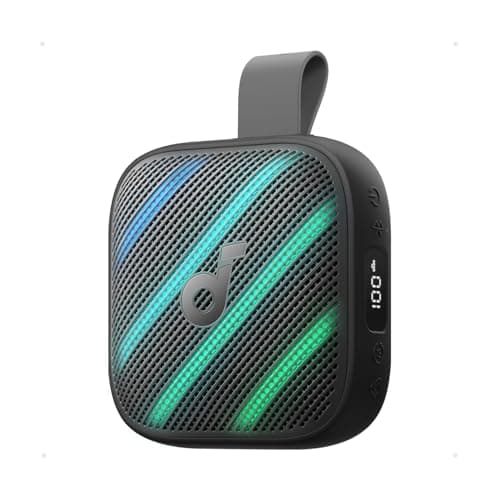 Soundcore Boom Go 3iIP68 and a day's battery, for meaningfully less. | Instead of the Flip | $59.98$79.9925% offView on Amazon |
| 2 | 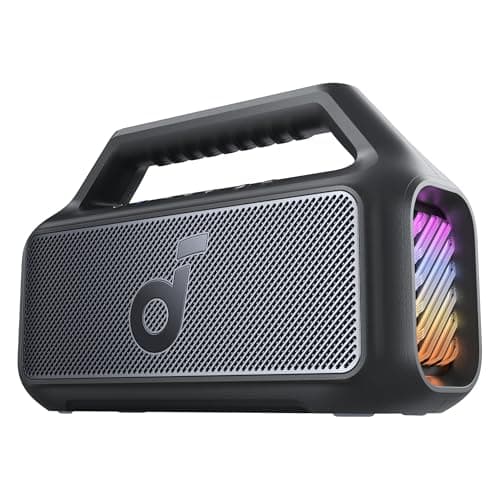 Soundcore Boom 2A real subwoofer where the Charge has a passive radiator. | Instead of the Charge | $99.99$129.9923% offView on Amazon |
| 3 | 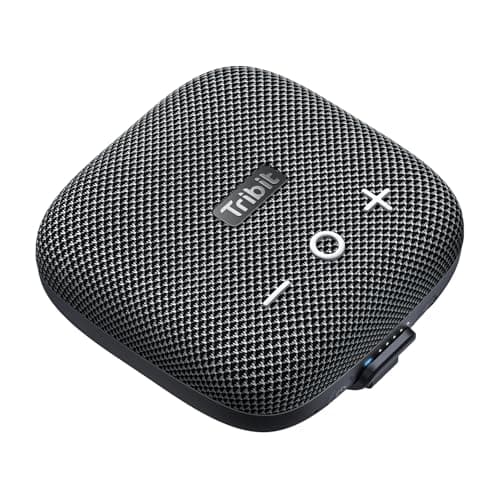 Tribit StormBox Micro 2Same strap idea, a fraction of the price. | Instead of the Clip | $39.99$59.9933% offView on Amazon |
| 4 | 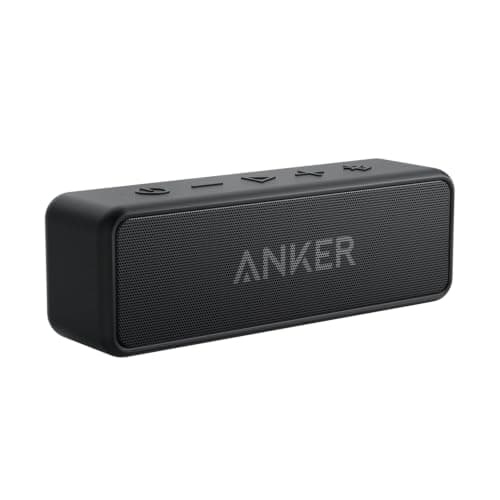 Anker Soundcore 2Three times the battery for similar money. | Instead of the Go | $29.99$44.9933% offView on Amazon |
| 5 | 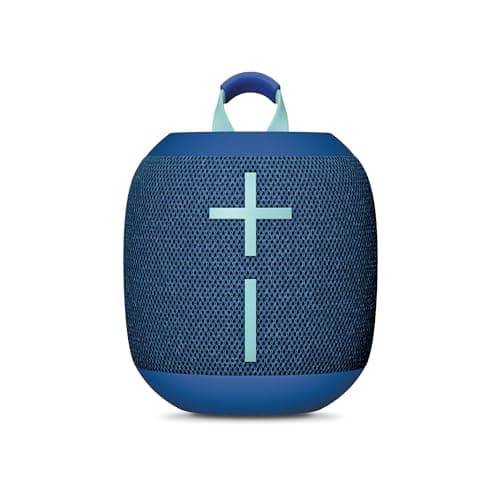 UE Wonderboom 4Floats, which no JBL in this range does. | Instead of the Flip, near water | $63.29View on Amazon |
#ad — buy links go to Amazon and we earn a commission on qualifying purchases. Prices change constantly, so the live listing is always the price of record. Full disclosure.
The closest alternatives are: Soundcore Boom Go 3i instead of the JBL Flip 7, Soundcore Boom 2 instead of the Charge 6, Tribit StormBox Micro 2 instead of the Clip 5, and Anker Soundcore 2 instead of the Go 4. In each swap you give up build quality and Auracast linking, and you gain either specification or money. Nobody gives up waterproofing or battery life.
JBL's position in this market is unusual. It is not the best-sounding brand — Bose is — and it is not the best-specified — Soundcore is. What it is, consistently, is the brand that is good at everything at once, with a range where each model does the obvious job and the build quality survives several years of abuse. That is a genuine product, and it is priced accordingly.
The question this page answers is narrower and more useful than "is JBL good": for each specific JBL you are looking at, what is the closest cheaper thing, and what precisely does the swap cost you? Once you can answer that model by model, the brand question mostly answers itself.
The swaps, model by model
| If you were buying | Consider instead | What you gain | What you give up |
|---|---|---|---|
| JBL Flip 7 | Soundcore Boom Go 3i | Genuine stereo, lower price, slimmer shape | IP68 build, Auracast, about 1 hour of battery |
| JBL Charge 6 | Soundcore Boom 2 | A dedicated 50 W subwoofer, buoyancy, lower price | The power bank, IP68, JBL's tuning consistency |
| JBL Clip 5 | Tribit StormBox Micro 2 | Much lower price, similar strap mounting | The metal carabiner, brand support |
| JBL Go 4 | Anker Soundcore 2 | Roughly three times the quoted battery | Pocketability, dust rating, modern styling |
| JBL Flip 7 (near water) | UE Wonderboom 4 | It floats; drop rating; 360-degree output | Stereo imaging, aux input, IP68 |
The alternatives in detail
Instead of the JBL Flip 7
Soundcore Boom Go 3i
Our default recommendation under $100 — tough, long-running and honestly specified.
- What it does well
- Matches the Flip 7's IP68 rating, adds a 1 m drop rating, and nearly doubles its battery — twenty-four hours with a percentage readout against the Flip's fourteen. The strap clips to the outside of a bag instead of filling one, at a lower price.
- Where it cuts corners
- Fifteen watts against the Flip's output, and it is mono. JBL's tuning consistency and build quality are both visibly a step above.
- Who it is for
- Anyone buying a Flip for general use rather than for abuse or for linking.
- Battery: 24 hours, with a battery-level display on the speaker
- Water rating: IP68 — submersible and dust-tight, and drop-tested from 3.28 ft (1 m)
- Output: 15 W with BassUp 2.0, quoted at 92 dB peak
- Weight: 0.84 lb
#ad — we earn a commission on qualifying purchases. How this is funded · Price as of November 11, 2026
Instead of the JBL Charge 6
Soundcore Boom 2
The value answer to a party speaker: it floats, it is loud, and it lasts a day.
- What it does well
- Where the Charge uses passive radiators, this has an actual 50 W subwoofer with two 15 W tweeters — more bass hardware for less money. It also floats, which the Charge does not, and the carry strap makes the size workable.
- Where it cuts corners
- No power bank, and the Charge's IP68 rating beats IPX7. The quoted twenty-four hours also assumes BassUp and the lights are off, where JBL's figure assumes standard EQ.
- Who it is for
- Party and poolside use, where bass and buoyancy beat a power bank and a dust rating.
- Battery: Up to 24 hours at 50% volume with BassUp and lights off
- Water rating: IPX7 — submersible to 1 m for 30 minutes, and it floats
- Output: Up to 80 W peak output (a 50 W subwoofer plus two 15 W tweeters)
#ad — we earn a commission on qualifying purchases. How this is funded · Price as of November 11, 2026
Instead of the JBL Clip 5
Tribit StormBox Micro 2
The best-argued cheap speaker on the market, and now a last-generation bargain.
- What it does well
- Solves the same problem — attach the speaker to something — with a molded rubber strap instead of a carabiner, at a fraction of the price. IP67 matches the Clip exactly, and the passive radiator gives it more low end than the Clip manages.
- Where it cuts corners
- The Clip's metal carabiner is a better mechanism for hooking onto a fixed point, and JBL's support and stock availability are far better. This is a previous-generation model.
- Who it is for
- Bikes, packs and rails where a strap works as well as a hook.
- Battery: Up to 12 hours
- Water rating: IP67 — submersible to 1 m for 30 minutes, dustproof
- Output: 10 W
- Weight: 315 g
#ad — we earn a commission on qualifying purchases. How this is funded · Price as of November 11, 2026
Instead of the JBL Go 4
Anker Soundcore 2
Years old, still sold, still the battery-life champion of the cheap shelf.
- What it does well
- Roughly three times the quoted battery life for similar money, plus the option of pairing two into a stereo set for less than one mid-tier speaker costs. IPX7 matches on water.
- Where it cuts corners
- Considerably larger, so it loses the Go 4's defining pocketability entirely. No dust rating where the Go 4 is IP67, and the styling is visibly dated.
- Who it is for
- Buyers who wanted a cheap JBL and do not specifically need it pocket-sized.
- Battery: 24 hours
- Water rating: IPX7 — submersible to 1 m for 30 minutes
- Output: 12 W stereo
#ad — we earn a commission on qualifying purchases. How this is funded · Price as of November 11, 2026
Instead of any JBL, near water
UE Wonderboom 4
The one to buy if the speaker is going anywhere near water.
- What it does well
- It floats, which no JBL in this size range does, and it is rated for five-foot drops onto concrete. IP67 sealing plus 360-degree output makes it the right shape for a pool deck.
- Where it cuts corners
- Not actually cheaper than JBL in most cases — it is an alternative on capability rather than price. No aux, no stereo imaging, and fourteen hours is unremarkable.
- Who it is for
- Pools and boats specifically, where buoyancy beats everything else.
- Battery: 14 hours
- Water rating: IP67 — submersible to 1 m for 30 minutes, dustproof, and it floats
- Weight: 14.81 oz (420 g)
#ad — we earn a commission on qualifying purchases. How this is funded · Price as of November 11, 2026
What no alternative gives up
It is worth being explicit about the things that do not appear in the give-up column, because this is where most people assume the brand premium is going. Waterproofing is identical — IPX7 means the same test on a Soundcore as on a JBL. Battery life frequently favors the cheaper option outright. Bluetooth version and codec support are a wash. Connection reliability at ordinary distances is a wash.
What genuinely differs is build quality, tuning consistency across a range, and multi-speaker linking — JBL's Auracast implementation works across the modern range and is noticeably less fiddly than the value brands' equivalents. If you will use any of those three, the premium is buying something real. If you will not, it is buying a badge. That argument in full is on is JBL worth it.
The cheapest JBL alternative is an older JBL
The move most people overlook: the outgoing JBL generation frequently undercuts the current value brands outright while keeping the build quality that justified the premium in the first place. A last-generation Flip or Charge at a clearance price is often the best-value speaker on the shelf, and it is a JBL.
Before committing, check what actually changed between generations — sometimes it is meaningful and sometimes it is the Bluetooth version and a color. We cover the two that matter most in Flip 7 vs Flip 6 and Charge 6 vs Charge 5. The blunter version of this whole page, aimed at people searching for direct copies, is JBL dupes.
For a wider view of who is good at what — not only who undercuts JBL — the best Bluetooth speaker brands sets out each brand's actual strength, its weakest area, and the one model that makes its case.
Marshall is the alternative that goes the other way on price rather than undercutting it, trading features for tuning and a 32-hour battery — Marshall vs JBL runs that comparison properly.
At model level the answer gets more specific, and the PartyBox line is the clearest case — JBL PartyBox alternatives shows which cheaper speakers beat it on output and battery, and the one feature that makes the swap a mistake.
Frequently asked questions
What is a cheaper alternative to JBL?
What is better than JBL?
Are JBL alternatives as waterproof?
Do cheaper brands last as long as JBL?
Should I just buy an older JBL instead?
Update log
- First publication. Swaps stated as explicit gain/give-up pairs rather than a generic alternatives list.
Sources
Every specification quoted above comes from the manufacturer or retailer listing below. We publish no measurements of our own — see how we pick.
- JBL — Flip 7 product page (manufacturer specifications)
- JBL — Charge 6 product page (manufacturer specifications)
- JBL — Clip 5 specification sheet (PDF)
- Soundcore — Boom Go 3i product page (manufacturer specifications)
- Soundcore — Boom 2 product page (manufacturer specifications)
- Soundcore — Soundcore 2 product page (manufacturer specifications)
- Ultimate Ears — Wonderboom 4 product page (manufacturer specifications)
- Bluetooth SIG — Auracast and Bluetooth LE Audio
Read next
Brands & Alternatives
The best Bluetooth speaker brands
What each major brand is actually good at, with the one model that makes its case.
Brands & Alternatives
JBL dupes: the cheaper versions worth buying
Genuine cheaper equivalents versus outright knockoffs — and how to tell a fake listing apart.
Brands & Alternatives
Is JBL worth it? A direct answer
The brand-premium question answered directly, with the one variable that decides it.
Head-to-Head
Soundcore vs JBL: which should you buy?
Specifications per dollar against build quality — the decision that shapes most speaker purchases.
Head-to-Head
Tribit vs JBL: which should you buy?
The widest price gap in the category — what it buys and what it costs.
By Price
The best Bluetooth speakers under $100 in 2026
The tier most people should buy in — six picks, ranked for value, with the compromises named.
Brands & Alternatives
JBL speakers: which one is actually worth buying
The JBL lineup decoded — what each model is for and which one a value buyer should pick.
Reviews
The best Bluetooth speakers in 2026
Our flagship list — the best Bluetooth speaker at each size and budget, with the trade-offs named.