Reviews
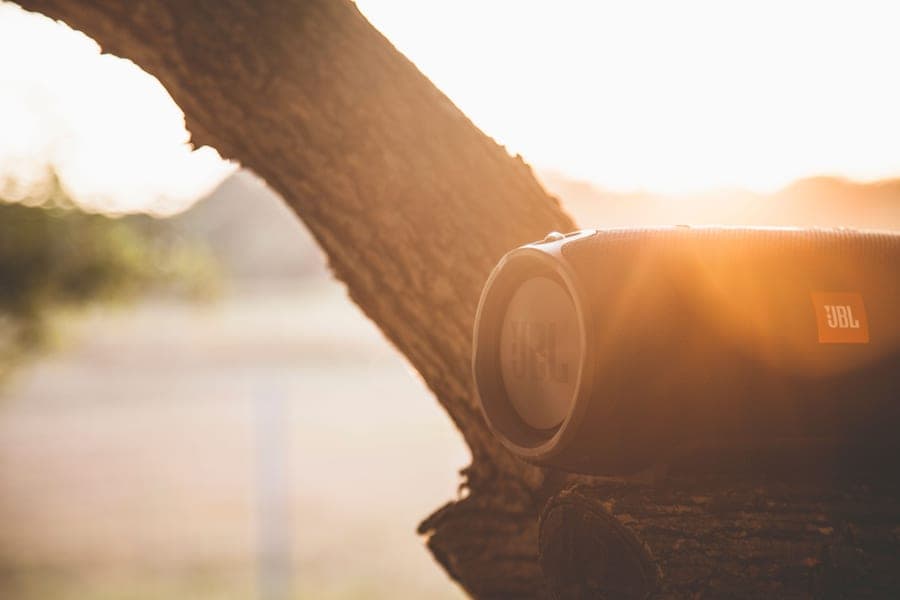
JBL Flip 7 review
The default answer in portable audio, and the one you should be able to argue yourself out of.
By Ryder M.Published
 Field-tested picks · 2026
How we are funded: Thump & Tote earns a commission when you buy through our Amazon links, at no extra cost to you. It never changes which speaker we put first — see how we pick and our affiliate disclosure.
The JBL Flip 7 is the best-built portable speaker in its size class: IP68 sealed, fourteen hours plus a boost mode, USB-C lossless input and Auracast linking that actually works. It is also the most expensive way to get those specifications, and it is mono where cheaper rivals manage stereo. Buy it if the speaker will be used hard.
Almost every speaker on this site is priced relative to a Flip. That makes this review less about whether the Flip 7 is good — it plainly is — and more about what the premium is actually purchasing, because that is the decision readers are trying to make.
What it does well
Tonal evenness across the volume range. Plenty of speakers sound good at moderate volume and fall apart near the top. The Flip 7 holds its balance as it gets louder, which is the audible signature of careful tuning and the clearest thing JBL's engineering budget buys. It does not have the tonal accuracy of the Bose SoundLink Flex, but it degrades far more gracefully.
The build. IP68 is the highest rating on this site — dust-tight and submersible beyond the IP67 baseline. Combined with a genuinely rugged shell, it means the speaker stops being something you look after. For a speaker that lives in a bag and goes to beaches, that is worth real money, and it is the single strongest argument for the price.
Auracast. JBL's linking runs on the Bluetooth LE Audio standard and works across the modern range without pairing rituals. If you might add a second speaker later, this is the one JBL advantage that gets more valuable with time rather than less — see how to pair two Bluetooth speakers.
Where it cuts corners
You pay a premium for a smaller cabinet. At similar money, the Soundcore Boom 2 offers a dedicated 50 W subwoofer and two tweeters. The Flip's bass comes from passive radiators in a hand-sized box, and outdoors it runs out earlier than a larger cabinet's would. That is physics rather than a JBL failing, but it is what the money is not buying.
It is mono. The Soundcore Motion 300 produces genuine stereo separation from a single chassis at a lower price, and at close listening range that is more audible than the Flip's tonal advantage. JBL's portable range has no answer to this.
It does not float. For a speaker with the best water rating here, that is a real omission if the intended use is a pool. An IP68 speaker at the bottom of the deep end is fully compliant and completely lost.
Specifications
| Specification | Figure |
|---|---|
| Battery | 14 hours, plus up to 2 more in Playtime Boost mode |
| Water and dust | IP68 — submersible to 1.5 m for 30 minutes, dustproof |
| Weight | 1.82 lb (about 560 g) |
| Bluetooth | 5.4 |
| Battery type | Li-ion polymer, 17.28 Wh |
| Charging time | About 2.5 hours |
| Extras | USB-C lossless audio input, clip-on loop, Auracast linking |
Alternatives at this price
 Illustrative
The value alternative
Soundcore Motion 300
Our default recommendation under $100 — stereo, slim, and honestly specified.
- What it does well
- Genuine stereo separation the Flip cannot offer, IPX7, thirteen hours, and a flat profile that packs better than a cylinder — at a lower price.
- Where it cuts corners
- IPX7 rather than IP68, no Auracast, and build quality that shows its age sooner under rough handling.
- Who it is for
- Indoor-led use where the durability premium is never called on.
- Battery: 13 hours
- Water rating: IPX7 — submersible to 1 m for 30 minutes
- Output: 30 W stereo (two 15 W full-range drivers)
#ad — we earn a commission on qualifying purchases. How this is funded
 Illustrative
The alternative if it goes near water
UE Wonderboom 4
The one to buy if the speaker is going anywhere near water.
- What it does well
- Floats face-up and is rated for five-foot drops onto concrete — the two things the Flip's IP68 rating does not cover. IP67 sealing and 360-degree output suit a pool deck.
- Where it cuts corners
- No aux, no stereo imaging, and it is priced close to the Flip. Fourteen hours is comparable rather than better.
- Who it is for
- Pools, beaches and boats.
- Battery: 14 hours
- Water rating: IP67 — submersible to 1 m for 30 minutes, dustproof, and it floats
- Weight: 14.81 oz (420 g)
#ad — we earn a commission on qualifying purchases. How this is funded
IllustrativeThe Flip itself, summarized
JBL Flip 7
The default mid-size pick, and the speaker every value brand is trying to undercut.
- What it does well
- The best build quality and the most even tuning in its size class, with Auracast linking and a lossless wired input that rivals do not offer.
- Where it cuts corners
- Mono, does not float, and the cabinet is smaller than similarly priced rivals. The premium buys durability rather than capability.
- Who it is for
- Anyone whose speaker will be carried, dropped and soaked regularly.
- Battery: 14 hours, plus up to 2 more in Playtime Boost mode
- Water rating: IP68 — submersible to 1.5 m for 30 minutes, dustproof
- Weight: 1.82 lb (about 560 g)
#ad — we earn a commission on qualifying purchases. How this is funded
Who should skip it
- Anyone whose speaker lives indoors. The IP68 rating and the rugged shell are insurance you will never claim on.
- Anyone who wants bass. A larger cheaper cabinet beats it outdoors, every time.
- Anyone buying for a pool. It does not float. That is decisive.
- Anyone on a strict budget. The under-$100 tier has genuinely good options and the Flip is not in it.
Where it appears on this site
The Flip 7 is our pick for best built on best under $150, toughest on beach speakers, and a recommended pair-up option on backyard party speakers. It is also the benchmark in is JBL worth it and the reference point throughout JBL alternatives.
If you are weighing it against its own family, Flip 7 vs Charge 6 is the size decision and Flip 7 vs Flip 6 is the generation one — the latter is where most of the money is saved.
Frequently asked questions
Is the JBL Flip 7 worth it?
How long does the JBL Flip 7 battery last?
Is the JBL Flip 7 waterproof?
Does the JBL Flip 7 have stereo sound?
Should I buy the Flip 7 or the Flip 6?
Sources
Every specification quoted above comes from the manufacturer or retailer listing below. We publish no measurements of our own — see how we pick.
Read next
Head-to-Head
JBL Flip 7 vs Charge 6: which one should you buy?
JBL's two most popular portables compared — and why the answer is about carrying, not sound.
Head-to-Head
JBL Flip 7 vs Flip 6: is the newer one worth it?
Generation against discount — what the Flip 7 actually added and whether it justifies the gap.
Brands & Alternatives
Is JBL worth it? A direct answer
The brand-premium question answered directly, with the one variable that decides it.
By Price
The best Bluetooth speakers under $150 in 2026
Where a bigger cabinet starts paying for itself. Four picks, and when to stay at $100 instead.
Brands & Alternatives
JBL alternatives: what you actually give up going cheaper
Each popular JBL mapped to its cheaper equivalent, with the real cost of each swap stated.
Reviews
Soundcore Motion 300 review
Our default recommendation — stereo, honest specs, and the compromises it makes to get there.