Guides
How to clean a Bluetooth speaker
A clogged grille costs you treble before it costs you volume. Most of the fix takes five minutes.
By Ryder M.Published
 Field-tested picks · 2026
How we are funded: Thump & Tote earns a commission when you buy through our Amazon links, at no extra cost to you. It never changes which speaker we put first — see how we pick and our affiliate disclosure.
Brush the grille dry first, then wipe it with a barely damp cloth, and leave liquid out of the charging port entirely. If the speaker is rated IP67 or IPX7 — which covers most of what we recommend — you can rinse the outside under a slow tap with every port closed, then dry it fully before charging. If it has no published IP rating, nothing wet should touch it at all, and a soft brush plus compressed air is the whole procedure.
Speakers get dirty in a way that actually changes how they sound, which is unusual for an electronic device. The grille sits directly in front of the drivers, so dust, sand, sunscreen and kitchen grease accumulate in the one place where they obstruct sound. The symptom is a gradual loss of treble and detail rather than volume — the speaker sounds dull and slightly muffled, and because it happens over months, people assume the speaker is wearing out.
Frequently it is not. A beach speaker with a year of sunscreen in the mesh can get a surprising amount of its clarity back from fifteen minutes of careful work, and the work costs nothing.
Before you start: find your IP rating
Everything below forks on one question — does the manufacturer publish an ingress rating for your speaker? An IP rating is a tested, standardized claim under IEC 60529, not a marketing word. "Water-resistant" with no number behind it is not a rating.
- IPX7 or IP67 — tested to survive submersion in one meter of fresh water for thirty minutes. You can rinse it.
- IP68 — tested deeper or longer, depending on the manufacturer's declared conditions. You can rinse it.
- IPX4 or IPX5 — splashes and jets only. Wipe it; do not rinse it.
- No published rating — treat it as an indoor device. Dry methods only, including every speaker here with an FM tuner and a microSD slot, because those openings are not sealed.
The full explanation of what each digit means, and why IPX7 and IP67 are not quite the same claim, is in IP ratings explained.
Cleaning the grille and mesh
- Brush it dry first, always. A soft toothbrush or a clean paintbrush, worked in one direction along the mesh rather than in circles. Dry debris lifts out; wet debris gets pushed in, which is why this step comes first.
- Hold the speaker face down while you brush, so gravity is on your side and the dust falls away from the driver rather than through the mesh.
- Use a vacuum, not compressed air, on a fabric grille. A crevice tool held just off the surface pulls debris out. Compressed air pushes it into the driver, and on a fabric grille it can also drive grit into the weave permanently.
- Then a barely damp cloth. Microfiber, wrung out until it is cool rather than wet, wiped across the mesh. Add a drop of dish soap for sunscreen or cooking grease; plain water does not touch either.
- Never use alcohol, solvents or abrasive pads. Isopropyl attacks the rubberized coatings and the adhesive holding fabric grilles to their frames, and it does so slowly enough that you will not connect cause and effect.
Rinsing a speaker that is rated for it
For an IP67 or IPX7 speaker that has been in salt water, sand or sunscreen, a rinse is the right tool and the manufacturers expect it. Do it properly:
- Close every port cover and flap, and check the charging port cover is actually seated rather than resting.
- Rinse under a slow, low-pressure tap of cool fresh water. Never a pressure washer, never a jet — IP67 is tested for still immersion, not for force.
- Work the grille gently with a soft brush while the water runs, if there is sand in it.
- Shake the water out, then stand the speaker on a towel with the ports facing down.
- Dry it completely before charging. Hours, not minutes. Charging a damp USB-C port is the single most common way a waterproof speaker dies, and it is a corrosion failure rather than a water-ingress one.
Ports, buttons and seals
- The charging port gets dry cleaning only. Lint compacts in the bottom of a USB-C port and prevents the cable seating, which presents as a speaker that "stopped charging". Pick it out with a wooden toothpick, with the speaker powered off. Never anything metal.
- Buttons that have gone stiff are usually salt or sugar in the surround, not a failed switch. A damp cotton bud around the edge of the button, then work it a few dozen times.
- Check the port flap seal. The rubber gasket on the flap is what the IP rating depends on. If it is split, dried out or carrying a trapped grain of sand, the rating is void until it is clean and intact.
- Fabric covers that have gone gray respond to a damp cloth and patience rather than to anything stronger. Resist the urge to soak them; the frame adhesive underneath is the casualty.
Speakers that make this easy
If you are reading this because cleaning your current speaker is a problem, the specification to buy next time is a real, published ingress rating with no unsealed openings. These three are the ones we would pick on that basis.
 Illustrative
Easiest to clean
UE Wonderboom 4
The one to buy if the speaker is going anywhere near water.
- What it does well
- IP67 with a fully sealed body and no microSD or aux openings, so a rinse under a tap is genuinely routine. It floats, so you can wash it in a sink without chasing it, and the fabric survives repeated damp cleaning better than most.
- Where it cuts corners
- No aux input at all, no useful speakerphone, and the 360-degree design gives no stereo imaging. Ultimate Ears charges close to JBL money for it.
- Who it is for
- Beach, pool and anyone whose speaker gets genuinely dirty rather than dusty.
- Battery: 14 hours
- Water rating: IP67 — submersible to 1 m for 30 minutes, dustproof, and it floats
- Weight: 14.81 oz (420 g)
#ad — we earn a commission on qualifying purchases. How this is funded
 Illustrative
Best sealed mid-size speaker
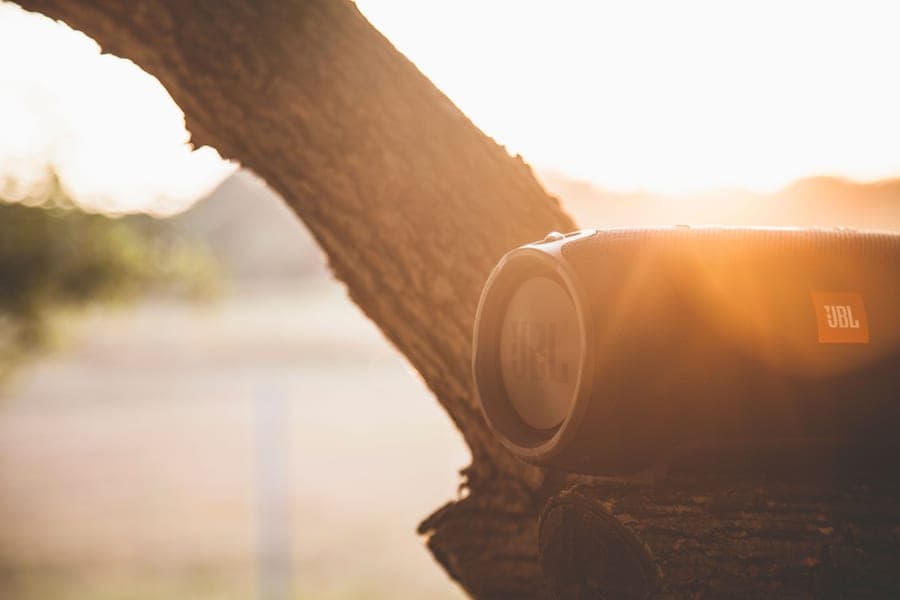
JBL Flip 7
The default mid-size pick, and the speaker every value brand is trying to undercut.
- What it does well
- IP68 is the highest rating anything here carries, the fabric grille is tightly woven enough to keep sand out of the drivers, and there is no unsealed card slot anywhere on the body. A rinse and a brush restores it completely.
- Where it cuts corners
- You pay the JBL premium in full, the fabric shows marks before it is actually dirty, and there is no aux input.
- Who it is for
- People who want one speaker that survives the beach and still sounds right in a kitchen.
- Battery: 14 hours, plus up to 2 more in Playtime Boost mode
- Water rating: IP68 — submersible to 1.5 m for 30 minutes, dustproof
- Weight: 1.82 lb (about 560 g)
#ad — we earn a commission on qualifying purchases. How this is funded
 Illustrative
Cheapest rinsable speaker
Soundcore Select 4 Go
The honest answer at the very bottom of the market.
- What it does well
- IP67 at the very bottom of the market, in a small sealed body with a strap — so the speaker that goes to the beach and the sandpit is also the cheap one you do not mind scrubbing. Twenty hours of battery means it is rarely plugged in, which keeps the port dry.
- Where it cuts corners
- Five watts is genuinely quiet and the bass is largely absent. The build is exactly as cheap as the price implies.
- Who it is for
- Sand, kids, tents and anywhere you would rather clean a speaker than protect one.
- Battery: 20 hours
- Water rating: IP67 — submersible to 1 m for 30 minutes, dustproof
- Output: 5 W
- Weight: 265 g
#ad — we earn a commission on qualifying purchases. How this is funded
If cleaning did not fix it
A speaker that still sounds wrong after a thorough clean has a different problem, and the symptom tells you which. Dull but even across the whole range usually means a source or codec issue. Distorted only at volume means the amplifier is running out of headroom. Rattling on bass notes means something is loose or a passive radiator is fouling. Each of those is diagnosed separately in why your speaker sounds muffled or distorted.
And if the speaker has had water in it beyond its rating — salt water especially — corrosion continues after it dries. Cleaning the outside will not reverse it. At that point the sensible question is whether the speaker owes you anything, which is really a question about how long these things last.
Frequently asked questions
How do you clean a Bluetooth speaker grille?
Can I wash a Bluetooth speaker under the tap?
How do I get sand out of a speaker mesh?
How do I clean a USB-C charging port on a speaker?
Does cleaning a speaker improve the sound?
Update log
- First publication. Procedure split by published ingress rating, because the right method for an IP67 speaker is dangerous for an unrated one. IP rating definitions taken from IEC 60529.
Sources
Every specification quoted above comes from the manufacturer or retailer listing below. We publish no measurements of our own — see how we pick.
Read next

Guides
What IPX7 and IP67 actually mean
Every IP rating decoded, and the single character that decides pool versus beach.
Guides
Why your Bluetooth speaker sounds muffled or distorted
Muffled, crackling, static or skipping — how to tell which fault you have, and what fixes each.
Waterproof
The best Bluetooth speakers for the beach in 2026
Dust-sealed picks for sand and salt — and the one digit in the rating that decides this category.
Waterproof
The best Bluetooth speakers for the pool in 2026
Speakers that float as well as survive — plus why an IPX7 rating on its own is not enough here.
Guides
How long do Bluetooth speakers last?
Product lifespan separated from battery runtime — what fails, when, and how to delay it.
Waterproof
The best Bluetooth speakers for the shower in 2026
Cheap works here — what a bathroom actually demands, and the mounting problem nobody solves.