Guides
What size Bluetooth speaker do I need?
Cabinet volume is the specification nobody prints and the only one that reliably predicts loudness.
By Ryder M.Published
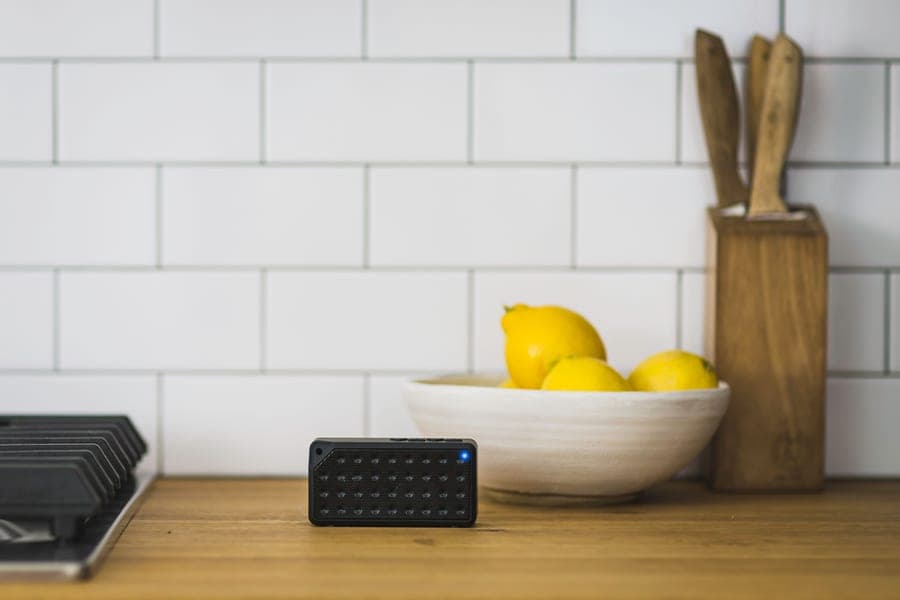 Field-tested picks · 2026
How we are funded: Thump & Tote earns a commission when you buy through our Amazon links, at no extra cost to you. It never changes which speaker we put first — see how we pick and our affiliate disclosure.
Quick picks
Ranked for value first. Tap any row to jump to the full write-up.
| # | Product | Best for | Price |
|---|---|---|---|
| 1 | 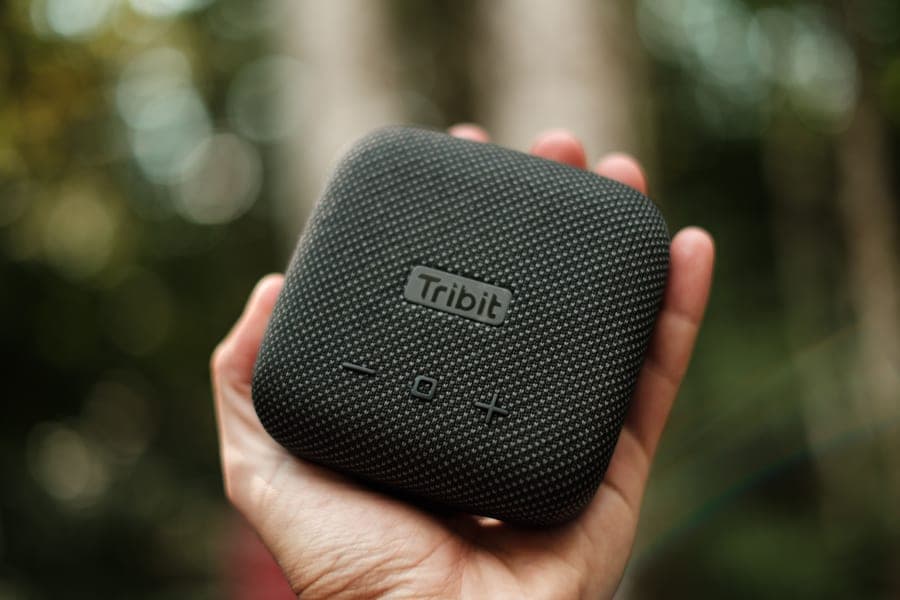 Illustrative IllustrativeSoundcore Select 4 GoOne or two people, one small room. | Pocket size | Check price on Amazon |
| 2 | Illustrative Soundcore Motion 300A kitchen, a desk or a patio for four. | Mid size | Check price on Amazon |
| 3 |  Illustrative IllustrativeSoundcore Boom 2A backyard, with bass that survives open air. | Party size | Check price on Amazon |
| 4 | Illustrative Tribit StormBox BlastAn open space and a crowd, for a day and a half. | Largest worth carrying | Check price on Amazon |
#ad — buy links go to Amazon and we earn a commission on qualifying purchases. Prices change constantly, so the live listing is always the price of record. Full disclosure.
Size the speaker to the largest space you will realistically use it in, not the average one. For one or two people in a small room, a pocket speaker of around 5 W is enough. A kitchen, a desk or a patio for four wants a mid-size cabinet of roughly 20 to 30 W. An open backyard with a crowd needs a party-size speaker with a dedicated bass driver. Outdoors you need roughly four times the output for the same perceived loudness, which is why the step from indoors to outdoors is the only one that really changes the answer.
The reason this question is hard to answer from a product page is that the number which predicts loudness is not printed anywhere. It is the internal volume of the cabinet. Wattage is quoted peak rather than continuous, sometimes per driver rather than per system, so a 30 W speaker and an 80 W speaker can be the same loudness. Frequency response is quoted without the tolerance figure that would make it meaningful. Cabinet volume is honest and nobody lists it.
What you can do is use physical size as a proxy, because it is a good one. A bigger box moves more air, and moving air is what low frequencies are. No amount of processing changes that — a small speaker claiming deep bass is boosting a narrow band and running out of excursion, which is the subject of why cheap speakers sound cheap.
The size-to-use-case table
| Size class | Roughly | Serves | Typical output |
|---|---|---|---|
| Fits a jacket pocket, under 400 g | 1-2 people, bathroom, tent, desk | About 5 W | |
| Compact | Fits one hand, 300-600 g | 2-4 people, kitchen, hotel room | 10-20 W |
| Mid | Two hands, 500 g-1 kg | 4-6 people, patio, home gym | 20-35 W |
| Party | Carry strap or handle, 2-4 kg | A backyard, a tailgate, a pool | 60 W and up |
| Largest portable | Telescoping handle, 4 kg+ | An open space with a crowd | 100 W and up |
Two warnings about reading that table. First, it describes the space, not the volume setting — a speaker running at its limit sounds bad long before it sounds loud, so size up rather than planning to run a small speaker hard. Second, the step from Mid to Party is the expensive one in both money and bulk, and it is only worth taking if you genuinely use open outdoor space. Most people who buy a party speaker for one barbecue a year should have bought a mid-size speaker.
Why indoors and outdoors are different questions
Indoors, sound reflects off walls, floors and ceilings and arrives at your ears several times over. That reinforcement is free loudness, and it is why a small speaker on a kitchen counter sounds surprisingly big. Step into a garden and all of it disappears. Low frequencies suffer worst, because they need the most energy to produce in the first place, so an outdoor speaker can sound thin and shouty at the same time.
The rough figure we use across the site is that each doubling of perceived loudness takes about four times the acoustic output. That is why outdoor buying is really cabinet-size buying, and why the honest advice for a garden is to skip two size classes rather than one. The full argument, including what the watt figures on the box do and do not tell you, is in watts and loudness.
What to look for inside each class
- A real driver arrangement rather than a wattage claim. A dedicated bass driver plus tweeters beats one full-range driver with a big number attached.
- Passive radiators. A small cabinet with a passive radiator genuinely extends its low end — this is the honest version of small-speaker bass.
- Stereo from one chassis, if the speaker will be close to you. Two drivers with real separation is audible at a desk and inaudible across a garden.
- An IP rating, in every class. Sealing costs nothing in loudness and decides where the speaker can go. IPX7 and IP67 explained covers the difference.
- A way to carry it. Above the Mid class, a strap or handle is the difference between a speaker that goes outside and one that does not.
A pick in each size class
IllustrativePocket size
Soundcore Select 4 Go
The honest answer at the very bottom of the market.
- What it does well
- IP67 and 20 hours at 265 g and 121 x 83 x 48.5 mm, with an integrated strap. For one or two people in a bathroom, a tent or at a desk, this is all the speaker the space can use.
- Where it cuts corners
- Five watts is genuinely quiet and bass is largely absent. Take it outdoors with any wind and it is inaudible.
- Who it is for
- Small rooms, travel and gifts where the budget is the binding constraint.
- Battery: 20 hours
- Water rating: IP67 — submersible to 1 m for 30 minutes, dustproof
- Output: 5 W
- Weight: 265 g
#ad — we earn a commission on qualifying purchases. How this is funded
IllustrativeMid size — the one most people should buy
Soundcore Motion 300
Our default recommendation under $100 — stereo, slim, and honestly specified.
- What it does well
- Thirty watts of genuine stereo from two 15 W drivers, IPX7, 13 hours, and SmartTune, which re-equalizes when you stand it on end. Covers a desk, a kitchen and a patio for four without being the wrong size for any of them.
- Where it cuts corners
- The slim cabinet caps how deep the bass goes, it does not float, and in an open yard with a crowd it runs out of headroom.
- Who it is for
- The single-speaker household. This is our default recommendation under $100.
- Battery: 13 hours
- Water rating: IPX7 — submersible to 1 m for 30 minutes
- Output: 30 W stereo (two 15 W full-range drivers)
#ad — we earn a commission on qualifying purchases. How this is funded
IllustrativeParty size
Soundcore Boom 2
The value answer to a party speaker: it floats, it is loud, and it lasts a day.
- What it does well
- A 50 W subwoofer and two 15 W tweeters — real hardware rather than an EQ curve — so the low end survives being outdoors. It floats, and the carry strap makes the bulk manageable.
- Where it cuts corners
- The quoted 24 hours assumes BassUp and the lights are off, there is no aux input, and indoors it is simply more speaker than a room can use.
- Who it is for
- Backyards, pools and tailgates where output matters more than portability.
- Battery: Up to 24 hours at 50% volume with BassUp and lights off
- Water rating: IPX7 — submersible to 1 m for 30 minutes, and it floats
- Output: Up to 80 W peak output (a 50 W subwoofer plus two 15 W tweeters)
#ad — we earn a commission on qualifying purchases. How this is funded
IllustrativeThe largest size worth carrying
Tribit StormBox Blast
The loudest thing we are willing to call good value.
- What it does well
- Gets genuinely loud in open air without the bass collapsing, runs over 32 hours in independent testing, and has a telescoping handle plus a 3.5 mm aux input. The practical ceiling for a speaker you still carry by hand.
- Where it cuts corners
- Big and heavy enough that you plan around it, fit and finish trails the mainstream brands, and the LED bar is the fastest route to a flat battery.
- Who it is for
- Open spaces, crowds and events where mains power is not available.
- Battery: Over 32 hours in independent testing
- Water rating: IPX7 — submersible to 1 m for 30 minutes
#ad — we earn a commission on qualifying purchases. How this is funded
If you want the rest of the buying framework rather than just the sizing, how to choose a Bluetooth speaker covers the four specifications that predict satisfaction and the three that exist to impress you. If the budget is the binding constraint rather than the space, what each price tier buys is the better starting point — and for a trip, where small is genuinely better, see best for travel.
Frequently asked questions
What size Bluetooth speaker do I need?
Is a bigger Bluetooth speaker always louder?
How many watts do I need for outdoors?
Is a small speaker enough for a hotel room?
Should I buy two small speakers or one big one?
Update log
- First publication. Built around cabinet volume as the honest proxy for loudness, with a size-to-use-case table rather than a wattage chart. One pick per size class, all currently-sold models.
Sources
Every specification quoted above comes from the manufacturer or retailer listing below. We publish no measurements of our own — see how we pick.
- Soundcore — Motion 300 product page (manufacturer specifications)
- RTINGS — Soundcore Motion 300 measurements (independent test lab)
- Soundcore — Boom 2 product page (manufacturer specifications)
- Tribit — StormBox Blast product page (manufacturer specifications)
- RTINGS — Tribit StormBox Blast measurements (independent test lab)
- IEC 60529 — the international standard behind IP ratings
Read next
Guides
How to choose a Bluetooth speaker
The complete buying framework — the four specs that matter and the three that do not.
Guides
How many watts is loud for a speaker?
Why wattage figures cannot be compared across brands, and what genuinely predicts loudness.
Guides
Why cheap Bluetooth speakers sound cheap
The editorial spine of this site: what a small cabinet physically cannot do, and what it can.
By Price
The best Bluetooth speaker for travel
Four small speakers worth the bag space, and why a hotel room needs less speaker than you think.
Outdoor & Party
The loudest Bluetooth speakers for the money in 2026
Genuinely loud speakers ranked on output per dollar — and why wattage figures cannot be compared.
By Price
The best Bluetooth speakers under $100 in 2026
The tier most people should buy in — six picks, ranked for value, with the compromises named.