Outdoor & Party
The best Bluetooth speaker for a car
A car is a small, hard, noisy room. That combination rewards a different speaker than a backyard does.
By Ryder M.Published
 Field-tested picks · 2026
How we are funded: Thump & Tote earns a commission when you buy through our Amazon links, at no extra cost to you. It never changes which speaker we put first — see how we pick and our affiliate disclosure.
Quick picks
Ranked for value first. Tap any row to jump to the full write-up.
| # | Product | Best for | Price |
|---|---|---|---|
| 1 | 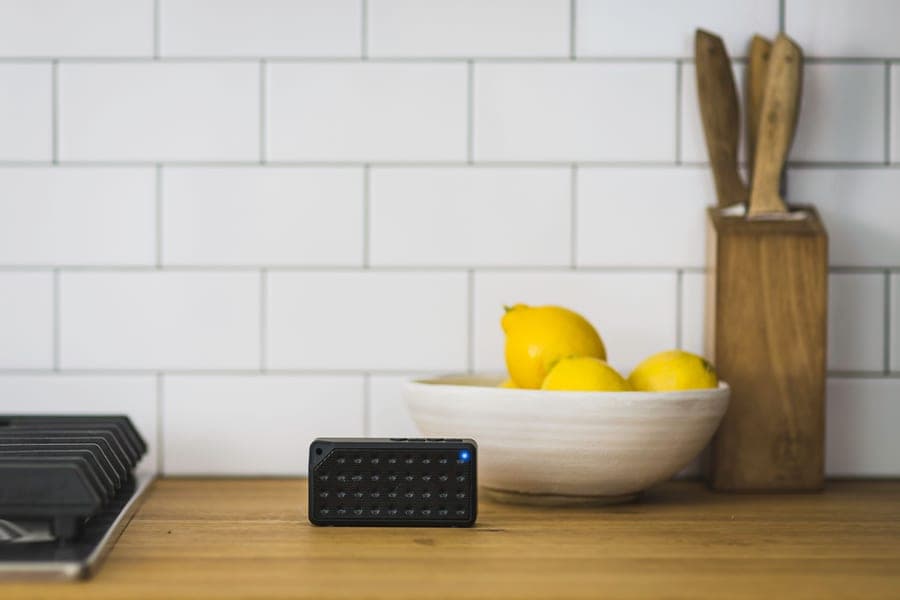 Illustrative IllustrativeSoundcore Motion 300Stereo from one slim box, and it sits flat without sliding. | Best for a car overall | Check price on Amazon |
| 2 |  Illustrative IllustrativeTribit XSound GoSixteen watts and a day of battery for daily commuting money. | Best for a car with no radio | Check price on Amazon |
| 3 |  Illustrative IllustrativeTribit StormBox Micro 2Small enough to drop in, with a strap for everything else. | Best for a cup holder | Check price on Amazon |
| 4 |  Illustrative IllustrativeJBL Clip 5The carabiner turns a grab handle into a speaker mount. | Best to clip in place | Check price on Amazon |
#ad — buy links go to Amazon and we earn a commission on qualifying purchases. Prices change constantly, so the live listing is always the price of record. Full disclosure.
The Soundcore Motion 300 is the best Bluetooth speaker for a car, because a car cabin is small and hard-surfaced, which is the one environment where its genuine stereo separation does real work — and its slim, flat body sits on a seat or a dash shelf without rolling. If the car has no working radio at all and the speaker is doing the whole job, buy the Tribit XSound Go instead: more output and far more battery per dollar, which is what matters when nothing else in the car makes sound.
Almost everything written about speakers assumes an open space. A car is the opposite: a sealed box of glass, plastic and upholstery, a few feet across, with a constant floor of road and wind noise. Two things follow from that, and they point in opposite directions from the usual advice.
First, you need far less output than you think. The hard surfaces reflect almost everything back at you, so a modest speaker that would vanish in a yard is comfortably loud in a cabin. Second, you need more midrange clarity than you think, because the noise you are competing with sits low and broad — tire roar, wind, engine — and a speaker that answers it with more bass just muddies the only frequencies that were still getting through.
Who this page is actually for
There are three distinct people searching this, and only two of them should buy a portable speaker.
- The car has no head unit, or a dead one. An older vehicle, a project car, a work truck with a stolen stereo. A portable speaker is a genuinely good answer here, and it is the cheapest one by a wide margin.
- The car has a radio but no Bluetooth. A portable speaker works, but so does a cheap FM transmitter or an aux cable, and either of those uses the car's own speakers — which are better placed than anything you can set on a seat. Consider those first.
- The car has Bluetooth already and you want more bass. Do not buy a portable speaker for this. A single small box on a seat cannot beat four door speakers, and you will be disappointed. Why cheap speakers sound cheap explains the physics that makes this a losing trade.
Where a speaker can safely live in a car
This is the part the roundups skip, and it is the part that decides whether you keep using the speaker. Anything loose in a cabin becomes a projectile under braking, and a sun-baked dashboard is one of the most hostile places a lithium battery can sit.
- A cup holder is the best spot in most cars: it restrains the speaker, it is within reach, and it aims the driver upward rather than into a footwell. It also limits you to a speaker of roughly soda-can proportions.
- Strapped or clipped to a grab handle or headrest post puts the speaker at ear height, which is worth more than any specification on this page.
- Flat on the passenger seat works and costs nothing, but upholstery absorbs sound and the speaker slides. Better than the floor, worse than either option above.
- Never left on the dash in summer. Heat is the fastest way to kill a lithium cell permanently — the same mechanism covered in how long Bluetooth speakers last.
The picks
IllustrativeBest Bluetooth speaker for a car
Soundcore Motion 300
Our default recommendation under $100 — stereo, slim, and honestly specified.
- What it does well
- Real stereo separation from one chassis, which is wasted in a garden and genuinely useful in a cabin where you sit a couple of feet from the speaker. The flat, slim body sits on a seat or a shelf without rolling, and IPX7 means a spilled drink is not the end of it.
- Where it cuts corners
- Thirty watts is more than enough in a car and not enough anywhere else, so it is a poor dual-purpose buy. It does not float, it has no aux input, and the slim cabinet caps how low the bass goes.
- Who it is for
- Anyone who wants the best sound inside a car and does not need the same speaker to carry a party outdoors.
- Battery: 13 hours
- Water rating: IPX7 — submersible to 1 m for 30 minutes
- Output: 30 W stereo (two 15 W full-range drivers)
#ad — we earn a commission on qualifying purchases. How this is funded
IllustrativeBest for a car with no radio
Tribit XSound Go
The long-running budget workhorse: 16 W and a full day of battery.
- What it does well
- Sixteen watts and a quoted 24 hours at half volume means it covers a working week of commuting between charges, which is the single most important thing when the speaker is the car's only audio. The app EQ lets you pull back the factory bass lift, and pulling it back is exactly what a car cabin wants.
- Where it cuts corners
- No dust rating, a plasticky shell that looks every bit as cheap as it is, and the XBass mode compresses audibly when you lean on it. Street pricing swings enough that it is not always the cheap option it looks like.
- Who it is for
- Older cars, project cars and work vehicles where the head unit is dead and the speaker is doing the entire job.
- Battery: 24 hours quoted at 50% volume
- Water rating: IPX7 — submersible to 1 m for 30 minutes
- Output: 16 W
#ad — we earn a commission on qualifying purchases. How this is funded
IllustrativeBest for a cup holder
Tribit StormBox Micro 2
The best-argued cheap speaker on the market, and now a last-generation bargain.
- What it does well
- Small and square enough to sit in a cup holder without wedging, and the molded rubber strap loops over a grab handle or a headrest post when it is not. A passive radiator gets more low end out of the size than anything else this small, and IP67 handles the dust and grit a car collects.
- Where it cuts corners
- Ten watts runs short of headroom on a highway with the windows down, and the Micro 3 that replaced it means color choices are thinning. The strap is better on a handlebar than in a car.
- Who it is for
- Drivers who want the speaker restrained and within reach rather than sliding around the cabin.
- Battery: Up to 12 hours
- Water rating: IP67 — submersible to 1 m for 30 minutes, dustproof
- Output: 10 W
- Weight: 315 g
#ad — we earn a commission on qualifying purchases. How this is funded
IllustrativeBest to clip in place
JBL Clip 5
The carabiner is the whole product, and it is a genuinely good one.
- What it does well
- The integrated metal carabiner clips to a grab handle, a headrest post or a seat-back pocket and stays there, which puts the speaker at ear height instead of at knee height. For its size the midrange is unusually clean, and midrange clarity is what a noisy cabin eats first.
- Where it cuts corners
- There is effectively no bass, because there is effectively no cabinet, and JBL charges well above rivals that sound similar purely for the clip. Twelve hours is short next to the cheaper picks here.
- Who it is for
- People who want the speaker mounted rather than placed, and who care more about hearing voices and lyrics than feeling a kick drum.
- Battery: 12 hours, plus up to 3 more in Playtime Boost mode
- Water rating: IP67 — submersible to 1 m for 30 minutes, dustproof
#ad — we earn a commission on qualifying purchases. How this is funded
Side by side
| Battery | Output | Water rating | Fits a cup holder | |
|---|---|---|---|---|
| Soundcore Motion 300 | 13 hours | 30 W stereo | IPX7 | No — it is flat and wide |
| Tribit XSound Go | 24 hours at 50% | 16 W | IPX7 | No — too long |
| Tribit StormBox Micro 2 | Up to 12 hours | 10 W | IP67 | Yes |
| JBL Clip 5 | 12 hours (+3 boost) | Not published | IP67 | Yes, or clip it |
What to skip
Skip anything sold specifically as a car speaker with a suction mount. The mounts fail in heat, the speakers inside them are usually the cheapest available drivers, and a general-purpose portable does the job better while still being useful at a campsite. The same reasoning applies to golf cart speakers and handlebar speakers: the mount is the only thing that is car-specific, and a strap solves it.
Skip the big party speakers too. A StormBox Blast or a Boom 2 in a cabin is not better, it is just unusable at any volume you would actually choose, and it takes up a seat. Cabin acoustics mean the useful range for in-car listening tops out far lower than people expect — the full argument is in watts and loudness.
And if the budget is tight, remember a portable speaker is competing against a cheap Bluetooth-to-FM transmitter that uses the car's own door speakers. That is a worse-sounding link but a better-placed set of drivers, and for a car that still has a working radio it is frequently the smarter buy. Spend the difference on something that is useful outside the car.
Frequently asked questions
What is the best Bluetooth speaker for a car?
What is the best Bluetooth speaker for a car with no radio?
Where should I put a Bluetooth speaker in a car?
Will a Bluetooth speaker sound better than my car stereo?
Which Bluetooth speaker fits in a cup holder?
Update log
- First publication. Picks ranked on cabin acoustics and placement rather than raw output, because a car is a small hard-surfaced space with a constant low-frequency noise floor. Every specification checked against the manufacturer listing.
Sources
Every specification quoted above comes from the manufacturer or retailer listing below. We publish no measurements of our own — see how we pick.
- Soundcore — Motion 300 product page (manufacturer specifications)
- RTINGS — Soundcore Motion 300 measurements (independent test lab)
- Tribit — XSound Go product page (manufacturer specifications)
- Tom's Guide — Tribit StormBox Micro 2 review
- TechRadar — Tribit StormBox Micro 3 review (confirms Micro 2 is superseded)
- JBL — Clip 5 specification sheet (PDF)
- Bluetooth SIG — Bluetooth technology overview (profiles, codecs, LE Audio)
Read next

Outdoor & Party
The best Bluetooth speakers for a golf cart in 2026
Cart-friendly picks ranked on how they attach — plus honest advice on magnetic mounts.

Outdoor & Party
The best Bluetooth speakers for a motorcycle in 2026
Handlebar-mountable picks for low-speed riding, and a straight answer about highway use.
By Price
The best Bluetooth speakers with an aux input in 2026
Speakers that kept the 3.5 mm jack, and the three jobs it does that Bluetooth cannot.
Outdoor & Party
The best Bluetooth speakers with FM radio in 2026
The few speakers that still include a real FM tuner, and an honest look at the alternative.

By Price
The best small Bluetooth speakers
Pocket and desk-sized picks, ranked on how much they get out of a cabinet that cannot be big.
Guides
How many watts is loud for a speaker?
Why wattage figures cannot be compared across brands, and what genuinely predicts loudness.