Outdoor & Party
The best Bluetooth speaker for a garage
Bare concrete and a metal door make everything echo. The speaker that wins here is the one that stays clean and keeps voices intelligible.
By Ryder M.Published
 Field-tested picks · 2026
How we are funded: Thump & Tote earns a commission when you buy through our Amazon links, at no extra cost to you. It never changes which speaker we put first — see how we pick and our affiliate disclosure.
Quick picks
Ranked for value first. Tap any row to jump to the full write-up.
| # | Product | Best for | Price |
|---|---|---|---|
| 1 | 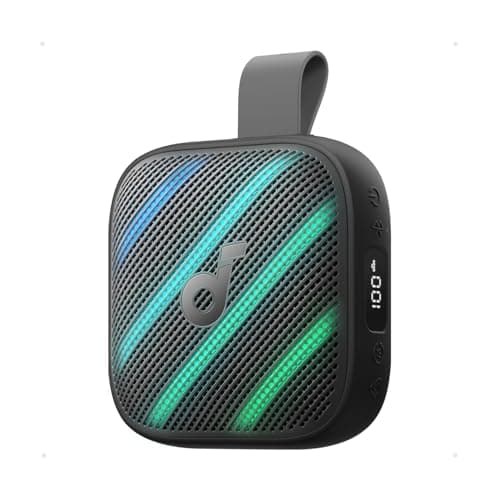 Soundcore Boom Go 3iIP68 dust-tight, drop-rated from 1 m, and 24 hours. | Best overall | $59.99$79.9925% offView on Amazon |
| 2 | 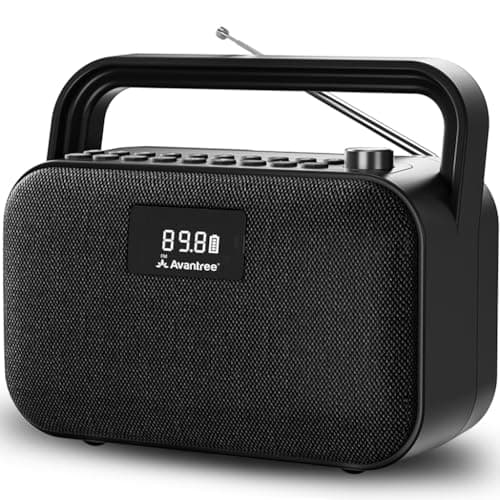 Avantree PowerByteA real FM tuner and 30 W of stereo, for a workbench. | Best if you want radio | $99.99$105.996% offView on Amazon |
| 3 | 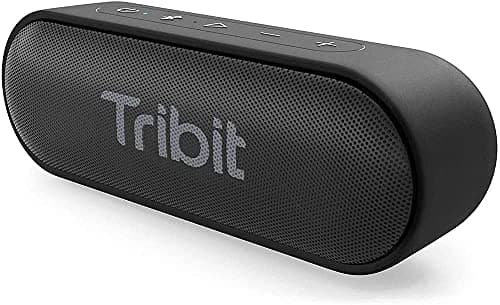 Tribit XSound Go16 W and a day of battery for very little money. | Best budget pick | $34.99$39.9913% offView on Amazon |
| 4 | 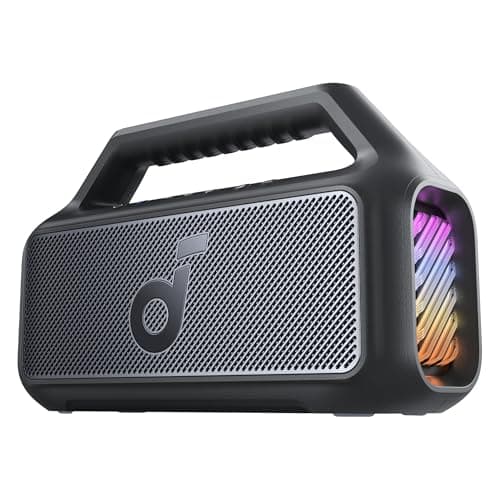 Soundcore Boom 280 W peak fills a double bay without being pushed. | Best for a big garage | $99.99$129.9923% offView on Amazon |
#ad — buy links go to Amazon and we earn a commission on qualifying purchases. Prices change constantly, so the live listing is always the price of record. Full disclosure.
The Soundcore Boom Go 3i is the best Bluetooth speaker for a garage, because a garage is a dust problem before it is a sound problem and this is the only speaker we recommend that is IP68 dust-tight *and* drop-tested from 1 m *and* runs 24 hours with a battery percentage on the display. Sawdust, brake dust and grinding swarf kill speakers through the driver grille long before anything else does, and a dust rating is the single spec that addresses it. If you want a radio on the bench as well as a speaker, the Avantree PowerByte has a genuine FM tuner and 30 W of stereo instead.
A garage is an acoustically hostile room, and it is hostile in a specific way. Bare concrete, a metal door, drywall and hard shelving mean almost nothing absorbs sound. Everything reflects, arrives late, and smears together — which is why a speaker that sounds rich in a living room sounds boomy and indistinct in a garage, and why a podcast in there can be genuinely hard to follow.
The counterintuitive consequence is that the bass-forward tuning most portable speakers ship with actively hurts you here. The room is already adding low-frequency energy by reflecting it back at you; adding more turns a voice into a rumble. The right speaker for a garage is one with honest mids and a dust rating, not the one with the biggest BassUp button.
What actually matters in a garage
- A dust rating, before anything else. The second digit of an IP rating is the dust one, and it is the digit that matters in a workshop. IP6X means dust-tight. An IPX7 speaker is rated against water and *untested* against dust — a distinction that matters enormously here and almost nowhere else. What IP ratings actually mean breaks down the digits.
- Midrange clarity over bass. The room supplies the boom for free. A speaker with a usable EQ you can pull the bass out of is worth more than one with more of it. Turn off BassUp, XBass and Extra Bass on day one.
- Drop survival. Garages are the room where things get knocked off benches by an elbow, a hose or a car door. A published drop rating is rarer than a water rating and more useful here.
- Battery, or a socket. Both work in a garage — unlike most places on this site, mains power is usually right there. A long battery means the speaker also travels to the driveway; a mains speaker means you never think about it. Decide which you want before you shop.
- Enough output for the volume of the space. A single bay is a small room. A double bay with the door open is effectively outdoors on one side. How many watts is loud is the sizing guide.
| Speaker | Dust rating | Output | Battery | Extras |
|---|---|---|---|---|
| Soundcore Boom Go 3i | IP68 — dust-tight | 15 W with BassUp 2.0 | 24 hours, with a battery display | Drop-tested from 1 m, strap, app EQ |
| Avantree PowerByte | No IP rating published | 30 W stereo with bass radiators | 20 hours | FM radio, microSD, USB, wired input |
| Tribit XSound Go | No dust rating (IPX7 water only) | 16 W | 24 hours quoted at 50% volume | Custom EQ, XBass, TWS pairing |
| Soundcore Boom 2 | No dust rating (IPX7 water only) | Up to 80 W peak | Up to 24 hours | Carry strap, light ring, floats |
The picks
Best speaker for a garage overall
Soundcore Boom Go 3i
Our default recommendation under $100 — tough, long-running and honestly specified.
- What it does well
- IP68 means dust-tight as well as submersible, which is the rating that matters in a room full of sawdust and brake dust, and the 1 m drop test covers the other way garage speakers die. Twenty-four hours out of something palm-sized means it goes out to the driveway with the car, and the battery-percentage display is worth more than it sounds — you find out it is low before it cuts out mid-job. The app EQ is what lets you pull the bass back out of a concrete room.
- Where it cuts corners
- Fifteen watts is the trade. This covers a single bay comfortably and will not fill a double garage with the door up. It is mono, it does not float despite the rating, and the light modes are the fastest way to spend the battery it is otherwise very good at keeping.
- Who it is for
- A one- or two-car garage where the speaker shares a bench with power tools and occasionally gets knocked off it.
- Battery: 24 hours, with a battery-level display on the speaker
- Water rating: IP68 — submersible and dust-tight, and drop-tested from 3.28 ft (1 m)
- Output: 15 W with BassUp 2.0, quoted at 92 dB peak
- Weight: 0.84 lb
#ad — we earn a commission on qualifying purchases. How this is funded · Price as of October 17, 2026
Best if you want a radio on the bench
Avantree PowerByte
A real radio first and a Bluetooth speaker second — which is the right way round here.
- What it does well
- A real FM tuner, which matters more in a garage than almost anywhere else — a ball game or a talk station with no phone involved, no pairing and no battery on your phone being eaten. Thirty watts of stereo with bass radiators makes it the only FM speaker we recommend that sounds like a speaker rather than a novelty, and it plays from microSD, USB and a wired input too.
- Where it cuts corners
- No published IP rating at all, which on this page is the serious caveat: keep it on a shelf away from the grinder and wipe it down. Twenty hours of battery is fine but this is really a plug-it-in-and-leave-it speaker. It is a considerably less refined listen than the mainstream portables here.
- Who it is for
- Workshops and garages where the radio is on all day and the speaker never leaves the bench.
- Battery: 20 hours
- Water rating: No IP rating published — treat it as an indoor speaker
- Output: 30 W stereo with bass radiators
#ad — we earn a commission on qualifying purchases. How this is funded · Price as of October 17, 2026
Best budget pick
Tribit XSound Go
The long-running budget workhorse: 16 W and a full day of battery.
- What it does well
- Sixteen watts and a quoted full day of battery for very little money, which is the right shape of compromise for a room where the speaker might get dropped in a pot of something. The custom EQ in the app is the important feature here — it lets you undo the factory bass lift, which is exactly the fix a concrete room needs.
- Where it cuts corners
- No dust rating. IPX7 covers water and says nothing about the particulate that will actually kill it, so it wants a shelf rather than a bench. The shell is plasticky and XBass audibly compresses at high volume. Street pricing on this model swings wildly, so check before assuming it is the cheap option.
- Who it is for
- A garage where the speaker is a convenience rather than an investment, and a replacement is no great loss.
- Battery: 24 hours quoted at 50% volume
- Water rating: IPX7 — submersible to 1 m for 30 minutes
- Output: 16 W
#ad — we earn a commission on qualifying purchases. How this is funded · Price as of October 17, 2026
Best for a double garage with the door open
Soundcore Boom 2
The value answer to a party speaker: it floats, it is loud, and it lasts a day.
- What it does well
- Eighty watts peak from a 50 W subwoofer and two tweeters means it fills a two-bay garage without being pushed into distortion, which is the real reason to step up in size — a big speaker at half volume sounds better than a small one at full. The carry strap means it goes out to the driveway, and IPX7 plus a floating body makes it the pick if the garage work involves a hose.
- Where it cuts corners
- No dust rating, which on this page is a genuine mark against it — keep it off the bench. The 24-hour figure assumes 50% volume with BassUp and the lights off. It is bulky, and there is no aux input, so a wired source is out.
- Who it is for
- Double garages, open doors, and anyone whose garage doubles as the party overflow.
- Battery: Up to 24 hours at 50% volume with BassUp and lights off
- Water rating: IPX7 — submersible to 1 m for 30 minutes, and it floats
- Output: Up to 80 W peak output (a 50 W subwoofer plus two 15 W tweeters)
#ad — we earn a commission on qualifying purchases. How this is funded · Price as of October 17, 2026
Garage gym, workshop or car bay?
The three uses pull in different directions, and it is worth knowing which one you are. A garage gym wants output and a beat that survives being twenty feet away mid-set, so the Boom 2 is the natural pick — and the best Bluetooth speaker for a gym covers the acoustics of a hard box in more depth. A woodworking or metalworking shop wants the dust rating above everything, which is the Boom Go 3i. A car bay with the radio on all day wants the PowerByte.
If the garage is genuinely a jobsite — contractors' tools, daily grit, things falling on things — the best Bluetooth speaker for a jobsite is the harder-wearing version of this page, written around survival rather than sound.
Mains power or battery?
A garage is one of the few places on this site where a socket is usually within reach, which opens up an option most of our pages cannot use: leave it plugged in. A permanently powered speaker never needs thinking about and never dies in the middle of something. The catch is that leaving a lithium battery at 100% and warm shortens its life — so if the speaker lives on a charger, unplug it now and then. How long Bluetooth speakers last covers why.
The argument for battery is that a garage speaker rarely stays in the garage. It goes to the driveway when you wash the car, to the yard when you mow, and into the trunk for a trip. If that is your pattern, buy the battery life and accept the lower wattage — all four picks here run twenty hours or more on paper, which is unusual for a page where mains power is on the table.
Frequently asked questions
What is the best Bluetooth speaker for a garage?
Why do speakers sound bad in a garage?
Does a garage speaker need to be waterproof?
How many watts do I need for a garage speaker?
Can I leave a Bluetooth speaker in an unheated garage?
Update log
- First publication. Written around dust sealing and room acoustics, which is what separates a garage from every other indoor space on this site.
Sources
Every specification quoted above comes from the manufacturer or retailer listing below. We publish no measurements of our own — see how we pick.
- Soundcore — Boom Go 3i product page (manufacturer specifications)
- Avantree — PowerByte FM radio Bluetooth speaker (manufacturer specifications)
- Tribit — XSound Go product page (manufacturer specifications)
- Soundcore — Boom 2 product page (manufacturer specifications)
- IEC 60529 — the international standard behind IP ratings
- Battery University — how lithium-ion batteries age (BU-808)
Read next
Outdoor & Party
The best Bluetooth speaker for a jobsite
The dust digit is the whole specification, and the four speakers that actually have it.
Outdoor & Party
The best Bluetooth speaker for a gym
Why a garage gym punishes cheap treble, and the four speakers that hold up in one.
Outdoor & Party
The best Bluetooth speakers with FM radio in 2026
The few speakers that still include a real FM tuner, and an honest look at the alternative.
Guides
What IPX7 and IP67 actually mean
Every IP rating decoded, and the single character that decides pool versus beach.
Guides
How many watts is loud for a speaker?
Why wattage figures cannot be compared across brands, and what genuinely predicts loudness.
Guides
How long do Bluetooth speakers last?
Product lifespan separated from battery runtime — what fails, when, and how to delay it.