Brands & Alternatives
Bose SoundLink alternatives
What you are really buying from Bose is tonal balance and voice clarity. Here is who else sells that, and what it costs you to save the money.
By Ryder M.Published
 Field-tested picks · 2026
How we are funded: Thump & Tote earns a commission when you buy through our Amazon links, at no extra cost to you. It never changes which speaker we put first — see how we pick and our affiliate disclosure.
Quick picks
Ranked for value first. Tap any row to jump to the full write-up.
| # | Product | Best for | Price |
|---|---|---|---|
| 1 | 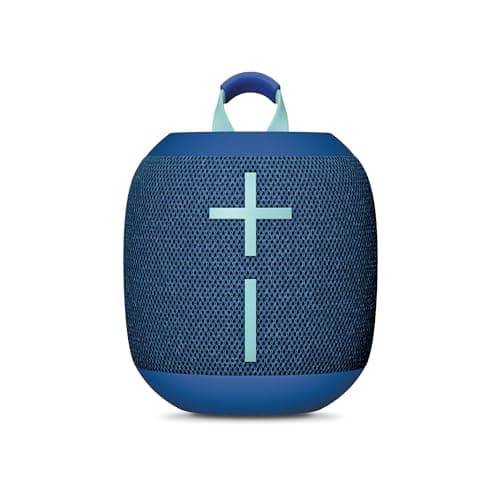 UE Wonderboom 4360-degree balance, IP67, floats, and 14 hours. | Best budget pick | $63.29View on Amazon |
| 2 | 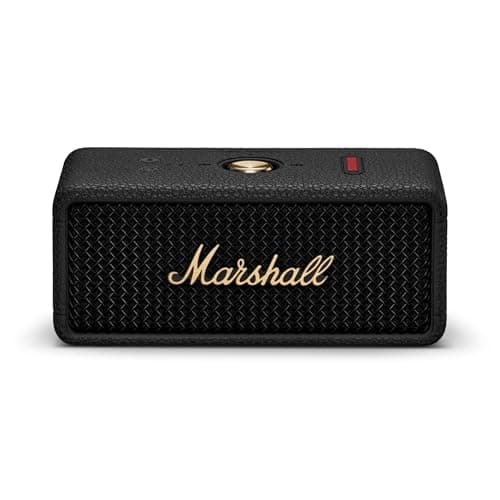 Marshall Emberton IIITwo passive radiators, 65 Hz, and 32+ hours of battery. | Closest on tone | $179.99View on Amazon |
| 3 | 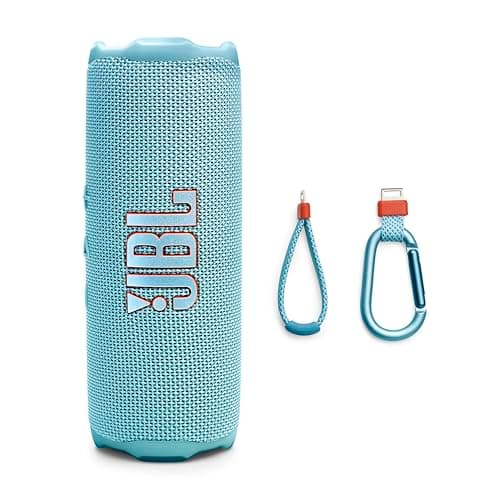 JBL Flip 7IP68 to 1.5 m, USB-C lossless audio and Auracast. | Best sealed pick | $149.95View on Amazon |
| 4 | 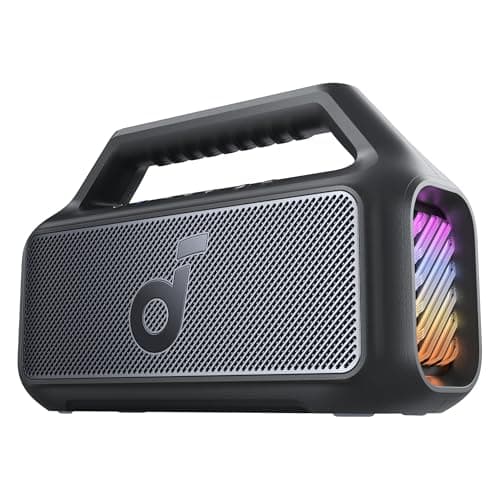 Soundcore Boom 2A real 50 W subwoofer, 24 hours, and it floats. | Most output for the money | $99.99$129.9923% offView on Amazon |
#ad — buy links go to Amazon and we earn a commission on qualifying purchases. Prices change constantly, so the live listing is always the price of record. Full disclosure.
If you want the Bose SoundLink character for less, the budget pick is the UE Wonderboom 4: two 40 mm active drivers plus two passive radiators radiating 360 degrees, which gives it the same even, unfussy balance from any seat, plus IP67, buoyancy, a 5 ft drop rating and 14 hours — two more than the SoundLink Flex (2nd Gen)'s quoted 12. The closest match on tone is the Marshall Emberton III, which also uses two passive radiators to reach a quoted 65 Hz and runs 32+ hours. What Bose is genuinely good at is even midrange and voice clarity, and the honest answer is that nothing here beats the SoundLink Max at that — it is on this site as a stated benchmark.
It is worth being precise about what the SoundLink range actually sells, because the alternatives only make sense once you name it. Bose does not win on wattage, battery or features — the published figures are modest. It wins on voicing: a flat, slightly warm midrange that makes voices and acoustic instruments sound natural, and that stays composed as you turn it up rather than getting shouty.
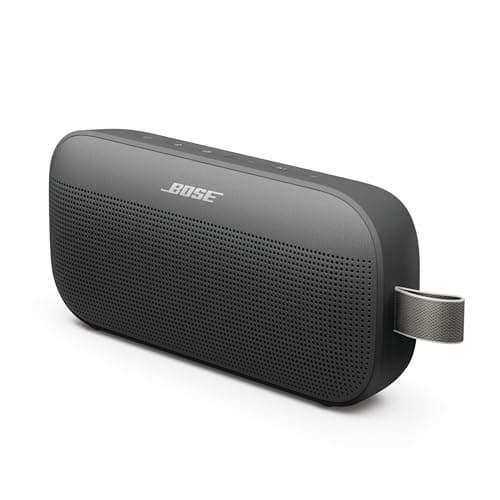
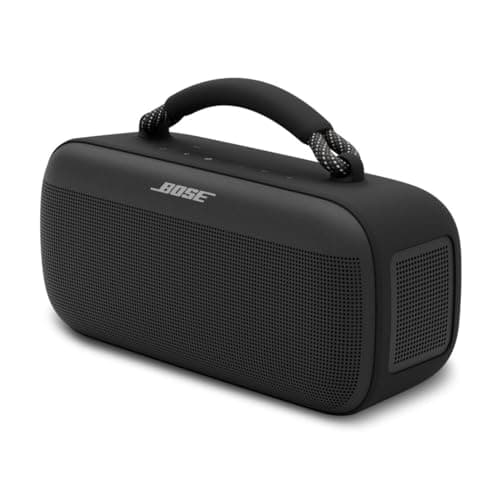
The two models this site carries make that concrete. The SoundLink Flex (2nd Gen) is IP67, Bluetooth 5.3, quoted at up to 12 hours, in a silicone-wrapped body with USB-C and roughly a four-hour recharge. The SoundLink Max is the serious one: the Bose Articulated Array of two 89 mm transducers and one 23 mm transducer with two 104 x 79 mm racetrack passive radiators, 20 hours, IP67, aptX Adaptive over Snapdragon Sound, multipoint, a 3.5 mm aux input and USB-C audio in and power out, and a removable rope handle at 4.9 lb.
So the question is not "what is better than Bose" — it is which compromise you would rather make to keep the money. Below, each pick is matched to the Bose strength it comes closest to.
What you are actually giving up, and what you gain
Passive radiators are the technique to look for. An undriven cone that moves with internal cabinet pressure extends the low end without a second amplifier, and it is how a small, sealed speaker produces fuller sound than its size suggests. Bose uses two racetrack radiators in the SoundLink Max; UE uses two in the Wonderboom 4 and Marshall two in the Emberton III. That shared engineering is why those two are the closest-sounding picks here rather than the loudest ones.
Battery is where Bose is easiest to beat. The SoundLink Flex quotes 12 hours and the Max 20. The Marshall Emberton III quotes 32+ hours with a 20-minute charge returning about six, and the UE Wonderboom 4 manages 14. If runtime is a real constraint, this is the clearest win available — the best speakers with the longest battery life ranks the whole registry on it.
Sealing is the other easy win. Both Bose models are IP67. The JBL Flip 7 is IP68 rated to 1.5 m with full dustproofing, and the Wonderboom 4 adds a 5 ft drop rating and buoyancy that neither Bose publishes. If the speaker is going near water rather than near a sofa, that matters — the best floating Bluetooth speakers and the most durable are the relevant rankings.
What you lose is the inputs and the fine tuning. The SoundLink Max's 3.5 mm aux input and USB-C audio in make it the only speaker in this group that will take any source, and its app EQ plus aptX Adaptive are a real technical advantage. Nothing cheaper here has both inputs — speakers with an aux input and speakers with USB-C audio show how short those lists are.
And you lose multipoint, which people underrate. The SoundLink Max and the Marshall Emberton III both have it — two devices connected at once, so a laptop call interrupts a phone's music without re-pairing. Most of this category does not. Why a Bluetooth speaker will not connect is the page people end up on when they do not have it.
The picks
Best budget pick — the closest balance per dollar
UE Wonderboom 4
The one to buy if the speaker is going anywhere near water.
- What it does well
- Two 40 mm active drivers plus two passive radiators in a sealed round cabinet, radiating 360 degrees — the same engineering idea as the Bose racetrack radiators, and the same practical result: an even, unfatiguing sound from any position rather than a single sweet spot. It also beats both Bose models on toughness with IP67, a 5 ft drop rating and buoyancy, and it beats the SoundLink Flex on battery at 14 hours against 12. 14.81 oz.
- Where it cuts corners
- No app EQ, so UE's warm voicing is final — this is the biggest gap against the Bose app. No aux input, no USB-C audio, no multipoint, no stereo pairing with a second unit, and it will not fill a large room the way the SoundLink Max does.
- Who it is for
- Anyone who wants the Bose evenness in a small speaker and would rather spend a fraction of the money.
- Battery: 14 hours
- Water rating: IP67 — submersible to 1 m for 30 minutes, dustproof, and it floats
- Weight: 14.81 oz (420 g)
#ad — we earn a commission on qualifying purchases. How this is funded · Price as of November 11, 2026
Closest match on tone, and double the battery
Marshall Emberton III
Thirty-two hours and a genuinely grown-up tuning, in something you can pocket in a coat.
- What it does well
- Two 38 W Class D amplifiers driving two 10 W full-range drivers plus two passive radiators, quoted 65 Hz to 20 kHz at 90 dB SPL at 1 m — a composed, midrange-forward voicing that is the nearest thing on this site to the Bose approach. It then beats both Bose models comfortably on runtime at 32+ hours, with a 20-minute charge giving about six hours and a two-hour full charge, and it matches the Max on multipoint with Bluetooth 5.3 LE. IP67, 1.5 lb.
- Where it cuts corners
- No aux input and no USB-C audio, so unlike the SoundLink Max it cannot take a wired source at all. 65 Hz is a modest low-end limit, True Stereophonic 360-degree dispersion is a liability in a reverberant room, it does not float, and it is the most expensive alternative here.
- Who it is for
- Anyone choosing on sound and battery who does not need a wired input.
- Battery: 32+ hours, with 20 minutes of charging giving about 6 hours
- Water rating: IP67 — submersible to 1 m for 30 minutes, dustproof
- Output: Two 38 W Class D amplifiers driving two 10 W full-range drivers plus two passive radiators
- Weight: 1.5 lb (0.67 kg)
#ad — we earn a commission on qualifying purchases. How this is funded · Price as of November 11, 2026
Best sealed pick, and the cheapest wired digital option
JBL Flip 7
The default mid-size pick, and the speaker every value brand is trying to undercut.
- What it does well
- IP68 rated to 1.5 m for 30 minutes with full dustproofing — better sealing than either Bose model — plus USB-C lossless audio, which makes it the cheapest speaker on this site that takes a digital wired signal the way the SoundLink Max does. Bluetooth 5.4, Auracast linking, a clip-on loop, and 14 hours plus up to 2 more in Playtime Boost at 1.82 lb.
- Where it cuts corners
- No 3.5 mm aux input, so a turntable or an older TV is still out — it covers only half of what the Max's inputs do. Tonally it is punchier and less neutral than Bose, you pay a real brand premium of its own, and JBL publishes no drop height.
- Who it is for
- Anyone who wants a wired digital connection and the best sealing, in something genuinely portable.
- Battery: 14 hours, plus up to 2 more in Playtime Boost mode
- Water rating: IP68 — submersible to 1.5 m for 30 minutes, dustproof
- Weight: 1.82 lb (about 560 g)
#ad — we earn a commission on qualifying purchases. How this is funded · Price as of November 11, 2026
Most output for the money, if balance is not the point
Soundcore Boom 2
The value answer to a party speaker: it floats, it is loud, and it lasts a day.
- What it does well
- A dedicated 50 W subwoofer plus two 15 W tweeters for up to 80 W peak and a quoted 45 Hz — genuinely lower and considerably louder than the SoundLink Flex, for less money. It also floats, is IPX7, runs 24 hours and has a carry strap, which makes it a far better outdoor speaker than either Bose.
- Where it cuts corners
- This is the furthest pick from the Bose character, and we are not pretending otherwise: it is tuned for impact rather than neutrality, and indoors the first thing to do is pull the low end down in the app. IPX7 carries no dust rating, and there is no aux input.
- Who it is for
- Anyone who liked the idea of Bose but actually needs a speaker for a backyard.
- Battery: Up to 24 hours at 50% volume with BassUp and lights off
- Water rating: IPX7 — submersible to 1 m for 30 minutes, and it floats
- Output: Up to 80 W peak output (a 50 W subwoofer plus two 15 W tweeters)
#ad — we earn a commission on qualifying purchases. How this is funded · Price as of November 11, 2026
The Bose models against the alternatives
| Speaker | Battery | Sealing | Aux / USB-C audio | Multipoint |
|---|---|---|---|---|
| Bose SoundLink Flex (2nd Gen) | Up to 12 hours; about 4-hour recharge | IP67 | No / No | Not published |
| Bose SoundLink Max | Up to 20 hours; 5-hour full charge | IP67 | Yes / Yes | Yes |
| UE Wonderboom 4 | 14 hours | IP67, 5 ft drops, floats | No / No | Not published |
| Marshall Emberton III | 32+ hours; 20 minutes gives about 6 | IP67 | No / No | Yes |
| JBL Flip 7 | 14 hours, plus up to 2 | IP68 to 1.5 m | No / Yes — lossless | Not published |
| Soundcore Boom 2 | 24 hours | IPX7, floats | No / No | Not published |
Who should look elsewhere entirely
- Anyone who wants bass they can feel. None of the Bose range is built for that and neither are its closest matches. The best speakers for bass and bass under $200 are the honest pages.
- Anyone throwing a party. The best outdoor party speakers and party speakers under $200 cover a crowd properly.
- Anyone comparing Bose against JBL specifically. Bose vs JBL and JBL Flip 7 vs Bose SoundLink Flex are the head-to-heads.
- Anyone wanting the brand overview. Bose Bluetooth speakers is the brand page and the best Bluetooth speaker brands is the comparison.
- Anyone on a strict budget. The best speakers under $100 and the best sound quality under $100 are where this page's budget pick competes.
For the reviews of the two originals, see the Bose SoundLink Flex review and the Bose SoundLink Max review. The Marshall Emberton III review and the UE Wonderboom 4 review cover the two closest alternatives in full, and how to choose a Bluetooth speaker is the framework if you are still undecided.
Frequently asked questions
What is the best alternative to a Bose SoundLink?
What is Bose actually better at?
Is there a cheaper speaker that sounds like a Bose?
Which alternative has the best battery life?
Does any alternative have an aux input like the SoundLink Max?
Is the Bose SoundLink Flex worth it over a cheaper speaker?
Which Bose alternative is toughest?
Update log
- First publication. Live autocomplete returns ten distinct "bose soundlink alternative" suggestions across six models; the site had brand-level Bose coverage and head-to-head comparisons but no page answering the alternatives query directly.
Sources
Every specification quoted above comes from the manufacturer or retailer listing below. We publish no measurements of our own — see how we pick.
- Bose — SoundLink Flex (2nd Gen) product page
- Bose — SoundLink Flex (2nd Gen) specification sheet (PDF)
- Bose — SoundLink Max product page (manufacturer specifications)
- RTINGS — Bose SoundLink Max review (independent measurements: max SPL, compression, soundstage)
- What Hi-Fi? — Bose SoundLink Max review
- Ultimate Ears — Wonderboom 4 product page (manufacturer specifications)
- Marshall — Emberton III product page (manufacturer specifications)
- JBL — Flip 7 product page (manufacturer specifications)
- Soundcore — Boom 2 product page (manufacturer specifications)
Read next
Brands & Alternatives
Bose: the best sound, and the least value
The premium benchmark — where the tonal advantage is real and where it evaporates.
Head-to-Head
Bose vs JBL: which portable speaker should you buy?
Tonal accuracy against durability and battery — and the setting where the difference vanishes.
Head-to-Head
JBL Flip 7 vs Bose SoundLink Flex (2nd Gen)
Sound quality against durability and runtime, with the one feature that settles it for most buyers.
Reviews
The best-sounding portable we cover, the heaviest, and the only one that still takes a cable.
Reviews
Bose SoundLink Flex (2nd Gen) review
The premium reference point — what careful tuning genuinely buys and where it stops mattering.
Brands & Alternatives
The best Bluetooth speaker brands
What each major brand is actually good at, with the one model that makes its case.