Head-to-Head
Mono vs stereo Bluetooth speakers
Stereo is not a quality grade. It is a width effect with a range, and most portable speakers sit outside it.
By Ryder M.Published
 Field-tested picks · 2026
How we are funded: Thump & Tote earns a commission when you buy through our Amazon links, at no extra cost to you. It never changes which speaker we put first — see how we pick and our affiliate disclosure.
Quick picks
Ranked for value first. Tap any row to jump to the full write-up.
| # | Product | Best for | Price |
|---|---|---|---|
| 1 | 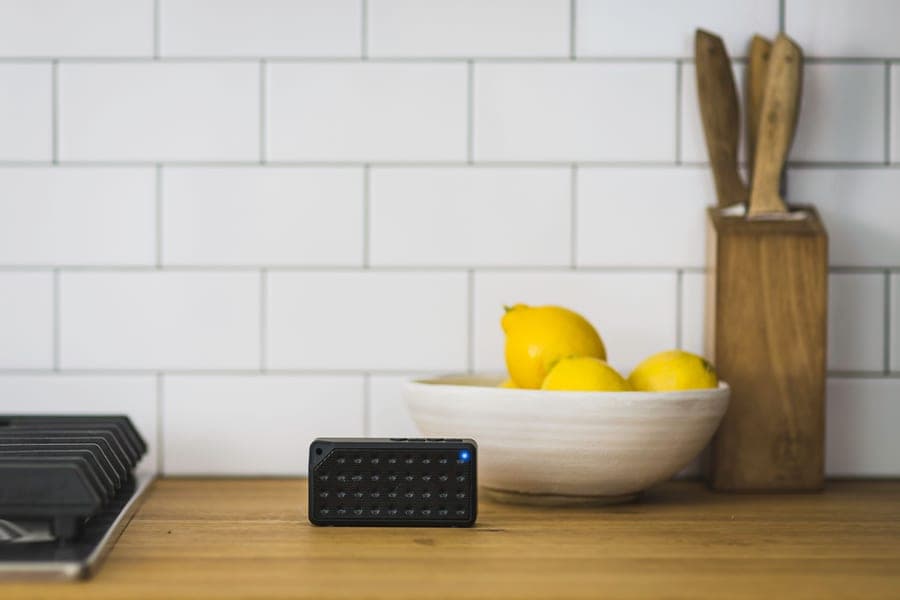 Illustrative IllustrativeSoundcore Motion 300Drivers far enough apart to actually hear the separation. | Best stereo from one box | Check price on Amazon |
| 2 |  Illustrative IllustrativeAnker Soundcore 2Two of them, placed apart, for less than one mid-tier speaker. | Cheapest real stereo pair | Check price on Amazon |
| 3 |  Illustrative IllustrativeUE Wonderboom 4360-degree output, which beats stereo outdoors. | Best mono by design | Check price on Amazon |
| 4 |  Illustrative IllustrativeMarshall Emberton IIIMarshall's answer to the same problem, done well. | Best multi-directional tuning | Check price on Amazon |
#ad — buy links go to Amazon and we earn a commission on qualifying purchases. Prices change constantly, so the live listing is always the price of record. Full disclosure.
Stereo is better only when you sit close enough and still enough to be inside the stereo field — roughly within a few feet of a single-cabinet speaker, or between two separated ones. On a desk, stereo is a genuine upgrade and the Soundcore Motion 300 is the one to buy. Outdoors, at a party, or anywhere people move around, stereo does nothing at all and a well-designed mono speaker like the UE Wonderboom 4 is the better buy, because 360-degree output puts sound where the listeners actually are.
Stereo gets sold as a tier — mono is the cheap one, stereo is the good one — and that is not what it is. Stereo is a spatial illusion produced by playing two slightly different signals from two positions far enough apart that your ears can tell them apart. It adds width and placement. It does not add loudness, bass, clarity or detail. A mono speaker and a stereo speaker with the same drivers and the same cabinet sound equally good; one of them sounds wider, at one particular listening position.
That matters because almost every portable Bluetooth speaker is mono, and the reason is physical rather than cynical: the cabinet is too narrow for the drivers to be far enough apart to create the effect. A manufacturer that prints "stereo" on a 180 mm cabinet is telling you there are two drivers, not that you will hear a soundstage.
The three configurations, and what each actually gives you
| Configuration | What it gives you | Where it works | Where it does not |
|---|---|---|---|
| Mono, one driver | All output from one point | Anywhere — no sweet spot to miss | No width at any distance |
| Mono, 360 degrees | Even coverage in every direction | Pools, tables, parties, moving listeners | No width, no imaging ever |
| Stereo, one cabinet | Modest width when you are close | Desks, bedside, kitchen counters | Beyond a few feet the two channels merge |
| Stereo, two cabinets | Real width and placement | Seated listening between the pair | Outdoors; anywhere people move around |
Why portable speakers are mono
Two reasons, and both are honest. The first is driver spacing: the stereo effect depends on the two sources being separated by a meaningful fraction of the distance to the listener. Two drivers 150 mm apart, heard from ten feet away, are acoustically one source. The second is bass: below roughly 150 Hz, human hearing cannot localize sound at all, so low frequencies are summed to mono even on a proper hi-fi. A small speaker spends most of its budget down there.
There is a third reason that is less flattering: splitting a given amount of amplifier power across two channels halves the output of each. At a party, a mono speaker using all its power in one direction is simply louder than the same speaker running stereo. That is a real engineering trade, and it is why party speakers are mono almost without exception. The loudness side of that argument is in watts and loudness.
The picks
IllustrativeBest stereo from a single cabinet
Soundcore Motion 300
Our default recommendation under $100 — stereo, slim, and honestly specified.
- What it does well
- Two 15 W full-range drivers placed at opposite ends of a wide, flat cabinet — far enough apart that at desk distance the separation is genuinely audible rather than theoretical. IPX7 and thirteen hours make it a real portable rather than a desk ornament.
- Where it cuts corners
- The effect collapses once you are more than a few feet away, which is most of how a portable speaker gets used. Thirty watts split across two channels is not a party speaker, and the slim cabinet caps the bass.
- Who it is for
- Desks, kitchen counters and bedside tables — anywhere you sit close and stay put.
- Battery: 13 hours
- Water rating: IPX7 — submersible to 1 m for 30 minutes
- Output: 30 W stereo (two 15 W full-range drivers)
#ad — we earn a commission on qualifying purchases. How this is funded
IllustrativeCheapest way to real stereo
Anker Soundcore 2
Years old, still sold, still the battery-life champion of the cheap shelf.
- What it does well
- Two of these pair wirelessly into a true stereo set for less than a single mid-tier speaker, and because you place them yourself, you get the separation that no single cabinet can offer. Twenty-four hours each means neither runs out first.
- Where it cuts corners
- A visibly dated design, no dust rating, and soft treble next to anything recent. You are also managing two speakers, two charges and a pairing that occasionally needs redoing.
- Who it is for
- Anyone who wants genuine stereo width on a desk or a shelf and will not pay mid-tier money for one box.
- Battery: 24 hours
- Water rating: IPX7 — submersible to 1 m for 30 minutes
- Output: 12 W stereo
#ad — we earn a commission on qualifying purchases. How this is funded
IllustrativeBest mono, by design
UE Wonderboom 4
The one to buy if the speaker is going anywhere near water.
- What it does well
- Throws sound in every direction from two 40 mm drivers and two passive radiators, which around a pool or a picnic table is strictly better than a stereo image nobody is positioned to hear. It floats, it survives a five-foot drop, and it does not matter which way you set it down.
- Where it cuts corners
- The 360-degree design trades imaging away entirely — there is no listening position where this sounds wide. No aux input, and Ultimate Ears charges close to JBL money.
- Who it is for
- Groups, outdoors, water — any situation where the listeners move and the speaker cannot be aimed.
- Battery: 14 hours
- Water rating: IP67 — submersible to 1 m for 30 minutes, dustproof, and it floats
- Weight: 14.81 oz (420 g)
#ad — we earn a commission on qualifying purchases. How this is funded
IllustrativeBest multi-directional tuning
Marshall Emberton III
Thirty-two hours and a genuinely grown-up tuning, in something you can pocket in a coat.
- What it does well
- Marshall's True Stereophonic arrangement is a serious attempt at the same problem Ultimate Ears solves with a cylinder: spread the sound rather than aim it. Paired with thirty-two-plus hours and a restrained tuning, it is the most grown-up-sounding speaker in this comparison.
- Where it cuts corners
- It is not loud for the money, there is no aux input at all, and it sits well above this site's usual ceiling. The multi-directional effect is width rather than true stereo imaging.
- Who it is for
- Home listening and long trips, where tuning and runtime matter more than output.
- Battery: 32+ hours, with 20 minutes of charging giving about 6 hours
- Water rating: IP67 — submersible to 1 m for 30 minutes, dustproof
- Output: Two 38 W Class D amplifiers driving two 10 W full-range drivers plus two passive radiators
- Weight: 1.5 lb (0.67 kg)
#ad — we earn a commission on qualifying purchases. How this is funded
How to decide in one question
Ask where the speaker will spend most of its life. If the answer is a surface you sit beside — desk, counter, nightstand — buy stereo, either one wide cabinet or two small speakers placed apart. If the answer is anywhere people move around or the speaker gets carried, buy the best mono speaker you can and spend the saved money on cabinet volume instead.
The one case that trips people up is the turntable. Vinyl is a stereo format, cut with instruments placed across a soundstage, and collapsing that to mono throws away a large part of what the record contains. That is one of the few situations where stereo is not a nicety, and it is covered properly in the best speaker for a record player.
What about 'stereo' on a cheap speaker?
On a cabinet narrower than about 250 mm, treat the word as a count of drivers rather than a description of the sound. Two drivers is not nothing — it usually means a cleaner midrange and more total output than one driver doing everything — but it will not produce an audible soundstage at any normal distance. The useful question to ask of a cheap speaker is not whether it is stereo but whether the extra driver bought you headroom, which is the subject of why cheap speakers sound cheap.
Frequently asked questions
Is a stereo Bluetooth speaker better than a mono one?
Why are most Bluetooth speakers mono?
Does pairing two Bluetooth speakers give me stereo?
What is the best stereo Bluetooth speaker?
Does mono sound worse for music?
Update log
- First publication. Framed around listening distance rather than a quality hierarchy, because the stereo effect has a usable range and most portable use sits outside it. Specifications from manufacturer listings.
Sources
Every specification quoted above comes from the manufacturer or retailer listing below. We publish no measurements of our own — see how we pick.
- Soundcore — Motion 300 product page (manufacturer specifications)
- RTINGS — Soundcore Motion 300 measurements (independent test lab)
- Soundcore — Soundcore 2 product page (manufacturer specifications)
- Ultimate Ears — Wonderboom 4 product page (manufacturer specifications)
- Marshall — Emberton III product page (manufacturer specifications)
- TechRadar — Marshall Emberton III review
- Bluetooth SIG — Bluetooth technology overview (profiles, codecs, LE Audio)
Read next

Guides
How to pair two Bluetooth speakers
Platform-by-platform steps for stereo and multi-speaker pairing — and why cross-brand does not work.

By Price
The best small Bluetooth speakers
Pocket and desk-sized picks, ranked on how much they get out of a cabinet that cannot be big.
Guides
Why cheap Bluetooth speakers sound cheap
The editorial spine of this site: what a small cabinet physically cannot do, and what it can.
By Price
The best Bluetooth speakers for a record player in 2026
What a turntable actually needs to connect, which portables can do it, and the better alternative.

Head-to-Head
Auracast vs PartyBoost: what JBL changed
Which JBL speakers link with which, the single model that bridges both, and the cheaper way to get stereo.

Guides
How many watts is loud for a speaker?
Why wattage figures cannot be compared across brands, and what genuinely predicts loudness.