Guides
Can you use a Bluetooth speaker while it is charging?
Yes. The question worth asking is what it costs you, and the answer is heat.
By Ryder M.Published
 Field-tested picks · 2026
How we are funded: Thump & Tote earns a commission when you buy through our Amazon links, at no extra cost to you. It never changes which speaker we put first — see how we pick and our affiliate disclosure.
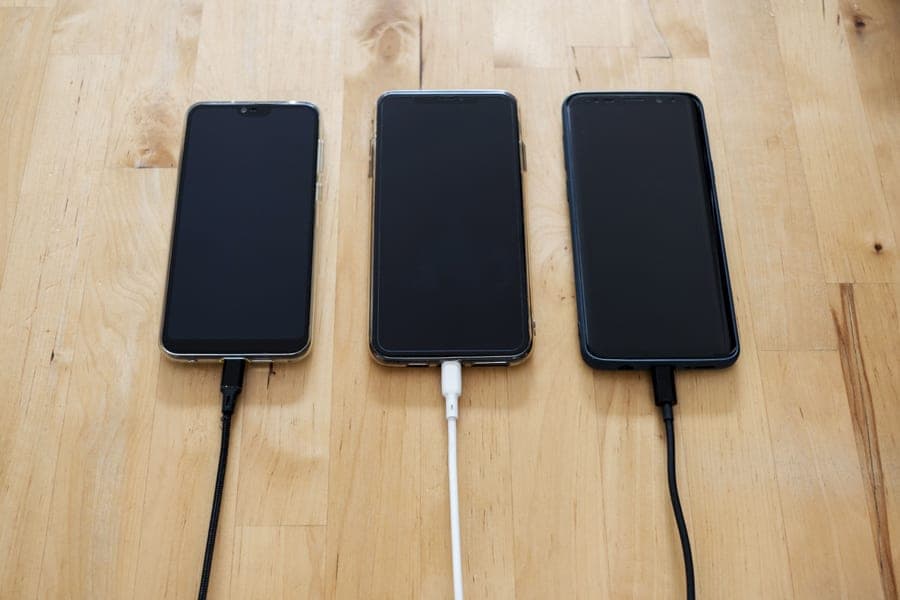
Yes — every speaker we recommend plays while plugged in, and doing it occasionally harms nothing. What it costs you is heat: the battery is charging and the amplifier is working at the same time, inside a sealed cabinet, and heat is the single biggest determinant of how long a lithium-ion cell lasts. Doing it for a party is fine. Doing it every day, permanently plugged in at high volume, measurably shortens the speaker's usable life.
There are two separate worries bundled into this question and they deserve separating. The first is is it safe, and the answer is yes — a speaker's charging circuit manages the cell and does not care that the amplifier is drawing current at the same time. The second is does it damage the battery, and the honest answer is: not directly, but the heat it generates does, and the always-plugged-in habit does.
What actually happens inside
Playing while charging means two heat sources running simultaneously in a box designed to be waterproof, which is to say designed to not vent. The charging circuit produces heat, the amplifier produces heat, and at high volume the amplifier produces a great deal of it. Lithium-ion cells age by a chemical process that accelerates with temperature, which is why Battery University and every manufacturer's own guidance converge on the same advice: keep the cell cool and keep it off the extremes of charge.
The second mechanism is subtler. A speaker left permanently on a charger sits at or near 100 percent indefinitely, and a lithium cell held at full charge degrades faster than one cycling in the middle of its range. This is the same reason Apple and other manufacturers now ship charge-management features that deliberately stop short of full. A speaker has no such feature, so the management has to be behavioral.
- Heat is the main enemy. A warm speaker playing loudly on a charger in direct sun is the worst case. The same speaker indoors at moderate volume is a non-event.
- Sitting at 100 percent is the second enemy. Months on a permanent charger does more cumulative damage than the occasional long party.
- Deep discharge is the third. Storing a speaker flat for months is worse than either of the above. If it is going in a cupboard for the winter, charge it to roughly half first.
- Charging a cold cell is genuinely damaging. A speaker that has been in a car overnight in winter should reach room temperature before it is plugged in.
When it is completely fine
- A party that outlasts the battery. This is exactly what the feature is for. Plug it in, keep it out of the sun, and stop worrying.
- A speaker used as a desk speaker at moderate volume. Low amplifier output means little heat; this is the mildest possible case.
- Topping up between sets. Short charges in the middle of the range are the gentlest thing you can do to a lithium cell.
- Any speaker with a published pass-through or AC mode, where the manufacturer has designed for exactly this. The Tribit StormBox Blast 2, for instance, publishes a higher output figure on AC power than on battery because running on mains is an intended mode, not a workaround.
When to unplug it
- When the speaker is hot to the touch. Not warm — hot. Unplug it, turn the volume down, let it cool.
- In direct summer sun, or in a car. Ambient heat plus charging heat plus amplifier heat is the combination that actually kills cells.
- As a permanent arrangement. If the speaker never leaves the desk and is never unplugged, you have bought a mains speaker with a battery slowly dying inside it. Unplug it for a few hours a week.
- While it is wet. This is a corrosion issue rather than a battery one, and it is the most common way a waterproof speaker dies — see how to clean a Bluetooth speaker for the drying routine.
Speakers built around the problem
If you are asking this question because you run out of battery mid-event, the real fix is not better charging habits — it is a speaker with enough runtime that the question does not come up, or one designed to be fed power. These four approach it from different directions.
 Illustrative
Best power-sharing speaker
JBL Charge 6
The battery-life benchmark, with a power bank built into the back.
- What it does well
- Twenty-four hours, extending to twenty-eight with Playtime Boost, plus a built-in power bank so the speaker charges a phone rather than the other way round. IP68 and Auracast make it a proper outdoor speaker rather than a battery with a driver attached.
- Where it cuts corners
- The power bank drains the speaker fast enough that using it twice costs you a night of playback, it is heavy for what most people carry, and the price sits at the very top of what this site calls value.
- Who it is for
- Campers and tailgaters who genuinely cannot reach a socket for a day or two.
- Battery: 24 hours, or up to 28 hours with Playtime Boost enabled
- Water rating: IP68 — submersible to 1.5 m for 30 minutes, dustproof
#ad — we earn a commission on qualifying purchases. How this is funded
IllustrativeBest for a battery you can replace
JBL Xtreme 4
Two woofers and two bass radiators — the most convincing low end JBL puts in a carryable box.
- What it does well
- A swappable battery, which is close to unique in this category and changes the entire calculation — the usual end of a speaker's life is a cell you cannot replace. Twenty-four hours before you even get to that, plus a power bank and a genuine two-woofer design.
- Where it cuts corners
- Heavy, expensive and firmly above this site's value ceiling. No aux input, and the Soundcore Boom 2 gets most of the way there for far less.
- Who it is for
- Big outdoor spaces, and anyone who wants the speaker to outlive its first battery.
- Battery: Up to 24 hours, plus 6 more with Playtime Boost
- Water rating: IP67 — submersible to 1 m for 30 minutes, dustproof
- Output: Two 70 mm woofers and two 20 mm tweeters with dual bass radiators
- Weight: 4.63 lb (2.1 kg)
#ad — we earn a commission on qualifying purchases. How this is funded
 Illustrative
Best value long-runner
Soundcore Motion Boom
A floating outdoor speaker with a handle, built for the water and the dirt.
- What it does well
- Twenty-four hours, a USB output for charging a phone, a carry handle and a body that floats — a full day outdoors without the charging question arising at all, for a good deal less than the JBLs above.
- Where it cuts corners
- Treble is rolled off next to the Motion 300, there is no dust rating despite being sold for the beach, and the shape is awkward anywhere indoors.
- Who it is for
- Kayaks, boats, riverbanks and campsites.
- Battery: 24 hours
- Water rating: IPX7 — submersible to 1 m for 30 minutes, and it floats
- Output: 30 W from titanium drivers
#ad — we earn a commission on qualifying purchases. How this is funded
 Illustrative
Cheapest way to stop worrying
Anker Soundcore 2
Years old, still sold, still the battery-life champion of the cheap shelf.
- What it does well
- Twenty-four hours from a speaker at the bottom of the market, which means the charging question simply does not come up on any normal day. Cheap enough that if the cell does age out, replacing the whole speaker is not a decision.
- Where it cuts corners
- Visibly dated, no dust rating, soft treble, and BassUp trades clarity for thump. Twelve watts is a small-room speaker.
- Who it is for
- Anyone whose actual problem is a short-lived speaker rather than a demanding one.
- Battery: 24 hours
- Water rating: IPX7 — submersible to 1 m for 30 minutes
- Output: 12 W stereo
#ad — we earn a commission on qualifying purchases. How this is funded
Habits that actually extend battery life
- Charge in the middle of the range where you can — frequent partial charges beat occasional full cycles.
- Do not store it flat. Half charge is the right storage state for anything going away for a season.
- Keep it out of hot cars, which is the fastest practical way to damage a cell permanently.
- Unplug it when it is full if it lives somewhere permanently powered.
- Use the cable that came with it, or a known-good USB-C cable — a marginal cable generates heat in the connector.
- If the speaker runs out before the evening does, that is a specification problem, not a habit problem. Bluetooth speakers with the best battery life is the shortlist.
Frequently asked questions
Can you use a Bluetooth speaker while it is charging?
Does playing a speaker while charging damage the battery?
Is it safe to leave a Bluetooth speaker plugged in all the time?
Why does my speaker get hot while charging and playing?
My speaker only works when plugged in. Is that fixable?
Update log
- First publication. Separates the safety question (no issue) from the longevity question (heat and sustained full charge), with the battery chemistry sourced to Battery University and manufacturer charge-management guidance.
Sources
Every specification quoted above comes from the manufacturer or retailer listing below. We publish no measurements of our own — see how we pick.
- Battery University — how lithium-ion batteries age (BU-808)
- Apple — maximizing battery performance and lifespan
- JBL — Charge 6 product page (manufacturer specifications)
- JBL — Xtreme 4 specification sheet (PDF)
- Soundcore — Soundcore 2 product page (manufacturer specifications)
- Soundcore — Boom 2 support FAQ
Read next
Guides
Bluetooth speaker battery life, honestly
How quoted runtimes are produced, what to expect in reality, and the longest-lasting picks.
Guides
How long do Bluetooth speakers last?
Product lifespan separated from battery runtime — what fails, when, and how to delay it.
Guides
How to clean a Bluetooth speaker
Cleaning the mesh, the ports and the seals safely — and which speakers survive a rinse.
Guides
Can you bring a Bluetooth speaker on a plane?
The FAA and TSA rules for speakers and their batteries, and the three best speakers to fly with.
By Price
The best Bluetooth speakers under $200 in 2026
Top of the value range — party-class output, long runtimes, and a candid word on diminishing returns.

Outdoor & Party
The best Bluetooth speakers for camping in 2026
Campsite picks chosen for battery and packability rather than volume — the opposite of a party speaker.