Outdoor & Party
The best Bluetooth speaker for an ATV or side-by-side
A trail is a dust bath with a vibration problem. Water rating is the spec everyone checks and the wrong one to check first.
By Ryder M.Published
 Field-tested picks · 2026
How we are funded: Thump & Tote earns a commission when you buy through our Amazon links, at no extra cost to you. It never changes which speaker we put first — see how we pick and our affiliate disclosure.
Quick picks
Ranked for value first. Tap any row to jump to the full write-up.
| # | Product | Best for | Price |
|---|---|---|---|
| 1 | 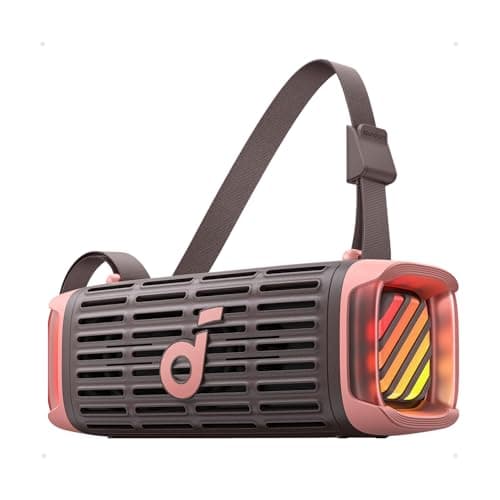 Soundcore Boom 3iIP68, salt-spray tested, 50 W and a detachable strap. | Best overall | $129.99View on Amazon |
| 2 | 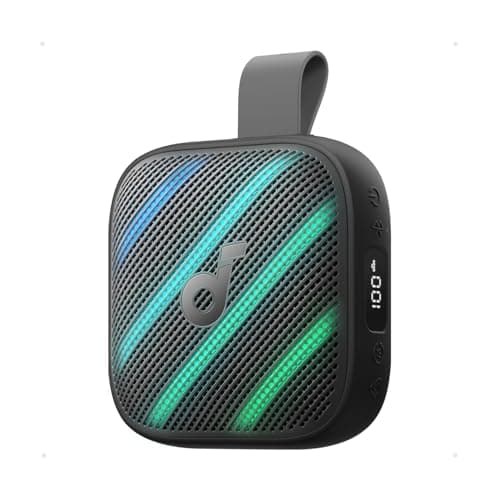 Soundcore Boom Go 3iIP68 dust-tight, drop-rated, 24 hours, clips on. | Best small option | $59.99$79.9925% offView on Amazon |
| 3 | 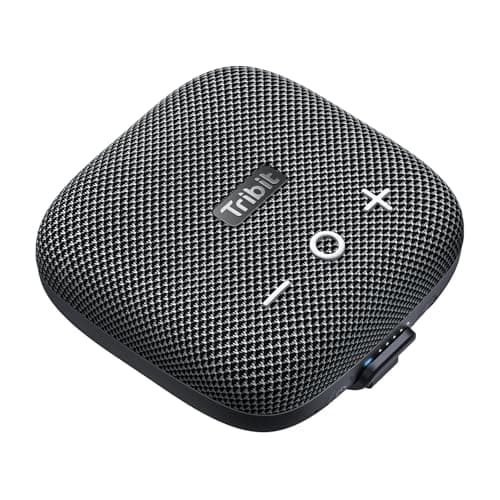 Tribit StormBox Micro 2A molded rubber strap that grips tube without hardware. | Best for a roll bar | $39.99$59.9933% offView on Amazon |
| 4 | 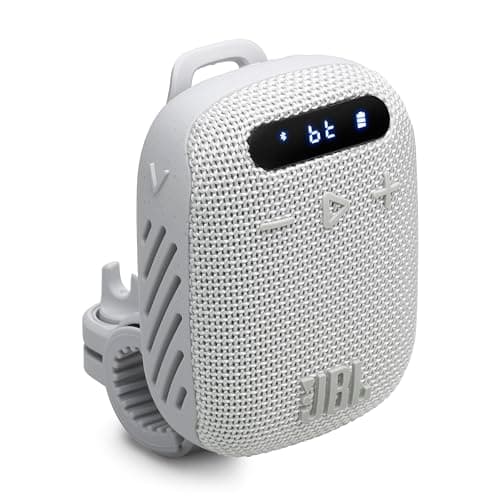 JBL Wind 3A handlebar mount, an FM tuner and a microSD slot. | Best with a bracket in the box | $67.45$79.9516% offView on Amazon |
#ad — buy links go to Amazon and we earn a commission on qualifying purchases. Prices change constantly, so the live listing is always the price of record. Full disclosure.
The Soundcore Boom 3i is the best Bluetooth speaker for an ATV or UTV, because it is IP68 — dust-tight as well as submersible — lab-tested to 240 hours of salt spray, drop-tested from 1 m, and it comes with a detachable strap that goes round a roll bar or a rack without buying hardware. On a trail it is fine dust and vibration that destroy speakers, not rain, and the second digit of that IP rating is the one that addresses it. If you want something smaller that clips to a cage tube and runs all weekend, the Soundcore Boom Go 3i is IP68 as well and quoted at 24 hours.
Almost every buying guide for this use case leads with waterproofing, and it is the wrong lead. A speaker on a side-by-side spends its life inside a cloud of extremely fine dust that gets forced into every seam by vibration and airflow. Water, when it shows up, arrives as a wash-down at the end of the day or a creek crossing — both brief, both survivable by anything with a decent rating.
Dust is continuous. It works past grille cloth into the driver's surround and the port, and it does it over weeks rather than in a moment, which is why a speaker that was fine all season suddenly sounds dull in the fall. That is also why the single most useful number on this page is a 6 in the first position of the IP code.
What actually matters on a trail
- IP6X — dust-tight. The first digit of an IP rating is solids. A 6 means no dust ingress at all. A speaker rated IPX7 has been tested against water and not tested against dust, which is precisely backwards for this use. What IP ratings mean explains the digits properly.
- A published drop rating. Vibration is a slow drop test. A speaker that is rated to survive a 1 m fall is a speaker built to hold its internals together, and on a machine that is the quality you are really buying.
- A strap or clip that grips tube. This is where most of these purchases go wrong. A speaker with no mounting provision ends up bungee-corded to a cage, where it rattles and eventually goes over the side. A molded strap or a convertible clip solves it with no accessories.
- Midrange over bass. Engine noise is low-frequency and broadband. Bass from a portable speaker disappears underneath it entirely, while midrange is what actually cuts through — which means the big-bass speaker is a poor use of money here.
- Battery that covers a day out. Trail days are long and there is no socket. Sixteen to twenty-four quoted hours is the sensible band, and remember that quoted figures assume half volume. Battery life, honestly has the arithmetic.
| Speaker | IP rating | Output | Battery | How it attaches |
|---|---|---|---|---|
| Soundcore Boom 3i | IP68, 240 h salt spray, floats upright | 50 W with BassUp 2.0 | 16 hours | Detachable strap |
| Soundcore Boom Go 3i | IP68, drop-tested from 1 m | 15 W with BassUp 2.0 | 24 hours | Convertible clip-and-carry strap |
| Tribit StormBox Micro 2 | IP67 | 10 W | Up to 12 hours | Integrated rubber strap |
| JBL Wind 3 | Weather-resistant; listings disagree | 5 W RMS | Check the current listing | Handlebar bracket included |
The picks
Best overall for an ATV or UTV
Soundcore Boom 3i
A floating outdoor speaker that rights itself in chop, built for the water and the dirt.
- What it does well
- IP68 plus 240 lab-tested hours of salt spray is a combination almost nothing else at this price carries, and the salt figure matters more than it looks — it is the closest published proxy for surviving mud, grit and a pressure wash at the end of the day. Fifty watts in a water-bottle-sized cabinet is loud rather than deep, which is exactly the right trade against engine noise. The detachable strap goes round a cage tube, and it floats the right way up if a creek crossing goes wrong.
- Where it cuts corners
- Sixteen hours is short for an outdoor speaker in this band, and a full day on the trail will finish it. The small cabinet means it cuts through with midrange rather than bass, so it will not impress anyone sitting still. There is no USB charge-out, so it will not revive a phone.
- Who it is for
- Trail riders who want one speaker that handles dust, mud, water and a wash-down without being babied.
- Battery: 16 hours
- Water rating: IP68 — submersible and dust-tight, lab-tested to 240 hours of salt spray, and it floats upright
- Output: 50 W with BassUp 2.0
- Weight: 1.7 lb (780 g)
#ad — we earn a commission on qualifying purchases. How this is funded · Price as of October 17, 2026
Best small option, and the battery champion here
Soundcore Boom Go 3i
Our default recommendation under $100 — tough, long-running and honestly specified.
- What it does well
- The same IP68 dust-tight sealing and 1 m drop rating in something palm-sized, at 24 quoted hours instead of 16 — which makes it the pick for a weekend rather than a day. The two-slot strap genuinely converts between a clip and a carry loop, so it goes on a cage tube and then into a pack without a second thought, and the battery-percentage display means you know where you stand before the ride rather than after.
- Where it cuts corners
- Fifteen watts against engine noise is modest — this is a speaker for a stopped machine, a camp or a slow trail, not for riding at speed. It is mono, and it does not float despite the IP68 rating, so a creek crossing is a real risk in a way it is not for the Boom 3i.
- Who it is for
- Riders who stop a lot, two-day trips, and anyone who wants one speaker that also works on a desk at home.
- Battery: 24 hours, with a battery-level display on the speaker
- Water rating: IP68 — submersible and dust-tight, and drop-tested from 3.28 ft (1 m)
- Output: 15 W with BassUp 2.0, quoted at 92 dB peak
- Weight: 0.84 lb
#ad — we earn a commission on qualifying purchases. How this is funded · Price as of October 17, 2026
Best for strapping to a roll bar
Tribit StormBox Micro 2
The best-argued cheap speaker on the market, and now a last-generation bargain.
- What it does well
- The molded rubber strap is the best tube-mounting solution on this page and it costs nothing extra — it was designed for bike handlebars and a cage tube is the same problem. For 315 g it punches well past its size thanks to a passive radiator, and IP67 covers the water side properly.
- Where it cuts corners
- Ten watts is ten watts. Outdoors with an engine running it runs out of headroom quickly, so this is a speaker for a stopped machine and a camp rather than a moving one. There is no published drop rating, and being a superseded model means color choices are thinning out.
- Who it is for
- Riders who want something that mounts properly, costs little and goes on a bike or a backpack the rest of the week.
- Battery: Up to 12 hours
- Water rating: IP67 — submersible to 1 m for 30 minutes, dustproof
- Output: 10 W
- Weight: 315 g
#ad — we earn a commission on qualifying purchases. How this is funded · Price as of October 17, 2026
Best if you want a bracket in the box
JBL Wind 3
A handlebar speaker with an actual FM tuner — a combination almost nothing else offers.
- What it does well
- A handlebar bracket is included rather than sold separately, which on a quad with bars is the fastest route to a speaker that is actually attached to something. It also covers FM radio, microSD and a 3.5 mm aux input as well as Bluetooth, so it keeps working where there is no phone signal — which on a trail is most of the time.
- Where it cuts corners
- Five watts RMS is very little against engine and wind noise, so it suits slow riding far better than anything fast. Retail listings disagree on its exact water rating, which is not reassuring for a speaker sold for outdoor use, and there is no dust rating to speak of.
- Who it is for
- Quads with handlebars, slow trail riding, and riders who want a radio where the signal drops out.
- Battery: Manufacturer-quoted; check the current listing
- Water rating: Weather-resistant — retail listings disagree on the exact IP rating, so check the one you buy
- Output: 5 W RMS
#ad — we earn a commission on qualifying purchases. How this is funded · Price as of October 17, 2026
Why not a hard-mounted pod system?
Cage-mounted pod systems wired to the machine's battery are the other half of this market, and they are genuinely better at being loud while moving — they have more power available than any battery speaker and they are built for vibration. They are also an installation, a wiring job and a cost well beyond anything on this site, and they are useless the moment you walk away from the machine.
A portable makes sense when the speaker needs to come off at the campsite, go in the boat, or sit on the tailgate afterward. That is the trade: a pod system is louder on the move, a portable is the only one still playing when the engine stops. Most people who ride recreationally rather than competitively are better served by the portable.
What about mounting hardware?
Resist the urge to buy a universal cup-holder or bar clamp for a speaker that has no provision of its own. Those mounts hold the speaker by its body, which transfers every bit of chassis vibration straight into the cabinet and — on a rough trail — eventually into the driver. A fabric or silicone strap is better precisely because it is a little compliant: it damps rather than couples.
If the speaker is going somewhere it can be struck by a branch or a thrown stone, face the drivers inward toward the cab. You lose a small amount of direct sound and gain a grille that does not get punctured. For more on what survives outdoors generally, the best Bluetooth speakers for a truck and for a motorcycle cover the neighbouring cases.
Frequently asked questions
What is the best Bluetooth speaker for an ATV?
Do I need a waterproof speaker for a side-by-side?
How do you mount a Bluetooth speaker to a roll cage?
Will a portable speaker be loud enough over an engine?
Can I use a bike handlebar speaker on a quad?
Update log
- First publication. Leads on dust sealing rather than waterproofing, which is the inversion this use case actually needs.
Sources
Every specification quoted above comes from the manufacturer or retailer listing below. We publish no measurements of our own — see how we pick.
- Soundcore — Boom 3i product page (manufacturer specifications)
- RTINGS — Anker Soundcore Boom 3i review (independent measurements)
- Soundcore — Boom Go 3i product page (manufacturer specifications)
- Tom's Guide — Tribit StormBox Micro 2 review
- JBL — Wind 3 handlebar speaker product page
- IEC 60529 — the international standard behind IP ratings
Read next
Outdoor & Party
The best Bluetooth speakers for a truck in 2026
Why 24 hours and a strap beat wattage in a cab, and the five speakers that fit the life.
Outdoor & Party
The best Bluetooth speakers for a motorcycle in 2026
Handlebar-mountable picks for low-speed riding, and a straight answer about highway use.
Outdoor & Party
The best Bluetooth speakers for a golf cart in 2026
Cart-friendly picks ranked on how they attach — plus honest advice on magnetic mounts.
Outdoor & Party
The best Bluetooth speakers for camping in 2026
Campsite picks chosen for battery and packability rather than volume — the opposite of a party speaker.
Guides
What IPX7 and IP67 actually mean
Every IP rating decoded, and the single character that decides pool versus beach.
Guides
Bluetooth speaker battery life, honestly
How quoted runtimes are produced, what to expect in reality, and the longest-lasting picks.