Outdoor & Party
The best Bluetooth speakers for a truck in 2026
A work truck or a sleeper cab is somebody's office and sometimes their bedroom. That asks for runtime and a mounting point, not volume.
By Ryder M.Published
 Field-tested picks · 2026
How we are funded: Thump & Tote earns a commission when you buy through our Amazon links, at no extra cost to you. It never changes which speaker we put first — see how we pick and our affiliate disclosure.
Quick picks
Ranked for value first. Tap any row to jump to the full write-up.
| # | Product | Best for | Price |
|---|---|---|---|
| 1 |  Illustrative IllustrativeAnker Soundcore 224 hours and 12 W of stereo for very little money. | Best overall | Check price on Amazon |
| 2 |  Illustrative IllustrativeJBL Wind 3A real FM tuner, a microSD slot and a bar mount in the box. | Best with a radio and a mount | Check price on Amazon |
| 3 | 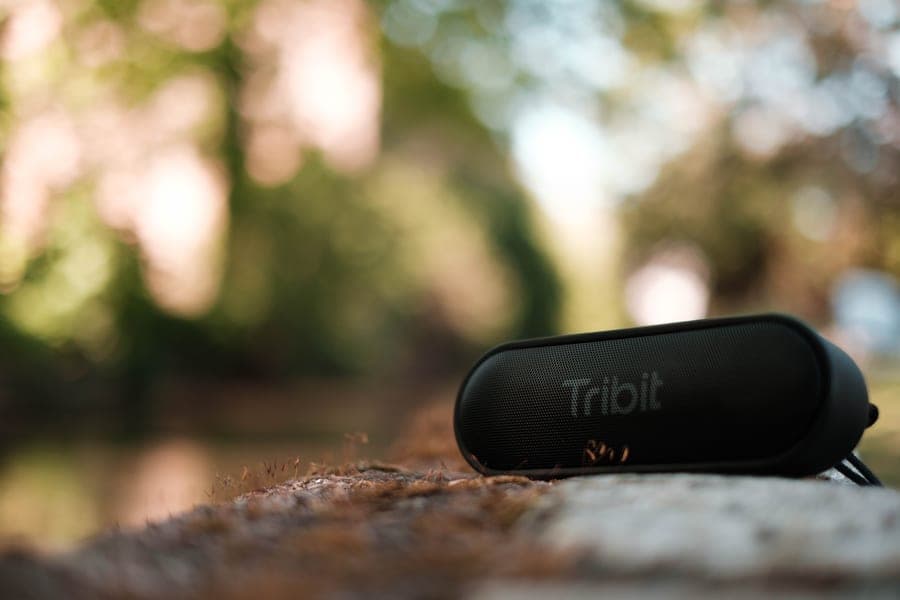 Illustrative IllustrativeJBL Charge 6IP68, 24 hours and a power bank built in. | Best if it has to charge your phone | Check price on Amazon |
| 4 | Illustrative Tribit XSound Go16 W and a full day of battery, cheap enough to replace. | Best budget pick | Check price on Amazon |
| 5 |  Illustrative IllustrativeSoundcore Motion Boom30 W, a handle and 24 hours for the tailgate. | Best for outside the cab | Check price on Amazon |
#ad — buy links go to Amazon and we earn a commission on qualifying purchases. Prices change constantly, so the live listing is always the price of record. Full disclosure.
The Anker Soundcore 2 is the best truck speaker for most drivers, and the reason is boring: twenty-four hours of quoted runtime and 12 W of stereo for a price that makes it disposable. In a cab you are three feet away, so output is irrelevant and battery is everything — there is no socket in a bunk and no time to wait on a charge. If you want local radio and a mounting point, the JBL Wind 3 has a real FM tuner, a microSD slot and a bar mount in the box. If the speaker also needs to keep your phone alive, the JBL Charge 6 is a power bank that plays music.
This page is not about replacing a broken car stereo — that is the car speaker list, and it answers a different question. This is about trucks as a place people spend their working lives: a semi with a sleeper, a work truck that is a mobile office, a pickup that lives on a site. In all three cases the speaker is in service for ten or twelve hours a day, every day, and it has to survive being thrown behind a seat.
That changes the ranking completely. A cab is tiny, so volume is a non-issue — most of these speakers will be run at a quarter of their maximum. What matters is how long it goes between charges, whether it can be strapped to something so it is not a projectile, and whether a wipe with a rag cleans it up. Those are durability and runtime questions, and they are the opposite of what product listings lead with.
What actually matters in a cab
- Quoted runtime of 20 hours or more. The one hard requirement. You are using it for a full shift and you will not reliably remember to charge it, and in a sleeper there may be no spare socket at all. Treat quoted figures as optimistic and halve them for real use — see battery life, honestly.
- Something to strap or clip it to. An unsecured object in a cab is a hazard in a hard stop and a rattle the rest of the time. A rubber strap, a carabiner or an included bar mount turns the speaker into part of the cab rather than loose cargo.
- A sealed, wipe-clean body. A truck cab collects dust, diesel film and fast food. Rubber or silicone wipes down; a fabric wrap does not. An IP rating matters less for rain than for the fact that sealed speakers are the ones you can actually clean.
- Tone, not output, in a hard little box. A cab is a small space with glass, plastic and metal on every surface — acoustically similar to a car. That makes cheap treble harsh. Look for a flat-ish tuning or an app EQ you can pull down, not a bass mode.
- FM radio, if you drive through dead zones. A real tuner gets local traffic, weather and news instantly where streaming will not load — genuinely useful on long hauls. Speakers with FM radio is the narrower list.
- A power bank, if the cab's USB ports are already full. A couple of these can top up a phone. That is worth more in a truck than almost anywhere else, because a dead phone is a dead navigation system and a dead dispatch line.
The picks
IllustrativeBest truck speaker overall
Anker Soundcore 2
Years old, still sold, still the battery-life champion of the cheap shelf.
- What it does well
- Twenty-four quoted hours from a 5,200 mAh cell is the headline, and it is the right headline for a cab: charge it on a weekend and forget it through a working week. 12 W of actual stereo from a single small box means voices in podcasts and talk radio stay separated rather than collapsing into mush, which matters more than bass at three feet. IPX7 covers a spilled drink or a rained-on tailgate, and the price is low enough that replacing it after two hard years is not a decision.
- Where it cuts corners
- No dust rating, so the X in IPX7 is a real gap in a dusty work truck. BassUp is heavy-handed and best left off in a small cab. There is no strap, carabiner or mount of any kind — you will need to find it a cubby. Build is plain, and it is the oldest design on this page.
- Who it is for
- Long-haul drivers, work trucks, and anyone who wants to stop thinking about charging a speaker.
- Battery: 24 hours
- Water rating: IPX7 — submersible to 1 m for 30 minutes
- Output: 12 W stereo
#ad — we earn a commission on qualifying purchases. How this is funded
IllustrativeBest with a radio and a mount in the box
JBL Wind 3
A handlebar speaker with an actual FM tuner — a combination almost nothing else offers.
- What it does well
- It is the only pick here that ships with a mount — a handlebar clamp designed for a bike, which also fits a grab handle, a roll bar or a frame tube in a cab. The built-in FM tuner is genuinely valuable on a long haul through poor coverage, the microSD slot plays a music library with no phone and no data at all, and the 3.5 mm aux input takes an older head unit. The LED display tells you what station you are on without reaching for a phone.
- Where it cuts corners
- 5 W RMS is the least output on this page, and it is a single small driver — fine for talk radio at three feet, thin for music. Retail listings disagree on its exact IP rating, so check the one you buy rather than assuming. JBL does not publish a clear playtime figure for it either. This is a utility speaker, not a good-sounding one.
- Who it is for
- Drivers who want radio, a memory card and a physical mount more than they want sound quality.
- Battery: Manufacturer-quoted; check the current listing
- Water rating: Weather-resistant — retail listings disagree on the exact IP rating, so check the one you buy
- Output: 5 W RMS
#ad — we earn a commission on qualifying purchases. How this is funded
IllustrativeBest if it also has to charge your phone
JBL Charge 6
The battery-life benchmark, with a power bank built into the back.
- What it does well
- The built-in power bank is the feature that justifies the price in a truck specifically: a dead phone in a cab is a dead sat-nav and a dead dispatch line, and this will bring one back. IP68 is the strongest rating on this page and the only one here that certifies dust as well as water, which suits a site truck. Twenty-four hours, twenty-eight with Playtime Boost, and Auracast if you want a second one outside at a tailgate.
- Where it cuts corners
- It is by far the most expensive pick here, and in a cab you will never use the output you paid for. No aux input, no FM radio and no mount. It is a chunky cylinder that rolls, so it needs a cubby or a strap you supply yourself.
- Who it is for
- Site trucks, drivers whose cab USB ports are always full, and anyone who wants one object to do both jobs.
- Battery: 24 hours, or up to 28 hours with Playtime Boost enabled
- Water rating: IP68 — submersible to 1.5 m for 30 minutes, dustproof
#ad — we earn a commission on qualifying purchases. How this is funded
IllustrativeBest budget truck speaker
Tribit XSound Go
The long-running budget workhorse: 16 W and a full day of battery.
- What it does well
- 16 W and a quoted twenty-four hours at 50% volume, for a price that makes it genuinely replaceable — which matters in a vehicle that gets broken into, rained on and left in the sun. IPX7 sealing means a wipe-down works, and the custom EQ lets you flatten the factory bass lift, which is exactly what a hard-surfaced cab needs. TWS pairing means two of them make stereo across a sleeper.
- Where it cuts corners
- No dust rating and a plastic shell, so it will not survive a dusty work truck as well as the Charge 6. XBass audibly compresses at high volume. No mount, no radio, no aux. Street pricing swings enough that it is not always the cheapest option on the shelf.
- Who it is for
- A first speaker, a spare for the bunk, or anywhere you would rather lose $30 than $150.
- Battery: 24 hours quoted at 50% volume
- Water rating: IPX7 — submersible to 1 m for 30 minutes
- Output: 16 W
#ad — we earn a commission on qualifying purchases. How this is funded
IllustrativeBest for outside the truck
Soundcore Motion Boom
A floating outdoor speaker with a handle, built for the water and the dirt.
- What it does well
- If half the point is music at the back of the truck rather than inside it, this is the value answer: 30 W from titanium drivers, twenty-four hours, a molded carry handle and a USB output that tops up a phone. It floats, which covers a jobsite puddle or a lakeside break, and it is the only pick here with enough output to be heard over an engine or a crew.
- Where it cuts corners
- Far too big to live in a cab — this is a speaker you lift out, not one you keep by the seat. IPX7 leaves dust untested, which is a weakness on a site. The default BassUp tuning is heavy-handed, and the twenty-four hour figure assumes it is off.
- Who it is for
- Crews, tailgates and work trucks where the listening happens outside the vehicle.
- Battery: 24 hours
- Water rating: IPX7 — submersible to 1 m for 30 minutes, and it floats
- Output: 30 W from titanium drivers
#ad — we earn a commission on qualifying purchases. How this is funded
How the five compare
| Speaker | Quoted battery | Output | Mount included | FM radio |
|---|---|---|---|---|
| Anker Soundcore 2 | 24 h | 12 W stereo | No | No |
| JBL Wind 3 | Not clearly published | 5 W RMS | Yes — bar mount | Yes |
| JBL Charge 6 | 24 h, or 28 with Playtime Boost | Not published | No | No |
| Tribit XSound Go | 24 h at 50% volume | 16 W | No | No |
| Soundcore Motion Boom | 24 h | 30 W | Carry handle | No |
Four of the five quote twenty-four hours, obtained four different ways — Tribit states 50% volume, Soundcore states BassUp off, JBL states standard EQ, Anker states a cell capacity. These are honestly obtained figures measured under different rules, which is exactly why they should not be ranked against each other. Plan on roughly half of any of them in daily use.
Why a cab needs so much less speaker than you think
Sound falls away with distance, and a cab removes the distance. Sitting three feet from a speaker in an enclosed space with hard reflective surfaces on all sides, you get both the direct sound and several reflections arriving almost immediately — which is why a 5 W speaker is audible over road noise in a truck and inaudible across a backyard. The enclosure is doing work that, outdoors, you would have to buy.
The flip side is that the same reflections make bright speakers unpleasant. Glass, a plastic dash and a metal door return treble almost unattenuated, so a speaker voiced to sound exciting on a shop shelf sounds hard and sibilant in a cab. If your speaker has an app EQ, pull the treble down a notch and leave the bass alone — the cab is already adding low end by reinforcing it in the corners.
Position matters more than price. Put the speaker roughly at head height and off-axis rather than firing straight at your ear, and get it off a flat hard surface if you can — a bare dash or a metal shelf couples into the panel and adds a buzz that sounds like a failing driver. A folded rag underneath genuinely fixes that, for nothing.
How much to spend
The $25 to $50 band is the right target for a cab, which is the lowest recommendation on this site and is meant seriously. You are buying runtime and a shell you can clean, not output, and both are available cheaply. That matches the under-$50 tier, and for the very tightest budget under $30 still gets you a usable speaker here.
Spend above $100 for exactly two reasons: you want the power bank, or the truck is a site vehicle where IP68 and a tougher shell will pay for themselves. Spend above $150 only if the listening happens outside the truck, in which case you are really shopping jobsite speakers or the loudest for the money.
What we did not pick, and why
- Installed head units and 12 V speaker upgrades. Better sound and no battery to manage, but a wiring job and often not permitted in a company truck. This site covers portables.
- Magnetic-mount speakers. Several exist and the idea is right for a steel cab, but none currently in our registry publishes a mount rating we can stand behind, and we do not recommend products we have not sourced. If you want a mount today, the Wind 3's clamp is the one in the box.
- The Soundcore Boom 2 Plus and JBL Xtreme 4. Both far too large for a cab and both above this site's value ceiling. If the truck is the transport rather than the venue, see tailgating.
- Speaker-and-CB combinations. Legacy products, mostly discontinued, and none currently sold that we can verify. Use the aux input on the Wind 3 if you need a wired source.
If what you actually need is to replace a dead car stereo, the best Bluetooth speaker for a car answers that directly. If the truck is a work vehicle and the speaker lives on a site, jobsite speakers ranks on dust and knocks. And if radio is the whole point, go to speakers with FM radio.
Frequently asked questions
What is the best Bluetooth speaker for a truck?
What is the best Bluetooth speaker for truck drivers in a sleeper cab?
How loud does a speaker need to be in a truck cab?
Can I mount a Bluetooth speaker in my truck?
Will a Bluetooth speaker survive being left in a truck?
Do I need FM radio in a truck speaker?
Update log
- First publication. Ranked on quoted runtime, mounting and a cleanable shell rather than output, which an enclosed cab makes close to irrelevant.
Sources
Every specification quoted above comes from the manufacturer or retailer listing below. We publish no measurements of our own — see how we pick.
- Soundcore — Soundcore 2 product page (manufacturer specifications)
- JBL — Wind 3 handlebar speaker product page
- JBL — Charge 6 product page (manufacturer specifications)
- Tribit — XSound Go product page (manufacturer specifications)
- IEC 60529 — the international standard behind IP ratings
- Battery University — how lithium-ion batteries age (BU-808)
Read next
Outdoor & Party
The best Bluetooth speaker for a car
Picks for an older car with a dead head unit, plus where a speaker can safely live in the cabin.
Outdoor & Party
The best Bluetooth speaker for a jobsite
The dust digit is the whole specification, and the four speakers that actually have it.
Outdoor & Party
The best Bluetooth speakers with FM radio in 2026
The few speakers that still include a real FM tuner, and an honest look at the alternative.
By Price
The best Bluetooth speakers under $50 in 2026
More speaker than this money used to buy. Five picks and an honest account of what you lose.
Guides
Bluetooth speaker battery life, honestly
How quoted runtimes are produced, what to expect in reality, and the longest-lasting picks.
Reviews
The old reliable — twenty-four hours for very little, and the stereo trick worth knowing.
Outdoor & Party
The best Bluetooth speakers for tailgating in 2026
Parking-lot speakers that stay audible — and the battery arithmetic to do before you buy.