Outdoor & Party
The best Bluetooth speakers for a patio in 2026
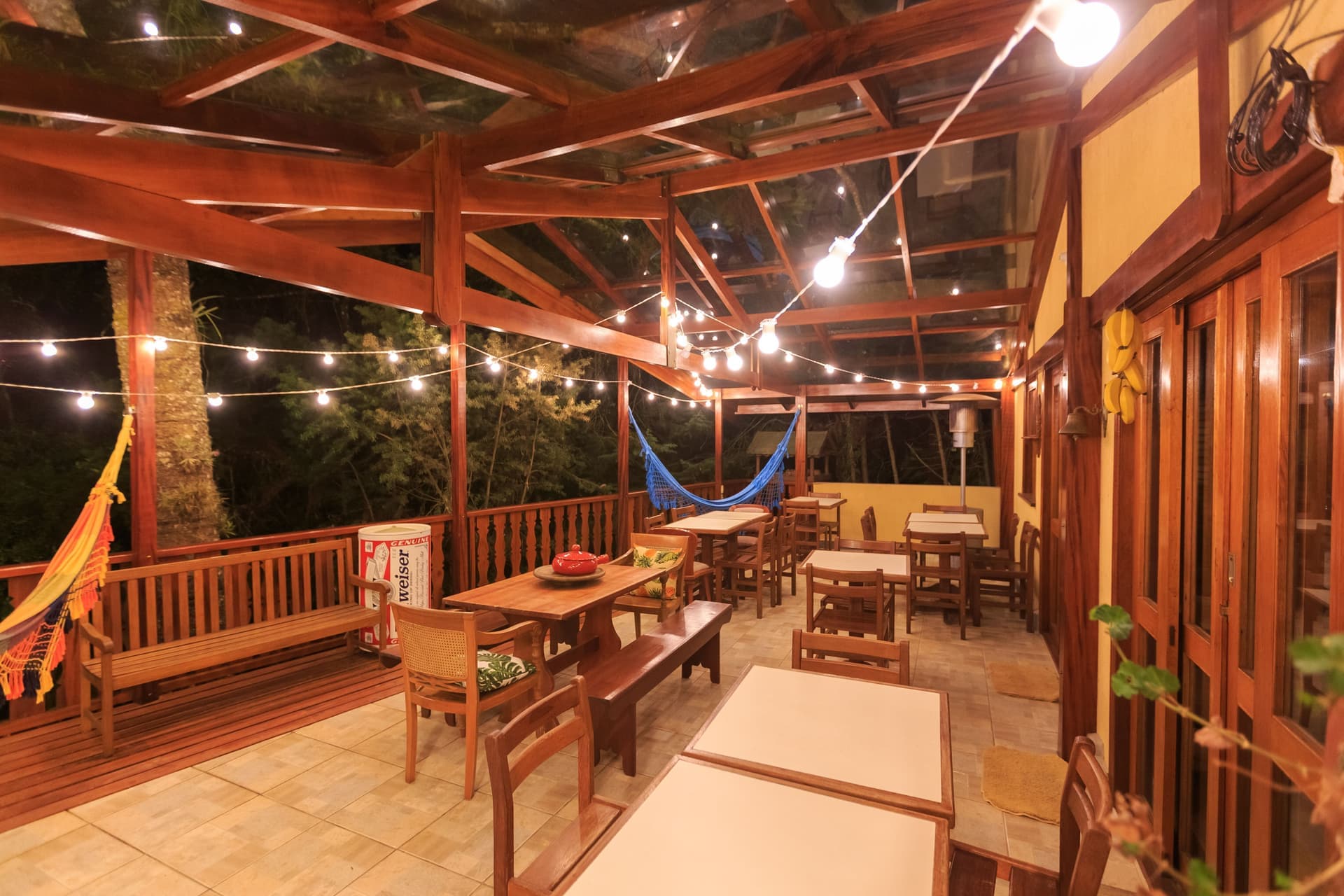
A patio is not a party and it is not a living room. It is the one outdoor spot where a speaker stays put — so buy for weather and tone, not for weight.
By Ryder M.Published
 Field-tested picks · 2026
How we are funded: Thump & Tote earns a commission when you buy through our Amazon links, at no extra cost to you. It never changes which speaker we put first — see how we pick and our affiliate disclosure.
Quick picks
Ranked for value first. Tap any row to jump to the full write-up.
| # | Product | Best for | Price |
|---|---|---|---|
| 1 |  Illustrative IllustrativeJBL Flip 7IP68, even tonality, and Auracast to add a second one. | Best overall | Check price on Amazon |
| 2 |  Illustrative IllustrativeSoundcore Boom 2A real subwoofer and a light ring, for less. | Best for entertaining | Check price on Amazon |
| 3 |  Illustrative IllustrativeTribit StormBox Mini+Reactive lights on a speaker designed as a speaker. | Best cheap one with lighting | Check price on Amazon |
| 4 | Illustrative Marshall Emberton III32+ hours and a tuning that does not tire you out. | Best for all-day listening | Check price on Amazon |
| 5 | Illustrative Soundcore Boom 2 PlusFour drivers, 40 Hz, and an aux jack. | Best for a big deck | Check price on Amazon |
| 6 |  Illustrative IllustrativeTribit XSound Go16 W and a full day of battery for very little. | Best budget pick | Check price on Amazon |
#ad — buy links go to Amazon and we earn a commission on qualifying purchases. Prices change constantly, so the live listing is always the price of record. Full disclosure.
The JBL Flip 7 is the best patio speaker for most people, and the reason is the IP68 rating rather than the sound — a patio speaker lives in pollen, dew, grit and the occasional shower, and the dust digit is what covers that. Add a second one over Auracast if the patio is wide. If the patio is where you entertain, the Soundcore Boom 2 gives you a real subwoofer and a light ring for less money. If the budget is firm, the Tribit XSound Go is genuinely enough for a small patio.
Patio buying gets done badly because the advice available is written for either a living room or a party, and a patio is neither. It is outdoors, so there are no walls to reflect sound back at you and bass disappears first. But it is also a fixed spot with people sitting a few feet away, so the brute-force answer that works for a crowd on a lawn is wasted here — and it is a spot where the speaker is exposed to weather for months at a stretch, which almost nobody mentions.
The useful way to think about it: a patio speaker is the one speaker on this site where portability does not matter at all. Weight is normally the main thing you trade away to get more sound, and here you can trade it away for free. That is why this list looks nothing like the camping list even though both are outdoors.
What actually matters on a patio
Before any picks, the criteria — in the order they should decide your purchase. This is deliberately not the order product listings lead with.
- A dust rating, not just a water rating. The one genuinely patio-specific requirement. IPX7 means water was tested and dust was not; IP67 or IP68 means both were. A patio speaker sits in pollen, lawn clippings, concrete dust and grit for months, and that is a slow failure no splash rating covers. What IPX7 and IP67 actually mean is the short version.
- Tone at conversation volume. People sit near a patio speaker and talk over it. A speaker that only comes alive when it is loud is the wrong tool — you want one that sounds balanced at a level that lets a conversation continue.
- All-day battery, or a socket. Patios get used in long stretches rather than bursts. Either buy real runtime, or accept the speaker will be on a charger — in which case a wired input and mains use are worth more than a big battery.
- Lighting, if the patio gets used after dark. We normally treat lit speakers with suspicion. A patio is the one place the feature earns its keep, because the speaker is stationary and the light has something to light.
- A wired input, if anything else plugs in. A TV on a covered patio, a turntable, a laptop for a film. Bluetooth latency makes video unwatchable; an aux jack solves it outright. Speakers with an aux input covers the shrinking field.
- Output last, not first. A typical patio is a seating area with people close by, which needs far less speaker than a backyard does. If your patio is really a deck that hosts twenty people, you are shopping the backyard party list instead.
The picks
IllustrativeBest patio speaker overall
JBL Flip 7
The default mid-size pick, and the speaker every value brand is trying to undercut.
- What it does well
- IP68 is the rating this use case actually wants — the dust axis is certified rather than skipped, which is what covers pollen and grit over a season outside. The tonality is even across the volume range instead of only working loud, so it sounds right under conversation. Auracast means a second Flip extends coverage across a wide patio without an app dance, and fourteen hours plus Playtime Boost covers a long evening.
- Where it cuts corners
- You pay a real brand premium, and several speakers below match its battery and water rating for noticeably less. Its bass still runs out earlier in open air than a bigger cabinet does, and there is no aux input at all, so a patio TV is out.
- Who it is for
- The default answer for a normal patio, especially one that stays out in the weather.
- Battery: 14 hours, plus up to 2 more in Playtime Boost mode
- Water rating: IP68 — submersible to 1.5 m for 30 minutes, dustproof
- Weight: 1.82 lb (about 560 g)
#ad — we earn a commission on qualifying purchases. How this is funded
IllustrativeBest if the patio is where you entertain
Soundcore Boom 2
The value answer to a party speaker: it floats, it is loud, and it lasts a day.
- What it does well
- A dedicated 50 W subwoofer with two 15 W tweeters and a quoted 45 Hz floor — real hardware rather than an EQ curve, and outdoors the gap against passive-radiator designs is immediately audible. The light ring is diffused and tracks the music rather than strobing, which is what a patio after dark wants. It floats, and it costs less than the JBL.
- Where it cuts corners
- The twenty-four hour figure assumes BassUp and the lights are off, which is not how anyone uses it at a gathering. IPX7 leaves dust untested, a genuine weakness for a speaker left outside. Finish is clearly below JBL's, and it is bulky enough that it lives in one place.
- Who it is for
- Patios that host people regularly and want bass that survives the open air.
- Battery: Up to 24 hours at 50% volume with BassUp and lights off
- Water rating: IPX7 — submersible to 1 m for 30 minutes, and it floats
- Output: Up to 80 W peak output (a 50 W subwoofer plus two 15 W tweeters)
#ad — we earn a commission on qualifying purchases. How this is funded
IllustrativeBest cheap one with lighting
Tribit StormBox Mini+
Reactive lighting on a speaker that is not just a light show.
- What it does well
- Reactive lighting that genuinely tracks the music, on a speaker clearly designed as a speaker first, at a price in the under-$50 bracket. IPX7 covers rain and a hosed-down patio, and the app EQ lets you undo the factory bass lift.
- Where it cuts corners
- The lights are the fastest way to halve the battery, and the small cabinet means the bass triggering the light show is more visible in the LEDs than audible in the air. Tribit's quoted playtime for this model moves between listings, so check the one you buy. No dust rating.
- Who it is for
- A small patio where ambience matters as much as output and the budget is firm.
- Battery: Manufacturer-quoted; check the current listing
- Water rating: IPX7 — submersible to 1 m for 30 minutes
#ad — we earn a commission on qualifying purchases. How this is funded
IllustrativeBest for all-day listening
Marshall Emberton III
Thirty-two hours and a genuinely grown-up tuning, in something you can pocket in a coat.
- What it does well
- 32+ hours is the longest runtime of any speaker this size we recommend, and twenty minutes of charging returns about six — which suits a patio used in long unplanned stretches. IP67 covers both dust and water. The tuning is restrained in a way budget speakers never are: it sounds like a small hi-fi rather than a loud toy, which is the right character when people are talking.
- Where it cuts corners
- No aux input at all, so a patio TV or a turntable rules it out. It is also not especially loud for the money — you are paying for refinement and battery, not output — and it sits well above this site's usual value ceiling.
- Who it is for
- Patios used for sitting and listening rather than for parties.
- Battery: 32+ hours, with 20 minutes of charging giving about 6 hours
- Water rating: IP67 — submersible to 1 m for 30 minutes, dustproof
- Output: Two 38 W Class D amplifiers driving two 10 W full-range drivers plus two passive radiators
- Weight: 1.5 lb (0.67 kg)
#ad — we earn a commission on qualifying purchases. How this is funded
IllustrativeBest for a big deck
Soundcore Boom 2 Plus
Two woofers, two tweeters and an aux jack — the most bass hardware per dollar in a carryable box.
- What it does well
- Two 50 W woofers and two 20 W tweeters, up to 140 W in BassUp 2.0 and a quoted 40 Hz floor — enough to fill a large deck without the bass folding in on itself. It keeps a 3.5 mm aux input, making it the one speaker here that will take a TV or a turntable, and a 10 W USB output that will keep a phone alive through an evening.
- Where it cuts corners
- 8.4 lb, which is irrelevant on a patio and disqualifying anywhere else. The default BassUp tuning is heavy-handed, with the mids and highs set back behind the bass. Its twenty-hour figure assumes BassUp and the lights off, there is only one USB-C port, and IPX7 leaves dust untested.
- Who it is for
- Large decks and patios big enough that a Flip would disappear in them.
- Battery: Up to 20 hours at 50% volume with BassUp and the light effects switched off
- Water rating: IPX7 — submersible to 1 m for 30 minutes, and it floats
- Output: 100 W as standard, up to 140 W in BassUp 2.0 mode, from two 50 W woofers and two 20 W tweeters
- Weight: 8.4 lb
#ad — we earn a commission on qualifying purchases. How this is funded
IllustrativeBest budget patio speaker
Tribit XSound Go
The long-running budget workhorse: 16 W and a full day of battery.
- What it does well
- 16 W and a quoted twenty-four hours at a price most speakers cannot match on either figure, with IPX7 sealing and a custom EQ that lets you flatten the factory bass lift. On a small patio with people sitting close, this is genuinely enough speaker.
- Where it cuts corners
- No dust rating and a plasticky shell, so it will not weather a season outside as well as the JBL. At high volume the XBass mode audibly compresses, and street pricing on this model swings widely enough that it is not always the cheap option — check before assuming.
- Who it is for
- A small patio, a first speaker, or anywhere you would rather not leave something expensive outside.
- Battery: 24 hours quoted at 50% volume
- Water rating: IPX7 — submersible to 1 m for 30 minutes
- Output: 16 W
#ad — we earn a commission on qualifying purchases. How this is funded
How the six compare
| Speaker | Dust + water | Quoted battery | Aux in | Lighting |
|---|---|---|---|---|
| JBL Flip 7 | IP68 | 14 h, +2 in Playtime Boost | No | No |
| Soundcore Boom 2 | IPX7, dust untested | 24 h, BassUp and lights off | No | Yes |
| Tribit StormBox Mini+ | IPX7, dust untested | Check the current listing | No | Yes |
| Marshall Emberton III | IP67 | 32+ h | No | No |
| Soundcore Boom 2 Plus | IPX7, dust untested | 20 h, BassUp and lights off | Yes | Yes |
| Tribit XSound Go | IPX7, dust untested | 24 h at 50% volume | No | No |
Read that battery column carefully. Soundcore's figures explicitly exclude BassUp and the lights; Tribit's assumes 50% volume; JBL's assumes standard EQ. These are all honestly obtained numbers measured under different rules, which is exactly why they should not be ranked against each other. Battery life sets out how the category produces them.
Why the dust digit is the patio specification
Almost every speaker worth buying is now water-rated, because the rating is cheap to obtain and sells well. Far fewer are dust-rated, and dust is the axis a patio actually tests. A patio speaker does not get dunked; it gets coated. Spring pollen, lawn clippings, grit blown off concrete and the fine dust that settles on anything left outdoors all work their way into grilles and port openings over months, and none of it is covered by an IPX7 label.
That is the whole reason the JBL Flip 7 leads this page rather than a cheaper speaker with the same water rating. IP68 means the dust axis was tested and passed. IPX7 means it was never tested at all — the X is a literal gap in the certification, not a zero. If your patio is covered and the speaker comes indoors most nights, the distinction matters much less and the cheaper picks here get stronger.
One thing no rating covers: leaving a speaker outside through a winter. Lithium cells degrade faster at temperature extremes, so a speaker stored outdoors through freezing or baking conditions loses capacity sooner than the same speaker kept inside. How long Bluetooth speakers last covers what actually kills them.
One speaker or two?
On a patio wider than about fifteen feet, two modest speakers beat one expensive one, and by a larger margin than most people expect. Outdoors you get no help from reflections, so coverage is purely a function of how far the sound has to travel — halving that distance does more for perceived loudness than doubling the wattage. Two Flip 7s linked over Auracast at either end of a seating area will sound better than one speaker costing twice as much in the middle.
The catch is that linking is brand-bound in practice. Auracast is an open Bluetooth standard and JBL's current range supports it broadly; Soundcore's pairing works best Soundcore-to-Soundcore. Buy both speakers at once from the same range, or accept that you are running one. Auracast vs PartyBoost covers what changed, and how to pair two speakers covers the mechanics.
How much to spend
For a normal patio — a seating area, a few people, music under conversation — the $50 to $100 band is the right target, which is the same answer we give on best under $100. What the money buys at that level is a weather rating you can trust and enough output that you are not running the speaker at its limit all evening, which is the thing that makes cheap speakers sound cheap.
Spend above $150 only for a specific reason: a genuinely large deck (the Boom 2 Plus), long unbroken listening sessions where 32 hours changes your habits (the Emberton III), or a wired source that needs an aux jack. Spend below $50 if the patio is small and the speaker will sit three feet from where you sit — physics is on your side at that distance, and the under-$50 tier covers it.
What we did not pick, and why
- Mains-powered outdoor speakers and rock speakers. Genuine options for a permanent install, but they are a wiring project rather than a purchase, and this site covers portables.
- Smart speakers. A Wi-Fi speaker outdoors depends on the patio having reliable coverage, and most do not at the far end of a garden. Bluetooth vs Wi-Fi covers the trade honestly.
- The JBL Xtreme 4 and Bose SoundLink Max. Both excellent, both well above this site's value ceiling, and on a patio neither does anything the Boom 2 Plus does not do for less. The Bose is the one exception worth knowing about if you need both an aux jack and the best tone available.
- Anything with no published IP rating. Several good-sounding FM and radio speakers fall here — see speakers with FM radio. On a covered porch they are fine; on an open patio they are a warranty argument waiting to happen.
If your patio reads more like a party deck, backyard party speakers and the loudest for the money are the right lists. If it sits next to a pool, start with pool speakers instead, where buoyancy outranks everything on this page.
Frequently asked questions
What is the best Bluetooth speaker for a patio?
Can I leave a Bluetooth speaker outside on the patio?
Do I need a waterproof speaker for a patio?
How many watts do I need for a patio speaker?
Is one patio speaker enough, or should I buy two?
What is the difference between a patio speaker and a backyard party speaker?
Update log
- First publication. Ranked on dust rating, tone at low volume and all-day runtime rather than maximum output, which a patio does not test.
Sources
Every specification quoted above comes from the manufacturer or retailer listing below. We publish no measurements of our own — see how we pick.
- JBL — Flip 7 product page (manufacturer specifications)
- RTINGS — JBL Flip 7 measurements (independent test lab)
- Soundcore — Boom 2 product page (manufacturer specifications)
- Soundcore — Boom 2 support FAQ
- Soundcore — Boom 2 Plus product page (manufacturer specifications)
- Marshall — Emberton III product page (manufacturer specifications)
- Tribit — XSound Go product page (manufacturer specifications)
- IEC 60529 — the international standard behind IP ratings
Read next
Outdoor & Party
The best Bluetooth speakers for a backyard party in 2026
Party picks for gardens and patios — plus why two speakers often beat one bigger one.
Outdoor & Party
The best Bluetooth speakers with lights in 2026
Lit speakers where the audio came first — and an honest account of what the LEDs cost you.

By Price
The best Bluetooth speakers under $100 in 2026
The tier most people should buy in — six picks, ranked for value, with the compromises named.

Guides
What IPX7 and IP67 actually mean
Every IP rating decoded, and the single character that decides pool versus beach.
Reviews
The most drivers per dollar in a carryable speaker — and the two things the listings do not lead with: the weight and the tuning.
Head-to-Head
Soundcore Boom 2 Plus vs JBL Charge 6: which should you buy?
140 W of bass hardware against a 2 lb speaker with a power bank — a weight decision disguised as a sound decision.
Outdoor & Party
The loudest Bluetooth speakers for the money in 2026
Genuinely loud speakers ranked on output per dollar — and why wattage figures cannot be compared.

Guides
How to pair two Bluetooth speakers
Platform-by-platform steps for stereo and multi-speaker pairing — and why cross-brand does not work.