By Price
Best sound quality Bluetooth speakers under $100
Loud is easy to sell and easy to measure. Balanced is harder, cheaper to achieve, and what you actually live with.
By Ryder M.Published
 Field-tested picks · 2026
How we are funded: Thump & Tote earns a commission when you buy through our Amazon links, at no extra cost to you. It never changes which speaker we put first — see how we pick and our affiliate disclosure.
Quick picks
Ranked for value first. Tap any row to jump to the full write-up.
| # | Product | Best for | Price |
|---|---|---|---|
| 1 | 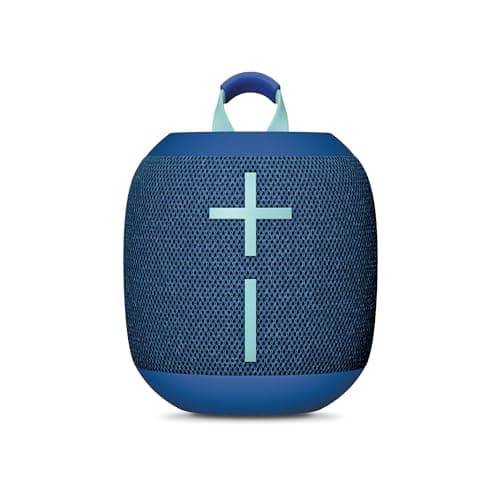 UE Wonderboom 4Two 40 mm drivers and two passive radiators, 360 degrees. | Best overall | $63.29View on Amazon |
| 2 | 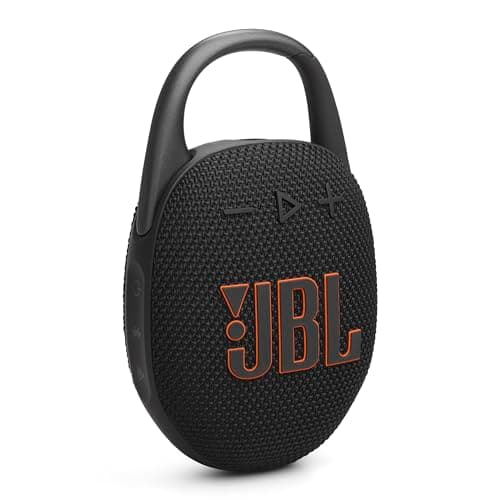 JBL Clip 5The most even voicing JBL sells at this size. | Best small-room pick | $79.95View on Amazon |
| 3 | 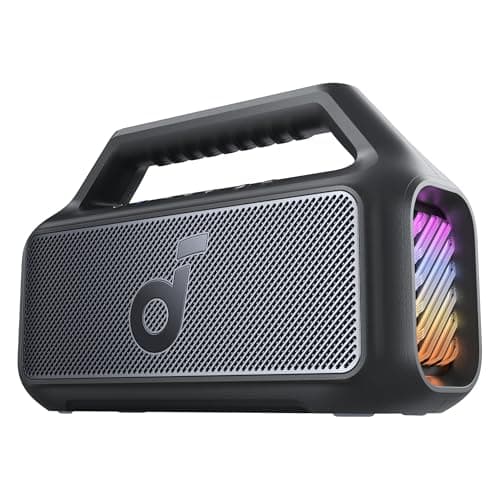 Soundcore Boom 2A 50 W subwoofer means bass from hardware, not EQ. | Best with real low end | $99.99$129.9923% offView on Amazon |
| 4 | 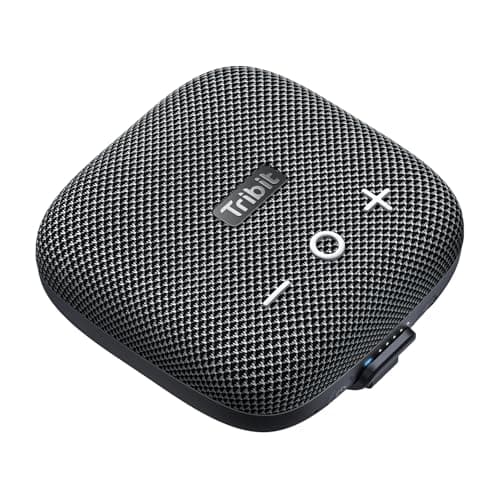 Tribit StormBox Micro 210 W done carefully, in 315 g that sits against anything. | Best flat-cabinet pick | $39.99$59.9933% offView on Amazon |
| 5 | 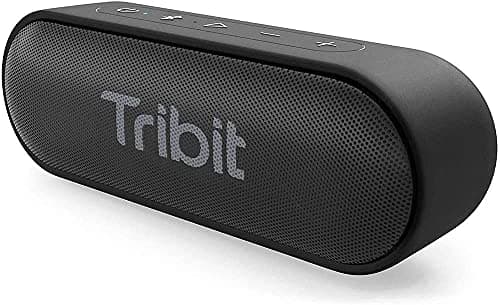 Tribit XSound Go16 W with a custom EQ you can actually fix it with. | Best budget pick | $34.99$39.9913% offView on Amazon |
#ad — buy links go to Amazon and we earn a commission on qualifying purchases. Prices change constantly, so the live listing is always the price of record. Full disclosure.
The UE Wonderboom 4 is the best-sounding speaker under $100: two 40 mm active drivers plus two passive radiators in a round 360-degree cabinet, which gives it an evenness across the room that directional speakers at this money do not manage. It is also IP67, it floats, it is rated for 5 ft drops and it runs 14 hours at 14.81 oz. The budget pick is the Tribit XSound Go: 16 W with a custom EQ and XBass, IPX7 and 24 quoted hours for about a third of the band. If you want low frequencies rather than balance, the Soundcore Boom 2 has an actual 50 W subwoofer. Every price here carries its own "as of" date.
Sound quality is the hardest thing to shop for in this category, because the two specifications that get printed — wattage and a frequency range — predict it badly. A speaker quoting 20 Hz to 20 kHz is telling you where its output becomes measurable, not where it stays flat, and a 100 W peak figure says nothing about whether the result is pleasant.
What does predict it, at this money, is driver count and cabinet design. Two drivers with passive radiators in a sealed round body is a real engineering choice; one full-range driver with aggressive bass processing is a cheaper one. This page ranks on that, and on what each speaker gives up to get there. Nothing here is measured by us — how we pick sets out the method.
What good sound costs under $100
Passive radiators are the cheapest honest way to get low frequencies. A passive radiator is an undriven cone that moves with the pressure inside the cabinet, extending the low end without a second amplifier. The Wonderboom 4 uses two, and the Marshall and Bose speakers further up the site use the same trick. It is why a 14.81 oz speaker can sound fuller than a bigger one with a single driver and a boost mode.
360-degree output solves a problem you did not know you had. A directional speaker has a sweet spot, and in a kitchen or a bathroom nobody sits in it. A round speaker radiating outward sounds the same from every seat, which in practice matters more than a slightly better on-axis response. The best speakers for a kitchen leans on exactly this.
An EQ is worth more than an extra driver at the bottom of the band. The Tribit XSound Go's custom EQ lets you pull down the bass hump that cheap speakers ship with, and that single adjustment does more for how a speaker sounds indoors than almost anything else you can buy at the price. Why cheap speakers sound cheap is the longer version of this argument.
Bass you can feel requires a woofer, and that is a different purchase. Only the Soundcore Boom 2 has one in this band. If low frequencies are the priority rather than balance, accept the size and read the best speakers for bass — no amount of processing in a small cabinet substitutes.
Where the speaker sits changes more than which speaker you bought. A speaker pushed into a corner gains several decibels of bass for free, and one on a resonant shelf gains a boom you will not enjoy. How to make a Bluetooth speaker louder covers the placement rules, and why a speaker sounds muffled covers the most common way this goes wrong.
The picks
Best overall under $100
UE Wonderboom 4
The one to buy if the speaker is going anywhere near water.
- What it does well
- Two 40 mm active drivers plus two passive radiators in a sealed round cabinet, radiating 360 degrees — the most even, least fatiguing sound in the band from any seat in a room. It is also genuinely robust: IP67 for dust and immersion, rated for 5 ft drops, and it floats. 14 hours, a quoted 131 ft range, 14.81 oz.
- Where it cuts corners
- There is no app EQ, so the voicing is the voicing — UE tuned it warm and you cannot change that. No aux input, no stereo pairing with a second unit in the way the Soundcore and Tribit picks manage, and it will not fill open ground.
- Who it is for
- Anyone who wants one small speaker that sounds right everywhere in a room.
- Battery: 14 hours
- Water rating: IP67 — submersible to 1 m for 30 minutes, dustproof, and it floats
- Weight: 14.81 oz (420 g)
#ad — we earn a commission on qualifying purchases. How this is funded · Price as of November 11, 2026
Best small-room pick
JBL Clip 5
The carabiner is the whole product, and it is a genuinely good one.
- What it does well
- JBL's voicing at this size is the most even in its own range — vocals sit forward without the scooped-out midrange that cheaper speakers use to fake clarity. IP67 covers dust and immersion, the integrated metal carabiner is the best attachment in the band, and Auracast will link it to a second JBL. 12 hours, plus up to 3 more in Playtime Boost.
- Where it cuts corners
- One driver, no stereo, and the low end disappears the moment you take it outdoors. You pay a brand premium for a small speaker, Playtime Boost trades tonal balance for runtime, and there is no aux input or app EQ.
- Who it is for
- A bathroom, a desk or a hotel room, where the carabiner earns its place too.
- Battery: 12 hours, plus up to 3 more in Playtime Boost mode
- Water rating: IP67 — submersible to 1 m for 30 minutes, dustproof
#ad — we earn a commission on qualifying purchases. How this is funded · Price as of November 11, 2026
Best if you want real low end in the band
Soundcore Boom 2
The value answer to a party speaker: it floats, it is loud, and it lasts a day.
- What it does well
- A dedicated 50 W subwoofer plus two 15 W tweeters, up to 80 W peak, with response quoted at 45 Hz to 20 kHz. This is the only speaker under $100 whose bass comes from hardware rather than processing, and the difference is immediately obvious on anything with a kick drum in it. IPX7, it floats, 24 hours, and a carry strap.
- Where it cuts corners
- It is much bigger than everything else here, and tonally it is tuned for impact rather than balance — pulling the low end down in the app is the first thing to do indoors. IPX7 carries no dust rating, and there is no aux input.
- Who it is for
- Anyone whose complaint about cheap speakers is specifically the missing bass.
- Battery: Up to 24 hours at 50% volume with BassUp and lights off
- Water rating: IPX7 — submersible to 1 m for 30 minutes, and it floats
- Output: Up to 80 W peak output (a 50 W subwoofer plus two 15 W tweeters)
#ad — we earn a commission on qualifying purchases. How this is funded · Price as of November 11, 2026
Best flat-cabinet pick
Tribit StormBox Micro 2
The best-argued cheap speaker on the market, and now a last-generation bargain.
- What it does well
- 10 W handled carefully rather than 20 W handled badly — Tribit tuned this one for a clean midrange instead of chasing a bass figure, and in a small room it sounds more composed than its size suggests. IP67, 315 g, Bluetooth 5.3 with a quoted range of about 120 ft, and a flat body with an integrated rubber strap that sits against a surface or a bar properly.
- Where it cuts corners
- 10 W is the least output in the band and there is no pretending otherwise outdoors. 12 hours is the shortest runtime here, and there is no app EQ or aux input.
- Who it is for
- A desk, a bedside table, a bike or a bag, where composure matters more than scale.
- Battery: Up to 12 hours
- Water rating: IP67 — submersible to 1 m for 30 minutes, dustproof
- Output: 10 W
- Weight: 315 g
#ad — we earn a commission on qualifying purchases. How this is funded · Price as of November 11, 2026
Best budget pick
Tribit XSound Go
The long-running budget workhorse: 16 W and a full day of battery.
- What it does well
- 16 W with a custom EQ and an XBass mode, which is the important combination at this price: the EQ lets you correct the factory voicing rather than live with it. IPX7 immersion, USB-C, 24 hours quoted at 50% volume, and TWS pairing so two of them make a stereo pair for still less than the band's top pick.
- Where it cuts corners
- IPX7 has no dust rating. 16 W from a small cabinet is a room speaker, and XBass raises what the driver already does rather than extending it. No aux input, and the build is plainly built to a price.
- Who it is for
- Anyone who wants most of the sound for a third of the band, or a cheap stereo pair.
- Battery: 24 hours quoted at 50% volume
- Water rating: IPX7 — submersible to 1 m for 30 minutes
- Output: 16 W
#ad — we earn a commission on qualifying purchases. How this is funded · Price as of November 11, 2026
What each one is built from
| Speaker | Drivers | Low end quoted | EQ | Playtime |
|---|---|---|---|---|
| UE Wonderboom 4 | Two 40 mm active plus two passive radiators | Not published | None | 14 hours |
| JBL Clip 5 | Not published by JBL | Not published | None | 12 hours, plus up to 3 |
| Soundcore Boom 2 | One 50 W subwoofer plus two 15 W tweeters | 45 Hz | App EQ with presets | 24 hours |
| Tribit StormBox Micro 2 | Not published in detail; 10 W | Not published | None | Up to 12 hours |
| Tribit XSound Go | Not published in detail; 16 W | Not published | Custom EQ plus XBass | 24 hours |
Who should spend differently
- Anyone listening at a desk all day. Near-field changes the brief entirely — the best speakers for a computer and for an office are the right pages.
- Anyone in a shared building. Bass that pleases you travels through walls. The best speakers for a dorm room is written around exactly that constraint, and for a bedroom around the quiet end of it.
- Anyone connecting a turntable. No speaker here has an aux input. The best speakers for a record player is the page, and it is a wiring problem first.
- Anyone who wants hi-fi rather than portable. A mains-powered pair will beat all of these for the money. Bluetooth speakers vs bookshelf speakers is the honest comparison.
- Anyone who wants volume above all. The loudest under $100 ranks the same band on output instead.
If the budget is the real constraint, the best speakers under $100 ranks the band on overall value and the best sound quality removes the cap entirely. The best small Bluetooth speakers overlaps this page heavily, and how to choose a Bluetooth speaker is the framework if you are still weighing one against another.
Frequently asked questions
What is the best sounding Bluetooth speaker under $100?
Why does a frequency response figure not tell me how good a speaker sounds?
What is the best cheap speaker that still sounds good?
Are passive radiators better than a bass-boost mode?
Will any speaker under $100 give me real bass?
Does a 360-degree speaker sound better than a directional one?
Is it better to buy one good speaker or two cheap ones?
Update log
- First publication. /price/best-sound-quality ranks the category with no budget; live autocomplete shows the under-$100 version is a separate query, and thirteen registry products carried a live offer in the band at publication.
Sources
Every specification quoted above comes from the manufacturer or retailer listing below. We publish no measurements of our own — see how we pick.
- Ultimate Ears — Wonderboom 4 product page (manufacturer specifications)
- RTINGS — Tribit StormBox Micro 2 vs UE Wonderboom 4 comparison
- JBL — Clip 5 specification sheet (PDF)
- JBL — Clip 5 product page
- Soundcore — Boom 2 product page (manufacturer specifications)
- Tom's Guide — Tribit StormBox Micro 2 review
- Tribit — XSound Go product page (manufacturer specifications)
- Amazon Associates Program — Operating Agreement
Read next
By Price
The best sounding Bluetooth speakers in 2026
Ranked on tonal accuracy rather than loudness, with the point of diminishing returns marked.
By Price
The best Bluetooth speakers under $100 in 2026
The tier most people should buy in — six picks, ranked for value, with the compromises named.
By Price
The best small Bluetooth speakers
Pocket and desk-sized picks, ranked on how much they get out of a cabinet that cannot be big.
Guides
Why cheap Bluetooth speakers sound cheap
The editorial spine of this site: what a small cabinet physically cannot do, and what it can.
Outdoor & Party
Loudest Bluetooth speakers under $100
The Soundcore Boom 2 is the only speaker under $100 with a dedicated 50 W subwoofer. The Tribit XSound Go is the budget pick.
Guides
How to choose a Bluetooth speaker
The complete buying framework — the four specs that matter and the three that do not.