Head-to-Head
Marshall vs JBL
One brand sells restraint and a 32-hour battery. The other sells toughness and a feature list. They barely overlap.
By Ryder M.Published
 Field-tested picks · 2026
How we are funded: Thump & Tote earns a commission when you buy through our Amazon links, at no extra cost to you. It never changes which speaker we put first — see how we pick and our affiliate disclosure.
Quick picks
Ranked for value first. Tap any row to jump to the full write-up.
| # | Product | Best for | Price |
|---|---|---|---|
| 1 | 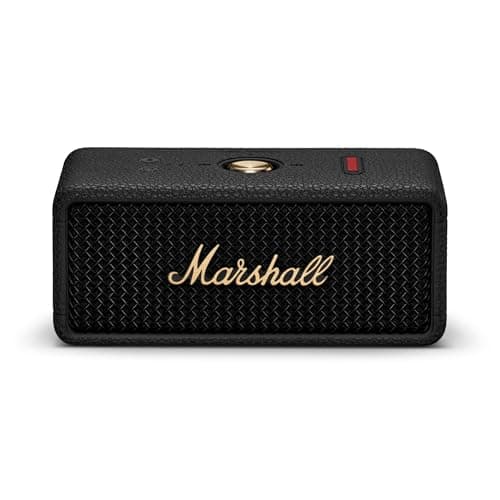 Marshall Emberton III32+ hours and the most restrained tuning here. | Best for listening | $179.99View on Amazon |
| 2 | 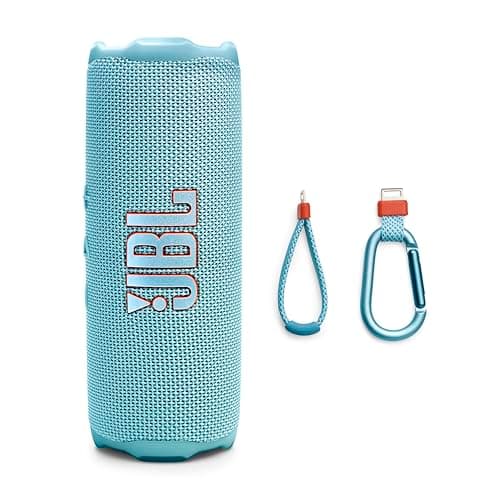 JBL Flip 7IP68, USB-C lossless audio and Auracast. | Best all-rounder | $119.95$149.9520% offView on Amazon |
| 3 | 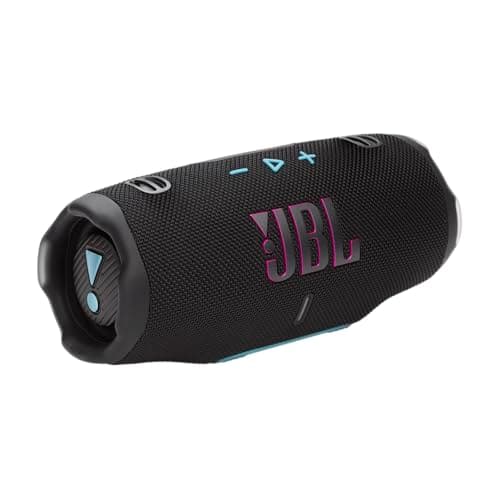 JBL Charge 624 hours and a power bank in the back. | Best battery from JBL | $149.95$199.9525% offView on Amazon |
#ad — buy links go to Amazon and we earn a commission on qualifying purchases. Prices change constantly, so the live listing is always the price of record. Full disclosure.
Buy the Marshall Emberton III if you listen for hours at moderate volume and want the speaker to sound unforced — 32+ hours of battery and a restrained tuning are its two real advantages, and both matter more the longer you listen. Buy the JBL Flip 7 if you want the better all-rounder: IP68 rather than IP67, USB-C lossless audio that removes Bluetooth latency on video, Auracast linking, and even tonality across the whole volume range. The deciding question is simple — are you buying a speaker to listen to, or a speaker to take places?
These two brands get cross-shopped constantly and they are built around genuinely different priorities, which makes this a cleaner comparison than most. Marshall's portables are home objects that happen to travel: the money goes into the tuning, the battery and the way the thing feels. JBL's are travel objects that happen to sound good: the money goes into sealing, connectivity, durability and the ecosystem of features around the speaker.
Neither brand is cheap. Both sit above the value tier this site usually recommends, which is worth saying before the comparison starts — Soundcore and Tribit match the IP ratings and beat the batteries of both for markedly less money, and if price is your binding constraint that is where to look first.
| Marshall Emberton III | JBL Flip 7 | JBL Charge 6 | |
|---|---|---|---|
| Battery | 32+ hours; 20 min charge gives about 6 hours | 14 hours, plus up to 2 in Playtime Boost | 24 hours, up to 28 with Playtime Boost |
| Water and dust | IP67 — submersible to 1 m, dustproof | IP68 — submersible to 1.5 m, dustproof | IP68 — submersible to 1.5 m, dustproof |
| Wired input | None | USB-C lossless audio | None published |
| Multi-speaker | Not published | Auracast | Auracast |
| Extras | True Stereophonic, 1.5 lb | Clip-on loop, Bluetooth 5.4 | Built-in power bank, Bluetooth 5.4 |
| Character | Restrained, built for long sessions | Even across the volume range | Bigger cabinet, low end survives outdoors |
Battery: Marshall, by a wide margin
This is the least ambiguous category on the page. The Emberton III's 32+ hours is more than double the Flip 7's 14 and comfortably ahead of the Charge 6's 24 — and the Charge 6 is a physically larger speaker with a bigger cell to get there. Marshall's fast charge compounds the advantage: twenty minutes on the cable buys about six hours, which turns a flat speaker into a usable one over a coffee.
The caveat that applies to all three is the same one that applies everywhere: quoted battery figures are measured at moderate volume with extras disabled. Halve them for real use at a realistic level and the ordering does not change, but the numbers do. Battery life, honestly sets out why.
The Charge 6 does have one trick neither of the others does, which is a power bank built into the back — it will revive a phone. That is a genuinely useful feature on a camping trip, with the honest caveat that using it twice costs you a night of playback.
Durability: JBL, but less than the badge suggests
Both JBLs are IP68 against the Emberton III's IP67. In practice that is the difference between 1.5 m of immersion and 1 m, both dust-tight, and for almost everybody it is a distinction without a consequence — if your speaker is 1.4 m underwater, something has gone wrong either way. What IP ratings mean breaks the digits down.
What is more notable is that neither brand publishes a drop rating, which is the specification that actually predicts whether a portable survives three years of being carried around. Soundcore's cheaper models do publish one. That is a real gap in both of these product lines, and worth knowing before paying a premium for perceived toughness.
Sound: different goals, not a ranking
The Emberton III is tuned with less bass lift and less treble lift than the category norm. The practical consequence is that voices sit where they should, long listening sessions do not become tiring, and the speaker sounds slightly unimpressive next to a rival in a showroom — which is exactly the trade a hi-fi voicing makes.
The Flip 7's strength is consistency: it holds its tonal balance across the volume range rather than only sounding right loud, which is unusual and underrated. The Charge 6's strength is cabinet volume — its extra size gives it low end that actually survives being outdoors, where the Flip 7 and the Emberton III both run out of bass in open air.
So the ranking depends entirely on where you are. Indoors at moderate volume, the Emberton III. Outdoors at a distance, the Charge 6. Everywhere in between, the Flip 7.
Features and connectivity: JBL, clearly
- Auracast. Both JBLs link to other Auracast speakers without an app dance. Marshall does not publish an equivalent. If you might buy a second speaker, this matters — how to pair two speakers explains why cross-brand linking essentially never works.
- USB-C lossless audio. Only the Flip 7. Plug it into a laptop and the 100–250 ms of Bluetooth latency that ruins video lip-sync disappears, along with the pairing. For anyone using the speaker with a computer this is the single biggest functional difference on this page.
- A power bank. Only the Charge 6, and only at the cost of its own runtime.
- Wired analogue input. None of the three. If a turntable or a TV is the source, all three are the wrong speaker — the best speakers with an aux input is the page.
The picks
Buy this if you are buying a speaker to listen to
Marshall Emberton III
Thirty-two hours and a genuinely grown-up tuning, in something you can pocket in a coat.
- What it does well
- Thirty-two-plus hours is the longest runtime of any speaker this size we recommend, and the twenty-minute fast charge is the kind of feature you only value once. The tuning is restrained in a way budget speakers never are — it sounds like a small hi-fi rather than a loud toy, which is what makes it the pick for a bedroom, a desk or a long train journey.
- Where it cuts corners
- No aux input at all, no published multi-speaker linking, and no drop rating. It is not especially loud for the money, so it is the wrong speaker for a yard or a party. You are paying for refinement and battery, not for output or features.
- Who it is for
- Home listening, long trips, bedside use, and anyone who has turned a speaker off because it was tiring.
- Battery: 32+ hours, with 20 minutes of charging giving about 6 hours
- Water rating: IP67 — submersible to 1 m for 30 minutes, dustproof
- Output: Two 38 W Class D amplifiers driving two 10 W full-range drivers plus two passive radiators
- Weight: 1.5 lb (0.67 kg)
#ad — we earn a commission on qualifying purchases. How this is funded · Price as of October 17, 2026
Buy this if you want the better all-rounder
JBL Flip 7
The default mid-size pick, and the speaker every value brand is trying to undercut.
- What it does well
- Even tonality across the whole volume range, a genuinely rugged IP68 shell, USB-C lossless audio that removes latency for video and games, and Auracast linking that chains speakers without an app dance. It is the model the rest of this category gets measured against, and it earns that in breadth rather than in any single number.
- Where it cuts corners
- Fourteen hours against the Emberton III's 32 is the headline weakness and it is a real one. You pay a brand premium: several speakers match its rating and beat its battery for markedly less. No analogue aux input, and the bass runs out earlier outdoors than a bigger cabinet would.
- Who it is for
- Buyers who want the safe answer, who will move the speaker between rooms, bags and a laptop, and who use it hard enough that the build pays for itself.
- Battery: 14 hours, plus up to 2 more in Playtime Boost mode
- Water rating: IP68 — submersible to 1.5 m for 30 minutes, dustproof
- Weight: 1.82 lb (about 560 g)
#ad — we earn a commission on qualifying purchases. How this is funded · Price as of October 17, 2026
Buy this if the speaker lives outdoors
JBL Charge 6
The battery-life benchmark, with a power bank built into the back.
- What it does well
- Twenty-four hours, or up to twenty-eight with Playtime Boost, closes most of the battery gap to Marshall while keeping JBL's IP68 sealing and Auracast. The extra cabinet volume over a Flip gives it low end that actually survives being outdoors, which is the single thing a bigger speaker buys you. The built-in power bank will revive a phone on a camping trip.
- Where it cuts corners
- It is heavy for what most people carry day to day, and the power bank drains the speaker fast enough that using it twice costs you a night of playback. The price sits at the very top of what this site considers value territory, and there is no wired input.
- Who it is for
- Campers and tailgaters who genuinely cannot charge for a day or two, and anyone whose listening happens outdoors.
- Battery: 24 hours, or up to 28 hours with Playtime Boost enabled
- Water rating: IP68 — submersible to 1.5 m for 30 minutes, dustproof
#ad — we earn a commission on qualifying purchases. How this is funded · Price as of October 17, 2026
The honest third answer
Both of these brands charge a premium, and on this site's terms the premium is hard to defend. The Soundcore Boom Go 3i is IP68, drop-tested from 1 m, quoted at 24 hours and has an app EQ you can use to approximate Marshall's restraint — for a fraction of either price. If the honest reason you are comparing Marshall and JBL is that those are the two names you know, the best Bluetooth speaker brands is the wider view.
If you have already decided on JBL, JBL Flip 7 vs Charge 6 is the internal decision in more detail. If you have already decided on Marshall, there is really only one portable to consider and the Marshall brand page covers it.
Frequently asked questions
Is Marshall better than JBL?
Which has better battery life, Marshall or JBL?
Does Marshall or JBL sound better?
Can I connect a Marshall speaker to a JBL speaker?
Is either one worth the money?
Update log
- First publication. Marshall had no comparison page on the site despite being in the product registry.
Sources
Every specification quoted above comes from the manufacturer or retailer listing below. We publish no measurements of our own — see how we pick.
- Marshall — Emberton III product page (manufacturer specifications)
- TechRadar — Marshall Emberton III review
- JBL — Flip 7 product page (manufacturer specifications)
- RTINGS — JBL Flip 7 measurements (independent test lab)
- JBL — Charge 6 product page (manufacturer specifications)
- SoundGuys — JBL Charge 6 review
- Bluetooth SIG — Auracast and Bluetooth LE Audio
Read next
Brands & Alternatives
What Marshall's portables actually do better, and the three alternatives worth comparing against.
Head-to-Head
JBL Flip 7 vs Charge 6: which one should you buy?
JBL's two most popular portables compared — and why the answer is about carrying, not sound.
Brands & Alternatives
JBL alternatives: what you actually give up going cheaper
Each popular JBL mapped to its cheaper equivalent, with the real cost of each swap stated.
Brands & Alternatives
The best Bluetooth speaker brands
What each major brand is actually good at, with the one model that makes its case.
Guides
Bluetooth speaker battery life, honestly
How quoted runtimes are produced, what to expect in reality, and the longest-lasting picks.
By Price
The best sounding Bluetooth speakers in 2026
Ranked on tonal accuracy rather than loudness, with the point of diminishing returns marked.