Brands & Alternatives
Marshall Bluetooth speakers
An amplifier brand selling portable speakers — which sounds like pure styling, and turns out not to be.
By Ryder M.Published
 Field-tested picks · 2026
How we are funded: Thump & Tote earns a commission when you buy through our Amazon links, at no extra cost to you. It never changes which speaker we put first — see how we pick and our affiliate disclosure.
Quick picks
Ranked for value first. Tap any row to jump to the full write-up.
| # | Product | Best for | Price |
|---|---|---|---|
| 1 | 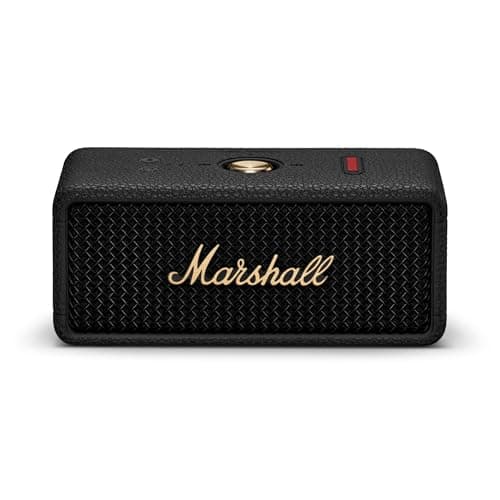 Marshall Emberton III32+ hours and a restrained, grown-up tuning. | The Marshall to buy | $179.99View on Amazon |
| 2 | 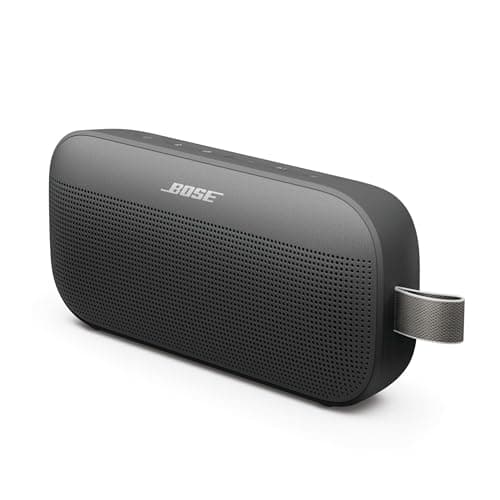 Bose SoundLink Flex (2nd Gen)The most convincing voicing in this size class. | Better tonally | $159.00View on Amazon |
| 3 | 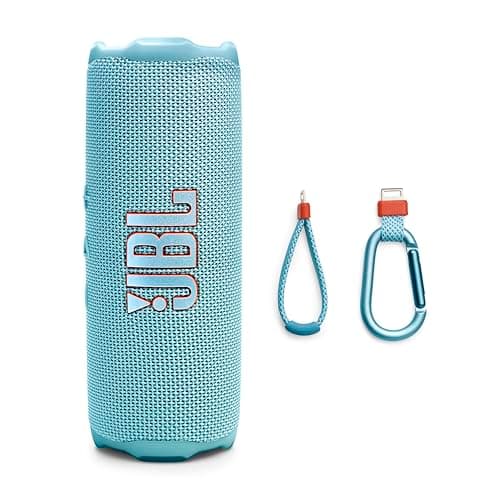 JBL Flip 7IP68, USB-C lossless audio and Auracast. | Tougher and more connected | $119.95$149.9520% offView on Amazon |
| 4 | 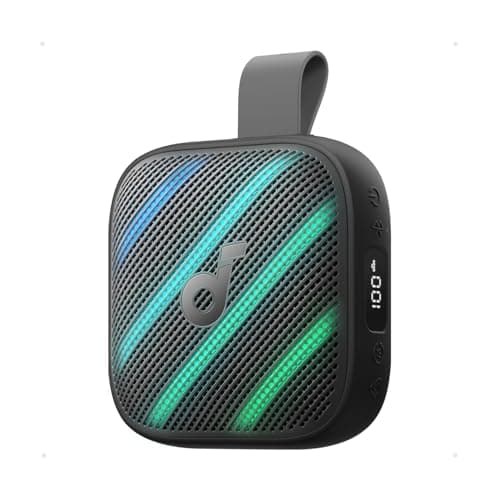 Soundcore Boom Go 3iIP68, drop-rated and 24 hours, for a fraction. | Far better value | $59.99$79.9925% offView on Amazon |
#ad — buy links go to Amazon and we earn a commission on qualifying purchases. Prices change constantly, so the live listing is always the price of record. Full disclosure.
Marshall's portable Bluetooth speakers are worth it for one specific buyer: somebody who listens for hours at modest volume and values a restrained, grown-up tuning over loudness, ruggedness or features. The Marshall Emberton III is the model to buy — 32+ hours of battery, the longest of any speaker this size we recommend, IP67 sealing, and a voicing that sounds like a small hi-fi rather than a loud toy. What you are not getting for the money is output, an aux input or any feature advantage, and that is a real gap at this price.
The obvious cynical read on Marshall portables is that an amplifier company licensed its logo onto Bluetooth speakers and charged a premium for the gold script and the vinyl-wrapped box. There is some truth in it — the styling is unmistakably the point of sale, and the brand carries weight that has nothing to do with any portable speaker it has ever made.
But the cynical read is incomplete, because the tuning is genuinely different from the category norm, and the difference goes the right way for a site aimed at people who actually listen. Nearly every portable speaker is voiced for a thirty-second shop demo: bass lifted, treble lifted, midrange pushed back between them. Marshall does noticeably less of that, and the result is a speaker you can leave on for four hours without it wearing you out.
What Marshall genuinely does well
- Restraint. The single real differentiator. Less bass lift and less treble lift than the category average means voices sit where they should and long sessions stay comfortable. If you have ever turned a speaker off because it was tiring rather than because you were done, this is the fix.
- Battery. 32+ hours on the Emberton III is the longest runtime of any speaker that size on this site, and twenty minutes of charging buys about six hours — the figure you appreciate on the morning you forgot to plug it in.
- Build and feel. The textured wrap, the brass-look control knob and the weight in the hand are a step above the moulded plastic that dominates this category. Whether that is worth money is personal; that it is real is not in question.
- Size-to-sound ratio. Two 38 W Class D amplifiers driving two 10 W full-range drivers plus two passive radiators, in something that fits in a coat pocket, is a serious amount of hardware for the dimensions.
| Speaker | Battery | IP rating | Aux input | Character |
|---|---|---|---|---|
| Marshall Emberton III | 32+ hours | IP67 | No | Restrained, even, built for long listening |
| Bose SoundLink Flex (2nd Gen) | Up to 12 hours | IP67 | No | The most convincing tonality in the class |
| JBL Flip 7 | 14 hours, plus 2 in Playtime Boost | IP68 | No (USB-C audio instead) | Even across the volume range, feature-rich |
| Soundcore Boom Go 3i | 24 hours | IP68, drop-tested from 1 m | No | Tough, loud for its size, EQ-adjustable |
The Marshall to buy, and what to weigh it against
The Marshall portable worth buying
Marshall Emberton III
Thirty-two hours and a genuinely grown-up tuning, in something you can pocket in a coat.
- What it does well
- Thirty-two-plus hours is the longest runtime of any speaker this size we recommend, and the fast charge is genuinely useful. The tuning is restrained in a way budget speakers never are — it sounds like a small hi-fi rather than a loud toy, which is the whole reason to consider the brand. True Stereophonic throws sound multi-directionally, so placement is forgiving, and IP67 covers a patio and a rainy walk.
- Where it cuts corners
- There is no aux input at all, which rules it out for a turntable or a TV and is a conspicuous omission at this price. It is not especially loud for the money, so it is the wrong speaker for a party. And at 1.5 lb it is a coat-pocket speaker rather than a trouser-pocket one.
- Who it is for
- Home listening, long trips, bedside use and anyone who values tuning and battery over volume and features.
- Battery: 32+ hours, with 20 minutes of charging giving about 6 hours
- Water rating: IP67 — submersible to 1 m for 30 minutes, dustproof
- Output: Two 38 W Class D amplifiers driving two 10 W full-range drivers plus two passive radiators
- Weight: 1.5 lb (0.67 kg)
#ad — we earn a commission on qualifying purchases. How this is funded · Price as of October 17, 2026
The alternative if tonality is the reason you were looking
Bose SoundLink Flex (2nd Gen)
The premium benchmark on this site — included so you can see what the money buys.
- What it does well
- Tonally the most convincing speaker in this size class — voices sit forward and the bass is controlled instead of merely loud. If the thing drawing you to Marshall is "I want it to sound right rather than impressive", Bose makes the same argument and arguably wins it. Build quality is a clear step above everything cheaper.
- Where it cuts corners
- Twelve hours is less than half the Emberton III's battery, and that is a real difference in daily use. The price gap to the value picks is larger than the sound gap for most listeners in most rooms, and there is no aux input here either.
- Who it is for
- Listeners who will genuinely sit and listen, and who would rather have the better voicing than the longer battery.
- Battery: Up to 12 hours
- Water rating: IP67 — submersible to 1 m for 30 minutes, dustproof
#ad — we earn a commission on qualifying purchases. How this is funded · Price as of October 17, 2026
The alternative if you want features and toughness
JBL Flip 7
The default mid-size pick, and the speaker every value brand is trying to undercut.
- What it does well
- IP68 rather than IP67, USB-C lossless audio that removes Bluetooth latency for video, and Auracast linking that chains speakers without an app dance. Even tonality across the whole volume range rather than only working loud. If the Marshall's missing wired input is the sticking point, the USB-C path here is the closest answer in this group.
- Where it cuts corners
- Fourteen hours against the Emberton III's 32 is the headline gap, and you still pay a real brand premium — several speakers match its rating and beat its battery for markedly less. No analogue aux input, and it is a cylinder that rolls off tables.
- Who it is for
- Buyers who want the safe, feature-complete answer and will use it hard enough that the build quality pays for itself.
- Battery: 14 hours, plus up to 2 more in Playtime Boost mode
- Water rating: IP68 — submersible to 1.5 m for 30 minutes, dustproof
- Weight: 1.82 lb (about 560 g)
#ad — we earn a commission on qualifying purchases. How this is funded · Price as of October 17, 2026
The alternative if the price is the problem
Soundcore Boom Go 3i
Our default recommendation under $100 — tough, long-running and honestly specified.
- What it does well
- Twenty-four hours, IP68 dust-tight sealing and a 1 m drop rating — the strongest durability spec on this site — for a fraction of the Emberton III's price. The app EQ is the relevant point for anyone drawn to Marshall's tuning: you cannot buy Marshall's voicing, but you can pull the bass out of this one and get much closer than the factory setting suggests.
- Where it cuts corners
- It is mono, where the Emberton III throws sound multi-directionally, and it is plainly a plastic object rather than a nice one. Fifteen watts covers a desk, a kitchen or one end of a patio and no more. The light modes are the fastest way to spend the battery.
- Who it is for
- The value buyer who likes the idea of a restrained, long-running speaker but not the idea of paying a premium for the object.
- Battery: 24 hours, with a battery-level display on the speaker
- Water rating: IP68 — submersible and dust-tight, and drop-tested from 3.28 ft (1 m)
- Output: 15 W with BassUp 2.0, quoted at 92 dB peak
- Weight: 0.84 lb
#ad — we earn a commission on qualifying purchases. How this is funded · Price as of October 17, 2026
Is a Marshall speaker worth the money?
On this site's terms — 90% of the result for 40% of the price — the honest answer is usually no, and that is not a criticism so much as a description of what Marshall is selling. The Emberton III's battery is a genuine engineering advantage and its tuning is a genuine editorial one, but neither closes a gap large enough to justify the premium for a buyer whose main question is value.
Where it does make sense is the buyer for whom the speaker is a thing in the room rather than a tool — the one who will have it on a shelf, look at it daily, and listen for several hours at a time. That buyer is real and the product is good. It is just not the buyer most of this site is written for, and JBL alternatives and the best speakers for the money are where the rest should start.
What about the bigger Marshall speakers?
Marshall's larger home models sit well outside this site's value remit and are not in our registry, so we do not have verified specifications to publish for them and will not guess. The pattern holds, though: the appeal is the tuning, the build and the object, and the trade is price against output and features. If a large home speaker is what you want, Bluetooth vs bookshelf speakers is a more useful starting point than any brand page.
For a direct head-to-head against the brand Marshall is most often cross-shopped with, Marshall vs JBL runs the comparison properly.
Frequently asked questions
Are Marshall Bluetooth speakers worth it?
Which Marshall portable speaker should I buy?
Do Marshall speakers have an aux input?
Is Marshall better than JBL?
Are Marshall speakers actually made by the amplifier company?
Update log
- First publication. The registry carried a Marshall product with no brand page behind it.
Sources
Every specification quoted above comes from the manufacturer or retailer listing below. We publish no measurements of our own — see how we pick.
Read next
Head-to-Head
Emberton III against Flip 7 and Charge 6: battery, sealing, features and who each one is for.
Brands & Alternatives
The best Bluetooth speaker brands
What each major brand is actually good at, with the one model that makes its case.
Brands & Alternatives
JBL alternatives: what you actually give up going cheaper
Each popular JBL mapped to its cheaper equivalent, with the real cost of each swap stated.
Brands & Alternatives
Bose: the best sound, and the least value
The premium benchmark — where the tonal advantage is real and where it evaporates.
By Price
The best sounding Bluetooth speakers in 2026
Ranked on tonal accuracy rather than loudness, with the point of diminishing returns marked.
By Price
The best Bluetooth speaker for the money in 2026
The single best-value speaker at each price point, plus the two tactics that save the most money.