By Price
The best Bluetooth speakers for teachers in 2026
A full teaching day with no socket in reach, a hard room full of noise, and a device that gets carried between rooms. Battery and durability decide it.
By Ryder M.Published
 Field-tested picks · 2026
How we are funded: Thump & Tote earns a commission when you buy through our Amazon links, at no extra cost to you. It never changes which speaker we put first — see how we pick and our affiliate disclosure.
Quick picks
Ranked for value first. Tap any row to jump to the full write-up.
| # | Product | Best for | Price |
|---|---|---|---|
| 1 |  Illustrative IllustrativeAnker Soundcore 224 hours and stereo for a price a teacher can justify. | Best overall | Check price on Amazon |
| 2 |  Illustrative IllustrativeSoundcore Motion Boom30 W and a handle for a room with thirty people in it. | Best for a gym or studio | Check price on Amazon |
| 3 | 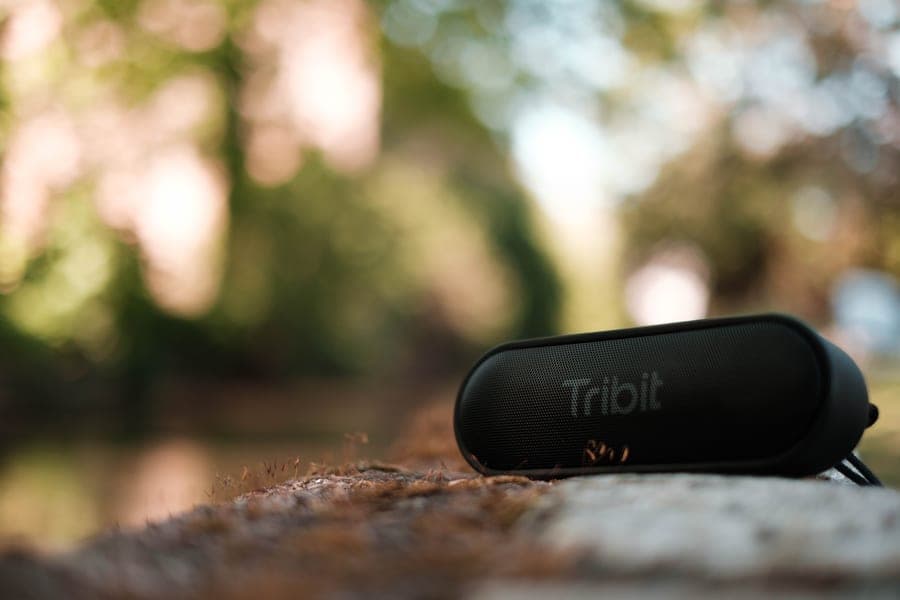 Illustrative IllustrativeJBL Charge 6IP68, 24 hours and a power bank for the phone. | Best for a long day | Check price on Amazon |
| 4 | 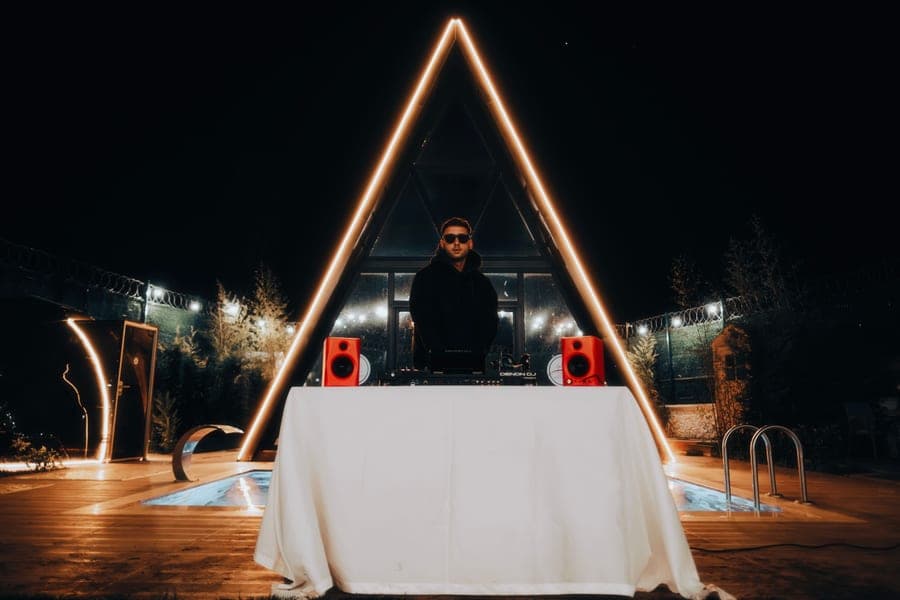 Illustrative IllustrativeTribit StormBox Blast 2Two wired mic inputs plus wireless mics, and 200 W on mains. | Best with microphones | Check price on Amazon |
| 5 | Illustrative Tribit XSound Go16 W and 24 hours, cheap enough to buy yourself. | Best budget pick | Check price on Amazon |
#ad — buy links go to Amazon and we earn a commission on qualifying purchases. Prices change constantly, so the live listing is always the price of record. Full disclosure.
The Anker Soundcore 2 is the best speaker for most teachers: twenty-four quoted hours and 12 W of stereo at a price you can justify out of your own pocket, which is how most classroom speakers get bought. For a gym, a hall or a dance studio, the Soundcore Motion Boom has 30 W and a carry handle for moving between rooms. And if you need to amplify your own voice rather than just play audio, the Tribit StormBox Blast 2 is the only pick here with real microphone inputs — that is a completely different purchase, and worth understanding before you spend.
Teaching is an unusual use case because the speaker is in service all day, every day, and almost nothing about a school building helps. There is rarely a free socket where you want the speaker. The rooms are hard — polished floor, blockwork, high ceiling, big windows — so cheap treble turns harsh and speech smears. The speaker gets carried between rooms by hand. And it will get knocked off a table by a twelve-year-old at some point.
The second thing worth saying plainly: there are two very different products inside this search, and buying the wrong one is the usual mistake. A music speaker plays audio to a room — that covers most classroom, PE, dance and yoga needs. A voice amplifier makes you audible over a room, which requires a microphone input and costs considerably more. Decide which you need before you look at anything.
What actually matters in a classroom or studio
- All-day quoted battery. Twenty hours or more, and halve it mentally for real use at volume. Charging overnight in a cupboard and running all day with no socket is the normal pattern. Battery life, honestly covers why the quoted number is never the number.
- Enough output for a hard, busy room. A class of thirty in a tiled room with the heating on is a genuinely noisy environment. 12 W is enough for a quiet classroom; a gym, hall or dance studio wants 30 W or more. How many watts is loud covers why the figure is unreliable.
- A microphone input, if you are amplifying your voice. A 6.35 mm jack or supported wireless mics. Almost no portable speaker has one, and the ones that do are large. The speaker's own built-in call mic is not a substitute — see do Bluetooth speakers have microphones.
- A carry handle or a strap. Teachers move. A molded handle or a strap is worth more than a few extra watts if the speaker travels between a classroom, a hall and a playground every week.
- A sealed, cleanable shell and a survivable fall. It will go onto a hard floor. Rubberized and sealed bodies cope; fabric grilles in a school building do not stay clean for a term.
- A reliable, boring pairing experience. You cannot spend three minutes of a lesson on Bluetooth. A speaker that reconnects instantly to the last device is worth real money here. Why your speaker will not connect covers the common causes.
The picks
IllustrativeBest for teachers overall
Anker Soundcore 2
Years old, still sold, still the battery-life champion of the cheap shelf.
- What it does well
- Twenty-four quoted hours from a 5,200 mAh cell means it genuinely survives a teaching day with the charger left at home, and the price is low enough that buying it yourself does not sting — which matters, because most classroom speakers are bought by the teacher. 12 W of real stereo keeps a backing track or a listening exercise clear rather than muddy, and IPX7 means a knocked-over water bottle is a non-event. Two of them pair wirelessly if a hall needs covering from both ends.
- Where it cuts corners
- 12 W will not carry a gym or a dance studio with music over thirty moving people. No dust rating, no handle or strap, no mic input. BassUp should stay off in a hard room — it makes speech worse. The build is plain plastic and will look its age after a year in a school bag.
- Who it is for
- Classroom teachers, primary teachers and anyone playing audio to a seated group rather than amplifying their own voice.
- Battery: 24 hours
- Water rating: IPX7 — submersible to 1 m for 30 minutes
- Output: 12 W stereo
#ad — we earn a commission on qualifying purchases. How this is funded
IllustrativeBest for a gym, hall or dance studio
Soundcore Motion Boom
A floating outdoor speaker with a handle, built for the water and the dirt.
- What it does well
- 30 W from titanium drivers is the step up a big hard room needs, and the molded carry handle is the feature that makes it a teaching speaker rather than a party speaker — you can pick it up one-handed with a folder in the other and walk it to the hall. Twenty-four quoted hours covers a full timetable, the USB output will revive the phone running the playlist, and it floats, which covers a poolside swimming lesson.
- Where it cuts corners
- IPX7 leaves dust untested. It is bulky, and in a small classroom it is far more speaker than the room needs. The default BassUp tuning is heavy-handed and should be turned down for anything involving speech. No microphone input, so it cannot amplify a teacher's voice. The twenty-four hour figure assumes BassUp off.
- Who it is for
- PE, dance, yoga and drama teachers, and anyone whose room is a hall rather than a classroom.
- Battery: 24 hours
- Water rating: IPX7 — submersible to 1 m for 30 minutes, and it floats
- Output: 30 W from titanium drivers
#ad — we earn a commission on qualifying purchases. How this is funded
IllustrativeBest for a long day away from a socket
JBL Charge 6
The battery-life benchmark, with a power bank built into the back.
- What it does well
- Twenty-four hours, twenty-eight with Playtime Boost, plus a built-in power bank — which in a school is unexpectedly useful, because the phone running your audio is also your timer, your register and your camera, and it dies at 2 pm. IP68 is the strongest rating on this page and the only one certifying dust as well as water, which suits a building full of chalk, sand trays and playground grit. Auracast lets a second unit cover a big space.
- Where it cuts corners
- It is expensive for a classroom and the output is not meaningfully higher than the much cheaper picks, so you are paying for the rating and the power bank. No microphone input, no aux input, no handle. It is a cylinder that rolls off a sloped desk.
- Who it is for
- Teachers who move between buildings, work outdoors, or cannot rely on finding a socket anywhere.
- Battery: 24 hours, or up to 28 hours with Playtime Boost enabled
- Water rating: IP68 — submersible to 1.5 m for 30 minutes, dustproof
#ad — we earn a commission on qualifying purchases. How this is funded
IllustrativeBest if you need to amplify your voice
Tribit StormBox Blast 2
The only genuinely portable speaker here with real microphone inputs.
- What it does well
- It is the only speaker we recommend with real microphone support: two 6.35 mm wired inputs plus dual wireless mic support, which makes it a genuine portable voice amplifier for a hall, a sports field or a drama production as well as a music speaker. 200 W on AC power and 180 W on battery covers a large space properly, up to thirty hours means an off-site day is fine, and IP67 covers an outdoor sports day.
- Where it cuts corners
- It is by far the most expensive and the heaviest pick here, and well above this site's usual ceiling — this is a department purchase, not a personal one. It needs two hands to carry. The music-reactive lighting is wrong for a classroom and has to be switched off. The thirty-hour figure assumes 50% volume with XBass and lights off; budget for roughly half.
- Who it is for
- PE and drama departments, assemblies, sports days, and any teacher who has lost their voice to a hall.
- Battery: Up to 30 hours at 50% volume with XBass and lights off
- Water rating: IP67 — submersible to 1 m for 30 minutes, dustproof
- Output: 200 W on AC power, 180 W on battery
#ad — we earn a commission on qualifying purchases. How this is funded
IllustrativeBest budget pick
Tribit XSound Go
The long-running budget workhorse: 16 W and a full day of battery.
- What it does well
- 16 W and a quoted twenty-four hours at 50% volume, at a price that makes it a reasonable thing to buy out of your own money and not worry about. The custom EQ is genuinely useful in a school: flatten the factory bass lift and speech-based listening exercises get clearer. IPX7 covers spills, TWS pairing means two cover a wider room, and losing it would be annoying rather than expensive.
- Where it cuts corners
- No dust rating and a plasticky shell that will show a year of school life. At high volume XBass audibly compresses, so it is not the pick for a gym. No handle, no mic input, no aux. Street pricing swings enough that it is not reliably the cheapest option on the shelf.
- Who it is for
- Supply teachers, a first classroom speaker, a spare for a second room, or a tight personal budget.
- Battery: 24 hours quoted at 50% volume
- Water rating: IPX7 — submersible to 1 m for 30 minutes
- Output: 16 W
#ad — we earn a commission on qualifying purchases. How this is funded
How the five compare
| Speaker | Output | Quoted battery | Mic input | Carry |
|---|---|---|---|---|
| Anker Soundcore 2 | 12 W stereo | 24 h | No | Bare — no strap |
| Soundcore Motion Boom | 30 W | 24 h | No | Molded carry handle |
| JBL Charge 6 | Not published | 24 h, or 28 with Playtime Boost | No | Bare cylinder |
| Tribit StormBox Blast 2 | 200 W on AC, 180 W on battery | Up to 30 h at 50% volume | Two wired, plus wireless | Telescoping handle |
| Tribit XSound Go | 16 W | 24 h at 50% volume | No | Bare — no strap |
The microphone column is the one that splits this page in two. Four of these are music speakers and one is a portable PA. If a teacher's problem is being heard, no amount of extra wattage on a music speaker solves it — only a microphone does. Speakers with a microphone input explains how narrow that category genuinely is.
Why a classroom sounds the way it does
Classrooms, gyms and dance studios are built from the hardest, most reflective materials in any building: vinyl or sprung floor, blockwork walls, a high flat ceiling, and large single-plane windows. There is almost no absorption, so every sound arrives at a pupil's ear several times over — once directly and several times reflected. That is what makes a hall sound echoey and makes consonants hard to pick out at the back.
The practical consequence is that turning a speaker up in a hard room makes things worse, not better: more energy means more reflections, and the reflections are what obscure the speech. The fix is distance, not volume. One speaker halfway down the room beats one at the front turned louder, and two modest speakers beat one loud one — the same conclusion we reach for a wedding and for exactly the same reason.
Get it off the floor and off a hard surface. A speaker on a polished floor or a steel-framed table couples into it and the whole surface starts radiating, which smears everything. On a chair with a folded jumper under it — genuinely — it will be clearer. And pull the bass down: in a reverberant room, low frequencies hang in the air longest and do the most masking.
How much to spend
For a classroom music speaker, $25 to $60 is the right band, which is a deliberate recommendation rather than a compromise: a seated class in a normal room is an easy job, and school equipment has a short life. The under-$50 tier covers it well.
For a gym, hall or studio, the $100 to $150 band gets you real output and a handle — see best under $150. For voice amplification you are in a different market entirely and the floor is high, because microphone inputs only appear on large speakers; that is a departmental purchase and worth raising with whoever holds the budget rather than funding yourself.
What we did not pick, and why
- Dedicated classroom voice amplifiers and waistband PA units. The genuinely correct tool if your problem is vocal strain — lighter, cheaper and better at speech than anything here. They are not portable Bluetooth music speakers, which is what this site covers, and they are worth looking at separately.
- Installed classroom sound systems. Better again, and a capital project rather than a purchase.
- Smart speakers. Most school networks will not have them, and many districts prohibit always-listening microphones in classrooms outright. Bluetooth vs Alexa covers the trade.
- The Soundcore Boom 2 Plus and JBL Xtreme 4. Both would work in a hall and both are above this site's value ceiling without adding a microphone input, which is the thing a hall actually needs. If output alone is the goal, the loudest for the money ranks on exactly that.
If the speaker is mainly for a school gym or a fitness class, the best speaker for a gym ranks on the same hard-room problem. If it travels to sports days and outdoor events, backyard party speakers covers open-ground output. And if a microphone is the whole reason you are here, start at speakers with a microphone input.
Frequently asked questions
What is the best Bluetooth speaker for a teacher?
Can I use a Bluetooth speaker to amplify my voice in a classroom?
How loud does a classroom speaker need to be?
What battery life do I need for a school day?
Why does my speaker sound echoey in the school hall?
Is a Bluetooth speaker allowed in a classroom?
Update log
- First publication. Ranked on all-day quoted battery, carry handles and durability, with the music-speaker and voice-amplifier purchases separated explicitly.
Sources
Every specification quoted above comes from the manufacturer or retailer listing below. We publish no measurements of our own — see how we pick.
- Soundcore — Soundcore 2 product page (manufacturer specifications)
- Soundcore — Boom 2 product page (manufacturer specifications)
- JBL — Charge 6 product page (manufacturer specifications)
- Tribit — StormBox Blast 2 product page (manufacturer specifications)
- Tribit — XSound Go product page (manufacturer specifications)
- IEC 60529 — the international standard behind IP ratings
Read next

Outdoor & Party
The best Bluetooth speakers with a microphone for karaoke in 2026
Speakers that take a real microphone, and an honest account of how few of them there are.
Outdoor & Party
The best Bluetooth speaker for a gym
Why a garage gym punishes cheap treble, and the four speakers that hold up in one.
By Price
The best Bluetooth speakers for kids
Speakers that survive a bedroom, a backpack and a bath — ranked on durability rather than sound.
By Price
The best Bluetooth speakers under $50 in 2026
More speaker than this money used to buy. Five picks and an honest account of what you lose.
Guides
Bluetooth speaker battery life, honestly
How quoted runtimes are produced, what to expect in reality, and the longest-lasting picks.
Outdoor & Party
The best Bluetooth speakers for a wedding in 2026
Why the ceremony is the hard part, not the reception, and the five speakers that cover both.
Guides
Do Bluetooth speakers have microphones?
What the built-in mic in a portable speaker actually is, and the three jobs it genuinely does.