By Price
The best small but loud Bluetooth speakers
Loudness is mostly cabinet size, so "small and loud" is a compromise. These six make the best of it, and one of them is nearly free.
By Ryder M.Published
 Field-tested picks · 2026
How we are funded: Thump & Tote earns a commission when you buy through our Amazon links, at no extra cost to you. It never changes which speaker we put first — see how we pick and our affiliate disclosure.
Quick picks
Ranked for value first. Tap any row to jump to the full write-up.
| # | Product | Best for | Price |
|---|---|---|---|
| 1 | 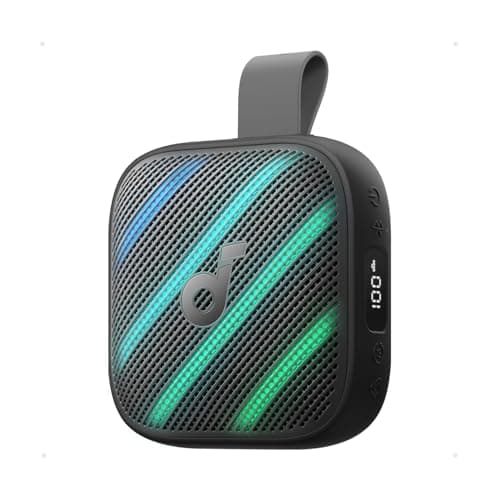 Soundcore Boom Go 3iA quoted 92 dB peak from 0.84 lb, plus IP68 and 24 hours. | Best overall | $49.99$79.9938% offView on Amazon |
| 2 | 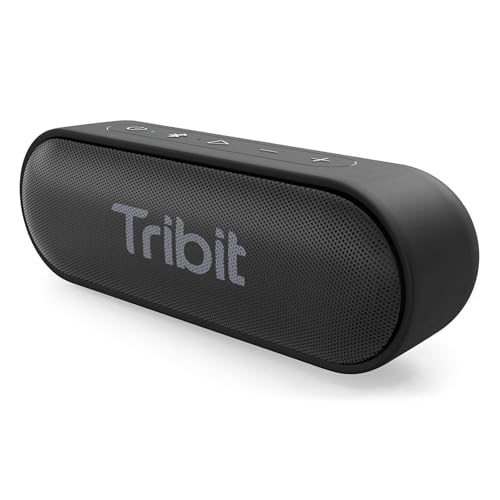 Tribit XSound Go16 W and 24 hours in a slim cabinet, for very little. | Most watts for the money | $32.99$39.9918% offView on Amazon |
| 3 | 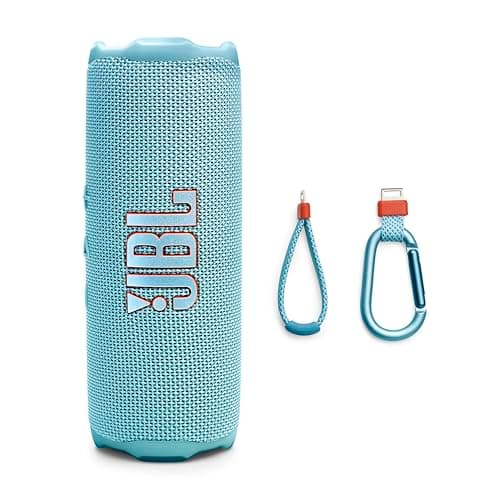 JBL Flip 7The biggest cabinet that still counts as one-hand. | Loudest here | $99.95$149.9533% offView on Amazon |
| 4 | 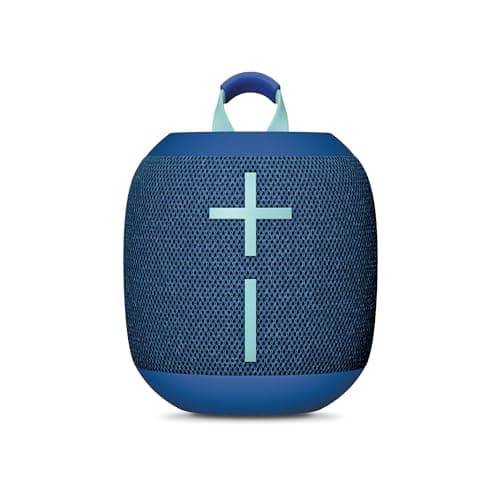 UE Wonderboom 4Two drivers, two passive radiators, and it floats. | Best for outdoors | $58.90View on Amazon |
| 5 | 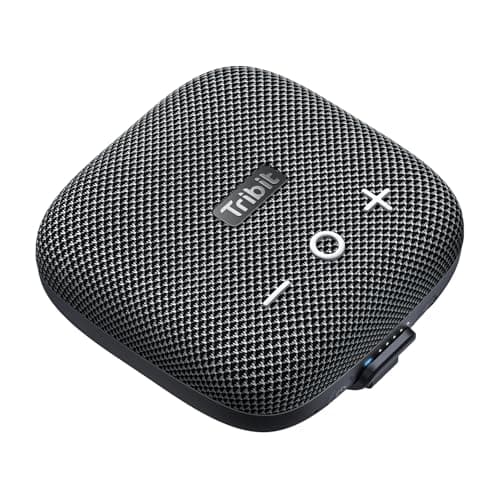 Tribit StormBox Micro 210 W and a passive radiator doing real work. | Smallest that still fills a room | $37.99$59.9937% offView on Amazon |
| 6 | 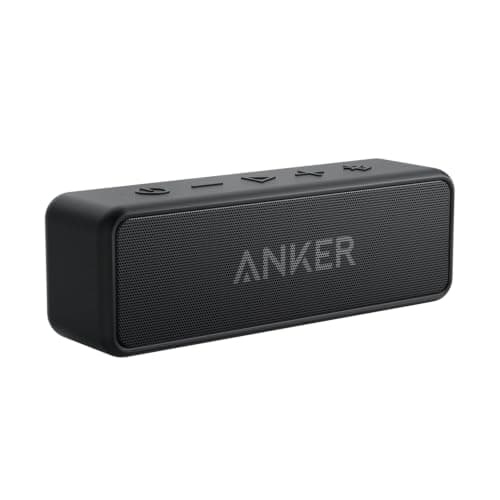 Anker Soundcore 212 W stereo and 24 hours at the bottom of the market. | Best budget pick | $28.48$44.9937% offView on Amazon |
#ad — buy links go to Amazon and we earn a commission on qualifying purchases. Prices change constantly, so the live listing is always the price of record. Full disclosure.
The best small but loud Bluetooth speaker is the Soundcore Boom Go 3i: Soundcore quotes 92 dB peak from 15 W with BassUp 2.0 in a body that weighs 0.84 lb, and it is also IP68, drop-tested from 3.28 ft (1 m) and good for a quoted 24 hours. Nothing else this size publishes a loudness figure at all. The budget pick is the Anker Soundcore 2 — 12 W stereo, a 5,200 mAh battery and 24 hours for the least money on this page. If you will accept a slightly bigger cabinet in exchange for genuinely more output, the JBL Flip 7 is the loudest thing here that still goes in one hand.
The honest headline first: small and loud pull against each other, and the physics does not negotiate. Loudness at low frequencies is a function of how much air a driver can move, and that is set by cone area and cabinet volume. A pocket speaker has very little of either. Wattage figures do not rescue it — they are measured differently by every brand and cannot be compared across them, which is the whole argument of watts and loudness explained.
So this page is not a list of small speakers that are as loud as big ones. It is a ranking of which small cabinets waste the least, which is a real and useful question. If you need to fill a yard, a garage bay or a party, stop here and read the loudest Bluetooth speakers instead — the answer there is a bigger box, and it always will be.
How we ranked six speakers nobody has measured
We do not measure speakers. That makes "loudest" a claim we cannot make from our own testing, so the ranking is built from published figures and physical facts, in this order.
- A published output or SPL figure, where one exists. Only one speaker here publishes a peak dB number. Where a brand publishes watts, we quote the watts and say which they are; where it publishes nothing, the table says "not published" rather than carrying an estimate.
- Driver and radiator count. Two drivers plus two passive radiators move more air than one driver, regardless of how the watts are counted. This is the most reliable thing you can read off a spec sheet.
- Cabinet volume, judged by weight. Every pick is under about 2 lb, and within that range heavier generally means louder — which is why the ranking is not simply "smallest wins".
- Then the rest of the speaker. Two speakers with similar output are separated by water rating, battery and carry hardware, because that is what you will actually live with.
Every figure on this page is a manufacturer-published specification captured from the listings in our sources. How we pick is the full method, and it includes what we refuse to claim.
The three things that make a small speaker sound louder than it is
A passive radiator. A sealed box with a tuned mass on it extends the low end without more amplifier, and it is why the Tribit StormBox Micro 2 and the UE Wonderboom 4 sound bigger than their size suggests. It is the single most useful thing to look for on a small cabinet.
Placement, which is free. A small speaker against a wall or in a corner gains real low end from boundary reinforcement, and one on a hard surface rather than a cushion gains more. This costs nothing and does more than a step up in price. How to make a Bluetooth speaker louder collects the rest of these.
A second speaker. Two of the picks below pair into stereo, which adds real perceived volume and a much wider image than one unit at the same total price. The best speakers for stereo pairing covers how the pairing systems differ and why they do not mix across brands.
And the thing that does not help: turning a small speaker all the way up. Past about three-quarters, a small amplifier compresses, the bass thins and distortion arrives — so the speaker gets harsher rather than louder. An EQ helps here more than volume does; speakers with an equalizer is the list that lets you do it.
The picks
Best overall — the only one with a published loudness figure
Soundcore Boom Go 3i
Our default recommendation under $100 — tough, long-running and honestly specified.
- What it does well
- Soundcore quotes 92 dB peak from 15 W with BassUp 2.0, which is the only SPL claim any manufacturer publishes for a speaker this size on this site, and it comes in a 0.84 lb body. The rest of the speaker is unusually complete for the money: IP68 sealing, a 3.28 ft (1 m) drop test, a quoted 24 hours with a real battery-percentage display, Bluetooth 6.0, TWS stereo pairing across two units, Auracast, EQ presets and emergency phone charging.
- Where it cuts corners
- Fifteen watts is still fifteen watts — this is a speaker for a kitchen, a desk or one end of a patio, and a bigger cabinet will out-shout it outdoors every time. It does not float despite the IP68 rating, there is no aux input and no USB-C audio in, and the 24-hour figure assumes its fourteen light modes are switched off.
- Who it is for
- Anyone who wants the most measurable output available from something that fits a jacket pocket.
- Battery: 24 hours, with a battery-level display on the speaker
- Water rating: IP68 — submersible and dust-tight, and drop-tested from 3.28 ft (1 m)
- Output: 15 W with BassUp 2.0, quoted at 92 dB peak
- Weight: 0.84 lb
#ad — we earn a commission on qualifying purchases. How this is funded · Price as of November 28, 2026
Most watts for the money — and it barely costs anything
Tribit XSound Go
The long-running budget workhorse: 16 W and a full day of battery.
- What it does well
- Sixteen published watts, the highest figure on this page, in a slim cabinet that costs a fraction of the JBL below it. It quotes 24 hours at 50% volume, carries a custom EQ and an XBass mode so you can pull the factory bass back when it gets boomy, and pairs with a second unit over TWS for stereo. IPX7 immersion is included at a price where it often is not.
- Where it cuts corners
- The 16 W is Tribit's own figure and cannot be compared with anyone else's. IPX7 leaves dust untested, so this is a pool speaker rather than a beach one. Driven hard it compresses and the low end thins out, there is no aux input, and the slim body has no carry hardware at all.
- Who it is for
- The value buyer who wants the most published output per dollar and will live with a bare-bones body.
- Battery: 24 hours quoted at 50% volume
- Water rating: IPX7 — submersible to 1 m for 30 minutes
- Output: 16 W
#ad — we earn a commission on qualifying purchases. How this is funded · Price as of November 28, 2026
Loudest here — the biggest cabinet that still counts as small
JBL Flip 7
The default mid-size pick, and the speaker every value brand is trying to undercut.
- What it does well
- This is where the ranking stops pretending: at 1.82 lb the Flip 7 has more cabinet than anything else on the page, and it is audibly the loudest of the six while still being a one-hand speaker. More usefully, it holds its tonal balance from quiet to loud, which is the thing small speakers fail at first. IP68 sealing to 1.5 m for 30 minutes, 14 hours plus up to 2 in Playtime Boost, USB-C lossless audio, Auracast and a clip-on loop in the box.
- Where it cuts corners
- JBL publishes no wattage or SPL figure at all, so its loudness is a listening judgment rather than a specification. It costs several times the budget pick, the battery is the second shortest here, and it is heavy enough that the smallest picks genuinely go places this will not. No drop rating and no buoyancy claim either.
- Who it is for
- The buyer whose real priority is output and who will carry a slightly bigger speaker to get it.
- Battery: 14 hours, plus up to 2 more in Playtime Boost mode
- Water rating: IP68 — submersible to 1.5 m for 30 minutes, dustproof
- Weight: 1.82 lb (about 560 g)
#ad — we earn a commission on qualifying purchases. How this is funded · Price as of November 28, 2026
Best for outdoors — two drivers, two radiators, and it floats
UE Wonderboom 4
The one to buy if the speaker is going anywhere near water.
- What it does well
- The most air-moving hardware of any small cabinet here: two 40 mm active drivers plus two passive radiators, which is why it sounds bigger outdoors than its 14.81 oz suggests. UE quotes a 131 ft wireless range, it is rated for 5 ft drops, it is IP67 and dustproof, and it floats — a combination nothing else on this page matches.
- Where it cuts corners
- UE publishes no wattage, so there is no output figure to compare. Fourteen hours is mid-pack, there is no aux input and no card slot, and the round body has no strap or clip in the box. It is also noticeably more expensive than the Tribit and Anker picks without being dramatically louder than them.
- Who it is for
- Pools, docks and trails, where "loud enough outdoors" and "survives the day" matter equally.
- Battery: 14 hours
- Water rating: IP67 — submersible to 1 m for 30 minutes, dustproof, and it floats
- Weight: 14.81 oz (420 g)
#ad — we earn a commission on qualifying purchases. How this is funded · Price as of November 28, 2026
Smallest that still fills a room
Tribit StormBox Micro 2
The best-argued cheap speaker on the market, and now a last-generation bargain.
- What it does well
- Ten watts and a passive radiator doing genuinely useful work, in 315 g with an integrated rubber strap that goes round a handlebar, a bag strap or a tent pole. IP67 sealing is dustproof as well as submersible, which the cheaper IPX7 picks are not, and the whole thing disappears into a jacket pocket.
- Where it cuts corners
- Ten watts is the least output on this page and it shows the moment you take it outside. Twelve hours is the shortest quoted battery here, there is no aux input, and Tribit has since introduced a newer Micro, so check which generation a listing is actually selling. This is a speaker for a bathroom, a tent or a desk — not a yard.
- Who it is for
- The reader whose constraint is genuinely size, and who wants the most sound that fits a pocket.
- Battery: Up to 12 hours
- Water rating: IP67 — submersible to 1 m for 30 minutes, dustproof
- Output: 10 W
- Weight: 315 g
#ad — we earn a commission on qualifying purchases. How this is funded · Price as of November 28, 2026
Best budget pick — 12 W stereo and 24 hours for almost nothing
Anker Soundcore 2
Years old, still sold, still the battery-life champion of the cheap shelf.
- What it does well
- Twelve watts in a stereo configuration, a 5,200 mAh battery good for a quoted 24 hours, a BassUp mode and wireless stereo pairing with a second unit, at the lowest price on this page by a clear margin. Buying two of these still costs less than one of the mid-priced picks and gives you a genuinely wider sound than any single small speaker here.
- Where it cuts corners
- IPX7 means water was tested and dust was not. There is no aux input, no carry hardware, no app EQ and no drop rating, and the cabinet is plain plastic. BassUp pushes the low end rather than giving you control over it, so a boomy room stays boomy.
- Who it is for
- Anyone who wants acceptable small-speaker volume for the least possible money, or two speakers for the price of one.
- Battery: 24 hours
- Water rating: IPX7 — submersible to 1 m for 30 minutes
- Output: 12 W stereo
#ad — we earn a commission on qualifying purchases. How this is funded · Price as of November 28, 2026
The six compared on output and size
| Speaker | Published output | Weight | Rating | Quoted battery |
|---|---|---|---|---|
| Soundcore Boom Go 3i | 15 W; quoted 92 dB peak | 0.84 lb | IP68 + 3.28 ft drop | 24 hours |
| Tribit XSound Go | 16 W | Not published | IPX7 — no dust rating | 24 hours at 50% volume |
| JBL Flip 7 | Not published | 1.82 lb | IP68 — 1.5 m / 30 min | 14 hours, plus up to 2 |
| UE Wonderboom 4 | Not published (2 drivers + 2 radiators) | 14.81 oz | IP67, floats, 5 ft drops | 14 hours |
| Tribit StormBox Micro 2 | 10 W | 315 g | IP67 — 1 m / 30 min | Up to 12 hours |
| Anker Soundcore 2 | 12 W stereo | Not published | IPX7 — no dust rating | 24 hours |
Where to go from here
If this page has convinced you that small is the wrong constraint, the fix is a bigger cabinet and the money goes further than you would think: the loudest Bluetooth speakers for the money and the loudest under $100 are the ranked answers, and party speakers under $200 is where the real output starts.
If small is genuinely the constraint, the best small Bluetooth speakers ranks the same class on overall quality rather than output, the best clip-on speakers covers the ones that attach to something, and the best Bluetooth speakers under $50 is where four of the six picks above live. For the full write-ups, see the Soundcore Boom Go 3i review, the JBL Flip 7 review, the UE Wonderboom 4 review, the Tribit StormBox Micro 2 review and the Anker Soundcore 2 review.
Frequently asked questions
What is the best small but loud Bluetooth speaker?
Can a small Bluetooth speaker be genuinely loud?
Do more watts mean a louder speaker?
How can I make a small speaker louder for free?
Is it better to buy two small speakers or one bigger one?
Which small speaker has the best battery life?
Update log
- First publication. Live autocomplete on 2026-11-21 returns ten suggestions for "best small loud bluetooth speaker", including "best small but loud bluetooth speaker" and "best loud mini bluetooth speaker". The site ranked small speakers and loud speakers separately but never the intersection.
Sources
Every specification quoted above comes from the manufacturer or retailer listing below. We publish no measurements of our own — see how we pick.
- Soundcore — Boom Go 3i product page (manufacturer specifications)
- Tribit — XSound Go product page (manufacturer specifications)
- JBL — Flip 7 product page (manufacturer specifications)
- RTINGS — JBL Flip 7 measurements (independent test lab)
- Ultimate Ears — Wonderboom 4 product page (manufacturer specifications)
- RTINGS — Tribit StormBox Micro 2 vs UE Wonderboom 4 comparison
- Tom's Guide — Tribit StormBox Micro 2 review
- TechRadar — Tribit StormBox Micro 3 review (confirms Micro 2 is superseded)
- Soundcore — Soundcore 2 product page (manufacturer specifications)
- IEC 60529 — the international standard behind IP ratings
Read next
By Price
The best small Bluetooth speakers
Pocket and desk-sized picks, ranked on how much they get out of a cabinet that cannot be big.
Outdoor & Party
The loudest Bluetooth speakers for the money in 2026
Genuinely loud speakers ranked on output per dollar — and why wattage figures cannot be compared.
Guides
How many watts is loud for a speaker?
Why wattage figures cannot be compared across brands, and what genuinely predicts loudness.
Guides
How to make a Bluetooth speaker louder
The volume limits your phone applies by default, and the free placement gains that beat them.
Outdoor & Party
Loudest Bluetooth speakers under $100
The Soundcore Boom 2 is the only speaker under $100 with a dedicated 50 W subwoofer. The Tribit XSound Go is the budget pick.
By Price
The best Bluetooth speakers with an equalizer
Six speakers with a real equalizer - app sliders, presets or an on-device mode - and what each one can actually fix.