By Price
The best Bluetooth speakers with an equalizer
Every speaker is tuned by someone guessing what you like. An equalizer is how you overrule them, and it costs nothing.
By Ryder M.Published
 Field-tested picks · 2026
How we are funded: Thump & Tote earns a commission when you buy through our Amazon links, at no extra cost to you. It never changes which speaker we put first — see how we pick and our affiliate disclosure.
Quick picks
Ranked for value first. Tap any row to jump to the full write-up.
| # | Product | Best for | Price |
|---|---|---|---|
| 1 | 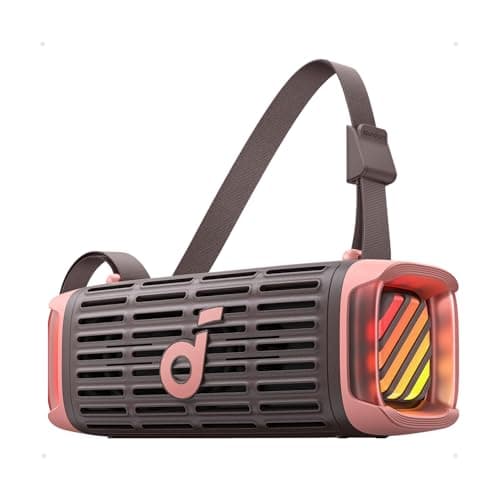 Soundcore Boom 3iA full app EQ on a speaker that is also IP68 and floats. | Best overall | $89.99$129.9931% offView on Amazon |
| 2 | 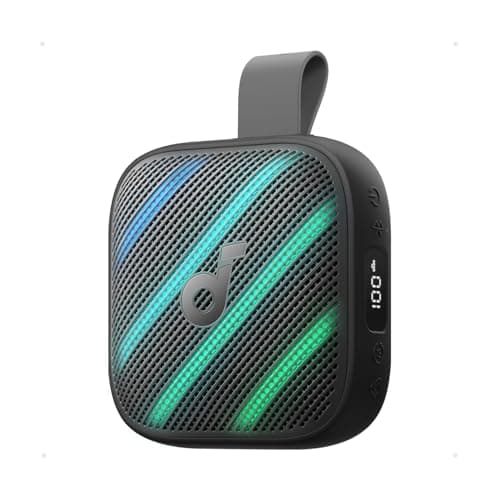 Soundcore Boom Go 3iEQ presets, 24 hours and IP68 for the price of a cheap speaker. | Best value | $49.99$79.9938% offView on Amazon |
| 3 | 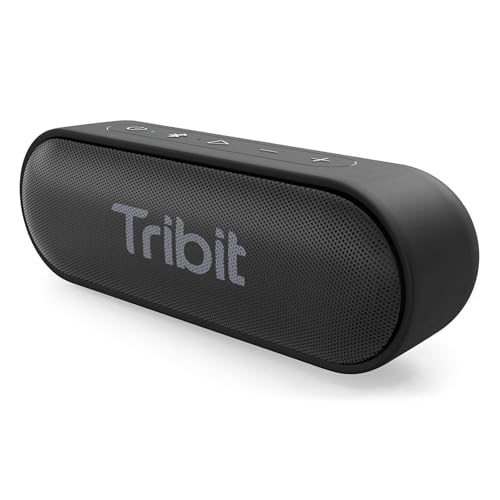 Tribit XSound GoCustom EQ and XBass at the bottom of the market. | Best budget pick | $32.99$39.9918% offView on Amazon |
| 4 | 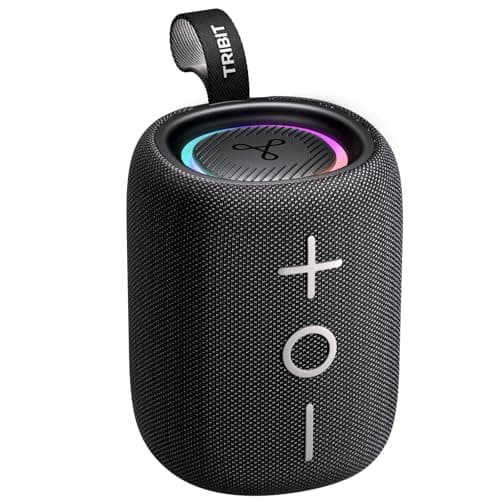 Tribit StormBox Mini+App EQ and reactive lighting in a pocket speaker. | Cheapest app EQ | $29.99$39.9925% offView on Amazon |
| 5 | 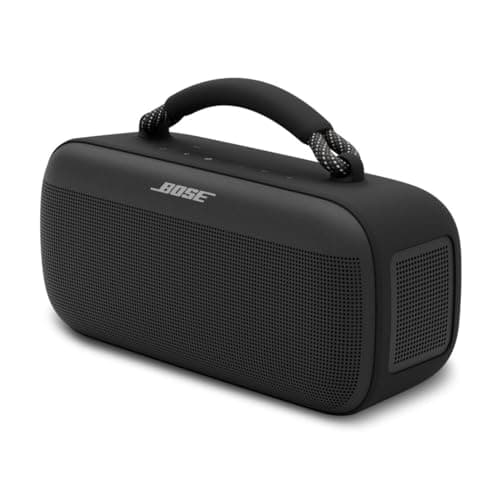 Bose SoundLink MaxThe Bose app EQ on the best-sounding speaker we list. | Best sounding | $279.00$399.0030% offView on Amazon |
| 6 | 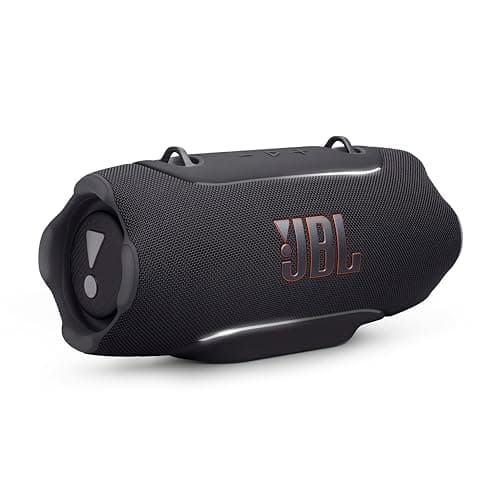 JBL Xtreme 5Smart EQ and AI Sound Boost on JBL's biggest portable. | Most output | $299.95$399.9525% offView on Amazon |
#ad — buy links go to Amazon and we earn a commission on qualifying purchases. Prices change constantly, so the live listing is always the price of record. Full disclosure.
The best Bluetooth speaker with an equalizer is the Soundcore Boom 3i: it carries a full app EQ rather than a handful of fixed presets, and it is the only speaker on this page that pairs that with IP68 sealing, 240 hours of lab-tested salt spray, a 3.28 ft (1 m) drop rating and a cabinet weighted to float upright. The budget pick is the Tribit XSound Go, which has a custom EQ plus an XBass mode and quotes 24 hours at 50% volume — at the bottom of the market, an EQ is the difference between a usable speaker and a boomy one. If you want the shortest route to an EQ at all, the Tribit StormBox Mini+ is the cheapest app-controlled one here.
An equalizer is the most underrated feature in this category, and the reason is simple: almost every portable Bluetooth speaker ships deliberately over-tuned. Bass is pushed because bass sells in a shop demo, and the mids get set behind it. That tuning is a sales decision, not an acoustic one, and the moment you move the speaker into a real room — a tiled kitchen, a car, a hard-walled garage — it stops being right. An EQ hands that decision back to you for free.
It is also the only feature on this site that can make a speaker you already own sound meaningfully better. Nothing else in the specification sheet does that. Why cheap speakers sound cheap explains the mechanical limits an EQ cannot move, and they are real — you cannot slide a 5 W driver into having bass — but within those limits, a flatter setting is usually an improvement most people hear immediately.
What counts as an equalizer here
"EQ" is used loosely in marketing copy, so every pick below had to publish one of three specific things.
- A custom or app EQ — sliders or bands you set yourself, saved to the speaker. This is the real thing, and four picks below have it.
- Named EQ presets on the speaker or in the app — fewer options than sliders, but still a choice you make rather than one made for you.
- A documented tuning mode that changes the response rather than just the volume, such as BassUp or XBass. A loudness button is not an EQ and is labeled as what it is below.
Speakers whose only adjustment is a bass-boost button did not qualify. Neither did speakers where the EQ exists but the manufacturer publishes nothing about it. We do not measure speakers or test EQ curves; every figure on this page is a manufacturer-published specification captured from the listings in our sources, and how we pick sets out the method in full.
What an EQ actually fixes, and what it does not
It fixes the room. A speaker on a hard surface in a small tiled space gains bass it was never tuned for, and the result is the muddy, one-note sound people blame on the speaker. Pulling the low band down two or three notches usually cleans it up entirely — the single most useful EQ move there is. Why your speaker sounds muffled covers the other causes, several of which are not the tuning at all.
It fixes speech. Podcasts, audiobooks, radio, a coach's voice over a field — all of them live in the mids, which is exactly where a bass-forward tuning buries them. Lifting the mids is why an EQ matters more for the best speakers for podcasts and audiobooks and classroom use than it does for music.
It buys back battery. Bass costs power. A speaker run flat rather than boosted will beat its own quoted runtime, and on cheaper models the gap is large enough to notice over a weekend — see the longest-battery-life Bluetooth speakers for how much the boost modes cost on each one.
It does not fix output. No EQ setting makes a small cabinet loud. Push the low end on a 10 W speaker and the amplifier clips, which sounds worse than the tuning you were trying to escape. If the problem is volume rather than balance, you are on the wrong page: the loudest Bluetooth speakers and small speakers that are genuinely loud are the right ones.
And it does not fix a broken connection. An EQ cannot smooth out dropouts, latency or a weak link — why Bluetooth keeps cutting out deals with that separately.
The picks
Best overall — a real app EQ on a speaker built for abuse
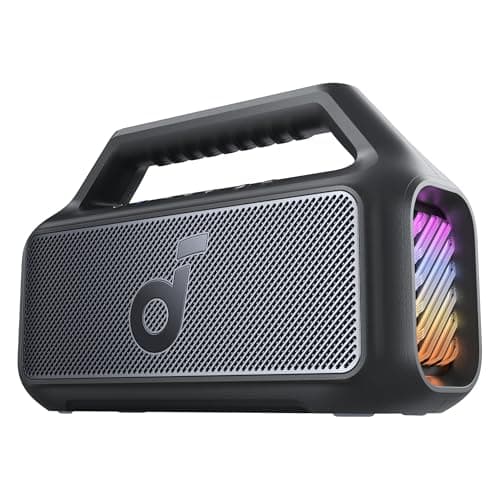
Soundcore Boom 3i
A floating outdoor speaker that rights itself in chop, built for the water and the dirt.
- What it does well
- A full Soundcore app EQ rather than a preset list, on a speaker that is also IP68, lab-tested to 240 hours of salt spray, drop-tested from 3.28 ft (1 m) and weighted to float upright so the drivers stay clear of the water. It puts out 50 W with BassUp 2.0, carries a detachable strap, and adds a voice amplifier and an emergency alarm nothing else here has.
- Where it cuts corners
- Sixteen hours is the shortest quoted runtime of any Soundcore on this page, and the app is where the EQ lives — lose the phone and you are back to the shipped tuning. There is no USB charge-out, so it will not revive a dead phone, and the 50 W figure is a boosted number, not a continuous one.
- Who it is for
- Anyone who wants the tuning under their control and the speaker outdoors, which is most of this site's readers.
- Battery: 16 hours
- Water rating: IP68 — submersible and dust-tight, lab-tested to 240 hours of salt spray, and it floats upright
- Output: 50 W with BassUp 2.0
- Weight: 1.7 lb (780 g)
#ad — we earn a commission on qualifying purchases. How this is funded · Price as of November 28, 2026
Best value — EQ presets, and everything else is good too
Soundcore Boom Go 3i
Our default recommendation under $100 — tough, long-running and honestly specified.
- What it does well
- EQ presets in the Soundcore app, 24 quoted hours with an actual battery-percentage readout on the speaker instead of three guessing LEDs, IP68 sealing plus a 3.28 ft (1 m) drop test, and 0.84 lb in the hand. It also brings Bluetooth 6.0, TWS stereo pairing across two units, Auracast and emergency phone charging, which is an unusual amount of speaker for the money.
- Where it cuts corners
- Presets are not sliders — you are choosing between someone else's curves rather than drawing your own. Fifteen watts with BassUp 2.0 is a kitchen, a desk or one end of a patio, and it will be out-shouted outdoors. The 24-hour figure also assumes its fourteen light modes are off; the light show is the fastest way to spend the battery it is otherwise so good at keeping.
- Who it is for
- The buyer who wants the tuning adjustable but is not going to sit in an app drawing curves.
- Battery: 24 hours, with a battery-level display on the speaker
- Water rating: IP68 — submersible and dust-tight, and drop-tested from 3.28 ft (1 m)
- Output: 15 W with BassUp 2.0, quoted at 92 dB peak
- Weight: 0.84 lb
#ad — we earn a commission on qualifying purchases. How this is funded · Price as of November 28, 2026
Best budget pick — the cheapest speaker here that lets you fix it
Tribit XSound Go
The long-running budget workhorse: 16 W and a full day of battery.
- What it does well
- A custom EQ and an XBass mode on a speaker that costs a fraction of everything above it, with 16 W of output, a quoted 24 hours at 50% volume, IPX7 immersion, USB-C and TWS stereo pairing with a second unit. At this price an EQ is not a luxury — it is the only way to get the bass-forward factory tuning out of the way.
- Where it cuts corners
- IPX7 means the water test was done and the dust test never was, so it is a pool speaker rather than a beach one. Sixteen watts driven hard compresses and the low end thins out, which is exactly the limit an EQ cannot move. There is no aux input, no dust rating, and the slim cabinet has no carry hardware at all.
- Who it is for
- Anyone spending the least they can who still wants a say in how the speaker sounds.
- Battery: 24 hours quoted at 50% volume
- Water rating: IPX7 — submersible to 1 m for 30 minutes
- Output: 16 W
#ad — we earn a commission on qualifying purchases. How this is funded · Price as of November 28, 2026
Cheapest app EQ — pocket-sized, with the lights nobody needs
Tribit StormBox Mini+
Reactive lighting on a speaker that is not just a light show.
- What it does well
- A genuine app EQ in the smallest and cheapest body on this page, with IPX7 immersion and reactive LED lighting synced to playback. If the only thing you want from this list is the ability to open an app and flatten the tuning, this is the shortest and cheapest route to it.
- Where it cuts corners
- Tribit does not publish a playtime figure we are willing to quote, so the live listing is the figure of record — treat the runtime as unknown until you read it there. IPX7 again leaves dust untested, there is no aux input, and the reactive lighting is a battery cost on a speaker that has no battery headroom to spare. A pocket cabinet also means the EQ is working inside very tight limits.
- Who it is for
- The reader who wants app control and nothing else, in something that fits a jacket pocket.
- Battery: Manufacturer-quoted; check the current listing
- Water rating: IPX7 — submersible to 1 m for 30 minutes
#ad — we earn a commission on qualifying purchases. How this is funded · Price as of November 28, 2026
Best sounding — and the least likely to need the EQ
Bose SoundLink Max
The best-sounding portable we know of, and the one that still has an aux jack.
- What it does well
- The Bose app EQ on the best-sounding speaker we list: a Bose Articulated Array of two 89 mm transducers and one 23 mm transducer plus two 104 x 79 mm racetrack passive radiators, which is a genuinely different class of cabinet. It also keeps a 3.5 mm aux input, USB-C audio in and power out, multipoint pairing and a removable rope handle, and quotes up to 20 hours.
- Where it cuts corners
- It is the most expensive thing on this site and sits well above the value territory this site exists for — the EQ is the least of the reasons to buy it. At 4.9 lb it is a speaker you place rather than carry, the full charge takes five hours, and there is no microphone. It is also, slightly paradoxically, the pick whose shipped tuning you are least likely to want to change.
- Who it is for
- Someone who has decided sound quality is the budget, and wants the EQ as a refinement rather than a rescue.
- Battery: Up to 20 hours, with a 5-hour full charge
- Water rating: IP67 — submersible to 1 m for 30 minutes, dustproof
- Output: Bose Articulated Array — two 89 mm transducers and one 23 mm transducer, plus two 104 x 79 mm racetrack passive radiators
- Weight: 4.9 lb
#ad — we earn a commission on qualifying purchases. How this is funded · Price as of November 28, 2026
Most output — Smart EQ, and a speaker that does not need a boost
JBL Xtreme 5
One big woofer instead of two small ones, IP68 and a drop rating — the most rugged Xtreme, and the heaviest.
- What it does well
- Smart EQ and AI Sound Boost on JBL's biggest portable: one 98 x 145 mm woofer and two 20 mm tweeters, 1 x 90 W RMS plus 2 x 20 W RMS on AC power, quoted from 40 Hz to 20 kHz. It is IP68, carries lossless USB-C audio and a built-in power bank, quotes up to 24 hours plus 4 more with Playtime Boost, and 10 minutes of charging returns about two hours.
- Where it cuts corners
- At 6.38 lb with a shoulder strap this is luggage, not a portable, and the price is far outside what this site calls value. JBL ships no power adapter in the box, there is no aux input at all, and "Smart EQ" is an automatic system rather than a set of sliders you control — the honest summary is that it adjusts itself, which is not the same thing as handing you the controls.
- Who it is for
- Buyers who need real output first and will take the automatic tuning that comes with it.
- Battery: Up to 24 hours, plus 4 more with Playtime Boost; 10 minutes of charging gives about 2 hours
- Water rating: IP68 — dust-tight and sealed against continuous immersion. JBL also calls it drop-proof, without publishing a drop height
- Output: One 98 x 145 mm woofer and two 20 mm tweeters; 1 x 90 W RMS plus 2 x 20 W RMS on AC power, 1 x 60 W RMS plus 2 x 15 W RMS on battery
- Weight: 6.38 lb (2.9 kg)
#ad — we earn a commission on qualifying purchases. How this is funded · Price as of November 28, 2026
The six compared on what their EQ actually is
| Speaker | EQ type | Boost mode | Rating | Quoted battery |
|---|---|---|---|---|
| Soundcore Boom 3i | Full app EQ | BassUp 2.0 | IP68 + 240 h salt spray | 16 hours |
| Soundcore Boom Go 3i | App EQ presets | BassUp 2.0 | IP68 + 3.28 ft drop | 24 hours |
| Tribit XSound Go | Custom EQ | XBass | IPX7 — no dust rating | 24 hours at 50% volume |
| Tribit StormBox Mini+ | App EQ | Not published | IPX7 — no dust rating | Not published |
| Bose SoundLink Max | Bose app EQ | Not published | IP67 — 1 m / 30 min | Up to 20 hours |
| JBL Xtreme 5 | Smart EQ (automatic) | AI Sound Boost | IP68 | Up to 24 hours, plus 4 boosted |
Three EQ settings worth trying first
- Flat, then one notch down on the lows. Start here on any speaker in a small or tiled room. It is the single change that fixes the most complaints, and it costs nothing to undo.
- Mids up for anything with a voice in it. Podcasts, audiobooks, radio, a class or a coaching session. Bass-forward tunings bury speech, and lifting the mids is usually more effective than turning the whole thing up.
- Boost off when the battery matters. BassUp, XBass and their relatives all draw more power. Switch them off for a camping weekend or a long shift and you will beat the quoted figure — how long Bluetooth speakers last covers the other half of that question.
If an EQ is not the feature you actually need
An EQ is a tuning control, not a source or an output upgrade. If the real problem is that the speaker cannot be heard, the loudest Bluetooth speakers is the page. If you want to feed it from something other than a phone, speakers with an aux input and speakers with an SD card slot both cover sources an app cannot fix. And if what you want is simply better sound out of the box rather than better sound after fifteen minutes of fiddling, the best-sounding Bluetooth speakers and the best under $100 are the ranked answers.
For the full write-ups on the picks above, see the Soundcore Boom 3i review, the Soundcore Boom Go 3i review, the Bose SoundLink Max review and the JBL Xtreme 5 review.
Frequently asked questions
What is the best Bluetooth speaker with an equalizer?
Does an equalizer really make a cheap speaker sound better?
Is an app EQ better than EQ presets on the speaker?
Is BassUp or XBass the same as an equalizer?
Will an EQ setting drain the battery faster?
Can I EQ a Bluetooth speaker from my phone instead?
Update log
- First publication. Six registry products publish an EQ and nothing on the site collected them. Live autocomplete on 2026-11-21 returns "best bluetooth speaker with equalizer" and "best portable bluetooth speaker with equalizer".
Sources
Every specification quoted above comes from the manufacturer or retailer listing below. We publish no measurements of our own — see how we pick.
- Soundcore — Boom 3i product page (manufacturer specifications)
- RTINGS — Anker Soundcore Boom 3i review (independent measurements)
- Soundcore — Boom Go 3i product page (manufacturer specifications)
- Tribit — XSound Go product page (manufacturer specifications)
- Bose — SoundLink Max product page (manufacturer specifications)
- RTINGS — Bose SoundLink Max review (independent measurements: max SPL, compression, soundstage)
- JBL — Xtreme 5 specification sheet (PDF, manufacturer specifications)
- JBL — Xtreme 5 product page
- IEC 60529 — the international standard behind IP ratings
Read next
By Price
The best sounding Bluetooth speakers in 2026
Ranked on tonal accuracy rather than loudness, with the point of diminishing returns marked.
By Price
Best Bluetooth speakers with the longest battery life
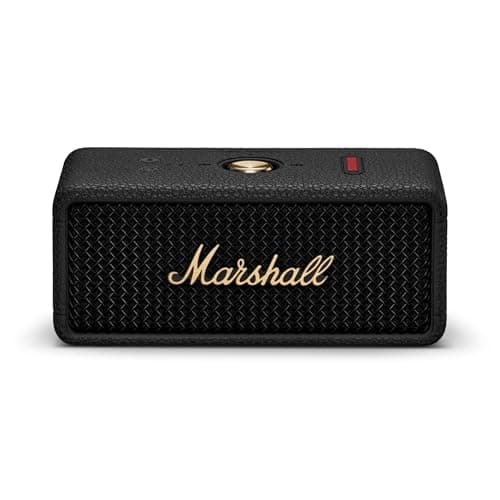
The Marshall Emberton III and the Tribit StormBox Blast both clear 32 hours. The cheapest honest 24-hour pick is a fifth of the money.
By Price
The best Bluetooth speakers with an SD card slot
Three speakers that play straight from a microSD card - no phone, no app, no signal - and what you give up to get one.
Guides
Why your Bluetooth speaker sounds muffled or distorted
Muffled, crackling, static or skipping — how to tell which fault you have, and what fixes each.
Guides
Why cheap Bluetooth speakers sound cheap
The editorial spine of this site: what a small cabinet physically cannot do, and what it can.
By Price
The best small but loud Bluetooth speakers
One-hand speakers ranked on how much output they get from a cabinet that cannot be big - plus where the physics stops.