By Price
Best Bluetooth speakers for stereo pairing
Linking two speakers and pairing them in stereo are different features with similar marketing. Only one of them gives you left and right.
By Ryder M.Published
 Field-tested picks · 2026
How we are funded: Thump & Tote earns a commission when you buy through our Amazon links, at no extra cost to you. It never changes which speaker we put first — see how we pick and our affiliate disclosure.
Quick picks
Ranked for value first. Tap any row to jump to the full write-up.
| # | Product | Best for | Price |
|---|---|---|---|
| 1 | 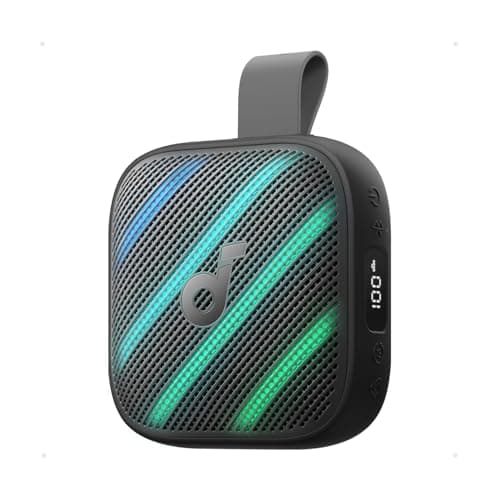 Soundcore Boom Go 3iTrue TWS stereo plus Auracast, IP68, and 24 hours. | Best overall | $59.98$79.9925% offView on Amazon |
| 2 | 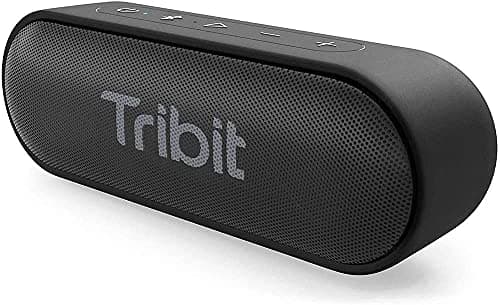 Tribit XSound GoThe cheapest real stereo pair on the site — buy two. | Best budget pick | $34.99$39.9913% offView on Amazon |
| 3 | 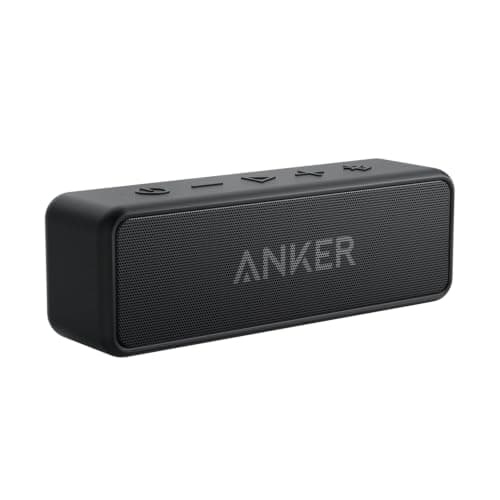 Anker Soundcore 224 hours each, 12 W stereo, and IPX7. | Best battery pair | $29.99$44.9933% offView on Amazon |
| 4 | 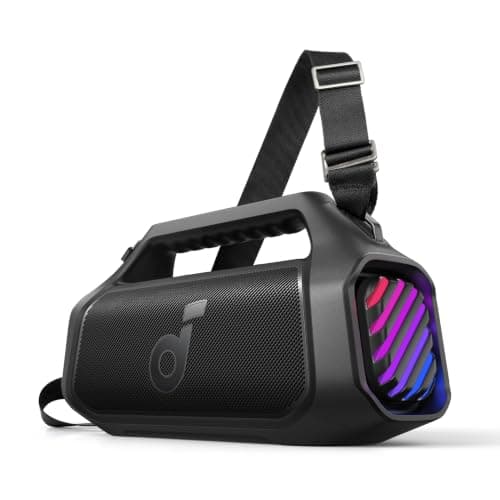 Soundcore Boom 2 PlusTWS and Auracast, 140 W each in BassUp, and an aux jack. | Best big pair | $169.99$249.9932% offView on Amazon |
#ad — buy links go to Amazon and we earn a commission on qualifying purchases. Prices change constantly, so the live listing is always the price of record. Full disclosure.
The Soundcore Boom Go 3i is the best speaker to buy two of: it supports true TWS stereo pairing across two units, it also does Auracast, and it brings IP68 sealing, a 3.28 ft drop test, 24 hours with a battery display and Bluetooth 6.0 at 0.84 lb. The budget pick is the Tribit XSound Go — a pair of them is the cheapest genuine stereo setup on this site, at 16 W each with IPX7 and 24 quoted hours. One warning that governs the whole page: Auracast and PartyBoost link speakers but do not necessarily split them into left and right, and most JBL speakers on this site offer only the linking kind.
Stereo is the oldest trick in audio and the most undersold feature in this category. A single portable speaker, however good, produces one point of sound. Two speakers placed a few feet apart with the left channel in one and the right in the other produce a soundstage — instruments occupy positions, and the result sounds markedly larger than the sum of two speakers playing the same thing.
The confusion is that manufacturers market several different multi-speaker features with similar names, and only one of them is stereo. Mono vs stereo is the explainer, how to pair two speakers is the step-by-step, and this page is the part neither covers: which products to actually buy.
TWS stereo against Auracast and PartyBoost
TWS — true wireless stereo — is the one you want. Two identical speakers connect to each other, one takes the left channel and one takes the right, and your phone sees a single device. The Soundcore Boom Go 3i, Tribit XSound Go, Anker Soundcore 2 and Soundcore Boom 2 Plus all do this. It requires two of the same model, which is the catch: a stereo pair is a two-speaker purchase.
Auracast is a broadcast feature, and that is a different thing. It lets one source feed many receivers, which is excellent for linking several speakers across a large space or a party. What it is designed around is distribution rather than channel separation, so do not assume an Auracast speaker gives you a left-right pair. Auracast vs PartyBoost sets out what each generation actually does.
Placement decides whether any of it is worth doing. A stereo pair needs separation — roughly as far apart as you sit from them, with both at about ear height and angled slightly inward. Two speakers side by side on the same shelf is a louder mono speaker with extra steps. For a long patio or a wide room, separation is exactly the benefit.
Stereo does not create bass. Two small speakers produce the same lowest frequency as one small speaker, because cone area and cabinet volume set that limit. If your complaint is depth rather than width, one bigger speaker wins — see the best speakers for bass and bass under $200.
Expect the pairing to drop occasionally. A stereo pair maintains two links instead of one, and interference affects it accordingly. If a pair keeps losing sync, why a Bluetooth speaker keeps cutting out and what to do when a speaker will not connect are the troubleshooting pages, and mixing brands explains why two different models will not pair at all.
The picks
Best overall — true stereo and Auracast
Soundcore Boom Go 3i
Our default recommendation under $100 — tough, long-running and honestly specified.
- What it does well
- It is the only speaker here that does both: TWS stereo pairing across two units for genuine left and right, and Auracast for linking more than two. Around that it is a genuinely good speaker — IP68 dust-tight sealing, drop-tested from 3.28 ft, 24 hours with a battery-percentage display, 15 W with BassUp 2.0 quoted at 92 dB peak, Bluetooth 6.0, and a strap that clips or converts to a loop, at 0.84 lb.
- Where it cuts corners
- 15 W each means a pair still covers a room rather than a yard. The 24-hour figure assumes its fourteen light modes are off, there is no aux input, and buying two doubles the cost of an already mid-priced speaker.
- Who it is for
- A desk, a kitchen, a bedroom or a patio where width matters more than volume.
- Battery: 24 hours, with a battery-level display on the speaker
- Water rating: IP68 — submersible and dust-tight, and drop-tested from 3.28 ft (1 m)
- Output: 15 W with BassUp 2.0, quoted at 92 dB peak
- Weight: 0.84 lb
#ad — we earn a commission on qualifying purchases. How this is funded · Price as of November 11, 2026
Best budget pick — the cheapest real stereo pair
Tribit XSound Go
The long-running budget workhorse: 16 W and a full day of battery.
- What it does well
- Two of these is the least expensive genuine stereo setup on this site, and it is a serious recommendation rather than a compromise: a pair of 16 W speakers spread across a room beats a single speaker at twice the price for soundstage and coverage. Each one has a custom EQ and XBass, IPX7 immersion, USB-C, Bluetooth 5.3 and 24 quoted hours.
- Where it cuts corners
- IPX7 carries no dust rating. Two small cabinets still produce no more bass than one, the build is plainly made to a price, and there is no aux input. You also now have two things to charge.
- Who it is for
- Anyone who wants to hear what stereo does without spending much to find out.
- Battery: 24 hours quoted at 50% volume
- Water rating: IPX7 — submersible to 1 m for 30 minutes
- Output: 16 W
#ad — we earn a commission on qualifying purchases. How this is funded · Price as of November 11, 2026
Best battery in a pair
Anker Soundcore 2
Years old, still sold, still the battery-life champion of the cheap shelf.
- What it does well
- 24 quoted hours each from a 5,200 mAh pack, so a pair runs a full day without either half dying first — which is the practical failure mode of a cheap stereo setup. Each unit is 12 W of stereo on its own before you pair them, with a BassUp mode and IPX7 immersion, and wireless stereo pairing with a second unit is explicitly published.
- Where it cuts corners
- IPX7 has no dust rating. 12 W each is an indoor-level pair, there is no app EQ to match the two units' voicing, no aux input and no fast charge published.
- Who it is for
- A long day or a weekend away where a pair has to last without a socket.
- Battery: 24 hours
- Water rating: IPX7 — submersible to 1 m for 30 minutes
- Output: 12 W stereo
#ad — we earn a commission on qualifying purchases. How this is funded · Price as of November 11, 2026
Best big pair
Soundcore Boom 2 Plus
Two woofers, two tweeters and an aux jack — the most bass hardware per dollar in a carryable box.
- What it does well
- If you want a stereo pair that genuinely fills outdoor space, this is the one: two 50 W woofers and two 20 W tweeters each, 100 W standard rising to 140 W in BassUp 2.0, quoted down to 40 Hz, with both TWS and Auracast linking. It also floats, is IPX7, and has a 3.5 mm aux input and a 10 W USB charging output.
- Where it cuts corners
- 8.4 lb each, so a pair is seventeen pounds of speaker and two things to position. 20 hours is shorter than the cheaper picks, IPX7 publishes no dust rating, and buying two of these is the most expensive option on the page by a wide margin.
- Who it is for
- A deck, a yard or a garage where a wide, loud stereo image is the goal.
- Battery: Up to 20 hours at 50% volume with BassUp and the light effects switched off
- Water rating: IPX7 — submersible to 1 m for 30 minutes, and it floats
- Output: 100 W as standard, up to 140 W in BassUp 2.0 mode, from two 50 W woofers and two 20 W tweeters
- Weight: 8.4 lb
#ad — we earn a commission on qualifying purchases. How this is funded · Price as of November 11, 2026
What each one can actually do with a second speaker
| Speaker | True L/R stereo | Auracast | Output each | Playtime |
|---|---|---|---|---|
| Soundcore Boom Go 3i | Yes — TWS | Yes | 15 W with BassUp 2.0 | 24 hours |
| Tribit XSound Go | Yes — TWS | No | 16 W | 24 hours |
| Anker Soundcore 2 | Yes — with a second unit | No | 12 W stereo | 24 hours |
| Soundcore Boom 2 Plus | Yes — TWS | Yes | 100 W, up to 140 W in BassUp | Up to 20 hours |
| JBL Flip 7 / Clip 5 / Charge 6 | Not published as a left-right pair | Yes | Not published by JBL | 12 to 24 hours |
Who should not bother
- Anyone who wants more bass. Two small speakers produce the same lowest note as one. The best speakers for bass is the right page.
- Anyone throwing a party. Coverage and output beat imaging in a crowd, and one big cabinet is simpler. The best outdoor party speakers and party speakers under $200 are the rankings.
- Anyone who moves the speaker constantly. A pair has to be placed to work, and re-placing two speakers every time is friction you will stop accepting.
- Anyone wanting whole-home audio. That is a Wi-Fi problem, not a Bluetooth one. Bluetooth vs Wi-Fi speakers and the best speakers for home cover it.
- Anyone who already owns one speaker of a different model. It will not pair. Mixing brands explains why.
If near-field listening is the real use, a pair is at its most convincing on a desk — the best speakers for a computer and for an office both benefit from separation at that distance. For the comparison against a traditional pair of passive speakers, Bluetooth speakers vs bookshelf speakers is honest about where the money goes further.
Frequently asked questions
What is the best Bluetooth speaker for stereo pairing?
Does Auracast give you stereo?
Can I pair two different Bluetooth speakers in stereo?
What is the cheapest way to get a real stereo pair?
How far apart should a stereo pair be?
Does a stereo pair sound louder?
Why does my stereo pair keep dropping out?
Update log
- First publication. The site had an explainer on mono versus stereo and a how-to on pairing, but no page ranking which products actually support true left-right pairing — which is the part the query needs.
Sources
Every specification quoted above comes from the manufacturer or retailer listing below. We publish no measurements of our own — see how we pick.
- Soundcore — Boom Go 3i product page (manufacturer specifications)
- Tribit — XSound Go product page (manufacturer specifications)
- Soundcore — Soundcore 2 product page (manufacturer specifications)
- Soundcore — Boom 2 Plus product page (manufacturer specifications)
- SoundGuys — Goodbye JBL PartyBoost, hello Auracast
- Bluetooth SIG — Auracast and Bluetooth LE Audio
- Bluetooth SIG — Bluetooth technology overview (profiles, codecs, LE Audio)
Read next
Head-to-Head
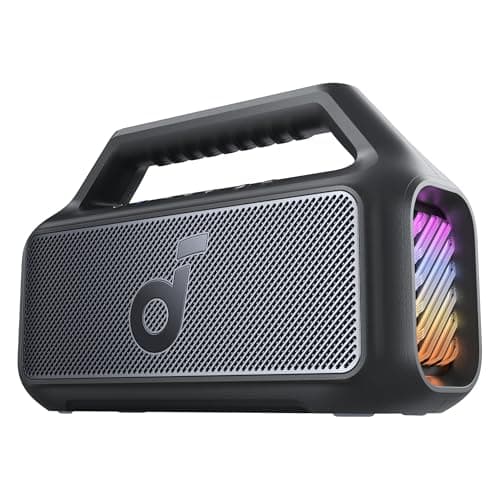
Mono vs stereo Bluetooth speakers
When stereo separation is audible, when it is marketing, and the four speakers that handle each case.
Guides
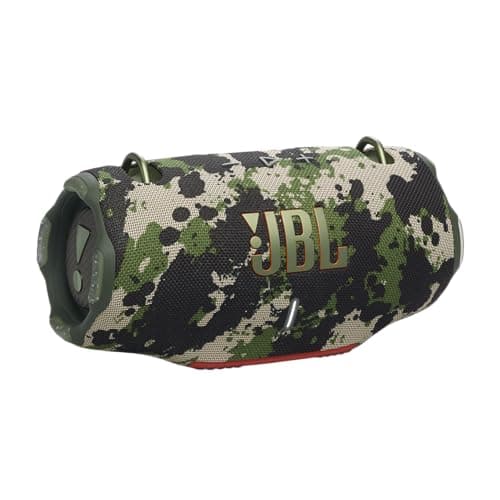
How to pair two Bluetooth speakers
Platform-by-platform steps for stereo and multi-speaker pairing — and why cross-brand does not work.
Head-to-Head
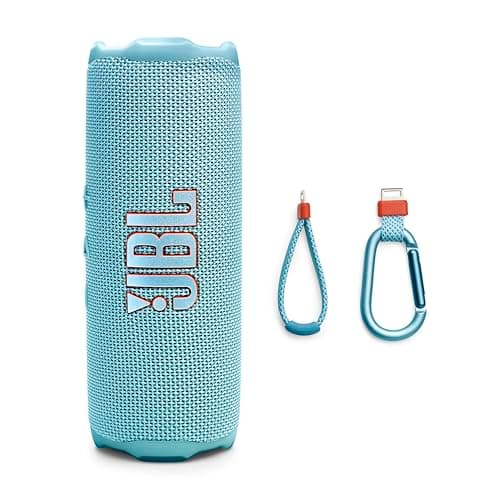
Auracast vs PartyBoost: what JBL changed
Which JBL speakers link with which, the single model that bridges both, and the cheaper way to get stereo.
Guides
Can you connect two different brands of Bluetooth speaker?
Why cross-brand pairing fails, the three real workarounds, and the one that is about to change everything.
Guides
How many Bluetooth speakers can you connect at once?
The real limits on multi-speaker Bluetooth, the four routes past one, and what each one costs you.
By Price
The best Bluetooth speakers for an office in 2026
Why an office speaker is a low-volume and call-quality problem, and the five that solve it.