Brands & Alternatives
JBL PartyBox alternatives
If you want volume per dollar, there are better buys. If you want a microphone, there is almost nothing else — and that is the whole decision.
By Ryder M.Published
 Field-tested picks · 2026
How we are funded: Thump & Tote earns a commission when you buy through our Amazon links, at no extra cost to you. It never changes which speaker we put first — see how we pick and our affiliate disclosure.
Quick picks
Ranked for value first. Tap any row to jump to the full write-up.
| # | Product | Best for | Price |
|---|---|---|---|
| 1 | 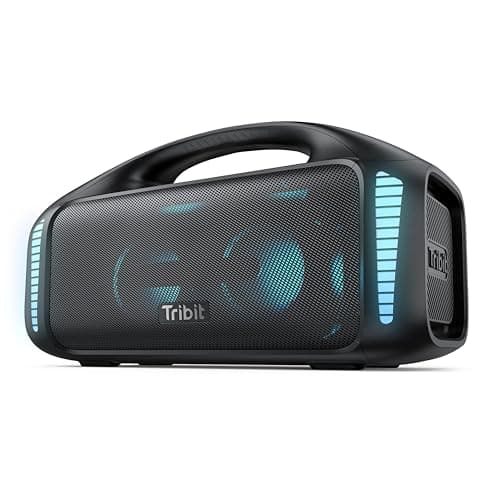 Tribit StormBox Blast96.7 dB measured and 32.1 hours, for less money. | Best overall swap | $179.99$199.9910% offView on Amazon |
| 2 | 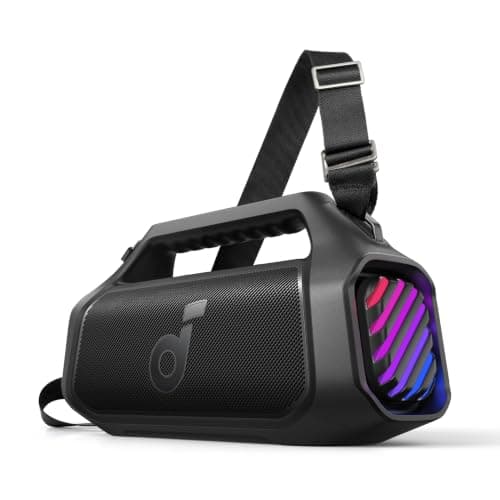 Soundcore Boom 2 PlusUp to 140 W in BassUp, quoted to 40 Hz, and it floats. | Best bass per dollar | $169.99$249.9932% offView on Amazon |
| 3 | 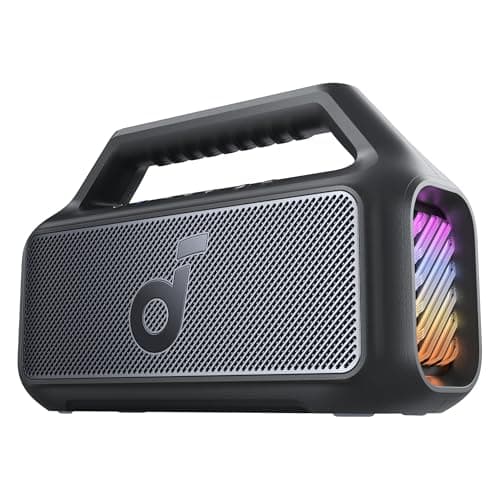 Soundcore Boom 280 W peak, 24 hours and IPX7 for a fraction of the price. | Best budget pick | $99.99$129.9923% offView on Amazon |
| 4 | 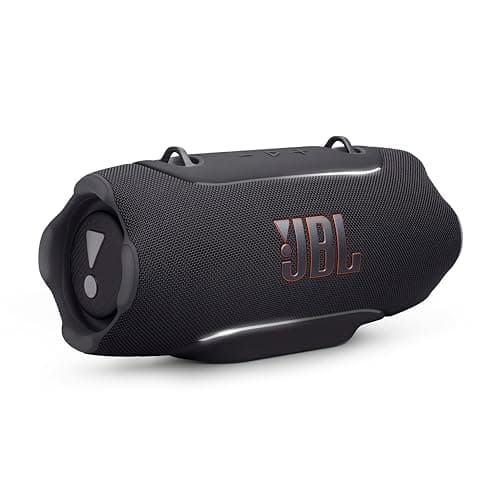 JBL Xtreme 5IP68, Auracast, a power bank and lossless USB-C audio. | Best if you want to stay with JBL | $399.95View on Amazon |
#ad — buy links go to Amazon and we earn a commission on qualifying purchases. Prices change constantly, so the live listing is always the price of record. Full disclosure.
The best cheaper swap for the JBL PartyBox Encore Essential 2 is the Tribit StormBox Blast: RTINGS measured it at 96.7 dB maximum SPL and 32.1 hours of battery — more than double the PartyBox's quoted 15 hours — and it is IPX7 rather than splash-resistant, with a 3.5 mm aux input and a nine-band app EQ, for less money. The budget pick is the Soundcore Boom 2: up to 80 W peak from a real 50 W subwoofer, 24 hours and IPX7, at a fraction of the price. One thing decides whether you should switch at all: the PartyBox has a 20 mV RMS microphone input and a 100 mV RMS guitar input, and nothing below has either.
Start with what the PartyBox Encore Essential 2 actually is, because it is better than the "overpriced party speaker" framing suggests. JBL publishes 100 W RMS measured to IEC60268, which is a stricter and more comparable standard than the peak figures most of this category quotes. It has three real inputs — microphone at 20 mV RMS, guitar at 100 mV RMS and a 3.5 mm aux at 370 mV RMS — plus Bluetooth 5.4 with Auracast, a dynamic lightshow, a grab-and-go handle and app control, at up to 15 hours. It is IPX4, splash-resistant only, and no microphone is included.
That input panel is the product. A phone's Bluetooth microphone profile cannot be routed back out through a speaker receiving music, so there is no software workaround for amplifying a voice — either the speaker has a physical mic jack or it does not. Speakers with a microphone input is the complete list on this site, and it is very short.
So the alternatives below are honest about their lane: they beat the PartyBox on output per dollar, on battery and on sealing, and every one of them loses the microphone. If karaoke, toasts, announcements or coaching are involved, stop here and keep the PartyBox.
Where the PartyBox wins and where it does not
It wins on inputs, decisively. Three jacks with published sensitivities is unusual at any price, and the karaoke EQ behind the mic input means the speaker is actually tuned for a voice rather than merely accepting one. The best speakers for a church or hall and for a wedding both end up at the PartyBox for this reason.
It loses on battery, heavily. Fifteen hours is the shortest runtime of anything in this class on this site. The Tribit StormBox Blast was independently measured at 32.1 hours, and the Soundcore Boom 2 quotes 24 — so a swap can roughly double your runtime while costing less. The best speakers with the longest battery life is the full ranking.
It loses on sealing, and this one catches people out. IPX4 is splash resistance only — no immersion, and no dust rating at all. Every alternative below is IPX7, which is thirty minutes under a meter of water, and two of them float. For a pool party, a beach or a tailgate in the rain, that is a meaningful difference. What IP67 and IPX7 actually mean is the primer.
On raw output it is competitive rather than dominant. The 100 W RMS IEC60268 figure is a genuinely good number honestly measured, and the StormBox Blast's 96.7 dB is an independent acoustic measurement rather than an amplifier rating — the two are not directly comparable, which is why we quote both and attribute both. Watts and loudness explains why those figures resist comparison.
The picks
Best overall swap — more output, double the battery, less money
Tribit StormBox Blast
The loudest thing we are willing to call good value.
- What it does well
- RTINGS measured 96.7 dB at maximum volume and 32.1 hours of battery against a 30-hour claim, which is the strongest measurement record of anything in this class. Two 11 cm bass-midrange drivers, two 3 cm tweeters and two passive side radiators move a lot of air. It keeps the 3.5 mm aux input, adds a USB-A port that charges a phone, is IPX7 rather than IPX4, and has a nine-band app EQ with seven presets.
- Where it cuts corners
- No microphone input and no guitar input, which is the entire reason to own a PartyBox. 11.6 lb, IPX7 means no dust rating, RTINGS measured 3.89 dB of compression at maximum volume, the LED bar drains the battery quickly, and the app wants an email address for full function.
- Who it is for
- Anyone whose party is music only and who wants the most measured output and battery per dollar.
- Battery: Over 32 hours in independent testing
- Water rating: IPX7 — submersible to 1 m for 30 minutes
#ad — we earn a commission on qualifying purchases. How this is funded · Price as of November 11, 2026
Best bass per dollar
Soundcore Boom 2 Plus
Two woofers, two tweeters and an aux jack — the most bass hardware per dollar in a carryable box.
- What it does well
- Two 50 W woofers and two 20 W tweeters, 100 W standard rising to up to 140 W in BassUp 2.0, with response quoted down to 40 Hz — the lowest published figure of any speaker in this comparison, including the PartyBox, which publishes none. It floats, it is IPX7, and it keeps a 3.5 mm aux input plus a 10 W USB charging output. Roughly a three-hour charge from a 30 W charger.
- Where it cuts corners
- No microphone or guitar input. 8.4 lb and placed rather than carried, 20 hours is well short of the Tribit, IPX7 carries no dust rating, and the RGB light show costs battery on top of that.
- Who it is for
- Anyone who wants the lowest, heaviest bass in the class and will leave the speaker in one spot.
- Battery: Up to 20 hours at 50% volume with BassUp and the light effects switched off
- Water rating: IPX7 — submersible to 1 m for 30 minutes, and it floats
- Output: 100 W as standard, up to 140 W in BassUp 2.0 mode, from two 50 W woofers and two 20 W tweeters
- Weight: 8.4 lb
#ad — we earn a commission on qualifying purchases. How this is funded · Price as of November 11, 2026
Best budget pick
Soundcore Boom 2
The value answer to a party speaker: it floats, it is loud, and it lasts a day.
- What it does well
- Up to 80 W peak from a dedicated 50 W subwoofer and two 15 W tweeters, response quoted at 45 Hz to 20 kHz, 24 hours, IPX7, buoyancy and a carry strap — for a small fraction of the PartyBox's price. For a normal backyard gathering it genuinely does the job, and it is far easier to carry and far better sealed than the speaker it replaces.
- Where it cuts corners
- No microphone input, no guitar input and no aux input at all, so it cannot join a system or amplify anything. IPX7 publishes no dust rating, the 24-hour figure assumes BassUp and the lights are off, and it will not cover genuinely open ground with a crowd on it.
- Who it is for
- Anyone who wanted a party speaker, does not need a microphone, and would rather not spend PartyBox money at all.
- Battery: Up to 24 hours at 50% volume with BassUp and lights off
- Water rating: IPX7 — submersible to 1 m for 30 minutes, and it floats
- Output: Up to 80 W peak output (a 50 W subwoofer plus two 15 W tweeters)
#ad — we earn a commission on qualifying purchases. How this is funded · Price as of November 11, 2026
Best if you want to stay with JBL
JBL Xtreme 5
One big woofer instead of two small ones, IP68 and a drop rating — the most rugged Xtreme, and the heaviest.
- What it does well
- JBL build quality with far better sealing than the PartyBox: IP68, dust-tight and sealed against continuous immersion rather than IPX4 splash resistance. One 98 x 145 mm woofer and two 20 mm tweeters rated 1 x 90 W plus 2 x 20 W RMS on AC, quoted 40 Hz to 20 kHz, 24 hours plus 4 with Playtime Boost from a 68 Wh pack, 10 minutes of charging giving about 2 hours, lossless USB-C audio, a built-in power bank, Bluetooth 6.0 with Auracast and LC3, and a shoulder strap.
- Where it cuts corners
- No microphone input and — more surprisingly — no aux input at all, so it is less connectable than the PartyBox it replaces. It costs more than every other pick here, on battery the output drops to 1 x 60 W plus 2 x 15 W RMS, it weighs 6.38 lb, and there is no power adapter in the box.
- Who it is for
- Buyers who want to stay in the JBL ecosystem and value sealing, battery and build over inputs.
- Battery: Up to 24 hours, plus 4 more with Playtime Boost; 10 minutes of charging gives about 2 hours
- Water rating: IP68 — dust-tight and sealed against continuous immersion. JBL also calls it drop-proof, without publishing a drop height
- Output: One 98 x 145 mm woofer and two 20 mm tweeters; 1 x 90 W RMS plus 2 x 20 W RMS on AC power, 1 x 60 W RMS plus 2 x 15 W RMS on battery
- Weight: 6.38 lb (2.9 kg)
#ad — we earn a commission on qualifying purchases. How this is funded · Price as of November 11, 2026
The PartyBox against the alternatives
| Speaker | Mic input | Output | Battery | Sealing |
|---|---|---|---|---|
| JBL PartyBox Encore Essential 2 | Yes — 20 mV RMS, plus guitar in | 100 W RMS (IEC60268) | Up to 15 hours | IPX4 — splash only |
| Tribit StormBox Blast | No | 90 W; 96.7 dB measured (RTINGS) | 32.1 hours measured | IPX7 — no dust rating |
| Soundcore Boom 2 Plus | No | 100 W, up to 140 W in BassUp 2.0 | Up to 20 hours | IPX7, floats |
| Soundcore Boom 2 | No | Up to 80 W peak | 24 hours | IPX7, floats |
| JBL Xtreme 5 | No | 90 W + 2 x 20 W RMS on AC | 24 hours plus 4 | IP68 |
Who should look elsewhere entirely
- Anyone who needs a microphone but not this much speaker. Speakers with a microphone input is the full list, short as it is.
- Anyone on a firm budget. Party speakers under $200 and the loudest under $100 are the price-capped rankings.
- Anyone whose party is near water. The PartyBox is IPX4. The best floating Bluetooth speakers and the best for a pool are better suited.
- Anyone comparing JBL as a brand. JBL alternatives, JBL dupes and is JBL worth it cover the brand-level question.
- Anyone who wants lights above all. Speakers with lights is honest about which light shows are worth the battery.
For the full write-ups of the speakers here, see the JBL PartyBox Encore Essential 2 review, the Tribit StormBox Blast review and the Soundcore Boom 2 Plus review. The loudest Bluetooth speakers for the money is the unrestricted output ranking, and what size speaker do I need is worth reading before committing to anything this large.
Frequently asked questions
What is a cheaper alternative to the JBL PartyBox?
Why is the JBL PartyBox more expensive than speakers that are just as loud?
Can I use a microphone with a cheaper party speaker?
Is the JBL PartyBox waterproof?
Which alternative has the most bass?
What is the cheapest speaker that replaces a PartyBox for a backyard?
Should I buy a JBL Xtreme 5 instead of a PartyBox?
Update log
- First publication. Live autocomplete returns "jbl partybox alternative cheaper" and "jbl partybox similar" among others, which is a direct match for this site's value buyer; the existing JBL pages are brand-level and do not address the PartyBox line.
Sources
Every specification quoted above comes from the manufacturer or retailer listing below. We publish no measurements of our own — see how we pick.
- JBL — PartyBox Encore Essential 2 specification sheet (PDF, manufacturer specifications)
- RTINGS — JBL PartyBox Encore Essential 2 review (independent measurements)
- RTINGS — Tribit StormBox Blast measurements (independent test lab)
- Tribit — StormBox Blast product page (manufacturer specifications)
- StereoGuide — Tribit StormBox Blast review (independent hands-on)
- Soundcore — Boom 2 Plus product page (manufacturer specifications)
- Soundcore — Boom 2 product page (manufacturer specifications)
- JBL — Xtreme 5 specification sheet (PDF, manufacturer specifications)
- IEC 60529 — the international standard behind IP ratings
Read next
Brands & Alternatives
JBL alternatives: what you actually give up going cheaper
Each popular JBL mapped to its cheaper equivalent, with the real cost of each swap stated.
Brands & Alternatives
JBL dupes: the cheaper versions worth buying
Genuine cheaper equivalents versus outright knockoffs — and how to tell a fake listing apart.
Outdoor & Party
The best Bluetooth speakers with a microphone for karaoke in 2026
Speakers that take a real microphone, and an honest account of how few of them there are.
Reviews
JBL PartyBox Encore Essential 2 review
Mic in, guitar in, aux in and 15 hours off the battery — against IPX4 and 13.67 lb.
Outdoor & Party
The best Bluetooth party speakers in 2026
The four features that make a speaker a party speaker, and the five that genuinely have them.
Outdoor & Party
Best Bluetooth party speakers under $200
The Soundcore Boom 2 Plus brings 140 W and an aux jack under $200. The Boom 2 covers most backyards for half the band.