Guides
Can you replace a Bluetooth speaker battery?
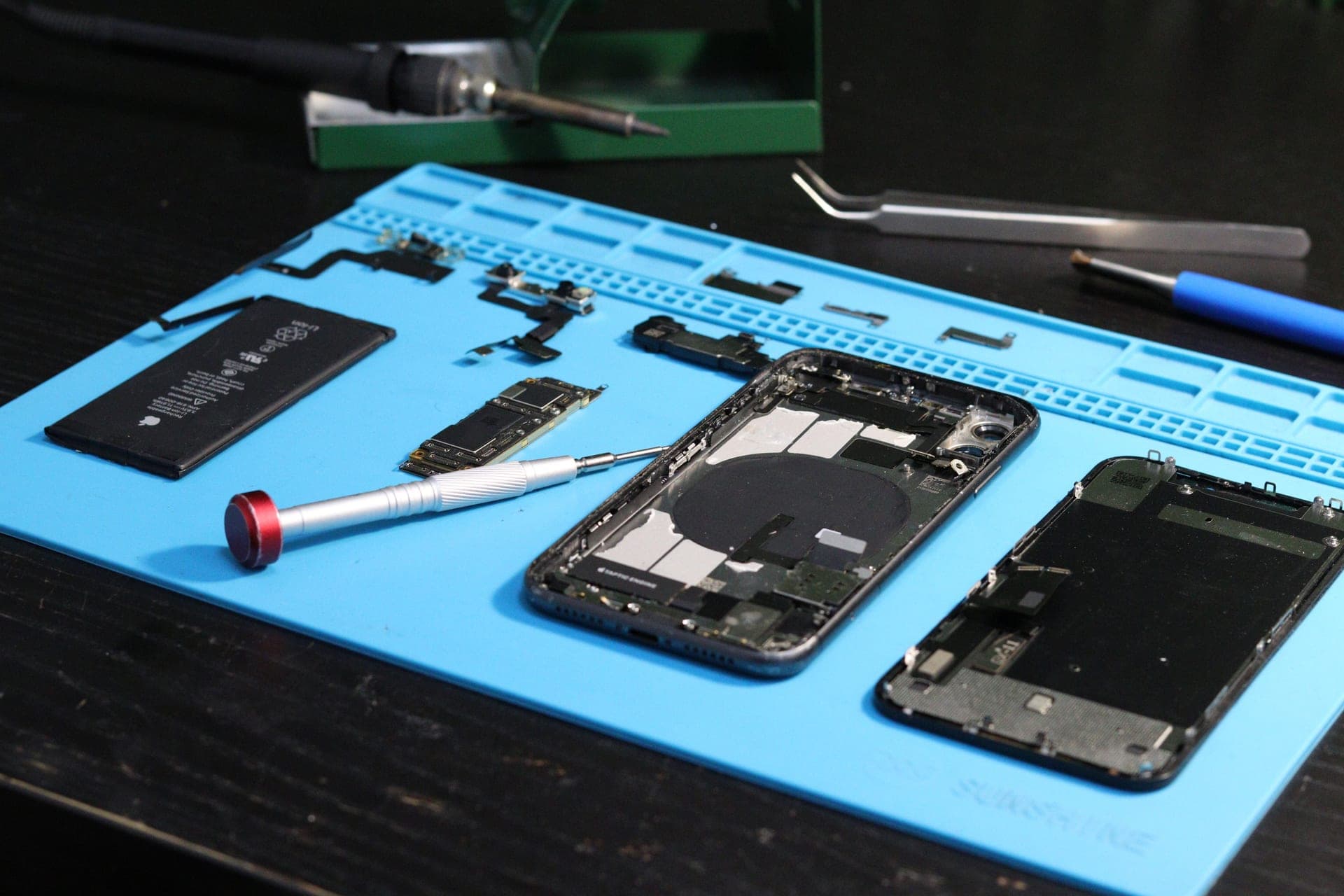
On most speakers, not without opening a sealed case. On a small handful, it is a 1-to-3-minute job with one screwdriver.
By Ryder M.Published
 Field-tested picks · 2026
How we are funded: Thump & Tote earns a commission when you buy through our Amazon links, at no extra cost to you. It never changes which speaker we put first — see how we pick and our affiliate disclosure.
Usually not easily. The great majority of portable Bluetooth speakers are built around a lithium cell that is glued or soldered inside a sealed, waterproofed case, with no service part sold and no documented procedure — replacing it means breaking a water seal you cannot reliably restore. A small number of speakers are genuinely designed for it: the JBL Xtreme 4 takes an official JBL spare battery behind a screwed cover, a job the published repair guide rates Easy at 1 to 3 minutes. For everything else your realistic options are a third-party replacement kit, a paid repair, or accepting that the speaker's life is the cell's life — which is why buying long battery life cheaply, rather than expensive battery life, is the better strategy.
This question almost always arrives the same way: a speaker that used to run all day now runs for two hours, everything else about it is fine, and throwing it away feels absurd. That instinct is correct — it *is* absurd — and the honest answer is that the industry has mostly designed the repair out, for a reason that is not pure cynicism.
Why most speakers are built this way
The waterproofing is the real culprit. An IP67 or IPX7 rating is achieved with gaskets, adhesive and ultrasonically welded seams, and every one of those is designed to be assembled once. A removable battery hatch is a hole in the enclosure, and a hole has to be sealed with a gasket, a captive cover and screws that compress it evenly — which costs money, adds bulk, and is a new place for the rating to fail. A sealed speaker is cheaper to build, lighter, and easier to certify.
Size is the second reason. In a Clip- or Go-sized speaker there is no room for a serviceable enclosure around the cell; the battery is a structural part of how the thing fits together. That is why the speakers that *do* offer replaceable batteries are all large ones — the space to do it properly only exists at that size.
And then there is the commercial reality, which is worth stating plainly rather than pretending otherwise: a speaker whose battery dies at three years is a speaker you replace at three years. Stocking a service part for a discontinued model costs a manufacturer money and earns nothing. The companies that do it are making a deliberate choice against their own short-term interest, and it is fair to reward them for it.
How long before this even matters
Longer than people fear. A lithium-ion cell loses capacity through charge cycles and through calendar ageing, and for a speaker used a few times a week you are typically looking at three to five years before the decline is annoying rather than measurable. Heat is what accelerates it most — far more than cycle count — which is why a speaker stored in a hot car or left on a sunny deck ages years faster than the same speaker kept indoors.
The three habits that genuinely extend it: avoid heat, do not store the speaker at full or empty charge for months (about 50% is the right level for long storage), and use shallow partial charges rather than running it flat. How long Bluetooth speakers last covers the full picture, and do Bluetooth speakers come charged covers the storage level in detail. Doing those three things is cheaper and more effective than any repair discussed below.
What to look for if replaceability matters to you
- An official spare battery part number. The only reliable signal. If the manufacturer sells a battery as a product in its own right, the speaker was designed for the swap. If the only results are third-party kits, it was not.
- A screwed access cover, not a glued seam. Look at photos of the back and underside. Visible Torx or Phillips screws around a defined panel mean a serviceable design; a continuous molded shell with no fasteners means the cell is inside a sealed box.
- A published repair guide. Either the manufacturer's own or a community one with a difficulty rating and a time estimate. "Easy, 1 to 3 minutes" and "Difficult, 90 minutes, heat gun required" are very different purchases.
- Size. Replaceable batteries effectively only exist on large speakers. If you want this feature, you are shopping the big end of the range and accepting the weight that comes with it.
- Or, the honest alternative: buy long battery life cheaply. A speaker that quotes twenty-four hours for under $50 can lose half its capacity and still outlast a twelve-hour premium speaker in fresh condition. This is the strategy this site usually recommends, because it costs nothing and needs no tools.
- Check whether the swap voids the water rating. On a designed-for-it speaker, reseating the cover restores the gasket. On a pried-open one, it does not — assume the rating is gone the moment you break a glued seam.
Three speakers, three strategies
These are the registry picks that answer this question three different ways: one that takes a genuine spare, one whose runtime is long enough that the question is years away, and one cheap enough that replacing the whole speaker is the rational repair.
 Illustrative
The one with a real replaceable battery
JBL Xtreme 4
Two woofers and two bass radiators — the most convincing low end JBL puts in a carryable box.
- What it does well
- JBL sells an official spare battery for it — the same pack also fits the PartyBox Stage 320 — and the cell sits behind a screwed cover on the back panel rather than inside a glued shell. The published repair guide rates the job Easy at 1 to 3 minutes: two 12.5 mm screws with a T20 Torx bit, pry the cover with a fingernail or spudger, pinch the orange ribbon and lift the 9,444 mAh pack out. That means the speaker's lifespan becomes a maintenance item, and it also means a spare battery is an unlimited runtime extension you can put in a bag. Twenty-four quoted hours plus six in Playtime Boost, IP67 on both axes, a power bank and Auracast.
- Where it cuts corners
- 2.1 kg on a shoulder strap with no rigid handle, which reviewers consistently call awkward. The stereo image is described as narrow and almost mono, it supports only the SBC codec, there is no aux input, no NFC and no mute, and it compresses at maximum volume. It is also now the outgoing generation — the Xtreme 5 arrived in April 2026 — so buying it at full list price is the one way to get it wrong.
- Who it is for
- Anyone who intends to still be using this speaker in five years, and anyone who spends days away from a socket.
- Battery: Up to 24 hours, plus 6 more with Playtime Boost
- Water rating: IP67 — submersible to 1 m for 30 minutes, dustproof
- Output: Two 70 mm woofers and two 20 mm tweeters with dual bass radiators
- Weight: 4.63 lb (2.1 kg)
#ad — we earn a commission on qualifying purchases. How this is funded
 Illustrative
The one whose battery will outlast your interest in it
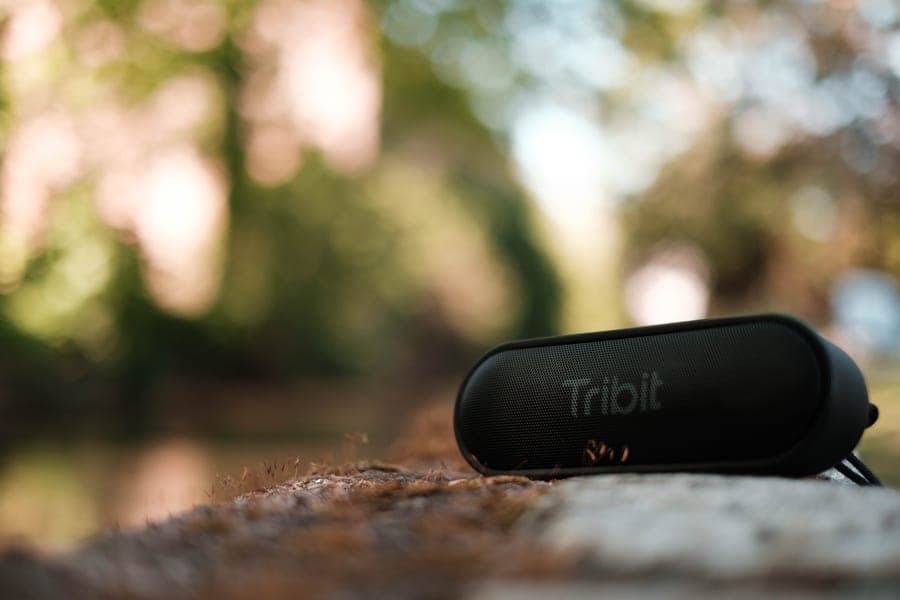
Marshall Emberton III
Thirty-two hours and a genuinely grown-up tuning, in something you can pocket in a coat.
- What it does well
- 32+ hours quoted is the longest runtime of anything we recommend at this size, and twenty minutes on the charger returns about six. The practical consequence matters more than the headline: a long runtime means fewer charge cycles for the same usage, and charge cycles are what wear a cell out. A speaker charged weekly rather than daily takes years longer to reach the same state of degradation. The tuning is restrained and even rather than the lifted-ends voicing cheap speakers use, and IP67 covers dust and water.
- Where it cuts corners
- The battery is not replaceable, so this is a mitigation rather than a solution. No aux input, no app EQ worth the name, and it is not especially loud for the money — you are paying for refinement and runtime. It sits above this site's usual value ceiling.
- Who it is for
- All-day listeners who would rather push the problem out five years than plan to fix it.
- Battery: 32+ hours, with 20 minutes of charging giving about 6 hours
- Water rating: IP67 — submersible to 1 m for 30 minutes, dustproof
- Output: Two 38 W Class D amplifiers driving two 10 W full-range drivers plus two passive radiators
- Weight: 1.5 lb (0.67 kg)
#ad — we earn a commission on qualifying purchases. How this is funded
 Illustrative
The one where replacing the speaker is the repair
Anker Soundcore 2
Years old, still sold, still the battery-life champion of the cheap shelf.
- What it does well
- Twenty-four quoted hours from a 5,200 mAh cell and 12 W of real stereo, at a price in the under-$50 bracket. That combination is the honest answer to this whole page for most people: at this money, a speaker that loses half its capacity in four years has cost you very little per year, and a replacement costs less than a paid battery repair on a premium speaker would. IPX7 covers spills, and two of them pair wirelessly for stereo.
- Where it cuts corners
- The battery is sealed and there is no service part, so when it goes, it goes. No dust rating, no strap, plain build, and this is the oldest design we recommend. BassUp is heavy-handed, and it sounds thin if you walk away from it.
- Who it is for
- Anyone who would rather not own a repair project, and anyone buying a speaker for a kitchen, a garage or a child.
- Battery: 24 hours
- Water rating: IPX7 — submersible to 1 m for 30 minutes
- Output: 12 W stereo
#ad — we earn a commission on qualifying purchases. How this is funded
If your speaker is not one of the replaceable ones
You have three realistic options, in descending order of how often they are worth it.
1. A third-party replacement kit. These exist for a surprising number of popular models and typically bundle a cell, opening tools and video instructions. They are the cheapest path and they work, with two honest caveats: the water rating is gone the moment you break a glued seam, and cell quality from unbranded suppliers is genuinely variable — a kit advertising more capacity than the original is a claim, not a specification. Worth doing on a speaker you like and would otherwise bin; not worth doing on a speaker you were lukewarm about.
2. Manufacturer service or a repair shop. Worth a single email if the speaker is expensive and recent, and worth almost nothing otherwise. Most manufacturers will quote a price close to a new mid-range speaker, or decline on a discontinued model. Ask specifically whether the water rating is restored; if the answer is vague, treat it as no.
3. Use it on mains power and stop treating it as portable. The most underrated option. A speaker with a dead battery usually still works perfectly plugged in, which makes it a free permanent speaker for a kitchen, a garage, a workshop or a bathroom — places where a socket is available and portability was never the point. Check can you use a Bluetooth speaker while it is charging first, because a few models behave oddly on mains, but most are fine.
What we would not recommend is attempting a swap on a small sealed speaker with no kit and no guide. Prying apart an ultrasonically welded shell damages it, and a punctured or crushed lithium cell is a genuine fire risk rather than a theoretical one. If there is no documented procedure and no part, the speaker is telling you something.
Disposing of a dead one properly
A speaker with a lithium cell inside does not belong in household waste or in a recycling bin, where crushed cells are a well-documented cause of fires in collection trucks and sorting facilities. Take it to an electronics recycling point or a retailer take-back scheme — most large electronics retailers run one, and battery-specific drop-off bins are common. The same rules are why lithium batteries are restricted in checked baggage, which can you bring a Bluetooth speaker on a plane covers.
If you are replacing rather than repairing, this is a good moment to buy down rather than up. The thing that failed was a consumable, and it will fail again on whatever you buy next, so paying a premium for a sealed speaker is paying a premium for the same countdown. Best for the money and best under $100 are written from that position, and Bluetooth speaker deals covers how to time the purchase.
Frequently asked questions
Can you replace a Bluetooth speaker battery?
Which Bluetooth speakers have replaceable batteries?
How do you replace a JBL Xtreme 4 battery?
How long does a Bluetooth speaker battery last before it needs replacing?
Will replacing the battery break the waterproofing?
Is it worth paying for a Bluetooth speaker battery replacement?
What should I do with a Bluetooth speaker whose battery is dead?
Update log
- First publication. Battery-replacement procedure and the existence of an official spare part verified against the manufacturer listing and the published repair guide rather than asserted.
Sources
Every specification quoted above comes from the manufacturer or retailer listing below. We publish no measurements of our own — see how we pick.
- JBL — Battery 400 replaceable spare battery (Xtreme 4 and PartyBox Stage 320)
- iFixit — JBL Xtreme 4 battery replacement guide (tools, screws, procedure)
- JBL — Xtreme 4 specification sheet (PDF)
- Battery University — how lithium-ion batteries age (BU-808)
- Apple — maximizing battery performance and lifespan
- FAA PackSafe — lithium batteries in carry-on and checked baggage
- Marshall — Emberton III product page (manufacturer specifications)
- Soundcore — Soundcore 2 product page (manufacturer specifications)
Read next
Guides
How long do Bluetooth speakers last?
Product lifespan separated from battery runtime — what fails, when, and how to delay it.
Guides
Bluetooth speaker battery life, honestly
How quoted runtimes are produced, what to expect in reality, and the longest-lasting picks.
Reviews
The one JBL portable whose battery you can change — and the three things reviewers agree it gets wrong.
Guides
Do Bluetooth speakers come charged?
Why speakers ship half charged, what the first charge actually needs, and the storage level that matters.
Head-to-Head
JBL Xtreme 4 vs Charge 6: which should you buy?
The honest split: about 10 Hz more bass and a swappable battery, against half the weight and a better rating.
Guides
Can you use a Bluetooth speaker while it is charging?
What playing while plugged in does to a lithium cell, when it matters, and which speakers handle it best.

By Price
The best Bluetooth speaker for the money in 2026
The single best-value speaker at each price point, plus the two tactics that save the most money.