By Price
The best Bluetooth speakers for an office in 2026
The constraint is not how loud it goes, it is how good it sounds quietly — and whether the person on the call can hear you.
By Ryder M.Published
 Field-tested picks · 2026
How we are funded: Thump & Tote earns a commission when you buy through our Amazon links, at no extra cost to you. It never changes which speaker we put first — see how we pick and our affiliate disclosure.
Quick picks
Ranked for value first. Tap any row to jump to the full write-up.
| # | Product | Best for | Price |
|---|---|---|---|
| 1 |  Illustrative IllustrativeSoundcore Motion 300Real stereo in a slim shape that fits behind a monitor. | Best overall | Check price on Amazon |
| 2 | 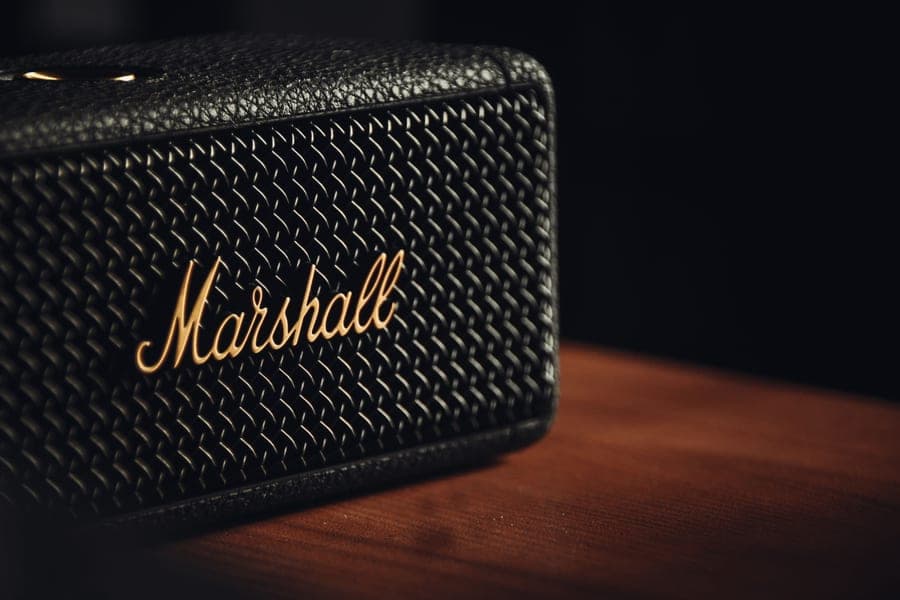 Illustrative IllustrativeBose SoundLink Flex (2nd Gen)The most even tuning here when it is barely turned up. | Best sound at low volume | Check price on Amazon |
| 3 |  Illustrative IllustrativeJBL Flip 7IP68 and USB-C lossless, so it also leaves the building. | Best all-rounder | Check price on Amazon |
| 4 |  Illustrative IllustrativeAnker Soundcore 2Stereo and 24 hours for a fraction of the price. | Best value | Check price on Amazon |
| 5 | 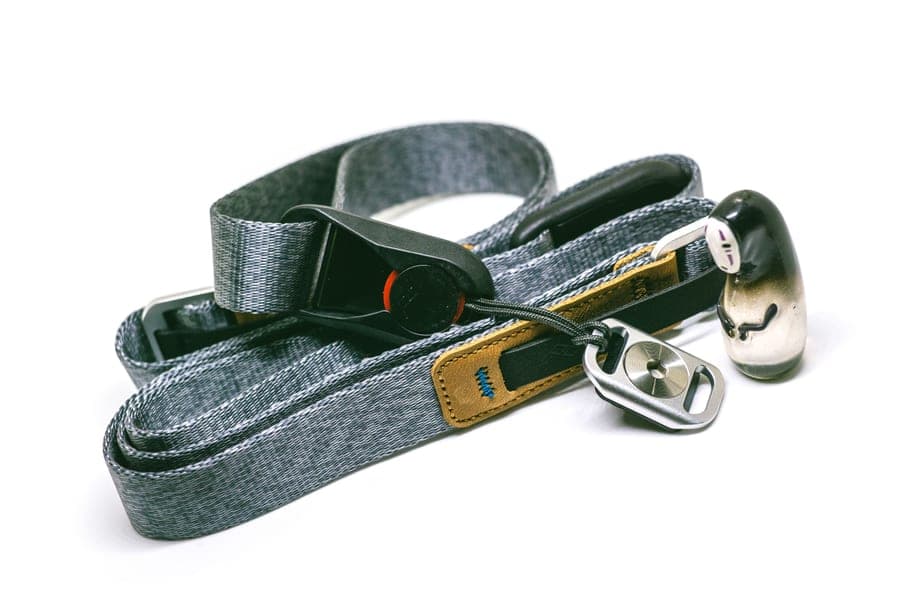 Illustrative IllustrativeJBL Clip 5Clips to a bag and goes home with you every night. | Best for a shared desk | Check price on Amazon |
#ad — buy links go to Amazon and we earn a commission on qualifying purchases. Prices change constantly, so the live listing is always the price of record. Full disclosure.
The Soundcore Motion 300 is the best office speaker for most people: 30 W of real stereo in a flat slim shape that fits behind a monitor or stands against a partition, with an app EQ to tame it for a shared room. If you only care how it sounds turned down low, the Bose SoundLink Flex (2nd Gen) has the most even tuning here at background volume, which is the hardest thing in this category to get right. And if the speaker needs to leave with you, the JBL Clip 5 clips to a bag. One honest warning up front: none of these is a good speakerphone.
Office listening is defined by a constraint nothing else on this site shares: other people. You are not trying to fill a room, you are trying to put music under your own work without putting it under anyone else's. That makes it a low-volume problem, and low volume is where cheap speakers are weakest — most are voiced to come alive loud, and turned down they go thin and lifeless.
The second thing that defines the category is calls, which is where most of the search traffic comes from and where most of the disappointment comes from too. A portable speaker's built-in microphone is a single element designed for a phone call in a car, not for a conference call in a room with air conditioning. We will not tell you otherwise: if calls are the actual job, buy a headset. This page is about the listening, with honest notes about which picks have a usable mic at all.
What actually matters at a desk
- Tone at low volume. The deciding spec, and the one no listing mentions. A good office speaker sounds complete at 20% volume; a bad one needs 60% to sound like anything, by which point your colleagues are involved. Even tuning beats output every time here.
- A footprint that fits. Desks are full. A speaker that stands flat against a monitor stand, lies down on a shelf or hangs off a hook keeps the desk usable in a way a cylinder does not.
- A call microphone, if and only if you need one. All of these have one; none is good. The better ones are usable one-to-one in a quiet room, which is a real but limited capability. Do Bluetooth speakers have microphones sets out exactly what the hardware is.
- Multipoint or fast reconnection. An office speaker gets handed between a laptop and a phone all day. A speaker that reconnects instantly to the last device saves a genuinely annoying amount of fiddling. Why your speaker will not connect covers the failure modes.
- Latency, if video is involved. Bluetooth adds enough delay that lip sync on a video call or a recorded meeting is visibly wrong. A USB or wired connection fixes it, and only some speakers offer one. The best speakers for a computer goes deeper on this.
- Output, last. A desk is two feet away. 12 to 30 W is ample, and anything more is bought for a different room.
The picks
IllustrativeBest office speaker overall
Soundcore Motion 300
Our default recommendation under $100 — stereo, slim, and honestly specified.
- What it does well
- The slim, flat shape is the real argument: it stands against a monitor foot or a partition and takes almost no desk, and SmartTune adapts if you lay it down on a shelf instead. 30 W from two 15 W full-range drivers is genuine stereo, and at desk distance you hear the separation clearly. The app EQ matters more in an office than anywhere else — pull the bass down and it stops carrying through a wall to the next desk. IPX7 means a knocked-over coffee is survivable.
- Where it cuts corners
- Thirteen hours is the shortest battery here, though an office has sockets. The call mic is usable one-to-one in a quiet room and not much more. IPX7 leaves dust untested, there is no aux or USB audio input, so latency on video calls is unavoidable, and the factory tuning needs the EQ adjustment to sit politely in a shared room.
- Who it is for
- Most desks, and the right pick if the speaker stays at work and the desk is short on space.
- Battery: 13 hours
- Water rating: IPX7 — submersible to 1 m for 30 minutes
- Output: 30 W stereo (two 15 W full-range drivers)
#ad — we earn a commission on qualifying purchases. How this is funded
IllustrativeBest sounding at background volume
Bose SoundLink Flex (2nd Gen)
The premium benchmark on this site — included so you can see what the money buys.
- What it does well
- This is the speaker on this page that sounds most complete when it is barely turned up, which is the entire office problem. Bose's voicing keeps the midrange present and the balance even at low levels instead of waiting for volume to come alive, so music stays musical at a level a colleague will not hear. The silicone-wrapped body wipes clean on a desk, IP67 covers both dust and a spill, and a roughly four-hour recharge over USB-C is convenient.
- Where it cuts corners
- Up to twelve hours is the shortest quoted battery on this page, and it is the most expensive pick here — above this site's usual value ceiling. No aux input and no USB audio, so video-call lip sync is a problem. The call mic is ordinary. It is a cylinder, so it takes more desk than the Motion 300.
- Who it is for
- Shared offices, open-plan desks, and anyone whose speaker never goes above a third of the way up.
- Battery: Up to 12 hours
- Water rating: IP67 — submersible to 1 m for 30 minutes, dustproof
#ad — we earn a commission on qualifying purchases. How this is funded
IllustrativeBest if the speaker also leaves the building
JBL Flip 7
The default mid-size pick, and the speaker every value brand is trying to undercut.
- What it does well
- USB-C lossless audio is the office-relevant feature almost nobody mentions: plug it into the laptop and you get a wired connection, which removes Bluetooth latency and the pairing dance both. IP68 is the strongest rating here and means the speaker survives being thrown in a bag and used in a garden at the weekend. Fourteen hours plus Playtime Boost, even tonality across the volume range, and Auracast if a second one appears.
- Where it cuts corners
- You pay a real brand premium, and cheaper picks here match it on rating and beat it on battery. No analogue aux input — the USB path is the wired option. It is a cylinder with a modest footprint but it does roll. The call mic is unremarkable.
- Who it is for
- Hybrid workers whose one speaker has to do a desk, a kitchen and a backyard, and anyone who wants a wired laptop connection.
- Battery: 14 hours, plus up to 2 more in Playtime Boost mode
- Water rating: IP68 — submersible to 1.5 m for 30 minutes, dustproof
- Weight: 1.82 lb (about 560 g)
#ad — we earn a commission on qualifying purchases. How this is funded
IllustrativeBest value for a desk
Anker Soundcore 2
Years old, still sold, still the battery-life champion of the cheap shelf.
- What it does well
- 12 W of real stereo and twenty-four quoted hours for an under-$50 price, which for a desk two feet away is close to all the speaker needed. It is small, light and plain enough to look like office equipment rather than a statement, IPX7 covers a spill, and a second unit pairs wirelessly for a wider stereo image across a wide desk. At this price, leaving one permanently at the office and one at home is a reasonable plan.
- Where it cuts corners
- BassUp should stay off in a shared room — low frequencies are what travel through partitions and annoy people. No dust rating, no EQ beyond that one mode, no strap, and a plain build. The call mic is the weakest here. It sounds thin if you move more than a few feet away.
- Who it is for
- Anyone who wants a competent desk speaker without thinking about it, and anyone buying two.
- Battery: 24 hours
- Water rating: IPX7 — submersible to 1 m for 30 minutes
- Output: 12 W stereo
#ad — we earn a commission on qualifying purchases. How this is funded
IllustrativeBest for a shared or hot desk
JBL Clip 5
The carabiner is the whole product, and it is a genuinely good one.
- What it does well
- The metal carabiner is the whole point in an office that is not yours: it clips to a bag strap and leaves with you every night, so there is nothing to lose and no desk to claim. IP67 means it survives a commute in a wet coat. Twelve hours plus Playtime Boost covers a working day, and it takes less desk space than anything else here when it is in use.
- Where it cuts corners
- It is a single small driver, so it is the thinnest-sounding pick on this page and it is mono. No EQ, no aux, no USB audio. You pay a JBL premium for a speaker that is deliberately limited, and the call mic is basic.
- Who it is for
- Hot desks, co-working spaces, shared studios, and anyone whose speaker commutes daily.
- Battery: 12 hours, plus up to 3 more in Playtime Boost mode
- Water rating: IP67 — submersible to 1 m for 30 minutes, dustproof
#ad — we earn a commission on qualifying purchases. How this is funded
How the five compare
| Speaker | Output | Quoted battery | Wired option | Footprint |
|---|---|---|---|---|
| Soundcore Motion 300 | 30 W stereo | 13 h | No | Slim and flat — stands or lies down |
| Bose SoundLink Flex (2nd Gen) | Not published | Up to 12 h | No | Small cylinder |
| JBL Flip 7 | Not published | 14 h, +2 in Playtime Boost | Yes — USB-C audio | Small cylinder |
| Anker Soundcore 2 | 12 W stereo | 24 h | No | Small box |
| JBL Clip 5 | Not published | 12 h, +3 in Playtime Boost | No | Tiny — clips to a bag |
The wired column is the one worth reading twice. Bluetooth adds delay, and on a video call or a recorded meeting that delay shows up as visible lip sync error. The Flip 7's USB-C audio path is the only connection here that removes it, which is a genuinely useful office feature hiding inside a spec nobody advertises as one.
What a speaker's microphone actually is
Every speaker on this page has a microphone, and every one of them is the same basic thing: a single omnidirectional element in the body, intended for a hands-free phone call. It has no beamforming, no array, no noise-canceling processing worth the name, and no way of telling your voice apart from the room. It hears the keyboard, the fan and the air conditioning at close to the level it hears you.
That is fine for a one-to-one call in a quiet room, and genuinely not fine for a conference call. The physics do not care how much you spent — a $200 speaker's mic is the same category of device as a $30 speaker's. If calls are a daily part of the job, a headset or a dedicated conference mic is a better use of $40 than any upgrade on this page. Do Bluetooth speakers have microphones explains the hardware in more detail, and speakers with a microphone input covers the entirely different category of speakers you can plug a real mic into.
Keeping the music to yourself
Bass is what travels. Low frequencies pass through partitions, doors and floors far more readily than treble, which is why the colleague two desks away hears a thump rather than a song. Turning the bass down in the app does more to keep your music private than turning the volume down does, and it costs you much less of what you were enjoying.
Decoupling helps too. A speaker sitting directly on a desk couples into the desk, which becomes a large radiating surface — the whole desk quietly becomes part of the speaker. A folded mat, a mousepad or a couple of felt pads under it removes that, which both tidies up the sound at your ear and stops it transmitting into the furniture next door. It is free, and it is the single most effective thing on this page.
Finally, position it close and aim it at yourself. A speaker eighteen inches away at ear height, pointed at you, can be run far quieter than the same speaker across the desk firing at the ceiling, for the same perceived result. Shortening the distance is always cheaper than adding volume.
How much to spend
The $40 to $100 band covers an office properly. Below that you can still get a competent desk speaker — the Soundcore 2 is proof — but even tuning at low volume is the thing the money buys, and it is the thing that matters most here. Best under $100 is the broader list.
Spend above $150 only if you work in a shared room and genuinely listen all day, where the Bose's low-volume composure is a daily benefit rather than a spec. Do not spend it on a speaker you hope will fix your calls — see the note above. And if the desk is really a gaming or media setup rather than a workspace, the best speakers for a computer ranks on latency and stereo width instead.
What we did not pick, and why
- Dedicated conference speakerphones. The right tool for the calls half of this job and much better at it. They are not portable Bluetooth music speakers, which is what this site covers.
- Any speaker with a subwoofer. The Soundcore Boom 2 and Boom 2 Plus are good speakers whose defining feature is exactly what you do not want leaking into a shared room.
- Smart speakers. Convenient on a desk, dependent on Wi-Fi and a company network that may not allow them, and not portable. Bluetooth vs Alexa covers the trade.
- Marshall Emberton III. A strong candidate — 32+ hours and a restrained tuning — but above this site's value ceiling for a speaker that sits next to a socket all day. It is the better pick if you also listen on the move; see best sound quality.
If the desk is at home and doubles as a media setup, start with the best speakers for a computer. If most of what you play is talk radio and podcasts, the best speakers for podcasts and audiobooks ranks on voice clarity. And for a student desk in a shared room, the best speaker for a dorm room is the closer fit.
Frequently asked questions
What is the best Bluetooth speaker for an office?
Can I use a Bluetooth speaker for work calls?
How do I stop my office speaker annoying colleagues?
Why does my speaker sound thin when I turn it down?
Will a Bluetooth speaker work for video calls?
How many watts do I need for a desk speaker?
Update log
- First publication. Ranked on low-volume tone, desk footprint and wired options rather than output, with an explicit warning that no portable speaker is a good conference mic.
Sources
Every specification quoted above comes from the manufacturer or retailer listing below. We publish no measurements of our own — see how we pick.
- Soundcore — Motion 300 product page (manufacturer specifications)
- RTINGS — Soundcore Motion 300 measurements (independent test lab)
- Bose — SoundLink Flex (2nd Gen) product page
- Bose — SoundLink Flex (2nd Gen) specification sheet (PDF)
- JBL — Flip 7 product page (manufacturer specifications)
- Soundcore — Soundcore 2 product page (manufacturer specifications)
- JBL — Clip 5 specification sheet (PDF)
- Bluetooth SIG — Bluetooth technology overview (profiles, codecs, LE Audio)
Read next
By Price
The best Bluetooth speakers for a computer in 2026
Desk picks chosen for near-field listening and connection behavior, not for outdoor output.
By Price
The best Bluetooth speaker for a dorm room
Picks for a shared room with hard walls — loud enough to matter, small enough to keep.
Guides
Do Bluetooth speakers have microphones?
What the built-in mic in a portable speaker actually is, and the three jobs it genuinely does.
By Price
The best Bluetooth speakers for podcasts and audiobooks in 2026
Why the bass-forward tuning everyone sells makes voices worse, and the five that get speech right.
By Price
The best Bluetooth speakers under $100 in 2026
The tier most people should buy in — six picks, ranked for value, with the compromises named.
Guides
Do Bluetooth speakers work with a PC?
Pairing on Windows and macOS, the latency that ruins video, and when to use a cable instead.

By Price
The best sounding Bluetooth speakers in 2026
Ranked on tonal accuracy rather than loudness, with the point of diminishing returns marked.