Reviews
JBL Xtreme 4 review
Now the outgoing generation, which is exactly when this speaker becomes interesting. The replaceable battery is the reason to want it.
By Ryder M.Published
 Field-tested picks · 2026
How we are funded: Thump & Tote earns a commission when you buy through our Amazon links, at no extra cost to you. It never changes which speaker we put first — see how we pick and our affiliate disclosure.
The JBL Xtreme 4 is a 2.1 kg outdoor speaker running two woofers and two tweeters on four amplifier channels, quoted at 2x30 W and 2x20 W with a response down to 44 Hz, IP67 on both the water and dust axes, up to twenty-four hours of playtime plus six more in Playtime Boost, a built-in power bank, Auracast linking and a 3.5-hour charge. The thing that actually makes it unusual is none of that: its battery is user-replaceable, and JBL sells an official spare. No other JBL portable offers that. What you pay for it is real weight, a stereo image independent reviewers describe as narrow and almost mono, and SBC-only Bluetooth with no aptX or LDAC.
Context first, because it changes the recommendation. The JBL Xtreme 5 shipped in April 2026, so the Xtreme 4 is now last year's model. On most sites that is a reason to stop writing about a speaker. On this one it is the reason to start: the outgoing generation is the most dependable discount in portable audio, the changes between generations are incremental, and a speaker that was hard to justify at launch price is often the obvious buy six months later. The Xtreme 5 is bigger and heavier again at 2.9 kg, moves to a single larger woofer with dual tweeters, and upgrades to IP68 — genuine improvements, none of which makes the 4 worse than it was.
This site's standing position is that most people spend more on a portable speaker than they need to, so a speaker in this bracket has to earn the money rather than assume it. The Xtreme 4 earns it in one specific way that almost nobody leads with, and fails to earn it in several ways that reviewers are consistent about. Both halves are below.
What it does well
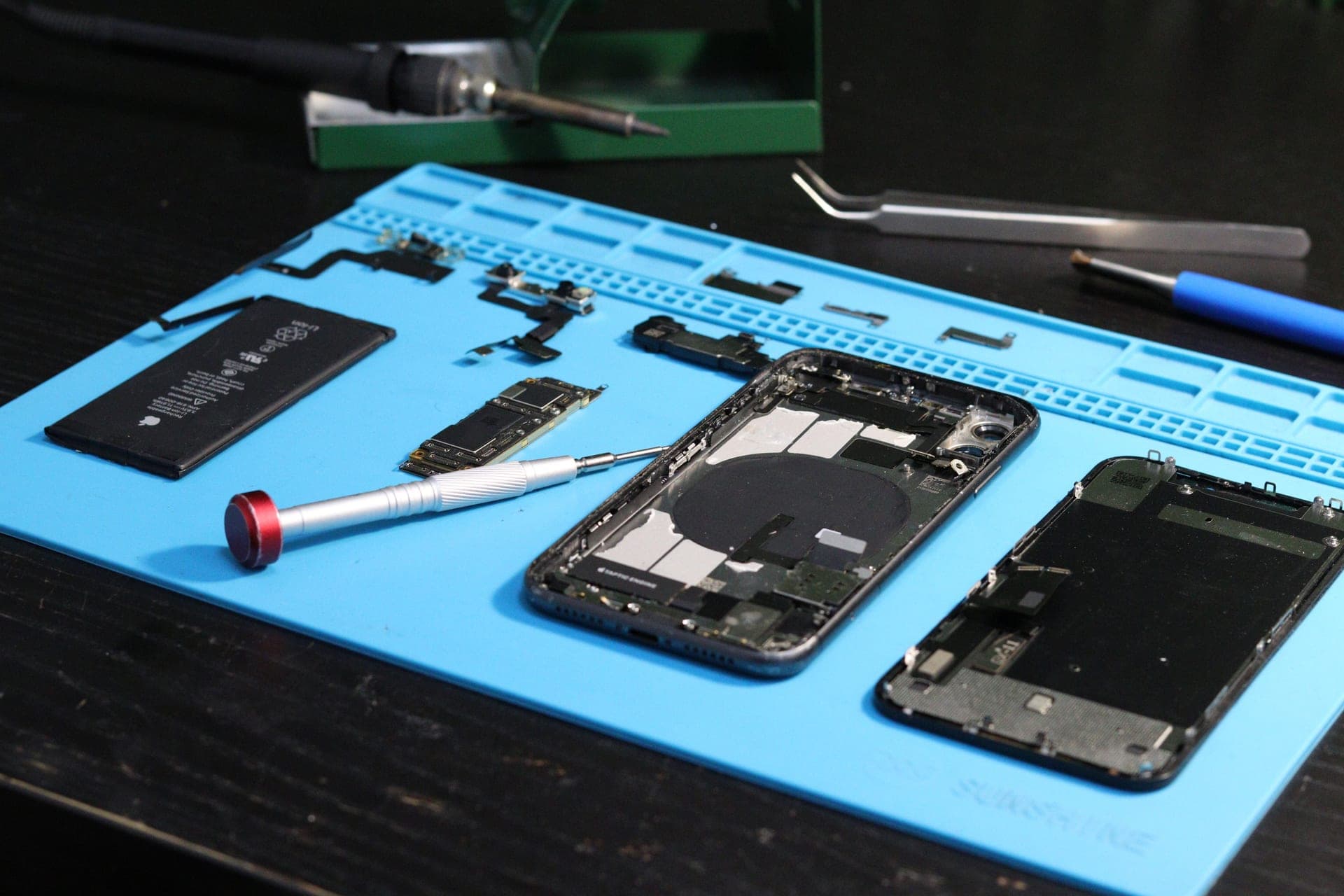
The battery is replaceable, and that is a bigger deal than any spec. The overwhelmingly common way a portable speaker dies is that its sealed lithium cell stops holding a useful charge after a few hundred cycles, at which point a working speaker becomes landfill. The Xtreme 4 takes a battery you can change: JBL sells an official spare — the same part also fits the PartyBox Stage 320 — and swapping it is a cover on the back panel rather than surgery. iFixit rates the job Easy and puts it at 1 to 3 minutes with a T20 Torx bit. That turns the speaker's lifespan from a countdown into a maintenance item, and it means you can carry a second battery instead of hunting for a socket. Can you replace a Bluetooth speaker battery explains how rare this is across the category.
Four drivers, and a 44 Hz floor you can hear outdoors. Two woofers and two tweeters on separate amplifier channels is a genuine two-way layout rather than one full-range driver with passive radiators implying bass. Outdoors, where nothing reflects back at you and low frequencies vanish first, that is the only honest fix — more cone area moving more air. The quoted 44 Hz is about 10 Hz below the Charge 6 and the practical result is that it keeps sounding like music on a lawn where smaller speakers start sounding like a phone.
It stays composed as you turn it up. Two woofers sharing the low end means each one moves less for the same output. That is why the character holds together through the usable volume range instead of collapsing into one-note thump, and it is the difference between a speaker that gets loud and a speaker that gets loud and still sounds good. The loudest for the money covers where it sits against the rest of that field.
IP67 covers dust as well as water. The dust digit is the specification that actually matters for a speaker that lives outdoors, because pollen, grit, sand and lawn dust are a slow failure that no splash rating covers. An IPX7 speaker has never had that axis tested — the X is a gap in the certification, not a zero. What IPX7 and IP67 actually mean is the one-page version.
The power bank, and the charge time. A built-in USB output that will revive a phone matters more outdoors than it sounds, because the phone running your playlist is also your map and your camera. A full charge in 3.5 hours is quick for a cell this size — the Xtreme 4's is a 9,444 mAh pack — so an overnight charge is never the constraint.
Auracast rather than a proprietary chain. Linking works across JBL's current portable range rather than demanding an identical twin, and because Auracast broadcasts rather than relaying down a chain, adding speakers later is a purchase instead of a rebuild. Auracast vs PartyBoost covers what changed, and how many speakers you can connect covers the limits.
Where it cuts corners
2.1 kg, and no rigid handle. About four and a half pounds, carried on a shoulder strap. Reviewers are consistent that it is awkward one-handed, and we agree with the implication: this is a speaker you deliver to a spot, not one you take with you. If it has to come along — a bag, a bike, a hotel, a hike — the Charge 6 is roughly half the weight for most of the useful loudness, and that is not a close call. JBL Xtreme 4 vs Charge 6 is the full comparison.
The stereo image is narrow — reviewers call it almost mono. Independent reviews describe the soundstage as confined and narrow, and note that its directivity is not a strength. In practice that means it throws a loud, solid wall of sound forward rather than a spacious image, and it rewards being pointed at people. For a party speaker that is a fair trade. If you want width you need two speakers, not this one — see mono vs stereo.
SBC only. No aptX, no LDAC, no hi-res Bluetooth codec of any kind. On a speaker at this price that is a genuine omission, and it is one the Charge 6 answers with USB-C lossless audio that the Xtreme 4 simply does not have. In fairness, codec differences are far less audible outdoors than in a quiet room, and this is an outdoor speaker — but you are paying premium money for the older radio and the lesser codec support.
No aux input. The Xtreme 3 had one; the Xtreme 4 dropped it. That rules out a TV, a turntable, a mixer or any wired source outright, and it is the single most common reason people return a speaker in this bracket. Speakers with an aux input is the dedicated list, and the Soundcore Boom 2 Plus is the obvious alternative that kept its jack.
It compresses at maximum volume, and it is not as loud as its size implies. Reviewers report both: audible compression when pushed flat out, and bass that lags at the highest settings. Several note it is not as loud as you might expect for genuinely large outdoor settings. Run it at two thirds and it is excellent; buy it expecting a PA and it will disappoint. How many watts is loud explains why the wattage figures set that expectation badly.
No NFC pairing and no mute control. Minor, but both are the sort of omission that irritates daily. Pairing is manual every time a new device appears, and there is no quick way to silence it without reaching for a phone.
The price, at list. Reviewers make the point this site would make anyway: cheaper rivals get close on sound. At its original price the Xtreme 4 was hard to defend on value grounds. As the outgoing generation it becomes a much easier argument — which is exactly why the discount matters more here than the spec sheet. Is JBL worth it works through the premium honestly.
Specifications
| Specification | Figure |
|---|---|
| Quoted output | 2x30 W woofers and 2x20 W tweeters |
| Frequency response | 44 Hz to 20 kHz |
| Battery | Up to 24 hours, plus 6 more with Playtime Boost |
| Battery capacity | 9,444 mAh |
| Replaceable battery | Yes — official JBL spare sold separately |
| Charging time | 3.5 hours |
| Power bank | Yes, USB out for charging a phone |
| Water and dust | IP67 — submersible to 1 m for 30 minutes, dustproof |
| Weight | 2.1 kg (about 4.6 lb) |
| Bluetooth | 5.3, SBC codec only |
| Wired input | None — no aux, no USB audio in |
| Linking | Auracast |
| Carry | Shoulder strap; no rigid handle |
Alternatives worth knowing about
 Illustrative
If it has to travel with you
JBL Charge 6
The battery-life benchmark, with a power bank built into the back.
- What it does well
- Roughly half the weight at 2.17 lb, the stronger IP68 rating, Bluetooth 5.4, the same twenty-four hours quoted, the same power bank, and USB-C lossless audio that gives you a wired path the Xtreme 4 has no equivalent for. Better build quality for the money, and the easier speaker to actually own.
- Where it cuts corners
- Downmixes stereo to mono, compresses at maximum volume, loses much of its expansive character at low listening levels, and its 54 Hz floor runs out earlier outdoors. No aux input, no replaceable battery, and no charging cable in the box.
- Who it is for
- Almost anyone whose speaker moves regularly, and anyone whose listening happens within about fifteen feet.
- Battery: 24 hours, or up to 28 hours with Playtime Boost enabled
- Water rating: IP68 — submersible to 1.5 m for 30 minutes, dustproof
#ad — we earn a commission on qualifying purchases. How this is funded
 Illustrative
If you want more bass hardware for less money
Soundcore Boom 2 Plus
Two woofers, two tweeters and an aux jack — the most bass hardware per dollar in a carryable box.
- What it does well
- Four drivers and a quoted 40 Hz floor — lower than the Xtreme 4 — plus buoyancy, a 3.5 mm aux input that almost everything in this class has dropped, a 10 W USB output and RGB lighting, at a price below JBL's. The most driver hardware per dollar in a speaker you can still carry in one hand.
- Where it cuts corners
- 8.4 lb, which is nearly double the Xtreme 4 and disqualifying for anything but a fixed spot. Its default BassUp tuning sets the mids and highs behind the bass, the twenty-hour figure assumes BassUp and the lights are off, there is only one USB-C port, and IPX7 leaves dust untested.
- Who it is for
- A patio, a deck or a driveway where the speaker lives in one place and the bass is the point.
- Battery: Up to 20 hours at 50% volume with BassUp and the light effects switched off
- Water rating: IPX7 — submersible to 1 m for 30 minutes, and it floats
- Output: 100 W as standard, up to 140 W in BassUp 2.0 mode, from two 50 W woofers and two 20 W tweeters
- Weight: 8.4 lb
#ad — we earn a commission on qualifying purchases. How this is funded
IllustrativeIf you need microphone inputs
Tribit StormBox Blast 2
The only genuinely portable speaker here with real microphone inputs.
- What it does well
- 200 W on AC power and 180 W on battery, two 6.35 mm wired microphone inputs plus dual wireless mic support, IP67 with the dust axis covered, a telescoping handle and up to thirty hours quoted. The only speaker in this bracket you can genuinely run karaoke, a ceremony or a sports day on.
- Where it cuts corners
- Heavier and more expensive again, it drops to 180 W the moment you unplug it, the thirty-hour figure assumes 50% volume with XBass and the lights off, and the music-reactive lighting is wrong for anything formal.
- Who it is for
- Events where somebody has to be heard rather than just the music — see the wedding and teacher lists.
- Battery: Up to 30 hours at 50% volume with XBass and lights off
- Water rating: IP67 — submersible to 1 m for 30 minutes, dustproof
- Output: 200 W on AC power, 180 W on battery
#ad — we earn a commission on qualifying purchases. How this is funded
IllustrativeThe Xtreme 4 itself, summarized
JBL Xtreme 4
Two woofers and two bass radiators — the most convincing low end JBL puts in a carryable box.
- What it does well
- A 44 Hz floor from four drivers, IP67 on both axes, twenty-four hours plus six, a power bank, Auracast — and the only user-replaceable battery in JBL's portable range, which is the reason to want it over anything else here.
- Where it cuts corners
- 2.1 kg on a shoulder strap, a narrow almost-mono stereo image, SBC-only Bluetooth, no aux input, no NFC, no mute, and compression at maximum volume.
- Who it is for
- Open ground, and anyone who plans to still be using this speaker in five years.
- Battery: Up to 24 hours, plus 6 more with Playtime Boost
- Water rating: IP67 — submersible to 1 m for 30 minutes, dustproof
- Output: Two 70 mm woofers and two 20 mm tweeters with dual bass radiators
- Weight: 4.63 lb (2.1 kg)
#ad — we earn a commission on qualifying purchases. How this is funded
Who should skip it
- Anyone carrying it regularly. 2.1 kg on a strap decides this, and no spec argues back. Buy the Charge 6.
- Anyone listening mostly indoors. A room reinforces bass for free, so the 44 Hz floor you paid for is doing much less work. Best sound quality and best for home are the better pages.
- Anyone who needs a wired source. No aux and no USB audio in. A TV, a turntable or a mixer rules it out entirely.
- Anyone who wants stereo from one box. The image is narrow by every independent account. Two smaller speakers will do more for you.
- Anyone buying at full list price. This is now the outgoing generation. Paying launch money for it is the one way to get this purchase wrong — see Bluetooth speaker deals.
If the Xtreme 4 is on your shortlist mainly because of its size, read the loudest for the money before committing — it ranks on output per dollar and the Xtreme 4 does not win that. If it is on the list because of the replaceable battery, can you replace a Bluetooth speaker battery explains what that is worth over five years, and it is more than most spec sheets suggest.
Frequently asked questions
Is the JBL Xtreme 4 worth buying in 2026?
Can you replace the JBL Xtreme 4 battery?
How long does the JBL Xtreme 4 battery last?
Does the JBL Xtreme 4 have an aux input?
Is the JBL Xtreme 4 waterproof?
How heavy is the JBL Xtreme 4?
Does the JBL Xtreme 4 support hi-res audio?
Update log
- First publication. All specifications re-verified against the current listings, battery-replacement procedure confirmed against the published repair guide, and the April 2026 Xtreme 5 launch noted because it changes what this speaker is worth.
Sources
Every specification quoted above comes from the manufacturer or retailer listing below. We publish no measurements of our own — see how we pick.
- JBL — Xtreme 4 specification sheet (PDF)
- RTINGS — JBL Xtreme 4 speaker review (independent measurements)
- What Hi-Fi? — JBL Xtreme 4 review (independent)
- JBL — Battery 400 replaceable spare battery (Xtreme 4 and PartyBox Stage 320)
- iFixit — JBL Xtreme 4 battery replacement guide (tools, screws, procedure)
- SoundGuys — JBL Xtreme 5 review (the Xtreme 4 successor, April 2026)
- JBL — Charge 6 product page (manufacturer specifications)
- RTINGS — JBL Charge 6 speaker review (independent measurements)
- IEC 60529 — the international standard behind IP ratings
- Battery University — how lithium-ion batteries age (BU-808)
Read next
Head-to-Head
JBL Xtreme 4 vs Charge 6: which should you buy?
The honest split: about 10 Hz more bass and a swappable battery, against half the weight and a better rating.
Guides
Can you replace a Bluetooth speaker battery?
Why almost no portable speaker takes a spare battery, the ones that do, and how to check before you buy.
Reviews
JBL's long-runner reviewed — class-leading battery, and the value problem it has.
Outdoor & Party
The loudest Bluetooth speakers for the money in 2026
Genuinely loud speakers ranked on output per dollar — and why wattage figures cannot be compared.
Brands & Alternatives
Is JBL worth it? A direct answer
The brand-premium question answered directly, with the one variable that decides it.
Reviews
The most drivers per dollar in a carryable speaker — and the two things the listings do not lead with: the weight and the tuning.

By Price
Bluetooth speaker deals in 2026: what is actually worth buying
How to tell a real Bluetooth speaker discount from a staged one, and the five models worth waiting for.