Brands & Alternatives
JBL Charge alternatives
The Charge 5 is a 20-hour speaker with a USB port that revives your phone. Keep that feature in mind, because most cheaper speakers drop it.
By Ryder M.Published
 Field-tested picks · 2026
How we are funded: Thump & Tote earns a commission when you buy through our Amazon links, at no extra cost to you. It never changes which speaker we put first — see how we pick and our affiliate disclosure.
Quick picks
Ranked for value first. Tap any row to jump to the full write-up.
| # | Product | Best for | Price |
|---|---|---|---|
| 1 | 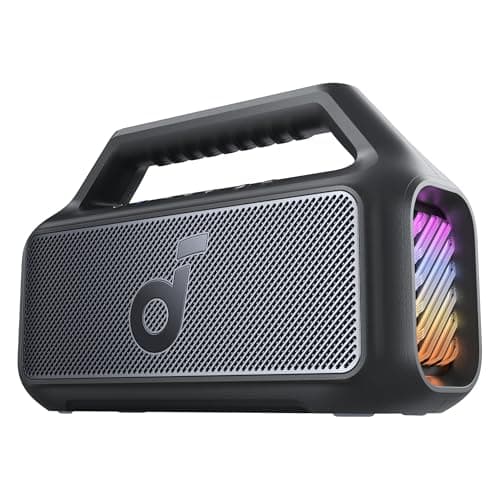 Soundcore Boom 2A real 50 W subwoofer and 24 hours, for less money. | Best budget pick | $84.99$129.9935% offView on Amazon |
| 2 | 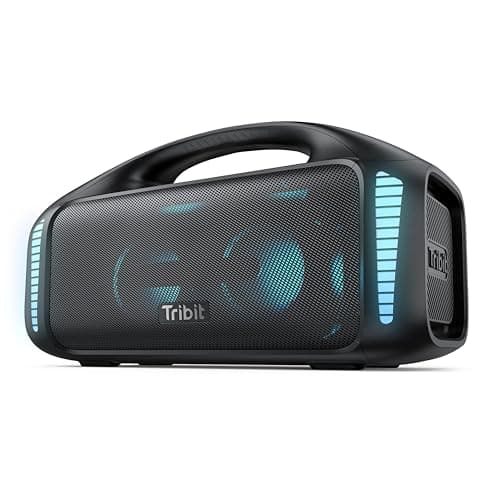 Tribit StormBox Blast96.7 dB and 32.1 hours measured, plus USB-A charge out. | Most output, keeps the power bank | $159.99$199.9920% offView on Amazon |
| 3 | 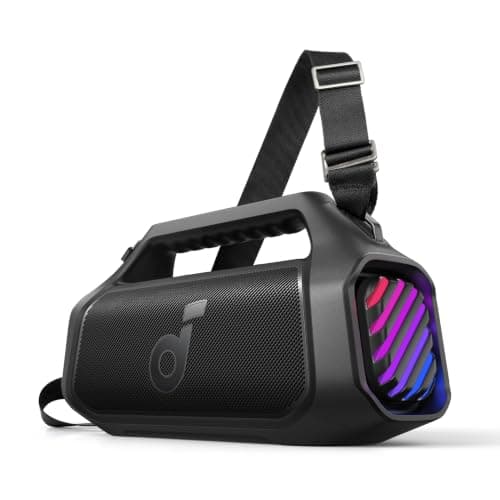 Soundcore Boom 2 PlusUp to 140 W in BassUp, quoted to 40 Hz, 10 W USB out. | Best bass, keeps the power bank | $159.99$249.9936% offView on Amazon |
| 4 | 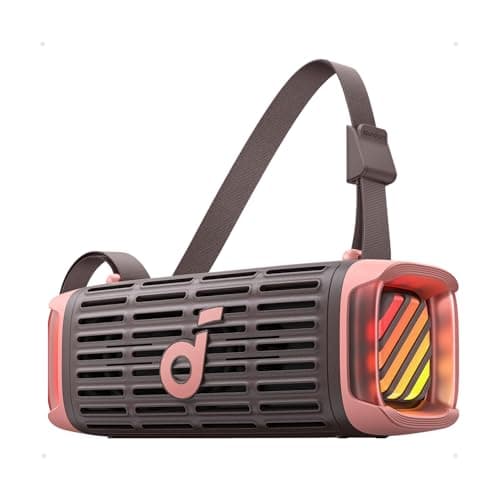 Soundcore Boom 3iFloats upright, IP68, 240 hours of salt-spray testing. | Best for water | $89.99$129.9931% offView on Amazon |
| 5 | 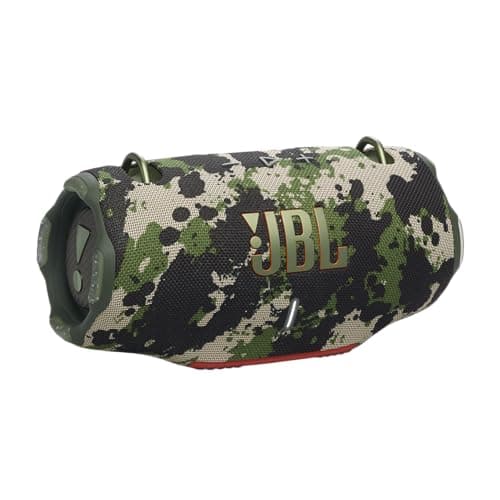 JBL Xtreme 4A swappable battery, 24 hours plus 6, and a power bank. | Best if you stay with JBL | $269.95$379.9529% offView on Amazon |
#ad — buy links go to Amazon and we earn a commission on qualifying purchases. Prices change constantly, so the live listing is always the price of record. Full disclosure.
The best cheaper swap for a JBL Charge 5 is the Soundcore Boom 2: it has a dedicated 50 W subwoofer plus two 15 W tweeters for up to 80 W peak against the Charge 5's 40 W, quotes 24 hours against the Charge's about 20, is IPX7, floats, and has a carry strap — all for less money. That is the budget pick. The important caveat is the feature the Charge line is named after: the Charge 5 has a built-in power bank, and the Boom 2 has no charge-out at all. If reviving a phone is why you wanted a Charge, the picks that keep it are the Tribit StormBox Blast (USB-A out), the Soundcore Boom 2 Plus (10 W USB out) and the JBL Xtreme 4.
The Charge 5 is a good speaker and the reason it sells is easy to state. JBL publishes about 20 hours of playtime from roughly a 4-hour charge, 40 W of rated output, IP67 dust and water protection with submersion to 1 m for 30 minutes, Bluetooth 5.1, PartyBoost for linking two speakers in stereo or several in party mode, a built-in power bank, and a weight of 0.96 kg (2.11 lb). It is the mid-size speaker a lot of people buy once and keep for years.
Two things make it worth shopping around. The first is that it is the outgoing model: the current Charge 6 raises the quoted runtime to 24 hours, up to 28 with Playtime Boost, moves to IP68 and Bluetooth 5.4, and switches multi-speaker linking from PartyBoost to Auracast, which is not backward compatible — so an old PartyBoost speaker will not pair with a new one. Our JBL Charge 6 vs Charge 5 page works through that decision directly.
The second is simply value. At its usual price the Charge line sits above several speakers that out-measure it on output and battery, which is the gap this page is about. Retailers still stock the Charge 5 in several finishes and at shifting prices, so verify the listing you actually buy — and read is JBL worth it if the brand premium is the thing you are weighing.
The power bank is the feature to check first
This is the single most common mistake in replacing a Charge. The name is not decoration: the USB port on the side will charge a phone from the speaker's own battery, which on a day out with no socket is genuinely valuable. Plenty of cheaper speakers match the Charge on sound and quietly drop that port, and buyers discover it on the first camping trip.
Of the five picks below, three keep a charge-out and two do not. The Tribit StormBox Blast has a USB-A port that will charge a phone while the speaker plays, though Tribit publishes no output figure for it. The Soundcore Boom 2 Plus publishes a 10 W (5V/2A) output, which is the only specified figure in the group. The JBL Xtreme 4 carries a power bank and adds a genuinely rare feature — a user-swappable battery. The Soundcore Boom 2 and Boom 3i have no charge-out. The best Bluetooth speakers with a power bank is the dedicated ranking if this feature is the whole reason you are here.
Remember that it is one battery spent twice. A speaker that quotes 24 hours of playback and also charges your phone cannot do both to the full figure. Treat the power bank as an emergency feature rather than a daily habit, and if runtime is what you actually care about, the best Bluetooth speakers with the longest battery life ranks the registry on that alone.
What else to weigh
Output comes from cabinet size, not from a wattage sticker. The Charge 5's 40 W is honest, but the Soundcore Boom 2's 80 W peak comes from a real subwoofer plus two tweeters, and the Tribit StormBox Blast was measured by RTINGS at 96.7 dB at maximum volume. If you have ever felt a Charge run out of room in a backyard, that is the fix — and watts and loudness explains why the published numbers compare so badly across brands.
Sealing: two picks beat the Charge 5's IP67. The Soundcore Boom 3i is IP68 with a 3.28 ft drop test and 240 hours of lab salt-spray exposure — the only corrosion figure on this site — and it floats upright. The two Soundcore Booms also float, which the Charge does not claim. See the best floating Bluetooth speakers and the most durable Bluetooth speakers.
An aux input is available down here, and never on a Charge. Neither the Charge 5 nor the Charge 6 has a 3.5 mm jack, but the Tribit StormBox Blast and Soundcore Boom 2 Plus both do. That matters for a projector, a turntable or a mixer, and speakers with an aux input is the full list.
The picks
Best budget pick — more speaker, less money
Soundcore Boom 2
The value answer to a party speaker: it floats, it is loud, and it lasts a day.
- What it does well
- One dedicated 50 W subwoofer plus two 15 W tweeters for up to 80 W peak — double the Charge 5's 40 W rated output — with response quoted at 45 Hz to 20 kHz, 24 hours at 50% volume, IPX7, buoyancy and a carry strap, for less than the Charge. For a backyard or a pool deck it is simply a bigger, louder speaker.
- Where it cuts corners
- No charge-out of any kind, which is the Charge line's defining feature — be sure you do not need it. IPX7 publishes no dust rating where the Charge 5 is IP67, there is no aux input, and the 24-hour figure assumes BassUp and the light ring are off.
- Who it is for
- Anyone who wanted a Charge for the sound and the battery, not for the USB port.
- Battery: Up to 24 hours at 50% volume with BassUp and lights off
- Water rating: IPX7 — submersible to 1 m for 30 minutes, and it floats
- Output: Up to 80 W peak output (a 50 W subwoofer plus two 15 W tweeters)
#ad — we earn a commission on qualifying purchases. How this is funded · Price as of November 28, 2026
Most output, and it keeps the power bank
Tribit StormBox Blast
The loudest thing we are willing to call good value.
- What it does well
- RTINGS measured 96.7 dB at maximum volume and 32.1 hours of battery against a 30-hour claim — far beyond the Charge 5 on both counts — from two 11 cm bass-midrange drivers, two 3 cm tweeters and two passive side radiators. It keeps a USB-A port that charges a phone while playing, adds a 3.5 mm aux input the Charge has never had, and carries a nine-band app EQ.
- Where it cuts corners
- 11.6 lb against the Charge 5's 2.11 lb — this is a speaker you carry to a destination, not around one. IPX7 means no dust rating, RTINGS measured 3.89 dB of compression at maximum volume, Tribit publishes no output figure for the USB port, the LED bar drains the battery, and the app wants an email address for full function.
- Who it is for
- Anyone whose Charge was never loud enough outdoors and who does not need to carry it far.
- Battery: Over 32 hours in independent testing
- Water rating: IPX7 — submersible to 1 m for 30 minutes
#ad — we earn a commission on qualifying purchases. How this is funded · Price as of November 28, 2026
Best bass, and the only specified charge-out
Soundcore Boom 2 Plus
Two woofers, two tweeters and an aux jack — the most bass hardware per dollar in a carryable box.
- What it does well
- Two 50 W woofers and two 20 W tweeters, 100 W standard rising to up to 140 W in BassUp 2.0, with response quoted down to 40 Hz — far lower than anything the Charge line publishes. It is also the only pick here with a published charge-out figure at 10 W (5V/2A), plus a 3.5 mm aux input, IPX7, buoyancy, TWS and Auracast linking, and roughly a three-hour charge from a 30 W charger.
- Where it cuts corners
- 8.4 lb, so it is placed rather than carried, and 20 hours is no better than the Charge 5 it replaces. IPX7 carries no dust rating, the RGB light show costs battery on top of that, and it is the most expensive Soundcore pick here.
- Who it is for
- A deck or a yard where you want the low end the Charge cannot produce and still want the USB port.
- Battery: Up to 20 hours at 50% volume with BassUp and the light effects switched off
- Water rating: IPX7 — submersible to 1 m for 30 minutes, and it floats
- Output: 100 W as standard, up to 140 W in BassUp 2.0 mode, from two 50 W woofers and two 20 W tweeters
- Weight: 8.4 lb
#ad — we earn a commission on qualifying purchases. How this is funded · Price as of November 28, 2026
Best if it goes near water
Soundcore Boom 3i
A floating outdoor speaker that rights itself in chop, built for the water and the dirt.
- What it does well
- The toughest pick here by a clear margin: IP68 against the Charge 5's IP67, drop-tested from 3.28 ft, lab-tested to 240 hours of salt spray, and Auto-Upright Floating so it returns drivers-up rather than face-down. 50 W with BassUp 2.0 beats the Charge's 40 W, it runs 16 hours, and it weighs 1.7 lb with a detachable strap.
- Where it cuts corners
- 16 hours is shorter than the Charge 5's 20, and there is no charge-out at all — the second pick here that drops the power bank. No aux input, and 50 W is well short of the two big picks above for covering open ground.
- Who it is for
- Pools, boats, beaches and anywhere salt is in the air.
- Battery: 16 hours
- Water rating: IP68 — submersible and dust-tight, lab-tested to 240 hours of salt spray, and it floats upright
- Output: 50 W with BassUp 2.0
- Weight: 1.7 lb (780 g)
#ad — we earn a commission on qualifying purchases. How this is funded · Price as of November 28, 2026
Best if you want to stay with JBL
JBL Xtreme 4
Two woofers and two bass radiators — the most convincing low end JBL puts in a carryable box.
- What it does well
- The in-family upgrade, and it keeps everything the Charge is bought for: a built-in power bank, IP67, and 24 hours plus 6 more with Playtime Boost. It adds two 70 mm woofers and two 20 mm tweeters with dual bass radiators — far more driver area than the Charge 5 — a carry strap, a 3.5-hour charge, and the rarest feature in the category, a user-swappable battery, which is why these last past the point where a sealed speaker is landfill.
- Where it cuts corners
- 4.63 lb against the Charge 5's 2.11 lb, and it costs more than every other pick here. No aux input and no microphone input, and it is the outgoing generation now that the Xtreme 5 has shipped, so stock will thin and support horizons shorten.
- Who it is for
- Charge owners who want the same conveniences in a bigger, longer-lived speaker.
- Battery: Up to 24 hours, plus 6 more with Playtime Boost
- Water rating: IP67 — submersible to 1 m for 30 minutes, dustproof
- Output: Two 70 mm woofers and two 20 mm tweeters with dual bass radiators
- Weight: 4.63 lb (2.1 kg)
#ad — we earn a commission on qualifying purchases. How this is funded · Price as of November 28, 2026
The Charge against the alternatives
| Speaker | Output | Battery | Power bank | Sealing |
|---|---|---|---|---|
| JBL Charge 5 | 40 W | About 20 hours; about 4-hour charge | Yes | IP67 |
| JBL Charge 6 | Not published | 24 hours, up to 28 with Playtime Boost | Yes | IP68 |
| Soundcore Boom 2 | Up to 80 W peak | 24 hours | No | IPX7, floats |
| Tribit StormBox Blast | 90 W; 96.7 dB measured | 32.1 hours measured | Yes — USB-A, no figure published | IPX7 — no dust rating |
| Soundcore Boom 2 Plus | 100 W, up to 140 W in BassUp 2.0 | Up to 20 hours | Yes — 10 W (5V/2A) | IPX7, floats |
| Soundcore Boom 3i | 50 W with BassUp 2.0 | 16 hours | No | IP68, 240 h salt spray, floats upright |
| JBL Xtreme 4 | Two 70 mm woofers, two 20 mm tweeters | 24 hours, plus 6 with Playtime Boost | Yes | IP67 |
Who should look elsewhere entirely
- Anyone who wants something pocketable. The Charge is mid-size and three picks here are bigger. The best small Bluetooth speakers is the opposite brief.
- Anyone who needs a microphone. No Charge and no pick here has an input for one. Speakers with a microphone input is the short list.
- Anyone shopping a strict budget. The best speakers under $100 and the loudest under $100 are the price-capped rankings.
- Anyone comparing JBL as a brand rather than this model. JBL alternatives and JBL dupes cover that, and JBL PartyBox alternatives covers the party line.
- Anyone deciding between the two Charges. JBL Charge 6 vs Charge 5 settles that without leaving the brand.
For the full write-ups, see the JBL Charge 6 review, the Soundcore Boom 2 review and the Tribit StormBox Blast review. The best Bluetooth speakers for the money is the site's unrestricted value ranking, and Soundcore vs JBL is the brand-level version of the trade this page describes.
Frequently asked questions
What is a cheaper alternative to the JBL Charge 5?
Which Charge alternatives still charge your phone?
What is the JBL Charge 5 known for?
Should I buy the Charge 5 or the Charge 6?
Is anything louder than a JBL Charge for the same money?
Does the JBL Charge have an aux input?
Which alternative is toughest?
Update log
- First publication. The site covered JBL at brand level and covered the PartyBox line, but nothing addressed the Charge — the model most people actually shop — and live autocomplete returns dedicated Charge 5 alternatives queries.
Sources
Every specification quoted above comes from the manufacturer or retailer listing below. We publish no measurements of our own — see how we pick.
- JBL — Charge 5 product page (manufacturer specifications)
- JBL — Charge 6 product page (manufacturer specifications)
- SoundGuys — JBL Charge 6 review
- Soundcore — Boom 2 product page (manufacturer specifications)
- Soundcore — Boom 2 support FAQ
- RTINGS — Tribit StormBox Blast measurements (independent test lab)
- Tribit — StormBox Blast product page (manufacturer specifications)
- Soundcore — Boom 2 Plus product page (manufacturer specifications)
- Soundcore — Boom 3i product page (manufacturer specifications)
- JBL — Xtreme 4 specification sheet (PDF)
- SoundGuys — Goodbye JBL PartyBoost, hello Auracast
Read next
Head-to-Head
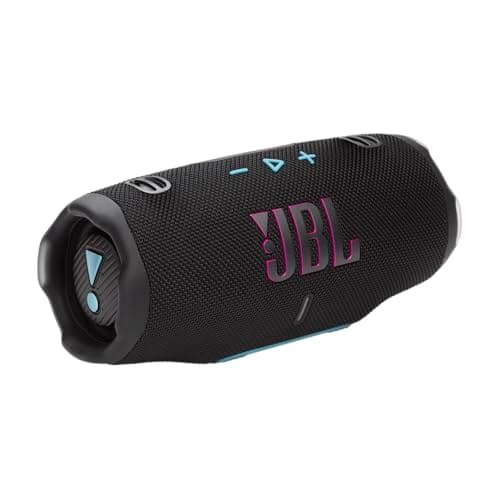
JBL Charge 6 vs Charge 5: is the upgrade worth it?
What JBL actually changed on its long-battery model, and whether it justifies full price.
Brands & Alternatives
JBL alternatives: what you actually give up going cheaper
Each popular JBL mapped to its cheaper equivalent, with the real cost of each swap stated.
Brands & Alternatives
JBL dupes: the cheaper versions worth buying
Genuine cheaper equivalents versus outright knockoffs — and how to tell a fake listing apart.
By Price
Best Bluetooth speakers with a power bank
The JBL Charge 6 is the speaker built around the feature. The Soundcore Boom Go 3i is the cheapest with any charge-out at all.
Reviews
JBL's long-runner reviewed — class-leading battery, and the value problem it has.
Head-to-Head
Soundcore vs JBL: which should you buy?
Specifications per dollar against build quality — the decision that shapes most speaker purchases.