Head-to-Head
Bluetooth speaker vs headphones
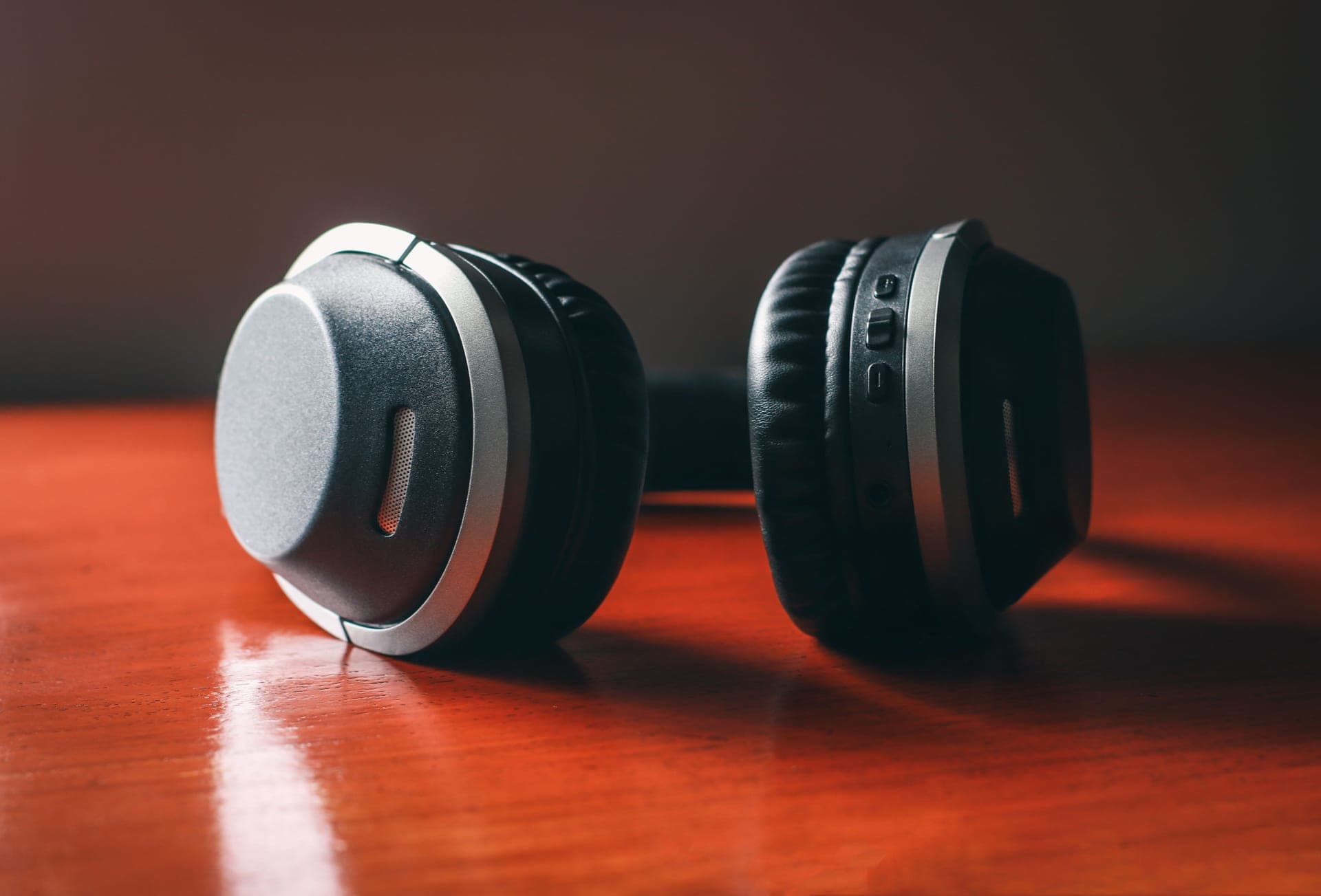
Headphones give you more sound for the money and nobody else hears it. A speaker gives you a room. The use case decides, not the specs.
By Ryder M.Published
 Field-tested picks · 2026
How we are funded: Thump & Tote earns a commission when you buy through our Amazon links, at no extra cost to you. It never changes which speaker we put first — see how we pick and our affiliate disclosure.
Headphones give you more sound quality per dollar than any speaker — by a wide margin, because they only have to move the air next to your ear. They also isolate you from the room and the room from you. A Bluetooth speaker wins on everything social and everything physical: more than one person can listen, you can hear the doorbell, and nothing is clamped to your head for four hours. If you listen alone with full attention, buy headphones. If you listen while doing something else, or with anyone else, buy the speaker. Most people genuinely need one of each, and the speaker is the cheaper half.
This comparison gets framed as a sound-quality question, and on that framing headphones win so decisively that the discussion ends. A $60 pair of headphones will out-resolve a $200 portable speaker in detail, bass extension and stereo imaging, and it is not a close contest. The physics are simply much easier: a driver an inch from your eardrum in a sealed cavity needs a tiny fraction of the energy and the cabinet volume that filling a room requires.
But almost nobody chooses on sound quality alone, and they are right not to. What actually decides it is whether listening is the activity or the accompaniment.
What the cable-free pair of drivers buys
The advantage headphones hold is structural, not a matter of better engineering. To produce a given loudness at your ear, a speaker has to fill a room with pressure and a headphone driver has to pressurize a cubic inch. That means a headphone driver can be smaller, lighter and more precisely controlled, and it can reach genuinely low frequencies with no cabinet at all. The same money therefore buys far more resolution.
They also control the listening environment completely. Closed-back headphones and in-ear monitors isolate you from a train, an office or a plane, and active noise canceling goes further. That is not a convenience — it is the reason the same track sounds better on headphones on a bus than any speaker could, because the speaker is competing with the bus and the headphones are not.
And they are private in both directions. Nobody else hears what you are listening to, and you are not making a decision on anyone else's behalf. In a shared office, a hotel room, a bedroom with someone asleep in it or a library, that settles it entirely.
Where a speaker genuinely wins
- More than one listener. The whole point. A speaker is social hardware; headphones are solitary hardware. Everything on this site — backyard parties, patios, weddings — exists because of this one difference.
- Listening while doing something else. Cooking, working in a garage, gardening, cleaning. You need to hear the room, the timer, the person at the door and the other person in the house. Headphones are actively wrong for this.
- Comfort over long periods. Nothing clamping your head, nothing in your ear canal, no heat, no ear fatigue. People who listen for eight hours a day usually end up on a speaker for exactly this reason.
- Safety and awareness. Outdoors, on a bike, with small children in the house, or anywhere you need to hear what is happening. Some situations make headphones genuinely unsafe.
- Hygiene and sharing. A speaker does not go in anyone's ear. For a family, a classroom or a workshop, that matters.
- Battery, by a wide margin. Many speakers quote twenty to thirty hours; most earbuds manage five to eight per charge. For an all-day listener that is a real difference. Battery life, honestly covers how to read the figures.
How they compare
| Bluetooth speaker | Headphones and earbuds | |
|---|---|---|
| Sound quality per dollar | Lower — a cabinet is expensive | Higher, by a wide margin |
| Bass extension per dollar | Limited by cabinet size | Easy — a sealed ear canal helps |
| More than one listener | Yes | No |
| Isolation from the room | None | Good to excellent |
| Privacy | None | Complete |
| Awareness of surroundings | Full | Reduced, sometimes unsafe |
| Comfort over 8 hours | Nothing worn at all | Varies; often fatiguing |
| Typical quoted battery | 12 to 30 hours | 5 to 8 hours per charge, more with a case |
| Latency for video | Noticeable; a cable fixes it | Noticeable; low-latency modes help |
| Works in a shared office | Rarely | Always |
Three speakers for people coming from headphones
If you already own good headphones, the speaker you want is not a quality upgrade — it cannot be. It is a different capability, and the right purchase is the cheapest one that covers the job properly.
 Illustrative
Best first speaker alongside headphones
Anker Soundcore 2
Years old, still sold, still the battery-life champion of the cheap shelf.
- What it does well
- 12 W of real stereo and twenty-four quoted hours for an under-$50 price. Coming from headphones the thing you will notice is not detail, it is that the sound is in the room — and this is the cheapest speaker we recommend that does that convincingly rather than tinnily. IPX7 means it travels to a kitchen, a bathroom or a garden without thought, and a second unit pairs for stereo.
- Where it cuts corners
- After good headphones, the resolution gap is obvious and no amount of EQ closes it. No dust rating, no strap, plain build, and BassUp is heavy-handed. It sounds thin if you walk away from it. This is a capability purchase, not a quality one.
- Who it is for
- Anyone who owns headphones and simply needs sound in a room sometimes.
- Battery: 24 hours
- Water rating: IPX7 — submersible to 1 m for 30 minutes
- Output: 12 W stereo
#ad — we earn a commission on qualifying purchases. How this is funded
 Illustrative
Best if you actually care how it sounds
Soundcore Motion 300
Our default recommendation under $100 — stereo, slim, and honestly specified.
- What it does well
- 30 W from two 15 W full-range drivers is genuine stereo, and that is the single thing most likely to satisfy someone used to headphones — a mono speaker feels like a step backwards in a way a stereo one does not. Wireless hi-res support, an app EQ to tune it to the room, a slim shape that fits a shelf or a desk, and IPX7 so it can follow you around the house.
- Where it cuts corners
- It still will not resolve like a decent pair of headphones; nothing at this size will. Thirteen hours is the shortest battery here. No aux or USB audio input, so video latency applies, and IPX7 leaves dust untested.
- Who it is for
- Headphone owners who want the room-filling option to be genuinely enjoyable rather than merely functional.
- Battery: 13 hours
- Water rating: IPX7 — submersible to 1 m for 30 minutes
- Output: 30 W stereo (two 15 W full-range drivers)
#ad — we earn a commission on qualifying purchases. How this is funded
 Illustrative
Best for the places headphones are wrong
JBL Clip 5
The carabiner is the whole product, and it is a genuinely good one.
- What it does well
- The metal carabiner is the argument: it clips to a bag, a shower rail, a tent loop or a bike and goes exactly where wearing headphones would be unwise or unpleasant. IP67 covers water and dust, twelve hours plus Playtime Boost covers a day out, and it is small enough to carry alongside the headphones you already own rather than instead of them.
- Where it cuts corners
- A single small driver, so it is mono and it is thin — the furthest thing on this page from a headphone listening experience. No EQ, no aux. You pay a JBL premium for a deliberately limited speaker.
- Who it is for
- Showers, bikes, worksites, campsites and anywhere awareness or hygiene rules headphones out.
- Battery: 12 hours, plus up to 3 more in Playtime Boost mode
- Water rating: IP67 — submersible to 1 m for 30 minutes, dustproof
#ad — we earn a commission on qualifying purchases. How this is funded
The verdict, by use case
- Commuting, flights, open-plan offices, libraries. Headphones, every time. Isolation and privacy are the entire requirement, and a speaker cannot provide either.
- Cooking, cleaning, gardening, a garage or workshop. A speaker. You need to hear the room, and you do not want something on your head while you work.
- Audiobooks and podcasts while doing chores. A speaker — see the best speakers for podcasts and audiobooks. Sitting down to listen attentively: headphones.
- Any gathering, from two people upward. A speaker. This is not a quality question.
- Serious attentive listening on a budget. Headphones. A $100 pair will beat a $300 speaker on detail and bass, and it is not close.
- A shared bedroom, a hotel, a dorm. Headphones for the late hours, a small speaker for the daytime — see the best speaker for a dorm room.
- Exercise. Earbuds for running; a speaker for a home or garage gym where you are stationary and the room is yours. The best speaker for a gym covers the latter.
Why this is not really a competition
Most people who ask this question end up owning both, and that is the rational outcome rather than a failure to decide. The two solve different problems, and the speaker half is considerably cheaper to solve well — because the jobs a speaker is uniquely good at, like background music in a kitchen or audio on a patio, are undemanding jobs. Why cheap speakers sound cheap explains where the money goes in a speaker, and the short version is that a lot of it goes into problems headphones simply do not have.
If you are deciding what to spend where, the useful split is this: put the money into headphones, because that is where money buys audible quality, and buy the cheapest speaker that genuinely covers your social and background use. On this site that usually means something in the under-$50 tier or under $100 — and spending more on a portable speaker mostly buys durability, battery and output rather than fidelity.
One other comparison worth reading if you are weighing a speaker against a different kind of sound system rather than against headphones: Bluetooth vs wired speakers makes the same honest-trade argument about cables, and Bluetooth vs a soundbar covers the TV case.
Frequently asked questions
Are headphones better than Bluetooth speakers?
Should I buy a Bluetooth speaker or headphones first?
Why do headphones sound better than speakers at the same price?
Is a Bluetooth speaker better for audiobooks than headphones?
Do Bluetooth speakers have better battery life than earbuds?
Can I use headphones and a Bluetooth speaker at the same time?
Update log
- First publication. Concedes the sound-quality-per-dollar argument to headphones outright and decides the comparison on use case instead.
Sources
Every specification quoted above comes from the manufacturer or retailer listing below. We publish no measurements of our own — see how we pick.
- Bluetooth SIG — Auracast and Bluetooth LE Audio
- Bluetooth SIG — Bluetooth technology overview (profiles, codecs, LE Audio)
- Soundcore — Soundcore 2 product page (manufacturer specifications)
- Soundcore — Motion 300 product page (manufacturer specifications)
- JBL — Clip 5 specification sheet (PDF)
- Apple — connect Bluetooth accessories to iPhone
Read next
Head-to-Head
Bluetooth vs wired speakers in 2026
What the cable actually buys you, what it costs you, and which one to buy for which job.

By Price
The best Bluetooth speakers for podcasts and audiobooks in 2026
Why the bass-forward tuning everyone sells makes voices worse, and the five that get speech right.
Guides
Why cheap Bluetooth speakers sound cheap
The editorial spine of this site: what a small cabinet physically cannot do, and what it can.
By Price
The best Bluetooth speakers under $50 in 2026
More speaker than this money used to buy. Five picks and an honest account of what you lose.

Head-to-Head
Mono vs stereo Bluetooth speakers
When stereo separation is audible, when it is marketing, and the four speakers that handle each case.

By Price
The best sounding Bluetooth speakers in 2026
Ranked on tonal accuracy rather than loudness, with the point of diminishing returns marked.