Guides
Can you leave a Bluetooth speaker in a hot car?
It will probably survive. It will also lose battery capacity it never gets back, every single time.
By Ryder M.Published
 Field-tested picks · 2026
How we are funded: Thump & Tote earns a commission when you buy through our Amazon links, at no extra cost to you. It never changes which speaker we put first — see how we pick and our affiliate disclosure.
You can, and it will usually still work — but it is the single worst thing you routinely do to a Bluetooth speaker, and the damage is permanent and cumulative. A car parked in summer sun reaches interior temperatures far above the roughly 40°C / 104°F that consumer electronics specify as a maximum operating temperature, and a lithium-ion battery held hot loses capacity it never recovers. The speaker will not fail the first time. It will simply run for fewer hours every season, until one day it holds almost nothing. Four rules avoid nearly all of it: take it inside when you can, keep it in the trunk rather than on a seat, never leave it at a full charge in the heat, and never charge it while it is still hot.
The reason this question is so common is that nothing dramatic happens. People leave a speaker in a car all summer, it keeps working, and they conclude it was fine. The damage from heat is not an event, it is a rate — it shortens the life of the cell rather than killing it, and the symptom arrives a year later as a speaker that used to last all day and now does four hours.
That is worth being clear about, because it changes the advice. The question is not "will my speaker break". It is "how much of the speaker's remaining life am I spending", and in a hot car the answer is: more than you would if you knew.
What heat actually does to a battery
Lithium-ion cells age through chemical reactions inside them, and like most chemistry those reactions run faster when it is hot. Capacity loss that would take years at room temperature takes months at elevated temperature. The effect compounds with the state of charge: a cell held hot *and* full degrades considerably faster than one held hot and half empty, because a full cell sits at a higher internal voltage and that accelerates the same reactions.
That combination — hot and fully charged — is exactly what happens when somebody charges a speaker overnight, throws it in the car in the morning and parks in the sun. It is also why battery guidance from manufacturers converges on the same advice: avoid heat, and avoid long storage at 100%.
There is a hard-failure mode as well, and it is worth knowing even though it is rare in practice. Lithium cells become genuinely unsafe at high enough temperatures, which is why speakers, phones and laptops all have thermal cut-outs that shut the device down rather than let it run hot. A speaker that has been baking may simply refuse to turn on until it cools. That is the protection working, not a fault.
What else in the speaker suffers
- Adhesives. Drivers, passive radiators and seals are glued. Heat softens those bonds, and a softened bond under the vibration of a moving car is how a driver develops a buzz or a seal stops sealing. This is the most common non-battery failure.
- Plastics. Housings and grilles deform at temperatures a dashboard reaches easily. A warped seam on a waterproof speaker means it is no longer a waterproof speaker, whatever the rating says.
- Screens and displays. Any speaker with an LCD battery readout can show temporary artefacts when very hot, and repeated cycles are not kind to them.
- The seal itself. Rubber gaskets harden and take a set with repeated heat cycling. A speaker that was IP67 when new is not necessarily IP67 after three summers on a dashboard — and nothing warns you until it gets wet.
The four rules
- Take it inside when it is easy. Not a counsel of perfection — just take it in when you are carrying things anyway. Most of the damage comes from the speaker living in the car all summer rather than from any single afternoon.
- If it stays, put it in the trunk. Shaded, insulated and out of direct sun, the trunk is substantially cooler than a dashboard or a seat. Never on the dashboard or the parcel shelf — those are the hottest surfaces in the car and they are in direct sunlight.
- Do not store it at 100%. Heat plus a full charge is the worst combination for a lithium cell. A speaker that lives in a car is better left part-charged than topped up before every trip.
- Never charge a hot speaker. Let it come back to room temperature first. Charging a hot cell is the fastest single way to age it, and a speaker that has been in a car is hotter than it feels.
Speakers that take the abuse best
No portable speaker is rated for a hot car, and anyone who tells you otherwise is guessing. What does differ is sealing quality and build integrity — and since heat damages seals and adhesives, a speaker that was better sealed to begin with has more margin to lose. These three are the ones on this site with the strongest published durability specifications.
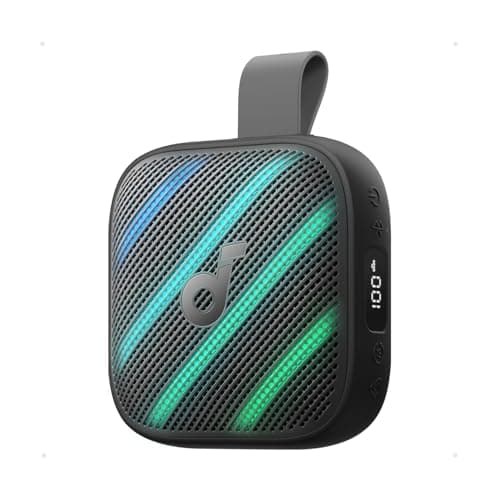
The toughest spec on this site
Soundcore Boom Go 3i
Our default recommendation under $100 — tough, long-running and honestly specified.
- What it does well
- IP68 dust-tight and submersible plus a 1 m drop rating is the strongest durability specification on this site at any price, which is the right starting point for a speaker that lives a hard life in a vehicle. The battery-percentage display is quietly relevant here too — capacity loss from heat shows up as a battery that reads lower than it used to, so you actually find out it is happening.
- Where it cuts corners
- None of that makes it heat-rated. Fifteen watts is modest, it is mono, and the light modes are the fastest way to drain it. Like every speaker here, it should come out of the car when it can.
- Who it is for
- Anyone whose speaker genuinely lives in a vehicle and who wants the most margin available.
- Battery: 24 hours, with a battery-level display on the speaker
- Water rating: IP68 — submersible and dust-tight, and drop-tested from 3.28 ft (1 m)
- Output: 15 W with BassUp 2.0, quoted at 92 dB peak
- Weight: 0.84 lb
#ad — we earn a commission on qualifying purchases. How this is funded · Price as of October 17, 2026
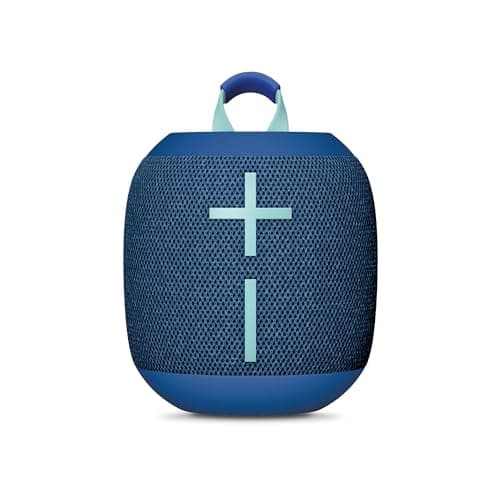
Best against the physical knocks
UE Wonderboom 4
The one to buy if the speaker is going anywhere near water.
- What it does well
- Rated for 5 ft drops onto hard surfaces and IP67 sealed, with a body designed to be thrown around rather than placed. It floats face-up, which is irrelevant in a car and useful the moment it leaves one. The 360-degree output means it sounds the same wherever it has rolled to in the footwell.
- Where it cuts corners
- Fourteen hours is a middling battery, and heat will take a bite out of that over time like everything else. There is no aux input and no speakerphone worth using. Ultimate Ears charges close to JBL money for it.
- Who it is for
- A car speaker that gets taken out to a beach, a pool or a campsite regularly.
- Battery: 14 hours
- Water rating: IP67 — submersible to 1 m for 30 minutes, dustproof, and it floats
- Weight: 14.81 oz (420 g)
#ad — we earn a commission on qualifying purchases. How this is funded · Price as of October 17, 2026
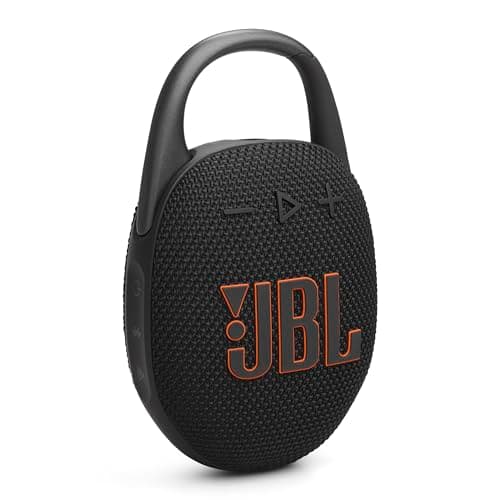
Easiest to just take with you
JBL Clip 5
The carabiner is the whole product, and it is a genuinely good one.
- What it does well
- The best answer to the hot car problem is not leaving the speaker in the car, and this is the speaker most likely to come with you — the integrated metal carabiner clips to a bag, a belt loop or a dog lead and it holds. IP67 covers the weather. The midrange is unusually clean for the size.
- Where it cuts corners
- There is almost no bass, because there is almost no cabinet. It is priced well above rivals that sound similar, purely on the strength of the clip and the badge.
- Who it is for
- Anyone whose real problem is that the speaker gets left in the car because it is awkward to carry.
- Battery: 12 hours, plus up to 3 more in Playtime Boost mode
- Water rating: IP67 — submersible to 1 m for 30 minutes, dustproof
#ad — we earn a commission on qualifying purchases. How this is funded · Price as of October 17, 2026
What about the cold?
Cold is a much more forgiving problem, and it is worth knowing the difference. A cold battery loses capacity temporarily and gets it back when it warms up, so a speaker left in a freezing car overnight will run short in the morning and be fine by lunchtime. Permanent damage from cold storage is minimal.
The one genuine cold-weather rule is never to charge a battery that is below freezing — that does cause permanent damage, unlike simply being cold. Using a Bluetooth speaker in cold weather covers the whole picture, including what happens to seals and screens at low temperatures.
How to tell if heat has already cost you
There is no diagnostic, but the symptom is reliable: the speaker runs noticeably shorter than it used to at the same volume, and the drop is gradual rather than sudden. A speaker on a battery display makes this easy to track; on a three-LED speaker you are judging by feel. If a speaker that used to do a full day now does half of one, the cell has aged, and heat is the most likely reason.
Capacity loss is not reversible, but it is not the end of the speaker either — a few models have replaceable batteries, and a speaker that runs four hours is still useful if it mostly sits near a socket. Can you replace a Bluetooth speaker's battery covers which ones, and how long Bluetooth speakers last sets expectations for a cell that has been looked after.
Frequently asked questions
Can you leave a Bluetooth speaker in a hot car?
What temperature damages a Bluetooth speaker?
Why won't my speaker turn on after being in the sun?
Is the trunk better than the seat?
Does heat damage anything other than the battery?
Should I store a car speaker fully charged?
Update log
- First publication. Covers the hot half of the temperature question; the cold half lives on the cold-weather guide.
Sources
Every specification quoted above comes from the manufacturer or retailer listing below. We publish no measurements of our own — see how we pick.
- Battery University — how lithium-ion batteries age (BU-808)
- Apple — maximizing battery performance and lifespan
- Soundcore — Boom Go 3i product page (manufacturer specifications)
- Ultimate Ears — Wonderboom 4 product page (manufacturer specifications)
- JBL — Clip 5 specification sheet (PDF)
- IEC 60529 — the international standard behind IP ratings
Read next
Guides
Bluetooth speakers in cold weather
Why cold halves your runtime, what damage is permanent, and the three speakers that handle winter best.
Guides
How long do Bluetooth speakers last?
Product lifespan separated from battery runtime — what fails, when, and how to delay it.

Guides
Can you replace a Bluetooth speaker battery?
Why almost no portable speaker takes a spare battery, the ones that do, and how to check before you buy.
Guides
Bluetooth speaker battery life, honestly
How quoted runtimes are produced, what to expect in reality, and the longest-lasting picks.
Outdoor & Party
The best Bluetooth speaker for a car
Picks for an older car with a dead head unit, plus where a speaker can safely live in the cabin.
Outdoor & Party
The best Bluetooth speakers for a truck in 2026
Why 24 hours and a strap beat wattage in a cab, and the five speakers that fit the life.