Outdoor & Party
The best Bluetooth speakers for an RV in 2026
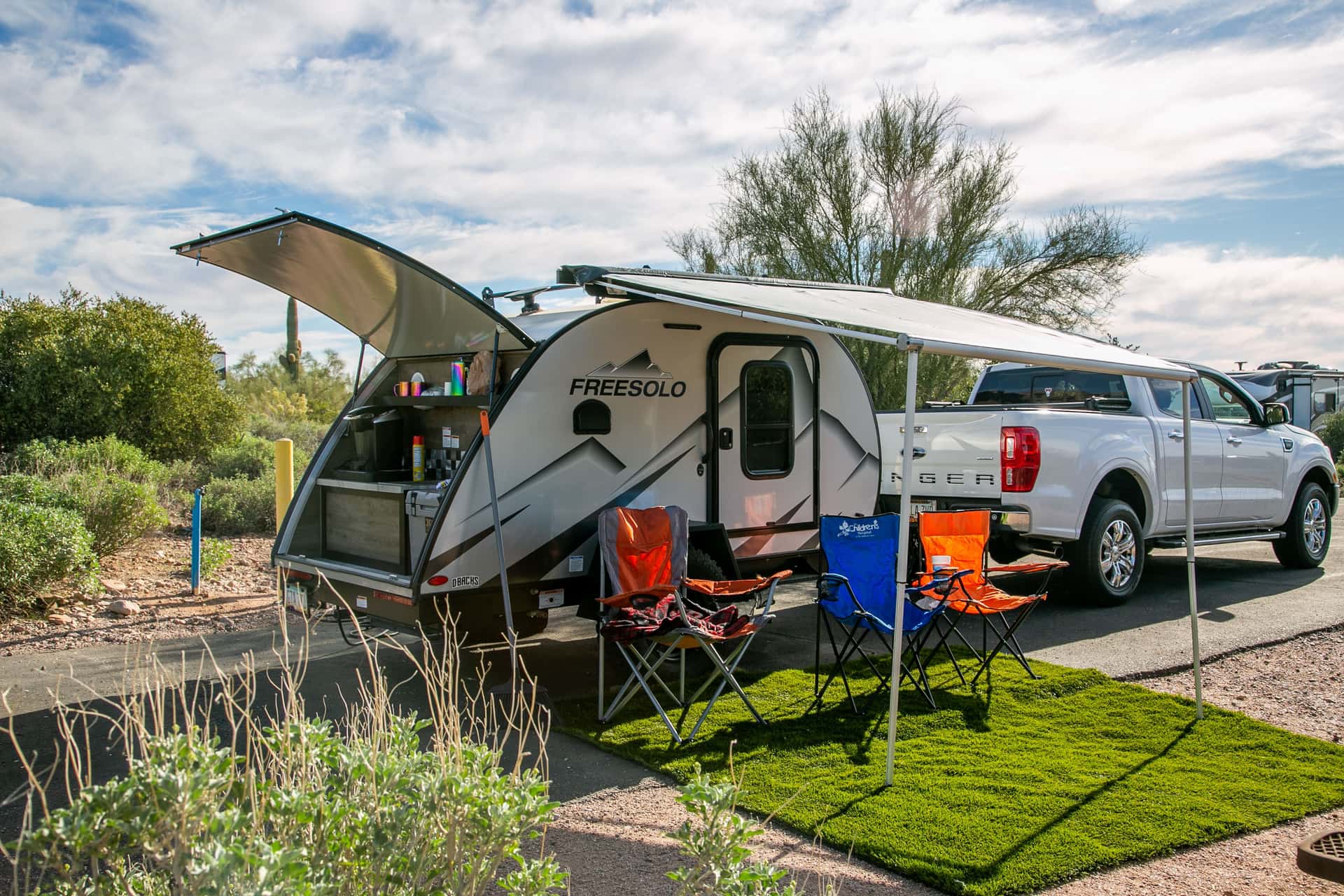
You have power, so stop shopping for battery. An RV's real problems are a hard little room, campground dust and a cupboard that hits 120 degrees.
By Ryder M.Published
 Field-tested picks · 2026
How we are funded: Thump & Tote earns a commission when you buy through our Amazon links, at no extra cost to you. It never changes which speaker we put first — see how we pick and our affiliate disclosure.
Quick picks
Ranked for value first. Tap any row to jump to the full write-up.
| # | Product | Best for | Price |
|---|---|---|---|
| 1 |  Illustrative IllustrativeJBL Flip 7IP68 for campground dust, and it goes inside or out. | Best overall | Check price on Amazon |
| 2 |  Illustrative IllustrativeSoundcore Motion 30030 W of real stereo that fits a shelf lengthways. | Best for inside | Check price on Amazon |
| 3 |  Illustrative IllustrativeSoundcore Motion BoomA handle, 24 hours, and it floats if the lake is close. | Best for under the awning | Check price on Amazon |
| 4 |  Illustrative IllustrativeAvantree PowerByteLocal stations and an aux jack, no data needed. | Best with FM radio | Check price on Amazon |
| 5 | Illustrative Tribit XSound Go16 W and IPX7, cheap enough to leave in the rig. | Best budget pick | Check price on Amazon |
#ad — buy links go to Amazon and we earn a commission on qualifying purchases. Prices change constantly, so the live listing is always the price of record. Full disclosure.
The JBL Flip 7 is the best RV speaker for most people, and the deciding spec is IP68 rather than sound: a campground is dusty, and the dust digit is the one almost no cheap speaker actually certifies. It is small enough to live on a shelf and tough enough to go outside under the awning, which is the two-places problem every RV speaker has. For music inside the rig, the Soundcore Motion 300 gives you 30 W of genuine stereo in a shape that fits a cupboard. If you want local radio without burning data, the Avantree PowerByte has a real FM tuner and an aux jack.
RV advice usually gets written as camping advice, and the two are not the same. Camping is a battery problem — you have no power, so runtime decides everything, which is why the camping list ranks the way it does. An RV has a leisure battery, a 12 V socket and usually USB ports built into the walls. Power is solved. That frees the budget to go somewhere more useful.
What it should go toward is the three problems an RV actually has. The interior is a small box of hard, flat, parallel surfaces — closer acoustically to a car than a living room, which makes cheap treble sound harsh. The outside is a dusty pitch under an awning. And the storage is a cupboard in a metal vehicle that will sit in full sun at 120 °F or freeze solid over a winter, which is harder on a battery than any amount of use.
What actually matters in an RV
- A dust rating. Campgrounds are gravel, dirt and wind. IP67 or IP68 means the dust axis was tested; IPX7 means it was never tested at all. This is the single most useful spec for a speaker that gets carried outside and set on a picnic table. What IPX7 and IP67 actually mean covers the scale.
- A shape that stows. An RV has no spare space. A speaker that lies flat on a shelf, wedges into a cupboard or hangs off a hook beats a cylinder that rolls around every time you drive. Weight genuinely does not matter — you are not carrying it anywhere.
- Tone that survives a hard little room. Flat walls, a flat ceiling and big windows make an RV interior bright and boomy at the same time. A speaker with restrained treble and an app EQ you can flatten will sound much better in there than a louder one. This is the same problem a car has.
- A wired input, if there is a TV. Bluetooth latency makes video unwatchable, and many RV TVs have no Bluetooth transmitter at all. A 3.5 mm aux jack solves both outright. Speakers with an aux input covers the shrinking field, and do Bluetooth speakers work with a TV covers the lip-sync problem.
- FM radio, if you travel where there is no signal. A genuine tuner picks up local weather, traffic and news in places where streaming will not load. It is a niche feature that is extremely useful in exactly the places RVs go — see speakers with FM radio.
- Battery, last. You have power. Any speaker here will run for days of normal use, and when it does not you plug it into the wall. This is the one page on this site where runtime is close to irrelevant.
The picks
IllustrativeBest RV speaker overall
JBL Flip 7
The default mid-size pick, and the speaker every value brand is trying to undercut.
- What it does well
- IP68 is the rating this use case wants — the dust axis is certified rather than skipped, which is what covers a gravel pitch and a windy desert campground. It is small enough to stow in a cupboard and tough enough to go out on the table, so one speaker covers both jobs. The tonality is even rather than only working loud, which matters in a hard little interior, and Auracast lets you put a second one outside while one plays inside. Fourteen hours plus Playtime Boost means you rarely think about charging it.
- Where it cuts corners
- No aux input at all, so an RV TV is out. You pay a real brand premium, and several cheaper speakers match its battery and water rating. Its bass runs out earlier in open air under an awning than a bigger cabinet does, and the cylindrical shape rolls on a shelf unless you wedge it.
- Who it is for
- The default answer for almost any rig, and the right one if the speaker moves inside and out.
- Battery: 14 hours, plus up to 2 more in Playtime Boost mode
- Water rating: IP68 — submersible to 1.5 m for 30 minutes, dustproof
- Weight: 1.82 lb (about 560 g)
#ad — we earn a commission on qualifying purchases. How this is funded
IllustrativeBest for inside the rig
Soundcore Motion 300
Our default recommendation under $100 — stereo, slim, and honestly specified.
- What it does well
- 30 W from two 15 W full-range drivers is genuine stereo rather than a mono box with a wide badge, and in a space as narrow as an RV you actually hear the separation. The flat, slim shape lies down on a shelf or stands in a cupboard without rolling, and SmartTune detects the orientation and adjusts, so either works. IPX7 covers a spilled drink, there is wireless hi-res support, and the app EQ lets you take the edge off the brightness a hard interior adds.
- Where it cuts corners
- IPX7 means dust was never tested, so it is an inside speaker that visits outside rather than the reverse. Thirteen hours is the shortest runtime here, which matters little in an RV. No aux input, no FM, and the bass is modest — it is a clarity speaker, not a party speaker.
- Who it is for
- Rigs where the speaker lives indoors and the awning gets a different one, or anyone who cares most about how music sounds in the van.
- Battery: 13 hours
- Water rating: IPX7 — submersible to 1 m for 30 minutes
- Output: 30 W stereo (two 15 W full-range drivers)
#ad — we earn a commission on qualifying purchases. How this is funded
IllustrativeBest for under the awning
Soundcore Motion Boom
A floating outdoor speaker with a handle, built for the water and the dirt.
- What it does well
- 30 W from titanium drivers and a molded carry handle — the right shape for something that gets lifted out to a picnic table every evening and carried back in. Twenty-four hours covers a weekend of outdoor use without plugging in at all, the USB output tops up a phone, and it floats, which is a real consideration at lakeside pitches. It is the best value-per-watt pick on this page.
- Where it cuts corners
- IPX7 leaves dust untested, which is a genuine weakness on a gravel pitch. It is bulky enough to eat real storage space in a rig where space is the scarce resource. The default tuning leans heavily on BassUp, and the twenty-four hour figure is quoted with that mode off.
- Who it is for
- RVs where most of the listening happens outside the door, and larger rigs with somewhere to put it.
- Battery: 24 hours
- Water rating: IPX7 — submersible to 1 m for 30 minutes, and it floats
- Output: 30 W from titanium drivers
#ad — we earn a commission on qualifying purchases. How this is funded
IllustrativeBest for FM radio and wired sources
Avantree PowerByte
A real radio first and a Bluetooth speaker second — which is the right way round here.
- What it does well
- A real FM tuner, which is worth more in an RV than almost anywhere else — local weather, traffic and news load instantly in places where a streaming app will spin forever. It also takes microSD and USB playback and has a wired input, so it will run the RV TV without lip sync and play a library with no phone involved at all. 30 W of stereo with bass radiators and twenty hours of battery, at a price well under the JBL.
- Where it cuts corners
- No published IP rating, so treat it as an indoor speaker and bring it in if it rains — that is a real limitation for a rig. Build and finish are plainer than the rest of this list, FM reception still depends on where you have parked, and it is the least rugged thing here.
- Who it is for
- Boondocking and remote pitches with no data, and anyone who wants the RV TV and a radio through the same box.
- Battery: 20 hours
- Water rating: No IP rating published — treat it as an indoor speaker
- Output: 30 W stereo with bass radiators
#ad — we earn a commission on qualifying purchases. How this is funded
IllustrativeBest budget RV speaker
Tribit XSound Go
The long-running budget workhorse: 16 W and a full day of battery.
- What it does well
- 16 W and a quoted twenty-four hours at a price most speakers cannot match on either figure, with IPX7 sealing and a custom EQ that lets you flatten the factory bass lift — which is exactly what a bright, hard RV interior needs. It is cheap enough to leave permanently in the rig and not think about, which has real value in a vehicle that gets broken into more often than a house does.
- Where it cuts corners
- No dust rating and a plasticky shell, so it will not weather a dusty season outside as well as the JBL. At high volume the XBass mode audibly compresses. Street pricing swings widely enough that it is not always the cheap option, and there is no aux input or radio.
- Who it is for
- A second speaker for the awning, a first speaker for a new rig, or anywhere you would rather not leave something expensive.
- Battery: 24 hours quoted at 50% volume
- Water rating: IPX7 — submersible to 1 m for 30 minutes
- Output: 16 W
#ad — we earn a commission on qualifying purchases. How this is funded
How the five compare
| Speaker | Dust + water | Output | Aux in | FM radio |
|---|---|---|---|---|
| JBL Flip 7 | IP68 | Not published | No | No |
| Soundcore Motion 300 | IPX7, dust untested | 30 W stereo | No | No |
| Soundcore Motion Boom | IPX7, dust untested | 30 W | No | No |
| Avantree PowerByte | No rating published | 30 W stereo | Yes | Yes |
| Tribit XSound Go | IPX7, dust untested | 16 W | No | No |
Note what the table does not let you do: rank these on output. JBL does not publish a wattage for the Flip 7 at all, and the three 30 W figures were obtained under different conventions. Wattage is a poor loudness proxy in general — cabinet size and driver count tell you more. How many watts is loud sets out why.
Why an RV interior makes good speakers sound bad
An RV is a rectangular box of thin, hard, parallel panels with large flat windows and almost no soft furnishing. That is close to the worst-case room shape for sound. Treble bounces off the glass and the ceiling and arrives twice, which reads as harshness. Bass builds up in the corners and in the narrow aisle, which reads as boom. The two together are why a speaker that sounds fine in your living room can sound cheap in a camper.
You fix most of it for free. Move the speaker out of the corner and away from the wall by a few inches, because the wall is what is reinforcing the bass. Put it at roughly ear height on a shelf rather than on the floor or the dinette table. If the speaker has an app EQ, pull the treble down a notch and the bass down two — the factory tuning was voiced for open air, not for a metal box. And if the rig has blinds, closing them over the big windows measurably helps.
If you want one upgrade rather than one adjustment, it is stereo. An RV interior is narrow enough that two speakers a few feet apart produce obvious separation, which is unusual — in most rooms you need much more distance. Two cheap speakers paired in TWS will often beat one speaker costing twice as much. Mono vs stereo covers when it is worth it.
How much to spend
The $50 to $100 band covers an RV properly, and that is a lower ceiling than most use cases on this site because battery life — normally the thing you pay for — is free here. What the money buys is a dust rating you can trust and even tonality in a difficult room, which is the same conclusion as best under $100.
Spend under $50 if the speaker is a second one for the awning or the rig is small, where the under-$50 tier is genuinely enough. Spend above $150 only for a specific reason: a large fifth-wheel with a real outdoor entertaining area, in which case you are shopping patio speakers or backyard party speakers instead.
What we did not pick, and why
- Installed RV sound systems and marine speakers. The right answer for a permanent upgrade and a genuinely better one, but a wiring project rather than a purchase. This site covers portables.
- Smart and Wi-Fi speakers. They depend on the campground Wi-Fi, which is the least reliable utility in the entire RV experience. Bluetooth vs Wi-Fi covers the trade honestly.
- The JBL Xtreme 4 and Soundcore Boom 2 Plus. Both excellent outdoors, both too big for the storage space most rigs have, and both well above this site's value ceiling. If you tow and have a garage, the Boom 2 Plus does have the aux jack an RV TV wants.
- Anything that only runs on battery with no mains option. Not a disqualifier for any pick here, but worth checking: a speaker you cannot leave plugged in loses the main advantage an RV gives you over a tent.
If you tent camp as well as tour, camping speakers is the list where runtime decides. If the rig's speaker will mostly play through a TV, start with do Bluetooth speakers work with a TV. And if you want radio above everything else, speakers with FM radio is the narrower list.
Frequently asked questions
What is the best Bluetooth speaker for an RV?
Does battery life matter for an RV speaker?
Why does my speaker sound bad inside my camper?
Can I leave a Bluetooth speaker in a stored RV over winter?
Do I need an FM radio in an RV speaker?
Can a Bluetooth speaker run my RV TV?
Update log
- First publication. Ranked on dust rating, stowable shape and tone in a hard interior rather than battery life, which an RV's own power supply makes a non-issue.
Sources
Every specification quoted above comes from the manufacturer or retailer listing below. We publish no measurements of our own — see how we pick.
- JBL — Flip 7 product page (manufacturer specifications)
- RTINGS — JBL Flip 7 measurements (independent test lab)
- Soundcore — Motion 300 product page (manufacturer specifications)
- RTINGS — Soundcore Motion 300 measurements (independent test lab)
- Avantree — PowerByte FM radio Bluetooth speaker (manufacturer specifications)
- Tribit — XSound Go product page (manufacturer specifications)
- IEC 60529 — the international standard behind IP ratings
- Battery University — how lithium-ion batteries age (BU-808)
Read next
Outdoor & Party
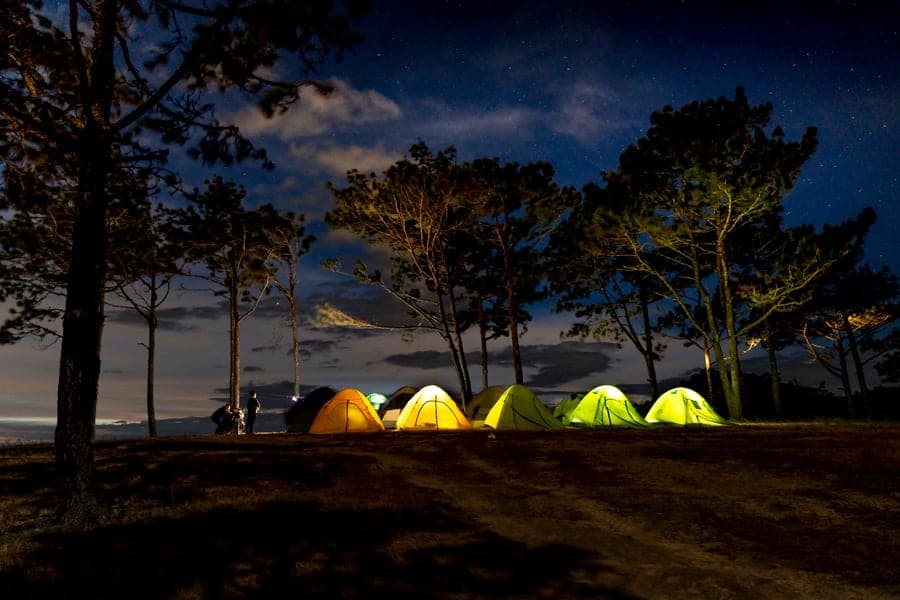
The best Bluetooth speakers for camping in 2026
Campsite picks chosen for battery and packability rather than volume — the opposite of a party speaker.
Outdoor & Party
The best Bluetooth speaker for a car
Picks for an older car with a dead head unit, plus where a speaker can safely live in the cabin.
Outdoor & Party
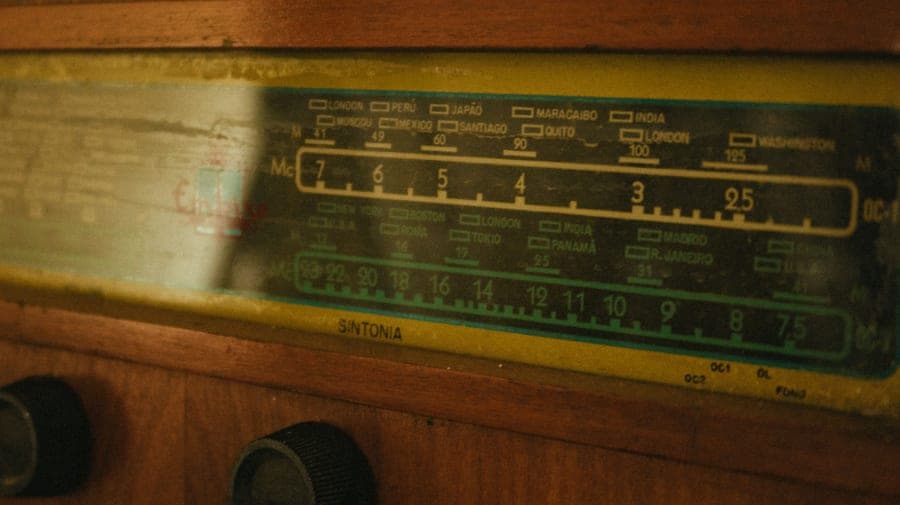
The best Bluetooth speakers with FM radio in 2026
The few speakers that still include a real FM tuner, and an honest look at the alternative.

By Price
The best Bluetooth speakers with an aux input in 2026
Speakers that kept the 3.5 mm jack, and the three jobs it does that Bluetooth cannot.

By Price
The best Bluetooth speakers under $100 in 2026
The tier most people should buy in — six picks, ranked for value, with the compromises named.
Guides
Do Bluetooth speakers work with a TV?
How to check whether your TV can do it, how to fix lip sync, and three speakers that sidestep the issue.
Outdoor & Party
The best Bluetooth speakers for a patio in 2026
The speaker lives outside and never gets carried, which flips almost every buying rule on this site.