By Price
Best Bluetooth speakers with USB-C audio
Almost every speaker charges over USB-C. Very few will actually play music through it — and the listings rarely make the difference clear.
By Ryder M.Published
 Field-tested picks · 2026
How we are funded: Thump & Tote earns a commission when you buy through our Amazon links, at no extra cost to you. It never changes which speaker we put first — see how we pick and our affiliate disclosure.
Quick picks
Ranked for value first. Tap any row to jump to the full write-up.
| # | Product | Best for | Price |
|---|---|---|---|
| 1 | 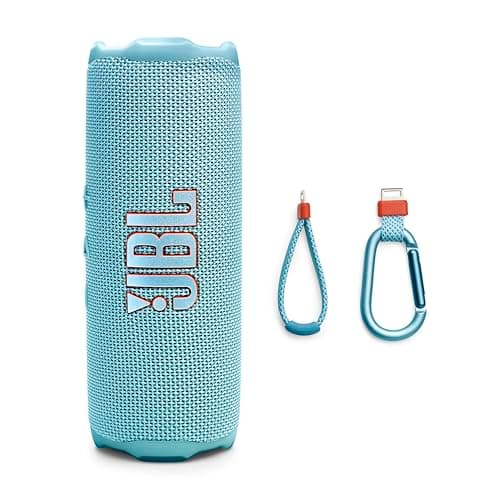 JBL Flip 7USB-C lossless audio in a 1.82 lb IP68 body. | Best overall | $149.95View on Amazon |
| 2 | 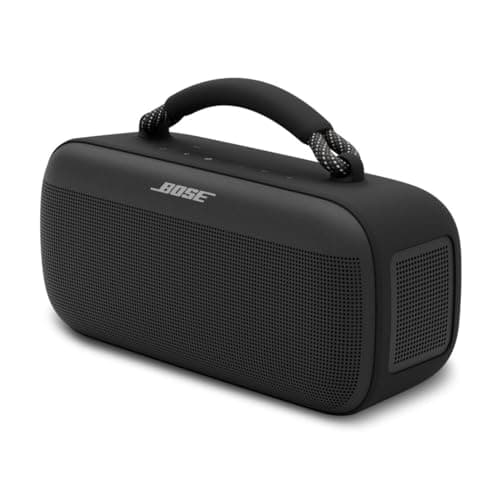 Bose SoundLink MaxUSB-C audio in and power out, plus a 3.5 mm aux jack. | Best sounding | $399.00View on Amazon |
| 3 | 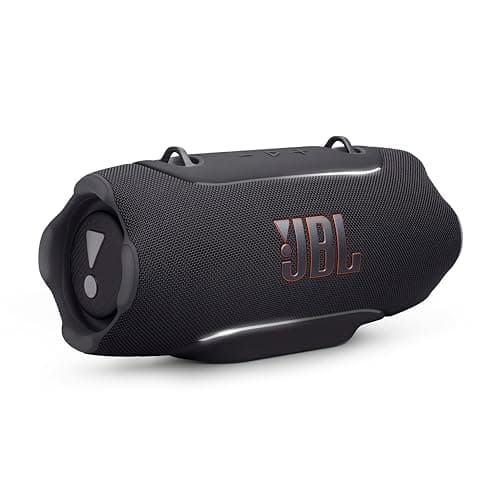 JBL Xtreme 5Lossless USB-C audio, IP68 and a 98 x 145 mm woofer. | Best big pick | $399.95View on Amazon |
| 4 | 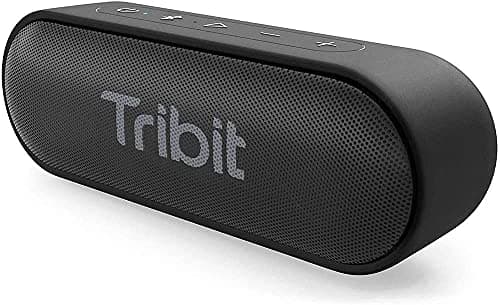 Tribit XSound GoUSB-C for power, not audio. 16 W, IPX7, 24 hours. | Best budget pick — charging only | $34.99$39.9913% offView on Amazon |
#ad — buy links go to Amazon and we earn a commission on qualifying purchases. Prices change constantly, so the live listing is always the price of record. Full disclosure.
If you want music to travel down the USB-C cable, the JBL Flip 7 is the cheapest speaker here that does it: JBL publishes USB-C lossless audio alongside IP68 sealing to 1.5 m, Bluetooth 5.4, Auracast, and 14 hours plus up to 2 more, at 1.82 lb. For the best result, the Bose SoundLink Max has USB-C audio in and power out plus a 3.5 mm aux jack and aptX Adaptive. The budget pick comes with a caveat you need to read: the Tribit XSound Go has USB-C for charging only — no audio over the cable — but it delivers 16 W, IPX7 and 24 quoted hours for a fraction of the others.
This page exists because the query hides a genuine ambiguity. Almost every speaker made in the last five years charges over USB-C, and listings advertise that prominently. A much smaller number accept a digital audio signal over the same port, which is a different circuit entirely — it needs a USB audio interface and a digital-to-analog converter inside the speaker, not just a charging controller.
Both are legitimate things to want, so this page covers both and labels which is which. Three speakers here take audio; the fourth is here because it is the honest budget answer if what you actually wanted was a USB-C charging port. Speakers with an aux input is the analog version of this page, and worth reading alongside it.
USB-C audio against USB-C charging, and against aux
USB-C audio is a digital connection, and that is its advantage. The signal leaves your phone or laptop as data and is converted inside the speaker, so nothing is re-compressed the way Bluetooth re-compresses it. JBL calls this lossless audio on the Flip 7 and Xtreme 5, and Bose supports audio in over USB-C on the SoundLink Max. If you have been bothered by Bluetooth's compression, this is the fix.
It also fixes latency, which matters more often than fidelity does. A wire has no transmission delay to speak of, so audio stays in sync with picture. That is the whole reason to want a cable for a film, a game or a video call — connect a Bluetooth speaker to a TV, PS5 and gaming and connect a speaker to a PC all turn on this point.
A 3.5 mm aux input is analog and still the most universal option. It works with a turntable, a mixer, an older laptop, a hotel television and a rental car. USB-C audio will not — those sources have no digital USB output to give. Only the Bose SoundLink Max on this page has both, and the best speakers for a record player is where that distinction matters most.
Check what your source can actually send. A phone or laptop with USB-C audio output will drive these speakers directly. Some devices will not, and a USB-C port that only does power on either end produces silence rather than an error. If you want the connection that always works, buy the aux input instead.
The picks
Best overall — the cheapest real USB-C audio
JBL Flip 7
The default mid-size pick, and the speaker every value brand is trying to undercut.
- What it does well
- JBL publishes USB-C lossless audio on the Flip 7, which makes it the least expensive genuine digital-wired speaker this site carries. Around that it is the best-sealed mid-size speaker here: IP68 rated to 1.5 m for 30 minutes with full dustproofing, Bluetooth 5.4, Auracast linking, a clip-on loop and 14 hours plus up to 2 more in Playtime Boost, at 1.82 lb.
- Where it cuts corners
- There is no 3.5 mm aux input, so a turntable, a mixer or an older TV is out. You pay a clear brand premium, JBL publishes no drop height, and outdoors the bass runs out sooner than a larger cabinet's.
- Who it is for
- A phone or laptop user who wants a wired digital connection in something genuinely portable.
- Battery: 14 hours, plus up to 2 more in Playtime Boost mode
- Water rating: IP68 — submersible to 1.5 m for 30 minutes, dustproof
- Weight: 1.82 lb (about 560 g)
#ad — we earn a commission on qualifying purchases. How this is funded · Price as of November 11, 2026
Best sounding, and the only one with both inputs
Bose SoundLink Max
The best-sounding portable we know of, and the one that still has an aux jack.
- What it does well
- USB-C audio in and power out, plus a 3.5 mm aux input — the only speaker on this page that covers both digital and analog sources, which makes it the one that works with everything from a laptop to a turntable. The Bose Articulated Array uses two 89 mm transducers and one 23 mm transducer with two 104 x 79 mm racetrack passive radiators, and it supports aptX Adaptive over Snapdragon Sound, multipoint and a Bose app EQ. 20 hours, IP67, a removable rope handle.
- Where it cuts corners
- It is the most expensive speaker on this page by a wide margin and sits above this site's usual ceiling — we carry it as a stated benchmark rather than a value pick. 4.9 lb, a five-hour full charge, and no microphone.
- Who it is for
- Anyone who wants one speaker that will take any source and does not mind paying for it.
- Battery: Up to 20 hours, with a 5-hour full charge
- Water rating: IP67 — submersible to 1 m for 30 minutes, dustproof
- Output: Bose Articulated Array — two 89 mm transducers and one 23 mm transducer, plus two 104 x 79 mm racetrack passive radiators
- Weight: 4.9 lb
#ad — we earn a commission on qualifying purchases. How this is funded · Price as of November 11, 2026
Best big pick
JBL Xtreme 5
One big woofer instead of two small ones, IP68 and a drop rating — the most rugged Xtreme, and the heaviest.
- What it does well
- Lossless USB-C audio in the largest and best-sealed body here: IP68, dust-tight and sealed against continuous immersion, around one 98 x 145 mm woofer and two 20 mm tweeters rated 1 x 90 W plus 2 x 20 W RMS on AC power. Response quoted 40 Hz to 20 kHz, a 68 Wh battery with a 3.5-hour charge and 10 minutes giving about 2 hours, Bluetooth 6.0 with Auracast and LC3, a built-in power bank and a shoulder strap with floating hooks.
- Where it cuts corners
- No aux input at all, which is a strange omission at this money and this size. 6.38 lb, there is no power adapter in the box, and on battery the output drops to 1 x 60 W plus 2 x 15 W RMS — so the headline wattage is an AC figure.
- Who it is for
- Anyone who wants the wired digital connection and genuine outdoor coverage in one speaker.
- Battery: Up to 24 hours, plus 4 more with Playtime Boost; 10 minutes of charging gives about 2 hours
- Water rating: IP68 — dust-tight and sealed against continuous immersion. JBL also calls it drop-proof, without publishing a drop height
- Output: One 98 x 145 mm woofer and two 20 mm tweeters; 1 x 90 W RMS plus 2 x 20 W RMS on AC power, 1 x 60 W RMS plus 2 x 15 W RMS on battery
- Weight: 6.38 lb (2.9 kg)
#ad — we earn a commission on qualifying purchases. How this is funded · Price as of November 11, 2026
Best budget pick — but read this carefully
Tribit XSound Go
The long-running budget workhorse: 16 W and a full day of battery.
- What it does well
- If what you wanted was a modern speaker that charges over USB-C rather than one that plays audio over it, this is the value answer by a very long way: 16 W with a custom EQ and XBass, IPX7 immersion, TWS pairing for stereo, Bluetooth 5.3 and 24 hours quoted at 50% volume, for a small fraction of the three picks above.
- Where it cuts corners
- Its USB-C port is for charging only — it will not accept an audio signal, and no setting changes that. There is no 3.5 mm aux input either, so this speaker is Bluetooth-only for playback. IPX7 carries no dust rating, and 16 W is a room speaker.
- Who it is for
- Anyone whose real requirement was USB-C charging and good value, not a wired digital connection.
- Battery: 24 hours quoted at 50% volume
- Water rating: IPX7 — submersible to 1 m for 30 minutes
- Output: 16 W
#ad — we earn a commission on qualifying purchases. How this is funded · Price as of November 11, 2026
Which cable does what
| Speaker | USB-C audio in | USB-C power out | 3.5 mm aux in | Sealing |
|---|---|---|---|---|
| JBL Flip 7 | Yes — lossless | No | No | IP68 to 1.5 m |
| Bose SoundLink Max | Yes | Yes | Yes | IP67 |
| JBL Xtreme 5 | Yes — lossless | Yes — built-in power bank | No | IP68, continuous immersion |
| Tribit XSound Go | No — charging only | No | No | IPX7 — no dust rating |
| Tribit StormBox Blast | No | Yes — USB-A | Yes — 3.5 mm | IPX7 — no dust rating |
Who should buy something else
- Anyone connecting a turntable or a mixer. Those sources are analog and need a 3.5 mm input. Speakers with an aux input and the best for a record player are the right pages.
- Anyone connecting an older TV. Most need an analog jack or an adapter. Connect a Bluetooth speaker to a TV and the best speakers for a TV cover it.
- Anyone on a budget who needs a wire. Digital USB-C audio is a premium feature. The cheapest wired option on the site is an aux input, not USB-C.
- Anyone pairing to a car. A car's USB port is almost always power or data, not audio out. The best speakers for a car covers that properly.
- Anyone who just wants the latest charging port. Say so and buy on value — the best speakers for the money is the ranking.
For the broader wired argument, Bluetooth speakers vs wired speakers sets out what you gain and lose, and the best speakers for a computer is the use case where a cable most often wins. If latency is the actual problem rather than fidelity, why a Bluetooth speaker keeps cutting out is worth reading first — some of what people blame on compression is a connection issue.
Frequently asked questions
What is the difference between USB-C audio and USB-C charging?
Which Bluetooth speakers accept audio over USB-C?
Is USB-C audio better than Bluetooth?
Is USB-C audio better than a 3.5 mm aux input?
What is the cheapest speaker with USB-C audio?
Can I play music through my speaker's charging port?
Will USB-C audio work from my phone?
Update log
- First publication. Deliberately extends /price/with-aux-input, the site's top affiliate-earning page, into the same wired-input intent on a different connector — and separates USB-C audio from USB-C charging, which is the actual confusion behind the query.
Sources
Every specification quoted above comes from the manufacturer or retailer listing below. We publish no measurements of our own — see how we pick.
- JBL — Flip 7 product page (manufacturer specifications)
- RTINGS — JBL Flip 7 measurements (independent test lab)
- Bose — SoundLink Max product page (manufacturer specifications)
- RTINGS — Bose SoundLink Max review (independent measurements: max SPL, compression, soundstage)
- JBL — Xtreme 5 specification sheet (PDF, manufacturer specifications)
- JBL — Xtreme 5 product page
- Tribit — XSound Go product page (manufacturer specifications)
- Bluetooth SIG — Bluetooth technology overview (profiles, codecs, LE Audio)
Read next
By Price
The best Bluetooth speakers with an aux input in 2026
Speakers that kept the 3.5 mm jack, and the three jobs it does that Bluetooth cannot.
Head-to-Head
Bluetooth vs wired speakers in 2026
What the cable actually buys you, what it costs you, and which one to buy for which job.
Guides
Do Bluetooth speakers work with a TV?
How to check whether your TV can do it, how to fix lip sync, and three speakers that sidestep the issue.
Guides
Do Bluetooth speakers work with a PC?
Pairing on Windows and macOS, the latency that ruins video, and when to use a cable instead.
By Price
The best Bluetooth speakers for a computer in 2026
Desk picks chosen for near-field listening and connection behavior, not for outdoor output.
Guides
Do Bluetooth speakers work with a PS5?
Why consoles block Bluetooth audio, the three ways around it, and the speakers with the right input.