Brands & Alternatives
Marshall Emberton alternatives
Thirty-two hours, two passive radiators and a Marshall badge. Two of those are easy to replace and one is not.
By Ryder M.Published
 Field-tested picks · 2026
How we are funded: Thump & Tote earns a commission when you buy through our Amazon links, at no extra cost to you. It never changes which speaker we put first — see how we pick and our affiliate disclosure.
Quick picks
Ranked for value first. Tap any row to jump to the full write-up.
| # | Product | Best for | Price |
|---|---|---|---|
| 1 | 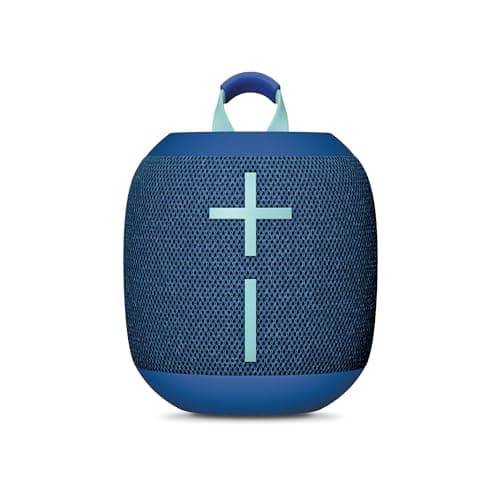 UE Wonderboom 4Two passive radiators, 360 degrees, IP67, and it floats. | Best budget pick | $63.29View on Amazon |
| 2 | 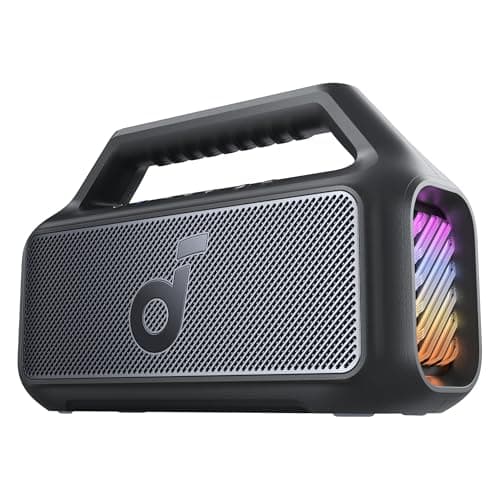 Soundcore Boom 2A real 50 W subwoofer and a quoted 45 Hz, for much less. | Most output for the money | $99.99$129.9923% offView on Amazon |
| 3 | 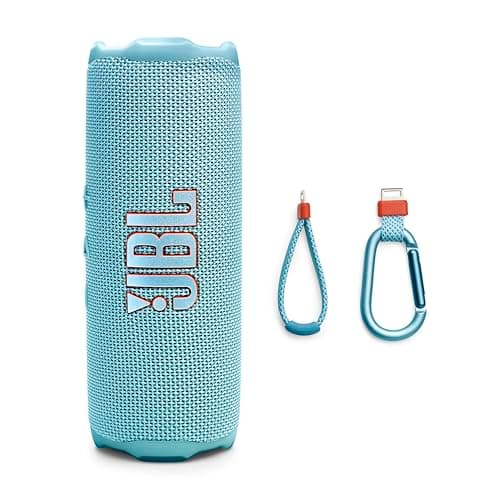 JBL Flip 7IP68 to 1.5 m, USB-C lossless audio and Auracast. | Best sealed pick | $149.95View on Amazon |
| 4 | 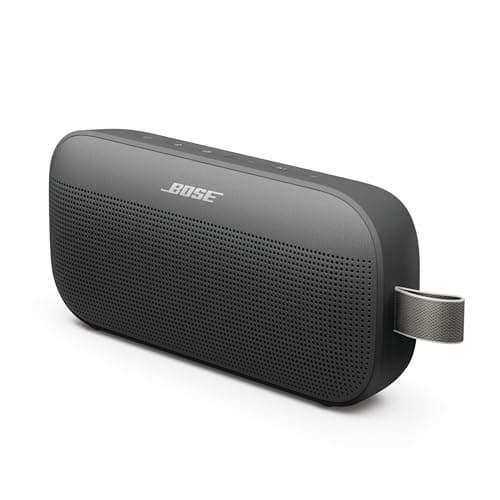 Bose SoundLink Flex (2nd Gen)Bose tuning in an IP67 silicone-wrapped body. | Closest on voicing | $159.00View on Amazon |
#ad — buy links go to Amazon and we earn a commission on qualifying purchases. Prices change constantly, so the live listing is always the price of record. Full disclosure.
The budget alternative to the Marshall Emberton III is the UE Wonderboom 4: it uses the same core idea — two passive radiators alongside two 40 mm active drivers in a sealed cabinet with 360-degree dispersion — plus IP67, buoyancy and a 5 ft drop rating, for a fraction of the money. If you want more speaker rather than a cheaper one, the Soundcore Boom 2 has a dedicated 50 W subwoofer and a quoted 45 Hz against Marshall's 65 Hz, with 24 hours and buoyancy, also for less. What is hard to replace is the Emberton III's 32+ hours with a 20-minute charge returning about six hours — nothing here comes close on that combination.
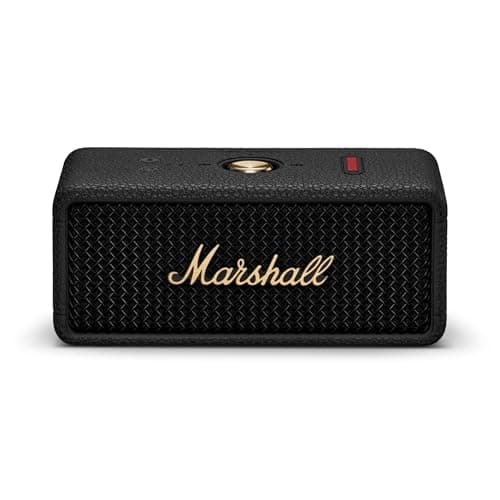
The Emberton III is a genuinely well-engineered small speaker and it is worth setting out what it actually publishes. Two 38 W Class D amplifiers drive two 10 W full-range drivers plus two passive radiators, in Marshall's True Stereophonic 360-degree configuration, quoted 65 Hz to 20 kHz at 90 dB SPL at 1 m. It runs 32+ hours, takes two hours for a full charge and returns about six hours from twenty minutes on the cable. It is IP67, weighs 1.5 lb, and runs Bluetooth 5.3 LE with multipoint and LE Audio readiness.
Three things in there are the reasons people buy it, and they separate cleanly. The battery and fast charge are exceptional and only one speaker on this site beats them. The passive-radiator tuning is good and reproducible — other manufacturers use the same technique. And the look is not a specification at all, which is worth saying plainly: if the styling is why you want one, no alternative substitutes.
Which of the three things you can replace
The tuning is replaceable. Passive radiators are a well-understood way to extend the low end of a small sealed cabinet without a second amplifier, and UE uses two in the Wonderboom 4 and Bose two racetrack radiators in the SoundLink Max. The Wonderboom 4 is the closest cheap match in approach and in the 360-degree result. The best sound quality under $100 ranks that band properly.
The battery mostly is not. 32+ hours at 1.5 lb is the best runtime-per-pound figure on this site. The only speaker that beats the raw number is the Tribit StormBox Blast, independently measured by RTINGS at 32.1 hours — and it weighs 11.6 lb, which is a completely different product. If runtime is the binding requirement, the best speakers with the longest battery life is the ranking, and the Emberton III is at the top of it for portable sizes.
The fast charge definitely is not. Twenty minutes for about six hours of playback is the specification that changes how you live with a speaker — you top it up while you find your keys. No alternative here publishes anything comparable; the Bose SoundLink Flex takes roughly four hours for a full charge and the SoundLink Max five.
What the Emberton III gives up is worth knowing too. It has no aux input, no USB-C audio and no microphone, it does not float, and 65 Hz is the highest low-frequency limit of any speaker on this page. Three of the four alternatives below beat it on at least one of those, which is where the real case for switching lies — not in saving money on the same thing.
The picks
Best budget pick — the same idea for far less
UE Wonderboom 4
The one to buy if the speaker is going anywhere near water.
- What it does well
- Two 40 mm active drivers plus two passive radiators in a sealed round body radiating 360 degrees: the same engineering approach as the Emberton III, producing the same kind of even sound from any position, at a fraction of the price. It then beats Marshall on things Marshall does not claim at all — IP67 plus a published 5 ft drop rating, and it floats. 14 hours, a quoted 131 ft range, 14.81 oz.
- Where it cuts corners
- 14 hours against 32+ is the headline loss, and there is no fast charge to compensate. No multipoint, no app EQ, no aux input, and its two 40 mm drivers do not have the Emberton's two 38 W Class D amplifiers behind them — it plays smaller as well as cheaper.
- Who it is for
- Anyone who liked the Emberton's balance and 360-degree sound and will accept half the battery to save most of the money.
- Battery: 14 hours
- Water rating: IP67 — submersible to 1 m for 30 minutes, dustproof, and it floats
- Weight: 14.81 oz (420 g)
#ad — we earn a commission on qualifying purchases. How this is funded · Price as of November 11, 2026
Most speaker for the money
Soundcore Boom 2
The value answer to a party speaker: it floats, it is loud, and it lasts a day.
- What it does well
- A dedicated 50 W subwoofer plus two 15 W tweeters for up to 80 W peak, with response quoted at 45 Hz to 20 kHz — twenty hertz lower than the Emberton III and audibly so on anything with a kick drum. It also runs 24 hours, is IPX7, floats, and has a carry strap, for less money than the Marshall. If your complaint about the Emberton is that it is small, this is the answer.
- Where it cuts corners
- It is a much bigger object and a completely different aesthetic — nobody buys this one for the way it looks. Tonally it is tuned for impact rather than Marshall's composure, IPX7 carries no dust rating, there is no aux input or multipoint, and the 24-hour figure assumes BassUp and the lights are off.
- Who it is for
- Anyone who wants real low end and outdoor coverage rather than a small speaker done well.
- Battery: Up to 24 hours at 50% volume with BassUp and lights off
- Water rating: IPX7 — submersible to 1 m for 30 minutes, and it floats
- Output: Up to 80 W peak output (a 50 W subwoofer plus two 15 W tweeters)
#ad — we earn a commission on qualifying purchases. How this is funded · Price as of November 11, 2026
Best sealed pick, and the one with a wired input
JBL Flip 7
The default mid-size pick, and the speaker every value brand is trying to undercut.
- What it does well
- IP68 rated to 1.5 m for 30 minutes with full dustproofing, which is better sealing than the Emberton III's IP67, plus the thing Marshall does not offer at all: a wired connection, in the form of USB-C lossless audio. Bluetooth 5.4, Auracast linking, a clip-on loop, and 14 hours plus up to 2 more in Playtime Boost at 1.82 lb.
- Where it cuts corners
- 14 hours plus 2 is less than half the Emberton's 32+, and there is no fast charge. No 3.5 mm aux input and no multipoint, JBL publishes no drop height, and tonally it is punchier and less composed than the Marshall.
- Who it is for
- Anyone who wants a wired digital source and the best sealing, and does not need the long battery.
- Battery: 14 hours, plus up to 2 more in Playtime Boost mode
- Water rating: IP68 — submersible to 1.5 m for 30 minutes, dustproof
- Weight: 1.82 lb (about 560 g)
#ad — we earn a commission on qualifying purchases. How this is funded · Price as of November 11, 2026
Closest on voicing
Bose SoundLink Flex (2nd Gen)
The premium benchmark on this site — included so you can see what the money buys.
- What it does well
- Bose's tuning is the nearest thing on this site to the Emberton III's priorities — an even, slightly warm midrange that stays composed as you turn it up, rather than a boosted low end. IP67 for dust and immersion, Bluetooth 5.3, a silicone-wrapped body that survives being thrown in a bag, USB-C, and roughly a four-hour recharge.
- Where it cuts corners
- Up to 12 hours is the shortest battery on this page, against the Emberton's 32+ — a very large gap — and there is no fast charge, no aux input, no USB-C audio and no multipoint. It is also the most expensive alternative here, so this is a sideways move on price rather than a saving.
- Who it is for
- Anyone choosing purely on how it sounds at moderate volume, with battery a secondary concern.
- Battery: Up to 12 hours
- Water rating: IP67 — submersible to 1 m for 30 minutes, dustproof
#ad — we earn a commission on qualifying purchases. How this is funded · Price as of November 11, 2026
The Emberton III against the alternatives
| Speaker | Battery | Fast charge | Low end quoted | Sealing | Weight |
|---|---|---|---|---|---|
| Marshall Emberton III | 32+ hours | 20 minutes gives about 6 hours | 65 Hz | IP67 | 1.5 lb |
| UE Wonderboom 4 | 14 hours | Not published | Not published | IP67, 5 ft drops, floats | 14.81 oz |
| Soundcore Boom 2 | 24 hours | Not published | 45 Hz | IPX7, floats | Not published |
| JBL Flip 7 | 14 hours, plus up to 2 | Not published | Not published | IP68 to 1.5 m | 1.82 lb |
| Bose SoundLink Flex (2nd Gen) | Up to 12 hours | Not published; about 4 hours full | Not published | IP67 | Not published |
Who should look elsewhere entirely
- Anyone who wants bass they can feel. 65 Hz is a modest limit. The best speakers for bass and bass under $200 are the honest pages.
- Anyone comparing Marshall against JBL. Marshall vs JBL is the head-to-head and Marshall Bluetooth speakers is the brand page.
- Anyone who needs an aux input. The Emberton III has none, and nor do three of the four alternatives. Speakers with an aux input is the list.
- Anyone throwing a party. This is a room speaker. The best outdoor party speakers is the right ranking.
- Anyone shopping on price alone. The best speakers under $100 and under $200 cover the bands around it.
For the full write-up of the original, see the Marshall Emberton III review. The UE Wonderboom 4 review and the Soundcore Boom 2 review cover the two value picks, and the best Bluetooth speaker brands is the wider comparison if you are weighing Marshall against the rest.
Frequently asked questions
What is the best alternative to the Marshall Emberton III?
Can anything match the Emberton III's battery life?
Does the Marshall Emberton III have an aux input?
Which Emberton alternative has more bass?
Is the Marshall Emberton III waterproof?
Is a cheaper speaker going to sound as good?
Should I buy the Emberton II instead to save money?
Update log
- First publication. Live autocomplete returns "marshall emberton alternative", "marshall emberton 3 alternative" and "marshall emberton 2 alternative"; the site had a Marshall brand page and a Marshall vs JBL comparison but nothing answering the model-level alternatives query.
Sources
Every specification quoted above comes from the manufacturer or retailer listing below. We publish no measurements of our own — see how we pick.
- Marshall — Emberton III product page (manufacturer specifications)
- TechRadar — Marshall Emberton III review
- BGR — Marshall Emberton III review (independent hands-on)
- Ultimate Ears — Wonderboom 4 product page (manufacturer specifications)
- Soundcore — Boom 2 product page (manufacturer specifications)
- JBL — Flip 7 product page (manufacturer specifications)
- Bose — SoundLink Flex (2nd Gen) product page
- Bose — SoundLink Flex (2nd Gen) specification sheet (PDF)
Read next
Brands & Alternatives
What Marshall's portables actually do better, and the three alternatives worth comparing against.
Head-to-Head
Emberton III against Flip 7 and Charge 6: battery, sealing, features and who each one is for.
Reviews
Thirty-two hours from something that fits a coat pocket — and the three specs Marshall does not put on the box.
By Price
Best Bluetooth speakers with the longest battery life
The Marshall Emberton III and the Tribit StormBox Blast both clear 32 hours. The cheapest honest 24-hour pick is a fifth of the money.
Reviews
The rugged water specialist — genuinely unmatched near a pool, hard to justify anywhere else.
Brands & Alternatives
The best Bluetooth speaker brands
What each major brand is actually good at, with the one model that makes its case.