Reviews
Marshall Emberton III review
The longest-running speaker this size we recommend, and the one most likely to be bought for how it looks. Both of those are fair reasons. Neither is the interesting one.
By Ryder M.Published
 Field-tested picks · 2026
How we are funded: Thump & Tote earns a commission when you buy through our Amazon links, at no extra cost to you. It never changes which speaker we put first — see how we pick and our affiliate disclosure.
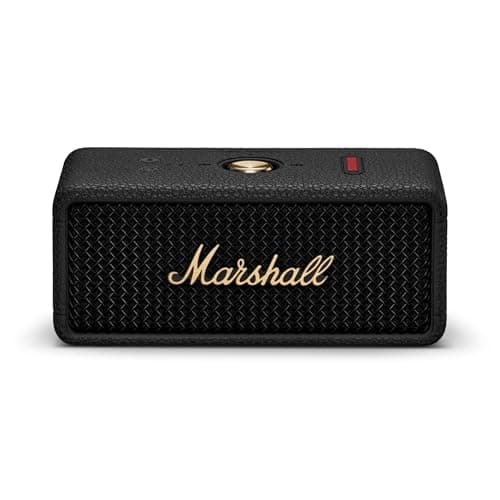
The Marshall Emberton III is a 1.5 lb, IP67-rated portable running two 10 W full-range drivers and two passive radiators off a pair of 38 W Class D amplifiers, quoted at 32+ hours of playtime with a two-hour full charge and a 20-minute top-up that buys six more hours. Marshall publishes a frequency response of 65 Hz to 20 kHz and a maximum of 90 dB SPL at 1 m. Those last two numbers are the whole review: the Emberton III is tuned for composure rather than scale, so it sounds better than almost anything its size at a civil volume and runs out of both bass and headroom before a bigger speaker would. There is no aux input, which rules it out for a TV or a turntable.
This site exists for the buyer who wants most of the result for a fraction of the money, so a speaker in the Emberton III's bracket has to justify itself against things costing a third as much. It does, in exactly two ways — runtime and tuning — and it fails to in several others that Marshall's marketing is quiet about. Both halves are below, and the specification table at the bottom is Marshall's own published figures rather than anything we measured.
One framing point before the detail. Marshall's portables are frequently bought as objects: the fretcloth, the script logo, the brass-look control knob. That is a legitimate reason to buy a speaker and we are not going to pretend otherwise. But it means the Emberton III gets reviewed on charm more often than on performance, and the performance story is more interesting than the charm one.
What it does well
Thirty-two hours is the headline, and it is real headroom rather than a lab trick. Every manufacturer quotes battery life at a moderate volume under its own conditions, so the number on the box is always a ceiling — but ceilings are comparable to each other. Thirty-two hours is roughly double the JBL Flip 7 and more than double the Bose SoundLink Flex, from a speaker in the same size class. In practice that is the difference between a speaker you charge after each weekend and one you charge when you remember. How long portable speakers last explains why quoted figures diverge from real ones.
The 20-minute quick charge is the underrated half of that. Marshall publishes six hours of playtime from twenty minutes on the cable, and two hours for a full charge. A speaker that recovers a full evening in the time it takes to get ready is a different kind of object from one that needs an overnight. It is the single most useful spec on the sheet for anyone who forgets to plug things in.
The tuning is grown-up in a way budget speakers are not. Marshall voices the Emberton III to sound even rather than impressive, which means vocals sit where they should and the bass supports the music instead of sitting on top of it. Reviewers consistently describe it as sounding great at low and moderate volumes, and that is the harder engineering problem — most portable speakers are voiced to win a demo at three-quarter volume and fall apart quietly. If you mostly listen while doing something else, that voicing matters more than any watt figure. Why cheap speakers sound cheap is the long version.
True Stereophonic throws sound in every direction. Marshall's multi-directional arrangement means the Emberton III does not have a front row. Put it in the middle of a table and everyone around it hears roughly the same thing, which is a better fit for how a small speaker actually gets used than a front-firing cabinet aimed at one chair. The trade is that you give up stereo imaging entirely — see mono vs stereo for what that costs and when it matters.
IP67 covers dust as well as water. The dust digit is the one that quietly decides how long an outdoor speaker survives, because grit and pollen are a slow failure no splash rating addresses. IP67 means submersion to 1 m for 30 minutes and a tested dust seal. What IPX7 and IP67 actually mean covers why the X in IPX7 is a gap rather than a zero. Note that the Emberton III does not float.
It is genuinely pocketable. 160 x 68 x 76.9 mm and 0.67 kg is coat-pocket territory, and it is a shape that lies flat in a bag rather than rolling. Marshall also publishes Bluetooth 5.3 LE with multipoint, so it holds a laptop and a phone at once without the reconnection dance that makes shared speakers irritating.
Where it cuts corners
There is no aux input, and no wired input of any kind. This is the single biggest practical limitation and the most common reason to return one. A turntable, a TV, a mixer, an older laptop — all of them are ruled out entirely. If a wire is part of your setup, stop here: speakers with an aux input is the list you want, and the best speakers for a record player is the specific case.
90 dB SPL at 1 m is not a party speaker. Marshall publishes that figure and it is an honest one, which is more than most brands manage — but it sets the ceiling clearly. This is a speaker for a room, a kitchen, a balcony or a tent. Outdoors with ten people and conversation, it will be working hard. Reviewers are consistent that it gets harsh when you push it to the top of its range, which is exactly what a small cabinet does when you ask it for scale it does not have. How many watts is loud explains why the amplifier numbers do not help you here.
The bass floor is 65 Hz, and outdoors that is audible. Sixty-five hertz is respectable for this size and well short of what a bigger cabinet does — the JBL Xtreme 4 reaches 44 Hz and the Soundcore Boom 2 Plus quotes 40 Hz. Indoors, where room boundaries reinforce low frequencies for free, the gap narrows a lot. Outdoors, where nothing reflects back at you, it is the first thing you notice. Buying the Emberton III for bass is the way to be disappointed by it.
The app gives you presets, not a real EQ. Marshall's app carries tuning options rather than a graphic or parametric equalizer, so if you want to pull the low end down for a shared room — or push the midrange up for podcasts — your control is coarser than on a Soundcore or Tribit speaker costing a quarter as much. For a speaker at this price that is a conspicuous omission.
You are paying a design premium, and it is a large one. The Emberton III sits well above the $50-to-$100 band where this site thinks most people should shop. What the money buys is runtime, tuning and build — not loudness, not bass extension, not features. That is a perfectly honest trade if those are the things you want. It is a bad trade if you assumed the price bought scale. Is JBL worth it works through the same question for the brand everyone compares against, and the reasoning transfers.
The microphone is a microphone in the way every portable speaker's is. There is one built in, it is a single omnidirectional element, and it will take a phone call in a quiet room. It is not a conference device and nothing at this price is. Do Bluetooth speakers have microphones sets out what the hardware actually is.
Specifications
| Specification | Figure |
|---|---|
| Playtime | 32+ hours |
| Charge time | 2 hours; 20 minutes gives about 6 hours |
| Amplification | 2 x 38 W Class D |
| Drivers | 2 x 10 W full-range, plus 2 passive radiators |
| Frequency response | 65 Hz to 20,000 Hz |
| Maximum output | 90 dB SPL at 1 m |
| Water and dust | IP67 — submersible to 1 m for 30 minutes, dustproof |
| Weight | 0.67 kg (1.5 lb) |
| Dimensions | 160 x 68 x 76.9 mm (6.3 x 2.7 x 3 in) |
| Bluetooth | 5.3 LE, multipoint, LE Audio-ready |
| Range | Up to 100 m in free field |
| Wired input | None |
| Sound field | True Stereophonic, 360 degrees |
| Microphone | Built in |
Alternatives worth knowing about
The Emberton III itself, summarized
Marshall Emberton III
Thirty-two hours and a genuinely grown-up tuning, in something you can pocket in a coat.
- What it does well
- Thirty-two hours and a 20-minute quick charge that buys six more, a restrained, even tuning that sounds like a small hi-fi rather than a loud toy, True Stereophonic 360-degree dispersion, IP67 on both axes, multipoint Bluetooth 5.3 LE, and a 1.5 lb body that fits a coat pocket.
- Where it cuts corners
- No aux input or wired input of any kind, a 65 Hz bass floor that is obvious outdoors, a published 90 dB ceiling that goes harsh when pushed, app presets instead of a real EQ, no floating, and a price well above this site's usual value band.
- Who it is for
- Rooms, kitchens, balconies and long trips — anyone who listens at a civil volume and hates charging things.
- Battery: 32+ hours, with 20 minutes of charging giving about 6 hours
- Water rating: IP67 — submersible to 1 m for 30 minutes, dustproof
- Output: Two 38 W Class D amplifiers driving two 10 W full-range drivers plus two passive radiators
- Weight: 1.5 lb (0.67 kg)
#ad — we earn a commission on qualifying purchases. How this is funded · Price as of October 23, 2026
If it has to go outdoors and get loud
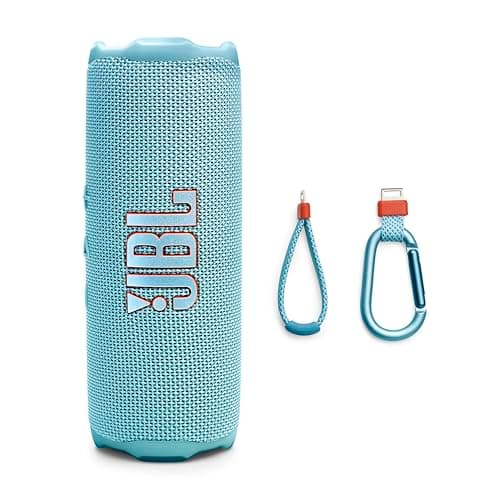
JBL Flip 7
The default mid-size pick, and the speaker every value brand is trying to undercut.
- What it does well
- IP68 rather than IP67, so the water rating is a step stronger, plus USB-C lossless audio that gives you the wired path the Emberton III has no equivalent for. Auracast lets you add a second speaker later rather than rebuild, and the tonality holds together right across the volume range.
- Where it cuts corners
- Fourteen hours quoted plus Playtime Boost is less than half the Emberton III's runtime, you pay a real JBL brand premium, and it downmixes to mono with no analogue aux jack. Its bass runs out outdoors too — a smaller cabinet is still a smaller cabinet.
- Who it is for
- Buyers whose speaker lives outside as much as in, and anyone who wants a wired laptop connection.
- Battery: 14 hours, plus up to 2 more in Playtime Boost mode
- Water rating: IP68 — submersible to 1.5 m for 30 minutes, dustproof
- Weight: 1.82 lb (about 560 g)
#ad — we earn a commission on qualifying purchases. How this is funded · Price as of October 23, 2026
If low-volume tone is the whole point
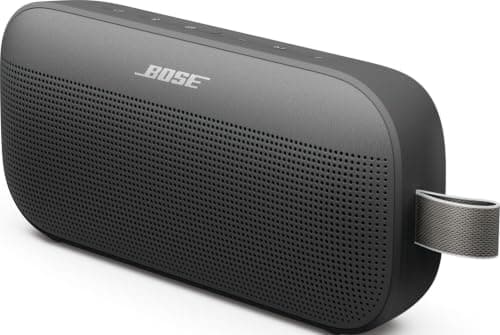
Bose SoundLink Flex (2nd Gen)
The premium benchmark on this site — included so you can see what the money buys.
- What it does well
- The most even tuning at background volume of anything in this size class, in a silicone-wrapped IP67 body that wipes clean, with a roughly four-hour recharge. If the speaker will spend its life at a third of the way up, this is the one that stays musical there.
- Where it cuts corners
- Up to twelve hours is a fraction of the Emberton III's runtime, there is no aux input here either, and Bose charges close to the same money for far less battery. It is a cylinder, so it takes more surface than a flat-sided speaker.
- Who it is for
- Desks, shared rooms and anywhere the volume knob never goes past a third.
- Battery: Up to 12 hours
- Water rating: IP67 — submersible to 1 m for 30 minutes, dustproof
#ad — we earn a commission on qualifying purchases. How this is funded · Price as of October 23, 2026
If the price is the problem
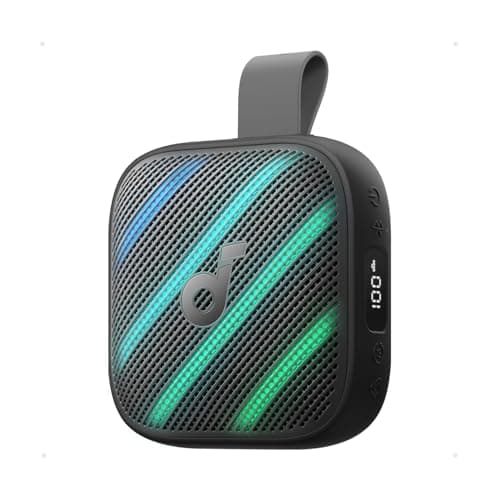
Soundcore Boom Go 3i
Our default recommendation under $100 — tough, long-running and honestly specified.
- What it does well
- Twenty-four quoted hours, IP68 plus a 1 m drop rating, an actual battery-percentage readout, a real app EQ and Auracast, for a fraction of the Emberton III's price. On durability specification alone it beats the Marshall outright.
- Where it cuts corners
- Fifteen watts is genuinely quiet — a kitchen or one end of a patio, not a garden. It is mono, the light show is the fastest way to spend the battery, and the factory tuning needs EQ work to sound as composed as the Marshall does out of the box.
- Who it is for
- Anyone who wants most of what the Emberton III does for a quarter of the money and can live with less output.
- Battery: 24 hours, with a battery-level display on the speaker
- Water rating: IP68 — submersible and dust-tight, and drop-tested from 3.28 ft (1 m)
- Output: 15 W with BassUp 2.0, quoted at 92 dB peak
- Weight: 0.84 lb
#ad — we earn a commission on qualifying purchases. How this is funded · Price as of October 23, 2026
Who should skip it
- Anyone with a wire. No aux, no USB audio in. A TV, a turntable or a mixer rules it out completely — see speakers with an aux input.
- Anyone buying for bass. 65 Hz from a 1.5 lb cabinet is good engineering and still not deep. Cheap speakers with good bass spends the money better for this purpose.
- Anyone filling a yard. 90 dB at 1 m is a published, honest ceiling. The loudest for the money is the right page.
- Anyone near a pool. IP67 survives a dunk, but it does not float. The best waterproof speakers that float covers the ones that do.
- Anyone on a budget. This is a premium purchase in a category where $60 buys a genuinely good speaker. Best under $100 is the honest starting point.
If you are weighing the Emberton III against JBL rather than against cheaper brands, Marshall vs JBL is the head-to-head, and the Marshall brand page covers the rest of the range. If the speaker is destined for a shop, a café or anywhere the public can hear it, read the best Bluetooth speakers for a restaurant first — there is a licensing problem there that no speaker solves.
Frequently asked questions
How long does the Marshall Emberton III battery last?
Does the Marshall Emberton III have an aux input?
Is the Marshall Emberton III waterproof?
How loud is the Marshall Emberton III?
Does the Marshall Emberton III have good bass?
Is the Marshall Emberton III worth the money?
Can you pair two Marshall Emberton III speakers?
Update log
- First publication. Every specification captured from Marshall's own current product listing during the run, including the published 90 dB SPL and 65 Hz figures that most coverage of this speaker leaves out.
Sources
Every specification quoted above comes from the manufacturer or retailer listing below. We publish no measurements of our own — see how we pick.
- Marshall — Emberton III product page (manufacturer specifications)
- TechRadar — Marshall Emberton III review
- BGR — Marshall Emberton III review (independent hands-on)
- JBL — Flip 7 product page (manufacturer specifications)
- Bose — SoundLink Flex (2nd Gen) product page
- Soundcore — Boom Go 3i product page (manufacturer specifications)
- IEC 60529 — the international standard behind IP ratings
- Battery University — how lithium-ion batteries age (BU-808)
Read next
Brands & Alternatives
What Marshall's portables actually do better, and the three alternatives worth comparing against.
Head-to-Head
Emberton III against Flip 7 and Charge 6: battery, sealing, features and who each one is for.
Reviews
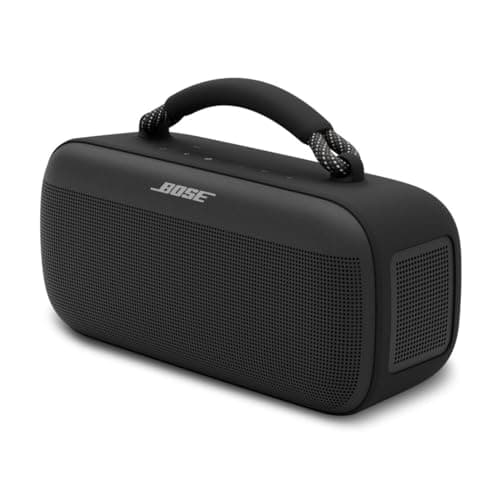
The best-sounding portable we cover, the heaviest, and the only one that still takes a cable.
By Price
The best Bluetooth speakers for a restaurant or café in 2026
Why a dining-room speaker is a runtime and licensing problem first, and the five that solve the hardware half.
By Price
The best sounding Bluetooth speakers in 2026
Ranked on tonal accuracy rather than loudness, with the point of diminishing returns marked.
Guides
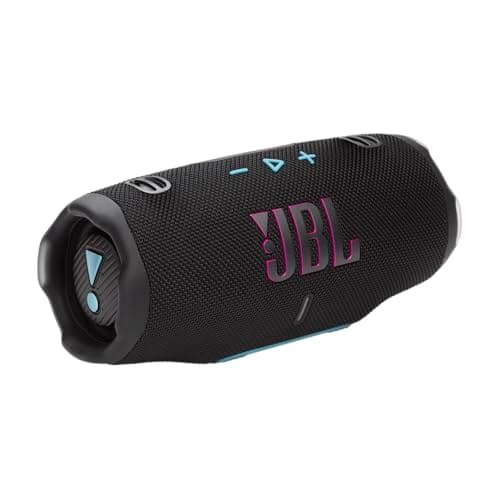
Bluetooth speaker battery life, honestly
How quoted runtimes are produced, what to expect in reality, and the longest-lasting picks.
By Price
The best Bluetooth speakers with an aux input in 2026
Speakers that kept the 3.5 mm jack, and the three jobs it does that Bluetooth cannot.