By Price
Best Bluetooth speakers for bass under $200
Under $200 you can finally buy bass that comes from hardware instead of a processing mode. Here is which hardware.
By Ryder M.Published
 Field-tested picks · 2026
How we are funded: Thump & Tote earns a commission when you buy through our Amazon links, at no extra cost to you. It never changes which speaker we put first — see how we pick and our affiliate disclosure.
Quick picks
Ranked for value first. Tap any row to jump to the full write-up.
| # | Product | Best for | Price |
|---|---|---|---|
| 1 | 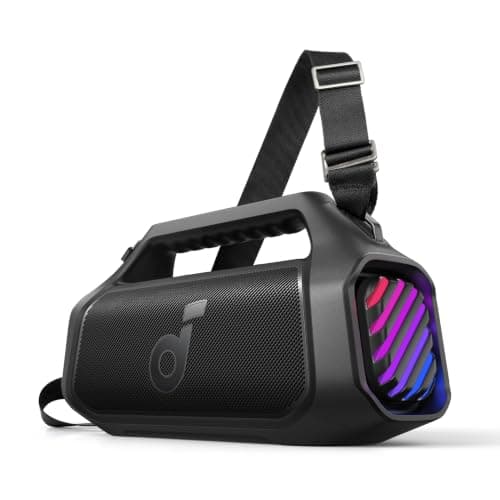 Soundcore Boom 2 PlusTwo 50 W woofers, up to 140 W in BassUp, quoted to 40 Hz. | Best overall | $169.99$249.9932% offView on Amazon |
| 2 | 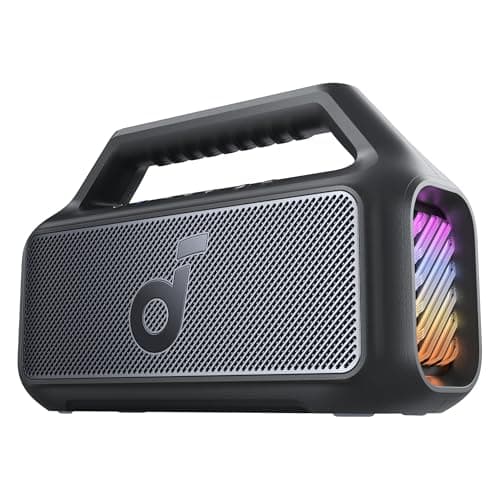 Soundcore Boom 2A real 50 W subwoofer and a quoted 45 Hz, for half the band. | Best budget pick | $99.99$129.9923% offView on Amazon |
| 3 | 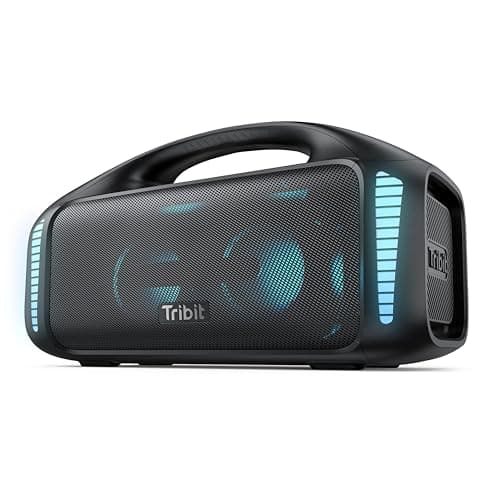 Tribit StormBox BlastTwo 11 cm woofers and two passive side radiators. | Best for open air | $179.99$199.9910% offView on Amazon |
| 4 | 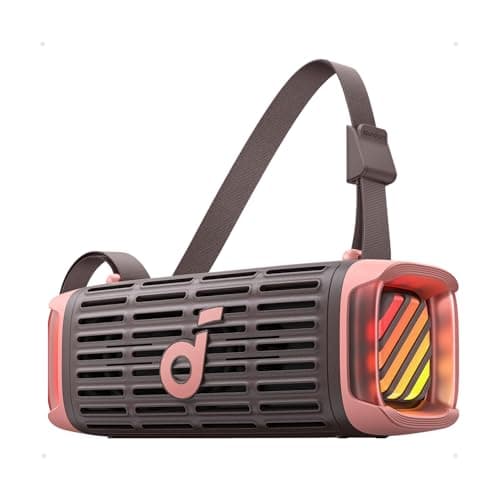 Soundcore Boom 3i50 W BassUp 2.0 and a quoted 56 Hz at 1.7 lb. | Best portable bass | $129.99View on Amazon |
| 5 | 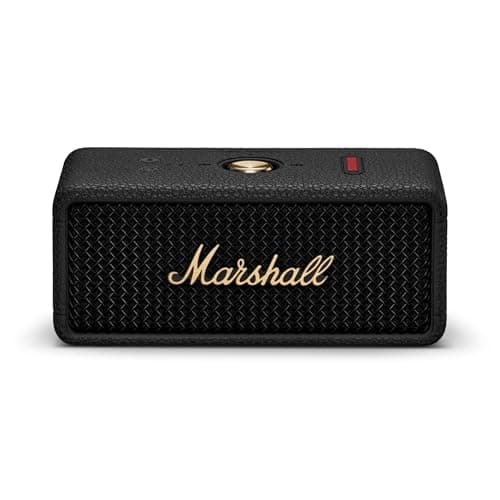 Marshall Emberton III65 Hz from two passive radiators, and 32+ hours. | Best small-room pick | $179.99View on Amazon |
#ad — buy links go to Amazon and we earn a commission on qualifying purchases. Prices change constantly, so the live listing is always the price of record. Full disclosure.
The Soundcore Boom 2 Plus is the bass pick under $200: two 50 W woofers and two 20 W tweeters, 100 W standard rising to 140 W in BassUp 2.0, with response quoted down to 40 Hz — the lowest published figure in the band. It also floats and takes a 3.5 mm aux cable. The budget pick is the Soundcore Boom 2, which has a genuine 50 W subwoofer and quotes 45 Hz at roughly half the band. For open ground rather than a deck, the Tribit StormBox Blast's two 11 cm bass-midrange drivers and two passive side radiators move more air than anything else here. Every price carries its own "as of" date.
Bass is the most misrepresented specification in portable audio and also the most physical. Low frequencies are long pressure waves, and producing them requires moving a meaningful volume of air — which means cone area and a cabinet designed around it. There is no processing shortcut, and every speaker that claims otherwise is raising the level of frequencies its driver can already produce.
That is why this page ranks on driver complement and published frequency response rather than on wattage or the presence of a bass button. Under $200 you can genuinely buy a woofer, which is the whole reason the band is worth a page. The best speakers for bass is the unrestricted version, and cheap speakers with good bass is the band below.
What bass actually requires
A woofer, meaning a driver built for low frequencies and nothing else. The Boom 2 Plus has two; the Boom 2 has one subwoofer; the StormBox Blast has two 11 cm bass-midrange cones plus two passive radiators. Below this band, speakers use a single full-range driver doing every job at once, and the low end is whatever that cone can manage.
Cabinet volume, which is why the good ones are big. A sealed or ported enclosure sets how low a given driver can usefully go. This is unglamorous and unavoidable: the Boom 2 Plus weighs 8.4 lb and the StormBox Blast 11.6 lb, and that mass is mostly air space. What size speaker do I need is the page that settles the trade.
Passive radiators, which are the efficient trick. An undriven cone that moves with internal cabinet pressure extends the low end without a second amplifier. Marshall uses two in the Emberton III to reach a quoted 65 Hz from a 1.5 lb speaker, and Tribit uses two on the sides of the Blast. It is the best bass-per-ounce engineering available.
A boost mode is a tone control, not a driver. BassUp, XBass and Playtime Boost all shape what the hardware already does. They are genuinely useful — and they cost battery and headroom, which is why every manufacturer quotes runtime with them switched off. Why cheap speakers sound cheap is the long form.
A corner is worth more than an upgrade. Placing a speaker against a wall, and better still in a corner, reinforces low frequencies by several decibels for free. If your complaint is thin bass, try that before you spend — how to make a Bluetooth speaker louder covers the placement rules, and remember that bass is also what travels through walls to your neighbors.
The picks
Best overall under $200
Soundcore Boom 2 Plus
Two woofers, two tweeters and an aux jack — the most bass hardware per dollar in a carryable box.
- What it does well
- Two 50 W woofers and two 20 W tweeters, 100 W as standard and up to 140 W in BassUp 2.0, with response quoted down to 40 Hz — the lowest published figure in the band and audibly lower than the 45 Hz speakers below it. It floats, it is IPX7, and it adds a 3.5 mm aux input and a 10 W USB charging output. Roughly a three-hour charge from a 30 W charger.
- Where it cuts corners
- 8.4 lb, so it gets placed rather than carried, and 20 hours is shorter than the cheaper Boom 2. IPX7 publishes no dust rating, the RGB light show costs battery, and at the top of the band there is nothing left over.
- Who it is for
- A deck, a yard or a garage where the speaker has a home and the bass is the point.
- Battery: Up to 20 hours at 50% volume with BassUp and the light effects switched off
- Water rating: IPX7 — submersible to 1 m for 30 minutes, and it floats
- Output: 100 W as standard, up to 140 W in BassUp 2.0 mode, from two 50 W woofers and two 20 W tweeters
- Weight: 8.4 lb
#ad — we earn a commission on qualifying purchases. How this is funded · Price as of November 11, 2026
Best budget pick — a real subwoofer for half the band
Soundcore Boom 2
The value answer to a party speaker: it floats, it is loud, and it lasts a day.
- What it does well
- One dedicated 50 W subwoofer plus two 15 W tweeters, up to 80 W peak, with response quoted at 45 Hz to 20 kHz. At roughly half the band this is the cheapest genuine subwoofer on the site, and the difference between it and a boosted full-range speaker is obvious on the first kick drum. 24 hours, IPX7, it floats, and it has a carry strap.
- Where it cuts corners
- No aux input at all. IPX7 carries no dust rating, the 24-hour figure assumes BassUp and the lights are off, and 45 Hz is five hertz short of the Plus — which sounds trivial and is not.
- Who it is for
- Anyone who wants real low end without buying the biggest thing in the band.
- Battery: Up to 24 hours at 50% volume with BassUp and lights off
- Water rating: IPX7 — submersible to 1 m for 30 minutes, and it floats
- Output: Up to 80 W peak output (a 50 W subwoofer plus two 15 W tweeters)
#ad — we earn a commission on qualifying purchases. How this is funded · Price as of November 11, 2026
Best for bass in open air
Tribit StormBox Blast
The loudest thing we are willing to call good value.
- What it does well
- Two 11 cm bass-midrange drivers, two 3 cm tweeters and two passive radiators on the sides — the most cone area and the most moving air of anything in the band, which is exactly what open ground requires. RTINGS measured 96.7 dB at maximum volume and 32.1 hours of battery. A 3.5 mm aux input, a USB-A charge-out and a nine-band app EQ.
- Where it cuts corners
- 11.6 lb, and RTINGS measured 3.89 dB of dynamic range compression at maximum volume — the bass softens when you push it hard, especially with XBass on. Tribit publishes no frequency response figure, IPX7 means no dust rating, and the LED bar drains the battery.
- Who it is for
- Yards, fields and tailgates where the bass has to survive having no walls to help it.
- Battery: Over 32 hours in independent testing
- Water rating: IPX7 — submersible to 1 m for 30 minutes
#ad — we earn a commission on qualifying purchases. How this is funded · Price as of November 11, 2026
Best bass you can actually carry
Soundcore Boom 3i
A floating outdoor speaker that rights itself in chop, built for the water and the dirt.
- What it does well
- 50 W with BassUp 2.0 and Soundcore quoting deep 56 Hz bass, from a 1.7 lb body — the best low-end-per-pound figure in the band. It also brings the toughest specification here: IP68, 240 hours of lab salt-spray testing, a 3.28 ft drop test, and Auto-Upright Floating so it rights itself on water. Detachable strap, app EQ.
- Where it cuts corners
- 16 hours is the shortest runtime in the band, there is no USB charge-out and no aux input, and 50 W is well short of the two big picks for covering open ground.
- Who it is for
- Anyone who wants low end that travels in a bag, and near water especially.
- Battery: 16 hours
- Water rating: IP68 — submersible and dust-tight, lab-tested to 240 hours of salt spray, and it floats upright
- Output: 50 W with BassUp 2.0
- Weight: 1.7 lb (780 g)
#ad — we earn a commission on qualifying purchases. How this is funded · Price as of November 11, 2026
Best small-room pick
Marshall Emberton III
Thirty-two hours and a genuinely grown-up tuning, in something you can pocket in a coat.
- What it does well
- Two 38 W Class D amplifiers driving two 10 W full-range drivers plus two passive radiators, quoted 65 Hz to 20 kHz at 90 dB SPL at 1 m, in a 1.5 lb body — and 32+ hours of battery with a 20-minute charge giving about six. The passive radiators are what make a speaker this small reach 65 Hz, and tonally it is the most composed thing in the band.
- Where it cuts corners
- 65 Hz is the highest low-frequency limit on this page, so if bass is genuinely the priority this is the wrong pick — you are buying balance, runtime and finish. No aux input, no microphone, it does not float, and it costs near the top of the band.
- Who it is for
- Rooms rather than yards, where tonal balance and 32 hours matter more than depth.
- Battery: 32+ hours, with 20 minutes of charging giving about 6 hours
- Water rating: IP67 — submersible to 1 m for 30 minutes, dustproof
- Output: Two 38 W Class D amplifiers driving two 10 W full-range drivers plus two passive radiators
- Weight: 1.5 lb (0.67 kg)
#ad — we earn a commission on qualifying purchases. How this is funded · Price as of November 11, 2026
Drivers and published low-end limits
| Speaker | Bass drivers | Low end quoted | Output | Weight |
|---|---|---|---|---|
| Soundcore Boom 2 Plus | Two 50 W woofers | 40 Hz | 100 W, up to 140 W in BassUp 2.0 | 8.4 lb |
| Soundcore Boom 2 | One 50 W subwoofer | 45 Hz | Up to 80 W peak | Not published |
| Tribit StormBox Blast | Two 11 cm bass-midrange plus two passive radiators | Not published | 90 W; 96.7 dB measured (RTINGS) | 11.6 lb |
| Soundcore Boom 3i | Not published in detail | Soundcore quotes deep 56 Hz bass | 50 W with BassUp 2.0 | 1.7 lb |
| Marshall Emberton III | Two 10 W full-range plus two passive radiators | 65 Hz | Two 38 W Class D amps; 90 dB at 1 m | 1.5 lb |
Who should spend differently
- Anyone in an apartment or a shared building. Bass is the frequency range that travels through structure. The best speakers for a dorm room and for a bedroom are written around not annoying anybody.
- Anyone on a tighter budget. Cheap speakers with good bass and the loudest under $100 are the honest bands below.
- Anyone who wants a subwoofer proper. Speakers with a subwoofer is the dedicated page.
- Anyone whose real problem is a muddy, boomy sound. That is usually placement or EQ rather than too little bass — why a speaker sounds muffled is the page.
- Anyone comparing against wired hi-fi. A mains-powered pair wins on low frequencies for the money. Bluetooth speakers vs bookshelf speakers is the fair comparison.
If you are choosing between the two Soundcore Booms, Soundcore Boom 2 vs Boom 2 Plus settles it directly, and the best party speakers under $200 is the same band judged for a crowd rather than for low frequencies. The best speakers under $200 ranks the band on overall value.
Frequently asked questions
What is the best Bluetooth speaker for bass under $200?
Does a bass-boost mode actually add bass?
How much difference is there between 40 Hz and 45 Hz?
What is the cheapest speaker with real bass?
Why are the speakers with the best bass so heavy?
Can I get good bass from a speaker I can carry?
Will more bass annoy my neighbors?
Update log
- First publication. /price/best-bass is one of the pages already earning affiliate clicks on this site and had no price-qualified companion; live autocomplete returns the under-$200 bass query separately, and twenty registry products carried a live offer in the band at publication.
Sources
Every specification quoted above comes from the manufacturer or retailer listing below. We publish no measurements of our own — see how we pick.
- Soundcore — Boom 2 Plus product page (manufacturer specifications)
- Soundcore US — Boom 2 Plus outdoor bass speaker (current US listing)
- The Gadgeteer — Soundcore Boom 2 Plus review (independent hands-on)
- Soundcore — Boom 2 product page (manufacturer specifications)
- RTINGS — Tribit StormBox Blast measurements (independent test lab)
- StereoGuide — Tribit StormBox Blast review (independent hands-on)
- Soundcore — Boom 3i product page (manufacturer specifications)
- Marshall — Emberton III product page (manufacturer specifications)
- Amazon Associates Program — Operating Agreement
Read next
By Price
The best Bluetooth speakers for bass in 2026
Speakers with real low-end hardware, ranked by what they move rather than what the EQ claims.
By Price
Cheap Bluetooth speakers with good bass in 2026
Real low end on a budget — which speakers use hardware rather than EQ, and the size below which it is impossible.
Outdoor & Party
The best Bluetooth speakers with a subwoofer in 2026
Speakers with dedicated low-frequency hardware, and the difference between a subwoofer and a radiator.
By Price
The best Bluetooth speakers under $200 in 2026
Top of the value range — party-class output, long runtimes, and a candid word on diminishing returns.
Head-to-Head
Soundcore Boom 2 vs Boom 2 Plus
Four drivers and an aux jack against a lighter box and a longer battery — which one you want.
Outdoor & Party
Best Bluetooth party speakers under $200
The Soundcore Boom 2 Plus brings 140 W and an aux jack under $200. The Boom 2 covers most backyards for half the band.