Head-to-Head
JBL Xtreme 5 vs Xtreme 4: which should you buy?
JBL rebuilt the Xtreme around one big woofer instead of two small ones. That is the whole comparison, and it is not the upgrade the spec sheet implies.
By Ryder M.Published
 Field-tested picks · 2026
How we are funded: Thump & Tote earns a commission when you buy through our Amazon links, at no extra cost to you. It never changes which speaker we put first — see how we pick and our affiliate disclosure.
Quick picks
Ranked for value first. Tap any row to jump to the full write-up.
| # | Product | Best for | Price |
|---|---|---|---|
| 1 | 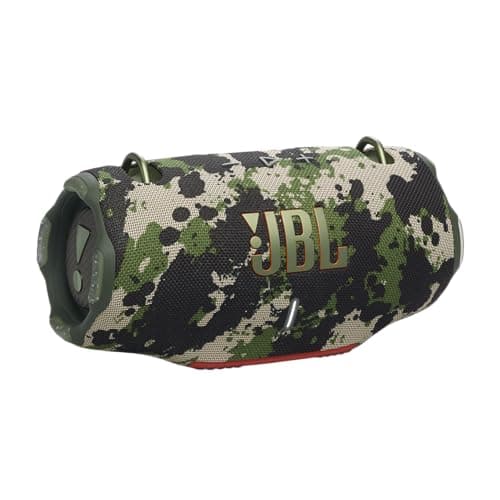 JBL Xtreme 4Two woofers, six bonus hours, 0.8 kg lighter, and discounting. | Best for almost everyone | $379.95View on Amazon |
| 2 | 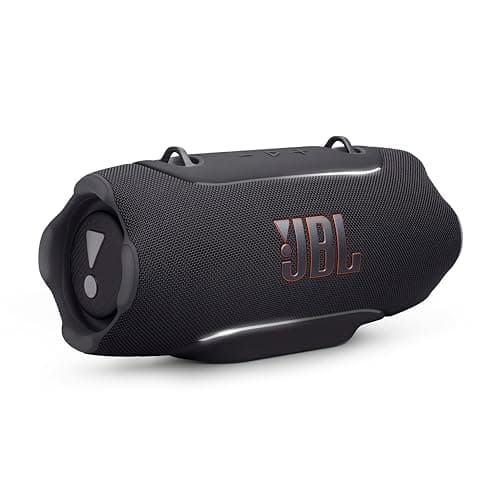 JBL Xtreme 5A 40 Hz floor, IP68 with a drop claim, Bluetooth 6.0. | Best if the bass floor decides it | $399.95View on Amazon |
#ad — buy links go to Amazon and we earn a commission on qualifying purchases. Prices change constantly, so the live listing is always the price of record. Full disclosure.
Buy the JBL Xtreme 4 unless the bottom octave is specifically what you are shopping for. It weighs 2.1 kg against the Xtreme 5's 2.9 kg, its two 70 mm woofers sit at opposite ends of the cabinet so it separates left from right better than the 5's single driver, its Playtime Boost adds six hours rather than four, its battery is user-replaceable, and as the outgoing generation it is the one that gets discounted. The Xtreme 5 wins on four specific things: a published 40 Hz floor instead of 44 Hz, IP68 instead of IP67 plus a drop claim, Bluetooth 6.0 with LC3 instead of 5.3, and 130 W on AC instead of 100 W. If none of those four is the thing that made you open this page, the older speaker is the better buy.
This is an unusual generational comparison because the architecture changed rather than just the numbers. JBL did not take the Xtreme 4 and improve it; it replaced a two-woofer design with a one-woofer design. That trade has a winner on each side and the spec sheet hides it, so the rest of this page is about which side you are on.
Both pages behind this comparison carry the full detail: the JBL Xtreme 5 review and the JBL Xtreme 4 review. Every figure below is JBL's own published specification for each model.
The specifications side by side
| Specification | JBL Xtreme 4 | JBL Xtreme 5 |
|---|---|---|
| Woofers | 2 x 70 mm | 1 x 98 x 145 mm |
| Tweeters | 2 x 20 mm | 2 x 20 mm |
| Rated output on AC | 2 x 30 W + 2 x 20 W RMS (100 W) | 1 x 90 W + 2 x 20 W RMS (130 W) |
| Rated output on battery | 2 x 20 W + 2 x 15 W RMS (70 W) | 1 x 60 W + 2 x 15 W RMS (90 W) |
| Frequency response | 44 Hz to 20 kHz | 40 Hz to 20 kHz |
| Playtime | Up to 24 hours, plus 6 with Playtime Boost | Up to 24 hours, plus 4 with Playtime Boost |
| Battery | Li-ion polymer 68 Wh, user-replaceable | Li-ion 68 Wh |
| Charge time | 3.5 hours | 3.5 hours |
| Water and dust | IP67 | IP68, plus a drop claim with no published height |
| Bluetooth | 5.3 | 6.0, with LC3 |
| Dimensions | 297 x 149 x 141 mm | 346 x 165 x 155 mm |
| Weight | 2.1 kg (4.63 lb) | 2.9 kg (6.38 lb) |
| Powerbank | Yes | Yes, up to 11 V / 2 A |
| Lighting | None | Ambient edge lighting |
| Aux input | None | None |
| Power adapter included | Yes | No |
Where the Xtreme 5 genuinely wins
Four hertz, at the bottom. Forty against forty-four does not look like much and it is the most meaningful difference here. At the bottom of the audible range, each hertz costs a disproportionate amount of cone area and amplifier power, which is exactly why JBL went from two 70 mm drivers to one 98 x 145 mm one. The practical effect is on open ground, where there are no walls to reinforce low frequencies and a speaker's real floor is exposed. The best speakers for bass explains why that is the hardest thing to buy cheaply.
One IP digit, and it is the right one. IP67 is submersion-tested to a defined depth and time; IP68 is sealed against continuous immersion under the manufacturer's stated conditions. Both are dust-tight. In practice the step from 7 to 8 matters less than people assume for a speaker that will mostly see rain — but if yours lives near water, it is a real difference and what IPX7 and IP67 actually mean spells out why.
Bluetooth 6.0 with LC3. Newer radio, lower-latency codec support, and a longer tail of firmware relevance. Nothing you will hear today, and something you might appreciate in three years. Both models carry Auracast, so multi-speaker linking is a wash — Auracast vs PartyBoost covers what that gets you.
Thirty more watts on AC, twenty on battery. Rated output rises from 100 W to 130 W plugged in, and from 70 W to 90 W on the battery. That is a genuine increase, and it is less than it sounds: 30 percent more power buys roughly one decibel or so of headroom in practice, not 30 percent more loudness. How many watts is loud is the page that explains the arithmetic.
Where the Xtreme 4 still wins
It is 0.8 kg lighter — a pound and three-quarters. 4.63 lb against 6.38 lb. Both are heavy, and the difference is the line between a speaker you will take somewhere and one that stays where you put it. Weight is the most underrated spec in this category because it is the one that decides how often the speaker actually gets used.
Two woofers at opposite ends beat one in the middle, for imaging. With drivers spread across the cabinet, the Xtreme 4 produces a wider sound field than a single central woofer can. SoundGuys specifically flag limited left-to-right separation on the Xtreme 5, and its immersiveness sub-score was the weakest part of its measurement. If the speaker will sit on a table in front of you rather than across a yard, this is the one you want. Mono vs stereo covers when it stops mattering.
Six bonus hours instead of four. Same 68 Wh battery, same 3.5-hour charge, two more hours from Playtime Boost. This is the one headline figure that went backwards generationally, and on a multi-day trip two hours is an evening.
The battery is user-replaceable, and documented as such. JBL published that for the Xtreme 4. For the Xtreme 5, SoundGuys report the swappable pack is retained but JBL's own specification sheet does not list it. If carrying a spare battery is the reason you want an Xtreme, the 4 is the model with the published answer. Can you replace a Bluetooth speaker battery is the broader version of that question.
It comes with a charger. The Xtreme 5 does not, and its quick-charge figure depends on a PD adapter you supply yourself.
And it is the one that gets cheap. This is the decisive argument on a site built for value buyers. A new generation shipping is the most reliable discount event in portable audio: the outgoing model stays in stock for months, loses colorways gradually, and drops in price steadily. SoundGuys reached the same conclusion — the Xtreme 4 is likely the better value once discounts land. Bluetooth speaker deals is how we track that.
How to decide in one question
Will the speaker spend most of its life outdoors with more than about eight people around it? If yes, the Xtreme 5's 40 Hz floor and extra output are worth the weight, because open air is where a bass floor gets exposed and a crowd is where output does. If no — if it is a patio, a garage, a kitchen, a campsite, a hotel room — the Xtreme 4 does everything you need, two hours longer, nearly two pounds lighter, for less money.
There is also a third answer that this site is obliged to give honestly: for most people neither of these is the right speaker. Both are several times above the $50-to-$100 band that covers the large majority of real requirements. If you are here because a smaller speaker ran out of bass outdoors, the Soundcore Boom 2 Plus matches the Xtreme 5's published 40 Hz floor for a fraction of the money, and the JBL Charge 6 is the JBL most people should actually own. Is JBL worth it is the page that argues it out.
Buying the outgoing generation without getting caught
If you take the advice above and buy the Xtreme 4, there are four things worth checking on the listing before you order. They are the same four for any outgoing-generation speaker, and they are where the apparent bargain goes wrong.
- Check it is New, not Renewed or Used. An outgoing model is exactly when refurbished stock floods in under near-identical titles. The condition line on the listing is the only place that is stated plainly.
- Check the seller. Once a model is superseded, gray-market importers and liquidators appear alongside the authorized sellers. A warranty you can actually claim is worth more than the ten dollars you saved.
- Check it is the speaker and not a bundle. Third-party listings pair a speaker with a case or a strap under a title that still opens with the model name, and the price is for the bundle. How to spot a fake speaker covers the tells.
- Check the discount is real. The list price on an outgoing model is frequently the original launch price, which nobody is paying any more. Compare against what the thing has actually been selling for rather than against the struck-through number — Bluetooth speaker deals is where we track that.
One more practical point specific to these two. The Xtreme 4's replaceable battery is only an advantage if spare packs stay available, and spares for a discontinued model get scarce before the speakers do. If a spare battery is central to why you want the Xtreme 4, buy it at the same time as the speaker rather than planning to add it later. Can you replace a Bluetooth speaker battery explains what the procedure involves.
If you are still weighing size classes rather than generations, Xtreme 4 vs Charge 6 is the comparison that settles whether you need an Xtreme at all, and what size speaker do I need works it out from the space instead of the spec sheet.
Frequently asked questions
Is the JBL Xtreme 5 better than the Xtreme 4?
What is the main difference between the JBL Xtreme 5 and Xtreme 4?
Should I buy the Xtreme 4 now that the Xtreme 5 is out?
Do the JBL Xtreme 5 and Xtreme 4 pair together?
Does the Xtreme 5 have a replaceable battery like the Xtreme 4?
Does either one have an aux input?
How much heavier is the Xtreme 5?
Update log
- First publication. Both specification columns taken from JBL's own published figures, with the AC and battery output ratings separated — the comparison most coverage of these two models runs on a single marketing wattage.
Sources
Every specification quoted above comes from the manufacturer or retailer listing below. We publish no measurements of our own — see how we pick.
- JBL — Xtreme 5 specification sheet (PDF, manufacturer specifications)
- JBL — Xtreme 5 product page
- SoundGuys — JBL Xtreme 5 review (independent battery test and MDAQS scoring)
- JBL — Xtreme 4 specification sheet (PDF)
- IEC 60529 — the international standard behind IP ratings
- Battery University — how lithium-ion batteries age (BU-808)
Read next
Reviews
A 98 x 145 mm woofer, a 40 Hz floor and an IP68 drop rating — against 6.38 lb and no charger in the box.
Reviews
The one JBL portable whose battery you can change — and the three things reviewers agree it gets wrong.
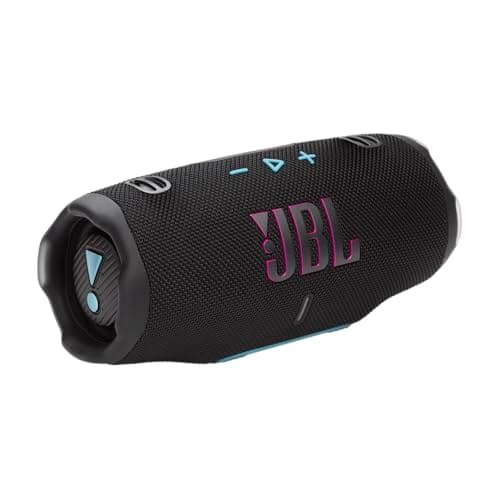
Head-to-Head
JBL Xtreme 4 vs Charge 6: which should you buy?
The honest split: about 10 Hz more bass and a swappable battery, against half the weight and a better rating.
By Price
Bluetooth speaker deals in 2026: what is actually worth buying
How to tell a real Bluetooth speaker discount from a staged one, and the five models worth waiting for.
Outdoor & Party
The loudest Bluetooth speakers for the money in 2026
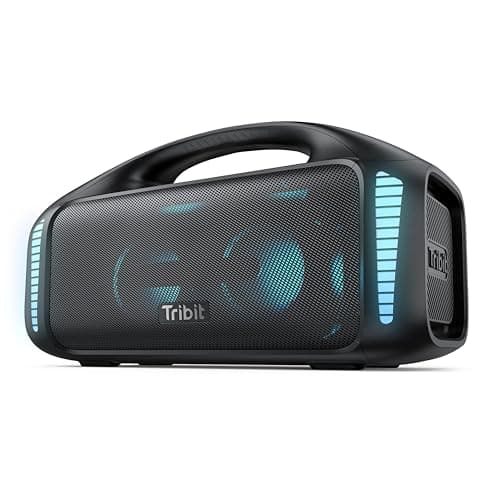
Genuinely loud speakers ranked on output per dollar — and why wattage figures cannot be compared.
By Price
The best Bluetooth speakers for bass in 2026
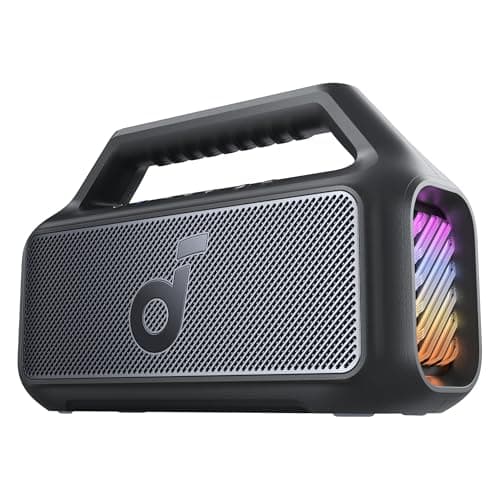
Speakers with real low-end hardware, ranked by what they move rather than what the EQ claims.
Guides
Can you replace a Bluetooth speaker battery?
Why almost no portable speaker takes a spare battery, the ones that do, and how to check before you buy.