Outdoor & Party
Best Bluetooth speakers for a warehouse
A big, noisy, dusty indoor space. The specification that decides this page is the one most buyers never look at.
By Ryder M.Published
 Field-tested picks · 2026
How we are funded: Thump & Tote earns a commission when you buy through our Amazon links, at no extra cost to you. It never changes which speaker we put first — see how we pick and our affiliate disclosure.
Quick picks
Ranked for value first. Tap any row to jump to the full write-up.
| # | Product | Best for | Price |
|---|---|---|---|
| 1 | 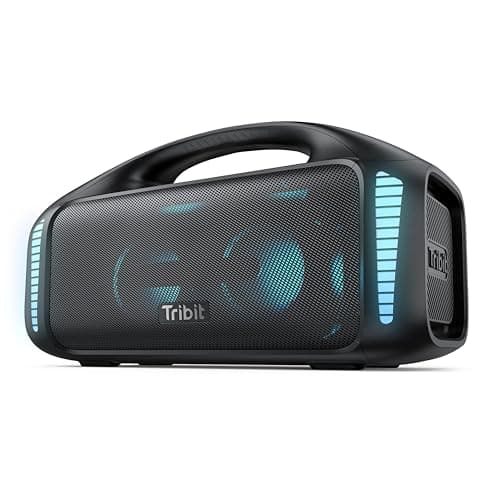 Tribit StormBox Blast96.7 dB measured, 32 hours, and an aux input for a PA feed. | Best overall | $179.99$199.9910% offView on Amazon |
| 2 | 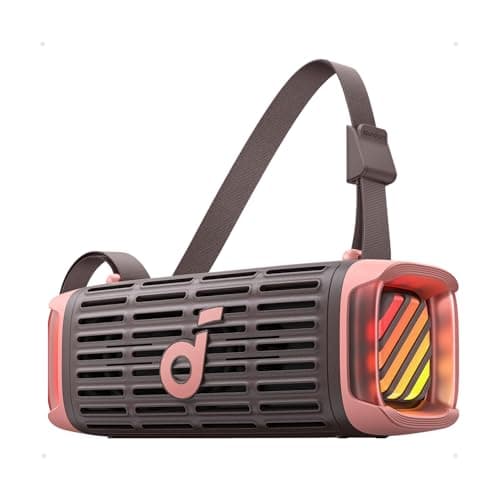 Soundcore Boom 3iIP68, a 3.28 ft drop test, and 50 W at 1.7 lb. | Best sealed pick | $129.99View on Amazon |
| 3 | 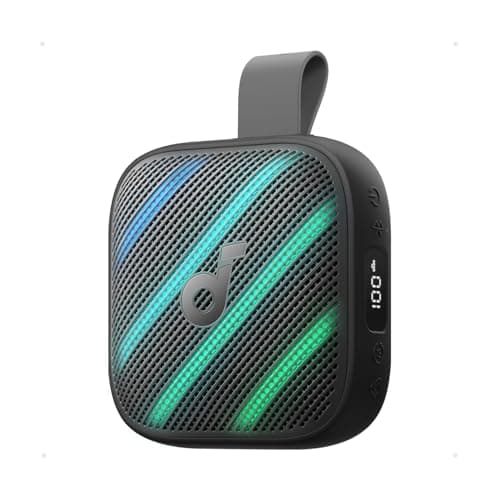 Soundcore Boom Go 3iIP68 and 24 hours, clipped to a rack at 0.84 lb. | Best for one bench | $59.98$79.9925% offView on Amazon |
| 4 | 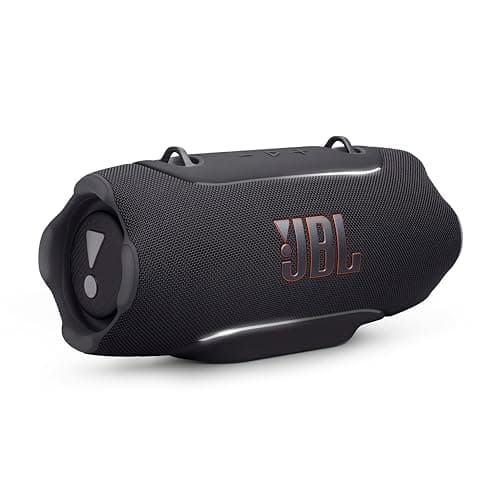 JBL Xtreme 5IP68 continuous immersion and a 98 x 145 mm woofer. | Best built | $399.95View on Amazon |
| 5 | 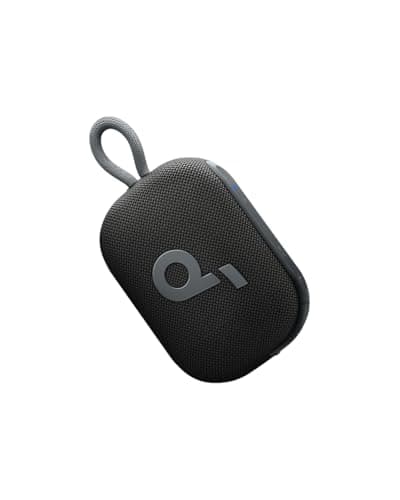 Soundcore Select 4 GoFull IP67 dust-tight sealing for almost nothing. | Best budget pick | $22.99$34.9934% offView on Amazon |
#ad — buy links go to Amazon and we earn a commission on qualifying purchases. Prices change constantly, so the live listing is always the price of record. Full disclosure.
For a working warehouse, the Tribit StormBox Blast is the pick: RTINGS measured 96.7 dB at maximum volume and 32.1 hours of battery — enough to be heard over machinery through a double shift — and its 3.5 mm aux input lets it be fed from an existing PA or paging system. The budget pick is the Soundcore Select 4 Go, which carries a full IP67 — genuinely dust-tight — with 20 hours and an integrated strap for the least money here. If sealing matters more than volume, the Soundcore Boom 3i is IP68, drop-tested from 3.28 ft and salt-spray tested to 240 hours, at 1.7 lb.
A warehouse looks like an easy environment and is not. It is indoors, so weather is irrelevant, which leads people to buy on output alone — and then the speaker dies in six months. The reason is almost always the same: airborne dust from cardboard, pallets, concrete, forklift tires and product, working steadily into port seals, grilles and buttons.
So the specification that decides this page is the first digit of the IP code, not the second. Every pick below publishes a dust-tight rating, and the ones that do not are deliberately absent. What IP67 and IPX7 actually mean is the primer, and the most durable Bluetooth speakers ranks the registry on published testing generally.
What a shop floor demands
A 6 in the first position, which is a dust-tight test result. IP67 and IP68 publish one; IPX7 does not test for dust at all. In a damp outdoor setting that distinction is academic, and in a warehouse it is the entire specification — which is why the cheapest pick here is an IP67 speaker rather than a louder IPX7 one at similar money.
Enough output to clear the noise floor, which is higher than you think. Conveyors, compressors, forklifts and HVAC set a constant background level, and a speaker has to exceed it to be intelligible rather than merely present. This is the one page on this site where the honest answer involves a large speaker: RTINGS' 96.7 dB measurement on the StormBox Blast is the only figure here with real margin over machine noise.
A full shift of battery, and preferably two. A warehouse day is eight to twelve hours and nobody wants to find a socket mid-shift. Everything here clears 16 hours and three picks clear 24, which is the right floor. The best speakers with the longest battery life ranks the whole registry on runtime.
A way to get it off the floor. A speaker on concrete is in the dust, in the way of a pallet jack, and radiating into people's shins. Clipping or strapping it to racking at head height solves all three at once, which makes an attachment a real specification. The best clip-on Bluetooth speakers is the wider list.
An aux input, if there is already a paging system. A 3.5 mm input lets the speaker take a feed from an existing PA rather than competing with it, which is often the difference between a sanctioned installation and a personal radio. Speakers with an aux input is the list.
And a word about hearing. Turning music up to beat machine noise raises total exposure, and in a space already near occupational limits that matters. Headphones are prohibited on many shop floors for safety reasons, which is exactly why a speaker is the tool — but the right fix for a noisy room is usually more speakers at moderate volume rather than one loud one. Bluetooth speakers vs headphones weighs that trade.
The picks
Best overall — the only one with real margin over machine noise
Tribit StormBox Blast
The loudest thing we are willing to call good value.
- What it does well
- RTINGS measured 96.7 dB at maximum volume, which is the only figure on this page with genuine headroom over conveyors and compressors, and 32.1 hours of battery against a 30-hour claim — a double shift without a socket. The 3.5 mm aux input lets it be driven from an existing PA or paging feed, the USB-A port charges a phone, and the nine-band app EQ lets you pull the low end down so speech and lyrics stay intelligible in a reflective steel-and-concrete space.
- Where it cuts corners
- IPX7 means Tribit publishes no dust rating, which is the one thing a warehouse most needs — this pick wins on output and loses on sealing, so keep it up off the floor and blow the grille out regularly. 11.6 lb, no microphone input, and RTINGS measured 3.89 dB of compression at maximum volume.
- Who it is for
- A genuinely noisy floor where one speaker has to cover a large bay.
- Battery: Over 32 hours in independent testing
- Water rating: IPX7 — submersible to 1 m for 30 minutes
#ad — we earn a commission on qualifying purchases. How this is funded · Price as of November 11, 2026
Best sealed pick
Soundcore Boom 3i
A floating outdoor speaker that rights itself in chop, built for the water and the dirt.
- What it does well
- IP68 — dust-tight and sealed against immersion — plus a 3.28 ft drop test and 240 hours of lab salt-spray exposure, which together make it the most comprehensively tested speaker on this page. 50 W with BassUp 2.0 covers a working bay at sensible volume, it runs 16 hours, it weighs 1.7 lb with a detachable strap for lashing it to racking, and it has a 96 dB emergency alarm.
- Where it cuts corners
- 16 hours is the shortest runtime here and will not cover a long double shift. 50 W has much less margin over machine noise than the top pick, there is no aux input to join a PA, and no USB charge-out.
- Who it is for
- A floor where the speaker will be knocked, dropped and dusted rather than where it has to be loudest.
- Battery: 16 hours
- Water rating: IP68 — submersible and dust-tight, lab-tested to 240 hours of salt spray, and it floats upright
- Output: 50 W with BassUp 2.0
- Weight: 1.7 lb (780 g)
#ad — we earn a commission on qualifying purchases. How this is funded · Price as of November 11, 2026
Best for one bench or one aisle
Soundcore Boom Go 3i
Our default recommendation under $100 — tough, long-running and honestly specified.
- What it does well
- IP68 dust-tight sealing and a 3.28 ft drop test at 0.84 lb, with a two-slot silicone strap that clips straight onto racking or a cage at head height — the easiest speaker here to get up out of the dust. 24 hours with a battery-percentage display, 15 W with BassUp 2.0 quoted at 92 dB peak, Bluetooth 6.0, and TWS pairing so two of them cover a long aisle better than one.
- Where it cuts corners
- 15 W is a one-bench speaker and will be buried by any real machinery. The 24-hour figure assumes its light modes are off, and there is no aux input.
- Who it is for
- A workbench, a packing station or a quiet aisle rather than an open floor.
- Battery: 24 hours, with a battery-level display on the speaker
- Water rating: IP68 — submersible and dust-tight, and drop-tested from 3.28 ft (1 m)
- Output: 15 W with BassUp 2.0, quoted at 92 dB peak
- Weight: 0.84 lb
#ad — we earn a commission on qualifying purchases. How this is funded · Price as of November 11, 2026
Best built
JBL Xtreme 5
One big woofer instead of two small ones, IP68 and a drop rating — the most rugged Xtreme, and the heaviest.
- What it does well
- IP68, dust-tight and sealed against continuous immersion — the strongest sealing claim on this page — around one 98 x 145 mm woofer and two 20 mm tweeters rated 1 x 90 W plus 2 x 20 W RMS on AC power, quoted 40 Hz to 20 kHz. 24 hours plus 4 with Playtime Boost from a 68 Wh pack, 10 minutes of charging giving about 2 hours, a built-in power bank, Bluetooth 6.0 with Auracast, and a shoulder strap.
- Where it cuts corners
- No aux input at all, so it cannot take a PA feed — a real omission at this size and money. On battery the output drops to 1 x 60 W plus 2 x 15 W RMS, so the headline figure is an AC number, it weighs 6.38 lb, and there is no power adapter in the box. JBL calls it drop-proof without publishing a height.
- Who it is for
- A floor where the speaker is a long-term asset and build quality is worth the premium.
- Battery: Up to 24 hours, plus 4 more with Playtime Boost; 10 minutes of charging gives about 2 hours
- Water rating: IP68 — dust-tight and sealed against continuous immersion. JBL also calls it drop-proof, without publishing a drop height
- Output: One 98 x 145 mm woofer and two 20 mm tweeters; 1 x 90 W RMS plus 2 x 20 W RMS on AC power, 1 x 60 W RMS plus 2 x 15 W RMS on battery
- Weight: 6.38 lb (2.9 kg)
#ad — we earn a commission on qualifying purchases. How this is funded · Price as of November 11, 2026
Best budget pick
Soundcore Select 4 Go
The honest answer at the very bottom of the market.
- What it does well
- A full IP67 — dust-tight and submersible — which is the specification that actually matters here, for the least money on the site. 20 hours covers a long shift, the integrated strap clips it to racking out of the dust, and at 265 g in a 121 x 83 x 48.5 mm body it fits in a pocket or a tool pouch. On a floor where speakers get lost, dropped and stolen, cheap and genuinely sealed is the right strategy.
- Where it cuts corners
- 5 W. Against any machinery at all this is inaudible, so it is a quiet-corner or packing-station speaker only. No aux input, no app EQ, no stereo pairing, and no published drop height.
- Who it is for
- A packing bench, a stockroom or a quiet corner — or a floor where speakers do not survive long enough to justify spending.
- Battery: 20 hours
- Water rating: IP67 — submersible to 1 m for 30 minutes, dustproof
- Output: 5 W
- Weight: 265 g
#ad — we earn a commission on qualifying purchases. How this is funded · Price as of November 11, 2026
Dust rating against output
| Speaker | Dust-tight? | Output | Realistic coverage | Playtime | Aux in |
|---|---|---|---|---|---|
| Tribit StormBox Blast | No — IPX7, untested | 90 W; 96.7 dB measured | A large bay over machine noise | 32.1 hours measured | Yes |
| Soundcore Boom 3i | Yes — IP68 | 50 W with BassUp 2.0 | A working bay at moderate volume | 16 hours | No |
| Soundcore Boom Go 3i | Yes — IP68 | 15 W; 92 dB peak quoted | One bench or a quiet aisle | 24 hours | No |
| JBL Xtreme 5 | Yes — IP68 | 90 W + 2 x 20 W RMS on AC | A large bay, mains-powered | 24 hours plus 4 | No |
| Soundcore Select 4 Go | Yes — IP67 | 5 W | A packing bench in a quiet corner | 20 hours | No |
Who should buy something else
- Anyone working outdoors. Weather and impact join dust as problems. The best speakers for a jobsite is written for that.
- Anyone in a single-bay garage or home workshop. One small room needs far less speaker. The best speakers for a garage is the right page.
- Anyone who needs to make announcements. No pick here takes a microphone. Speakers with a microphone input is the short list, and the best speakers for a church or hall covers voice-over-music properly.
- Anyone whose speaker lives in a vehicle. The best speakers for a truck and for a car cover mounting and vibration.
- Anyone who can wear headphones. Where it is permitted, headphones solve the noise problem at a fraction of the output. Bluetooth speakers vs headphones is the comparison.
If budget is the binding constraint, the best outdoor speakers under $100 and the loudest under $100 both overlap this page. The loudest Bluetooth speakers for the money is the unrestricted output ranking, and how to make a Bluetooth speaker louder covers the free placement gains before you spend — in a steel-and-concrete space those are substantial.
Frequently asked questions
What is the best Bluetooth speaker for a warehouse?
Why do warehouse speakers fail so quickly?
What does the first digit of an IP rating mean?
How loud does a warehouse speaker need to be?
What is the cheapest speaker that survives a warehouse?
Where should the speaker go on a shop floor?
Should we use one loud speaker or several quieter ones?
Update log
- First publication. Live autocomplete returns dedicated warehouse speaker queries; the site covered outdoor jobsites and single-bay garages but nothing written around a large, noisy, dusty indoor volume where the dust digit is the limiting specification.
Sources
Every specification quoted above comes from the manufacturer or retailer listing below. We publish no measurements of our own — see how we pick.
- RTINGS — Tribit StormBox Blast measurements (independent test lab)
- Tribit — StormBox Blast product page (manufacturer specifications)
- StereoGuide — Tribit StormBox Blast review (independent hands-on)
- Soundcore — Boom 3i product page (manufacturer specifications)
- Soundcore — Boom Go 3i product page (manufacturer specifications)
- JBL — Xtreme 5 specification sheet (PDF, manufacturer specifications)
- IEC 60529 — the international standard behind IP ratings
Read next
Outdoor & Party
The best Bluetooth speaker for a jobsite
The dust digit is the whole specification, and the four speakers that actually have it.
Outdoor & Party
The best Bluetooth speaker for a garage
Why bass-heavy speakers sound worse in a garage, and the four that handle the dust and the echo.
Outdoor & Party
The loudest Bluetooth speakers for the money in 2026
Genuinely loud speakers ranked on output per dollar — and why wattage figures cannot be compared.
Head-to-Head
Bluetooth speaker vs headphones
Where each one genuinely wins, what the money buys on each side, and a verdict per use case.
Guides
What IPX7 and IP67 actually mean
Every IP rating decoded, and the single character that decides pool versus beach.
Outdoor & Party
Best outdoor Bluetooth speakers under $100
The Soundcore Boom 2 is the only speaker under $100 with a real subwoofer. The Select 4 Go is the cheapest properly sealed pick.