By Price
The best Bluetooth speakers for an apartment
Every other page here asks how loud a speaker gets. This one asks how good it sounds at a volume your neighbor cannot hear.
By Ryder M.Published
 Field-tested picks · 2026
How we are funded: Thump & Tote earns a commission when you buy through our Amazon links, at no extra cost to you. It never changes which speaker we put first — see how we pick and our affiliate disclosure.
Quick picks
Ranked for value first. Tap any row to jump to the full write-up.
| # | Product | Best for | Price |
|---|---|---|---|
| 1 | 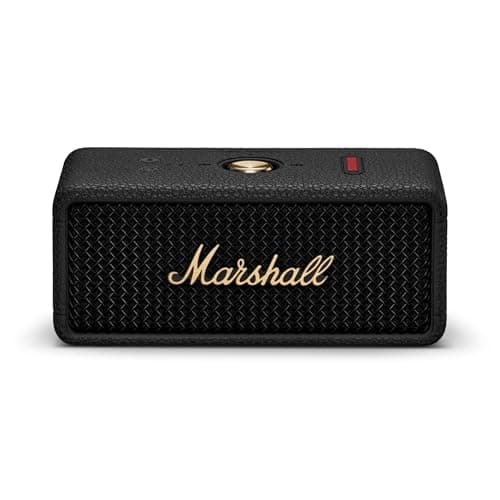 Marshall Emberton IIIA grown-up tuning that holds together at low volume. | Best overall | $119.99$179.9933% offView on Amazon |
| 2 | 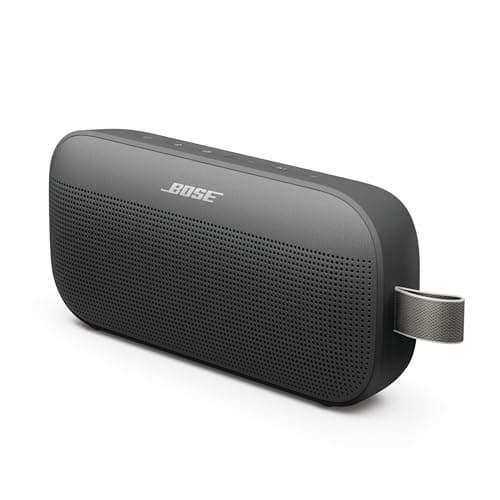 Bose SoundLink Flex (2nd Gen)The tonal upgrade, with the shortest battery here. | Best sounding under $100 | $99.00$149.0034% offView on Amazon |
| 3 | 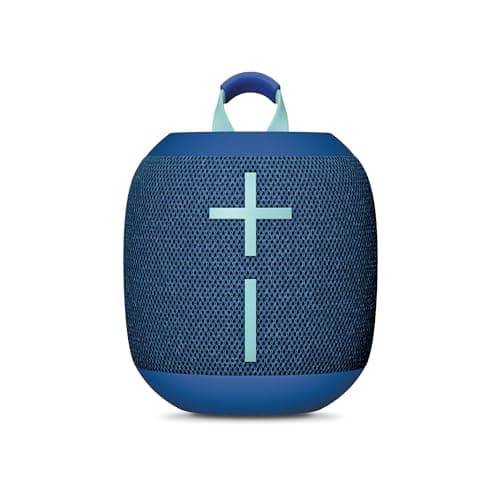 UE Wonderboom 4Two drivers and two radiators, even in every direction. | Best for a small room | $58.90View on Amazon |
| 4 | 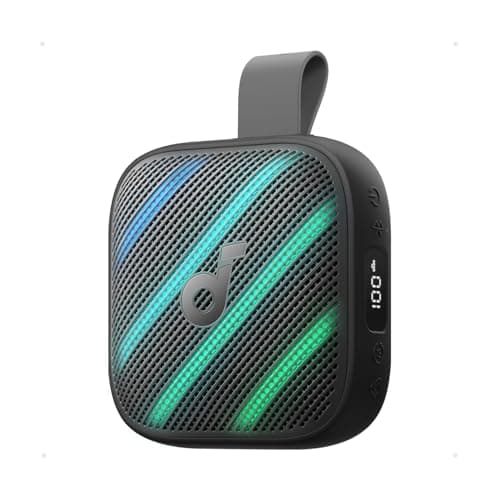 Soundcore Boom Go 3iEQ presets, so you can cut the bass a wall transmits. | Best value | $49.99$79.9938% offView on Amazon |
| 5 | 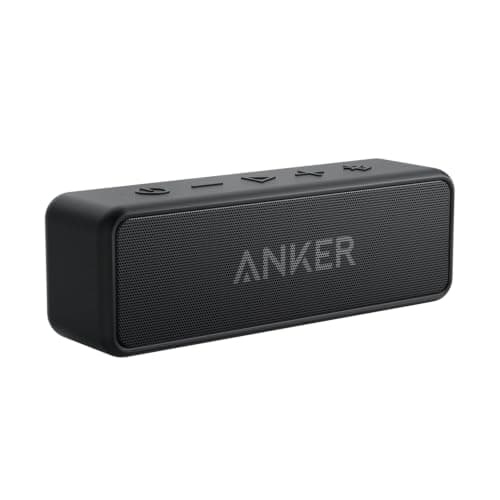 Anker Soundcore 212 W stereo and 24 hours for the least money here. | Best budget pick | $28.48$44.9937% offView on Amazon |
#ad — buy links go to Amazon and we earn a commission on qualifying purchases. Prices change constantly, so the live listing is always the price of record. Full disclosure.
The best Bluetooth speaker for an apartment is the Marshall Emberton III, because an apartment rewards the one thing most portable speakers are worst at: sounding right quietly. Marshall publishes two 38 W Class D amplifiers driving two 10 W full-range drivers plus two passive radiators in a True Stereophonic 360-degree layout, quoted 65 Hz to 20 kHz at 90 dB SPL at 1 m — a tuning that stays coherent at conversation volume instead of collapsing into boom. It also runs 32+ hours, and 20 minutes of charging returns about six hours. The budget pick is the Anker Soundcore 2 — 12 W stereo, a 5,200 mAh battery and a quoted 24 hours for the least money on this page. If you want the best sound under $100, take the Bose SoundLink Flex (2nd Gen).
Apartments invert this site's usual question. Everywhere else, the honest advice is that a bigger cabinet is a better speaker — see the loudest Bluetooth speakers for the unvarnished version. In an apartment, a bigger cabinet is a liability, because the frequencies that travel through a shared wall or a floor are exactly the ones a big speaker is built to produce.
Low frequencies are the whole problem. Bass has long wavelengths that couple into building structure and pass through it; mids and treble get absorbed by the first wall they hit. That is why the neighbor hears a thump rather than a song, and why turning the volume down helps less than you expect while turning the bass down helps immediately. It is also why a speaker with an EQ is worth more here than a speaker with more watts.
How we picked for a shared wall
Four requirements, in this order. Several speakers we rate highly elsewhere on the site fail the first one outright.
- Coherent at low volume. The speaker has to keep its balance at a level you would hold a conversation over. Bass-forward tunings designed to impress in a shop demo do the opposite.
- Bass you can reduce. Either a tuning that is not boosted in the first place, or an EQ that lets you cut the lows. A speaker whose only control is a bass-boost button is the wrong tool — speakers with an equalizer is the fuller list.
- Small enough to place well. Under about 2 lb and able to sit on a shelf away from a shared wall. Every pick here qualifies.
- No requirement to be loud. Output was deliberately NOT a ranking criterion. If you need volume, this is the wrong page and the next section says where to go.
We do not measure speakers. Every figure here is a manufacturer-published specification captured from the listings in our sources; where a brand publishes nothing, the table says "not published" rather than carrying a guess. How we pick is the method in full.
Four things that matter more than which speaker you buy
Get it off the shared wall and off the floor. A speaker touching a wall or standing on floorboards transmits directly into the structure. Move it to an interior wall, put it on a shelf, and put something soft under it. This single change does more than any upgrade on this page.
Cut the lows rather than lowering the volume. Two picks below have an EQ. Pulling the bass band down two or three notches keeps the music intelligible at a level that no longer travels — and it fixes the boom a small, hard-walled room adds for free. Why your speaker sounds muffled covers the related causes.
Use two speakers at low volume instead of one at high volume. A stereo pair spreads the same perceived loudness across two quieter sources, which is gentler on the building and better to listen to. The best speakers for stereo pairing explains which systems do it and why they do not mix across brands.
Know when a speaker is the wrong answer. For late nights, headphones solve a problem no speaker can — Bluetooth speakers vs headphones is an honest comparison rather than a sales page.
The picks
Best overall — the tuning that survives being turned down
Marshall Emberton III
Thirty-two hours and a genuinely grown-up tuning, in something you can pocket in a coat.
- What it does well
- The most convincing voicing on this page by a clear margin: two 38 W Class D amplifiers driving two 10 W full-range drivers plus two passive radiators in Marshall's True Stereophonic 360-degree layout, quoted 65 Hz to 20 kHz at 90 dB SPL at 1 m. It sounds like a small hi-fi rather than a loud toy, which is exactly what a small room wants, and the 360-degree dispersion means it does not have to be aimed. It also runs longest here at 32+ hours, with 20 minutes of charging returning about six hours, at 1.5 lb.
- Where it cuts corners
- It is the most expensive pick on this page, and it is not especially loud for the money — you are paying for refinement and battery, not output. There is no aux input, so it is the wrong speaker for a turntable or a TV, and IP67 with no buoyancy and no drop rating makes it a weaker outdoor choice than several cheaper picks on this site.
- Who it is for
- The apartment listener who actually listens, rather than using a speaker to fill the room.
- Battery: 32+ hours, with 20 minutes of charging giving about 6 hours
- Water rating: IP67 — submersible to 1 m for 30 minutes, dustproof
- Output: Two 38 W Class D amplifiers driving two 10 W full-range drivers plus two passive radiators
- Weight: 1.5 lb (0.67 kg)
#ad — we earn a commission on qualifying purchases. How this is funded · Price as of November 28, 2026
Best sounding under $100 — and the shortest battery here
Bose SoundLink Flex (2nd Gen)
The premium benchmark on this site — included so you can see what the money buys.
- What it does well
- The tonal step up for the money. Bose's voicing is noticeably more even than the budget picks below, which is what makes it listenable at low volume rather than merely audible, and the silicone-wrapped body is designed to be knocked about. IP67 means dustproof as well as submersible to 1 m for 30 minutes, and it recharges over USB-C in roughly four hours.
- Where it cuts corners
- Up to 12 hours is the shortest quoted battery on this page, which matters if the speaker also leaves the apartment. Bose publishes no wattage figure, there is no aux input and no app EQ slider set as flexible as Soundcore's, and it does not float. It is also the pick most likely to be mistaken for a party speaker and then found wanting.
- Who it is for
- Someone who wants the best sound they can get under $100 and will charge it every couple of days.
- Battery: Up to 12 hours
- Water rating: IP67 — submersible to 1 m for 30 minutes, dustproof
#ad — we earn a commission on qualifying purchases. How this is funded · Price as of November 28, 2026
Best for a small room — even in every direction
UE Wonderboom 4
The one to buy if the speaker is going anywhere near water.
- What it does well
- Two 40 mm active drivers plus two passive radiators in a round cabinet, which spreads sound evenly rather than firing it at one spot — useful in a studio or a single room where you move around and there is no good listening seat. It is IP67 and dustproof, rated for 5 ft drops, it floats, and UE quotes a 131 ft wireless range, so it doubles as the speaker you take to a pool without worrying.
- Where it cuts corners
- UE publishes no wattage figure, so there is no output number to compare. Fourteen hours is mid-pack, there is no aux input, no card slot and no app EQ, and the round body ships with no strap or clip. It is also a more bass-forward tuning than the two picks above, which in a hard-walled room is the thing you will want to cut and cannot.
- Who it is for
- A studio or one-room apartment where the speaker has to sound the same everywhere.
- Battery: 14 hours
- Water rating: IP67 — submersible to 1 m for 30 minutes, dustproof, and it floats
- Weight: 14.81 oz (420 g)
#ad — we earn a commission on qualifying purchases. How this is funded · Price as of November 28, 2026
Best value — the EQ is the reason it is here
Soundcore Boom Go 3i
Our default recommendation under $100 — tough, long-running and honestly specified.
- What it does well
- EQ presets in the Soundcore app, which on this page is the feature that matters most: it lets you pull the low end back so the music stops traveling through the wall. Beyond that it is an unusually complete speaker for the money — a quoted 24 hours with a real battery-percentage display, IP68 sealing, a 3.28 ft (1 m) drop test, 0.84 lb, Bluetooth 6.0, TWS stereo pairing, Auracast and emergency phone charging.
- Where it cuts corners
- Fifteen watts with BassUp 2.0 is modest, though that is close to irrelevant here. Presets are not sliders, so the cut you want may not be exactly available. The 24-hour figure assumes the fourteen light modes are off, and the light show is not what you want in a living room anyway. No aux input and no USB-C audio in.
- Who it is for
- The value buyer who wants adjustable tuning and a speaker that also leaves the building.
- Battery: 24 hours, with a battery-level display on the speaker
- Water rating: IP68 — submersible and dust-tight, and drop-tested from 3.28 ft (1 m)
- Output: 15 W with BassUp 2.0, quoted at 92 dB peak
- Weight: 0.84 lb
#ad — we earn a commission on qualifying purchases. How this is funded · Price as of November 28, 2026
Best budget pick — stereo, 24 hours, and almost free
Anker Soundcore 2
Years old, still sold, still the battery-life champion of the cheap shelf.
- What it does well
- Twelve watts in a stereo configuration and a 5,200 mAh battery good for a quoted 24 hours, at the lowest price on this page by a wide margin. It pairs wirelessly with a second unit, which in an apartment is the better way to use it: two of these at low volume costs less than one mid-priced speaker and sounds wider than any single small cabinet here.
- Where it cuts corners
- There is no app EQ, and BassUp pushes the low end rather than letting you cut it — on this page that is the wrong direction, so leave it off. IPX7 means water was tested and dust never was, there is no aux input, no carry hardware and no drop rating, and the plain plastic cabinet does not pretend otherwise.
- Who it is for
- A first apartment, a spare room, or a stereo pair bought for the price of one speaker.
- Battery: 24 hours
- Water rating: IPX7 — submersible to 1 m for 30 minutes
- Output: 12 W stereo
#ad — we earn a commission on qualifying purchases. How this is funded · Price as of November 28, 2026
The five compared on what an apartment cares about
| Speaker | Can you cut the bass? | Published response | Quoted battery | Weight |
|---|---|---|---|---|
| Marshall Emberton III | No EQ, but a flat-ish tuning | 65 Hz to 20 kHz; 90 dB SPL at 1 m | 32+ hours | 1.5 lb |
| Bose SoundLink Flex (2nd Gen) | No | Not published | Up to 12 hours | Not published |
| UE Wonderboom 4 | No | Not published | 14 hours | 14.81 oz |
| Soundcore Boom Go 3i | Yes — app EQ presets | Not published | 24 hours | 0.84 lb |
| Anker Soundcore 2 | No — BassUp only | Not published | 24 hours | Not published |
If your apartment problem is actually something else
- It is for a bedroom, and sleep is involved. The best Bluetooth speakers for a bedroom deals with nightstand placement and alarms rather than neighbors.
- It has to cover more than one room. The best Bluetooth speakers for home is the whole-house page, and under $100 is the budget version of it.
- It is going on a desk. The best speakers for a computer and for an office are the right lists — a desk is a near-field problem, not a room one.
- It is for a TV. Latency decides this, not tuning: the best Bluetooth speakers for a TV and how to connect a speaker to a TV.
- You actually do want it loud. Then read the loudest Bluetooth speakers and accept the consequences, or small speakers that are genuinely loud for the quieter compromise.
For the full write-ups, see the Marshall Emberton III review, the Bose SoundLink Flex review, the UE Wonderboom 4 review, the Soundcore Boom Go 3i review and the Anker Soundcore 2 review.
Frequently asked questions
What is the best Bluetooth speaker for an apartment?
Why do my neighbors hear the bass but not the music?
Does a smaller speaker disturb neighbors less?
Where should I put a speaker in a small apartment?
Is one speaker or two better in a studio apartment?
What is the cheapest decent speaker for an apartment?
Update log
- First publication. Live autocomplete on 2026-11-21 returns "best bluetooth speaker for an apartment", "...for small apartment" and "...for studio apartment". Every existing room page on the site ranked on output; this one deliberately does not.
Sources
Every specification quoted above comes from the manufacturer or retailer listing below. We publish no measurements of our own — see how we pick.
- Marshall — Emberton III product page (manufacturer specifications)
- BGR — Marshall Emberton III review (independent hands-on)
- Bose — SoundLink Flex (2nd Gen) product page
- Bose — SoundLink Flex (2nd Gen) specification sheet (PDF)
- Ultimate Ears — Wonderboom 4 product page (manufacturer specifications)
- Soundcore — Boom Go 3i product page (manufacturer specifications)
- Soundcore — Soundcore 2 product page (manufacturer specifications)
- IEC 60529 — the international standard behind IP ratings
Read next
By Price
The best Bluetooth speaker for a bedroom
Why low-volume behavior beats wattage at the bedside, and the four that get it right.
By Price
The best Bluetooth speakers for home in 2026
Indoor picks where tuning matters more than output — and why you can spend less here than outdoors.
By Price
The best Bluetooth speakers with an equalizer
Six speakers with a real equalizer - app sliders, presets or an on-device mode - and what each one can actually fix.
By Price
Best Bluetooth speakers for stereo pairing
The Soundcore Boom Go 3i pairs in true stereo and links by Auracast too. Two Tribit XSound Gos are the cheapest real stereo pair on the site.
Head-to-Head
Bluetooth speaker vs headphones
Where each one genuinely wins, what the money buys on each side, and a verdict per use case.
By Price
The best Bluetooth speakers for home under $100 in 2026
Six indoor picks under $100 - the best-sounding, the loudest, the one that plays without a phone, and the budget pair.