By Price
The best Bluetooth speakers for a restaurant or café in 2026
The hardest part of this purchase is not the speaker. It is that the music you already pay for is almost certainly not licensed for your dining room.
By Ryder M.Published
 Field-tested picks · 2026
How we are funded: Thump & Tote earns a commission when you buy through our Amazon links, at no extra cost to you. It never changes which speaker we put first — see how we pick and our affiliate disclosure.
Quick picks
Ranked for value first. Tap any row to jump to the full write-up.
| # | Product | Best for | Price |
|---|---|---|---|
| 1 | 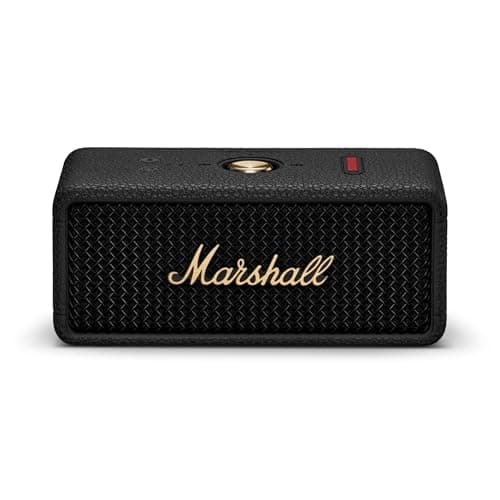 Marshall Emberton IIIThirty-two hours and a tuning built for background volume. | Best overall | $179.99View on Amazon |
| 2 | 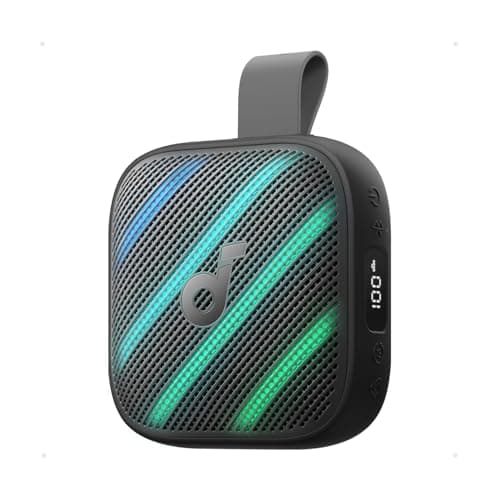 Soundcore Boom Go 3iIP68 and 24 hours for a fraction of the price. | Best value | $79.99View on Amazon |
| 3 | 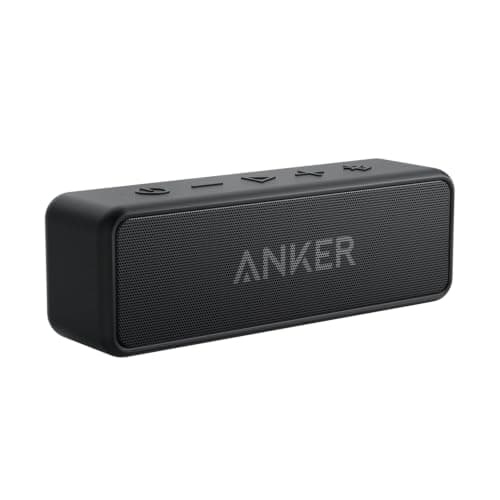 Anker Soundcore 2Buy two, pair them, cover both ends of the floor. | Best for covering a room cheaply | $29.98$44.9933% offView on Amazon |
| 4 | 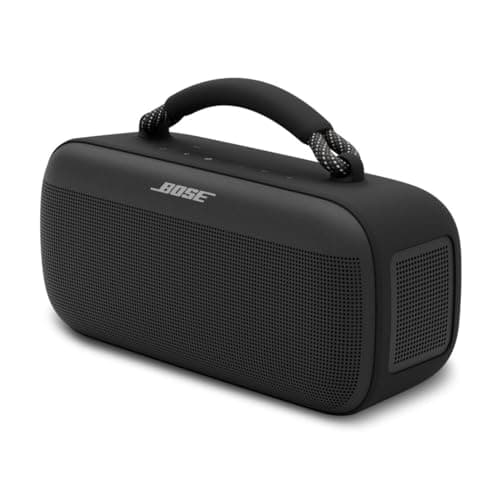 Bose SoundLink MaxThe one that takes a cable from a licensed player. | Best sound, and the aux jack | $399.00View on Amazon |
| 5 | 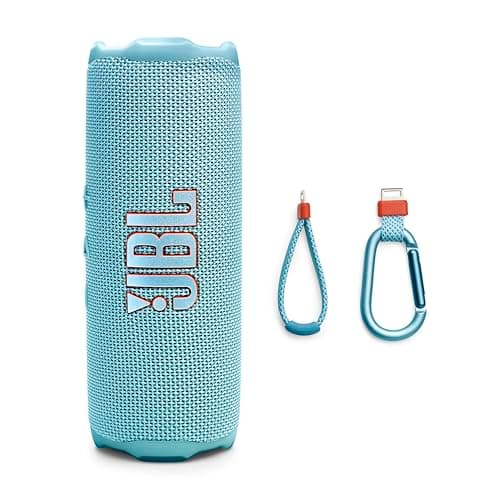 JBL Flip 7IP68, a wired USB path, and Auracast to add more later. | Best if it also covers a patio | $149.95View on Amazon |
#ad — buy links go to Amazon and we earn a commission on qualifying purchases. Prices change constantly, so the live listing is always the price of record. Full disclosure.
The Marshall Emberton III is the best single speaker for a small dining room: 32+ quoted hours, a restrained tuning that sounds complete at background volume, 360-degree dispersion so there is no bad table, and an IP67 body that wipes clean. If the budget is tight, the Soundcore Boom Go 3i does most of it with IP68 sealing and a 24-hour battery for a fraction of the money, and a pair of Anker Soundcore 2 units covers a wider floor for less than one mid-tier speaker. Before any of that, though: playing a personal Spotify or Apple Music account in your dining room is not permitted, and that is a legal problem no speaker fixes. The licensing section below is the most important part of this page.
Commercial background music is a different problem from every other page on this site. The speaker runs ten to fourteen hours a day, every day, at a volume low enough to sit under conversation. Nobody is listening to it on purpose and everybody notices when it is wrong. It lives in an environment with airborne grease, spills and cleaning chemicals. And the content going into it is subject to copyright law in a way the same playlist in your kitchen at home is not.
That reorders every priority. Loudness barely matters. Bass barely matters. What matters is whether the speaker sounds complete when it is barely turned up, whether it can run indefinitely on a charger, whether you can wipe it down, and whether it stays out of the way visually. We will take those in order, then get to the licensing.
The licensing problem, first
Spotify's own support pages are explicit about this. Spotify states that "you can't broadcast or play Spotify publicly from a business, such as bars, restaurants, schools, stores, salons, dance studios, radio stations, etc." and directs commercial users to a separate licensed service instead. A Premium subscription does not change that — Spotify's terms grant a license for personal, non-commercial use, and a dining room full of paying customers is not personal use.
The reason is public performance right. In the United States, playing recorded music where the public can hear it is a performance of the underlying composition, and that requires permission from the rights holders — in practice a blanket license from the performing rights organizations. That is a separate thing from the subscription you pay for the recording.
There is one narrow statutory carve-out and it is worth knowing precisely, because it is widely misunderstood. 17 U.S.C. section 110(5)(B) exempts a food service or drinking establishment that *retransmits a radio or television broadcast* — not a streaming playlist — where the premises are under 3,750 gross square feet excluding customer parking, or, if larger, where the audio system uses no more than 6 loudspeakers, of which no more than 4 are in any one room, with no direct charge to hear it and no further transmission beyond the establishment. A radio playing through four ceiling speakers in a small café can fall inside that. Your curated Spotify playlist on a Bluetooth speaker does not.
What actually matters in a dining room
- Can it run plugged in, all day? This is the real specification and nobody lists it. A portable speaker in a restaurant is effectively a mains speaker — the battery is a backup, not the power source. Most will run while charging; a few misbehave. Can you use a Bluetooth speaker while it is charging covers how to check and what goes wrong.
- Does it sound complete at 20% volume? Background music lives at a level where most portable speakers go thin and hollow, because they are voiced to impress at three-quarters. An even tuning beats a big wattage figure every single time here.
- Dispersion, not output. One speaker aimed at the door leaves the back tables in silence and the front tables shouting. A 360-degree speaker in the middle of the room, or two quiet speakers at opposite ends, both beat one loud speaker at one end. This is the single most common mistake.
- Can you wipe it down? Kitchens aerosolize grease and it lands on everything. A sealed silicone or rubberized body with an IP rating can be wiped with a damp cloth; an exposed fabric grille collects a film that never comes off. How to clean a Bluetooth speaker has the method.
- Does it disappear? A pulsing RGB light show belongs at a tailgate, not over a dinner service. The right restaurant speaker is visually quiet, and any model with lighting needs them switched off permanently.
- Multipoint and fast reconnection. The speaker will be handed between a manager's phone, a tablet behind the bar and whatever device opens the next morning. A speaker that reconnects instantly saves a small daily annoyance from becoming a large one. Why your speaker will not connect covers the failure modes.
- Output, last. A dining room at conversational volume needs far less than people expect. 15 to 30 W per speaker is ample for a small room, and more power usually just means a louder mistake.
The picks
Best restaurant speaker overall
Marshall Emberton III
Thirty-two hours and a genuinely grown-up tuning, in something you can pocket in a coat.
- What it does well
- Marshall voices this one to be composed rather than exciting, which is precisely what background music needs — it sounds like a small hi-fi at a level people can talk over, instead of going thin the way most portables do when you turn them down. True Stereophonic throws sound in all directions, so a table in the middle of the room covers the whole floor without a bad seat. 32+ quoted hours means it survives a whole service if somebody forgets the cable, the 20-minute quick charge recovers six hours over a shift change, and IP67 means a wipe-down with a damp cloth is routine. It also looks like furniture rather than equipment.
- Where it cuts corners
- No aux input of any kind, so a wired licensed music player is impossible — it is Bluetooth only. The published 90 dB SPL ceiling means a busy room at peak will have it working, and reviewers note it turns harsh near the top. The app gives presets rather than a real EQ, so fine-tuning for a hard-surfaced room is limited. And it is a premium price for a device that will live its life next to a socket.
- Who it is for
- A café, a bistro or a single small dining room where the music should be felt rather than noticed.
- Battery: 32+ hours, with 20 minutes of charging giving about 6 hours
- Water rating: IP67 — submersible to 1 m for 30 minutes, dustproof
- Output: Two 38 W Class D amplifiers driving two 10 W full-range drivers plus two passive radiators
- Weight: 1.5 lb (0.67 kg)
#ad — we earn a commission on qualifying purchases. How this is funded · Price as of October 23, 2026
Best value for a small room
Soundcore Boom Go 3i
Our default recommendation under $100 — tough, long-running and honestly specified.
- What it does well
- IP68 plus a 1 m drop rating is the toughest specification on this page at any price, which matters in a room where staff move things in a hurry. The app EQ is a genuine advantage over the Marshall here — a restaurant with hard floors and bare tables needs the low end pulled down, and this one lets you do it properly. Twenty-four quoted hours with an actual battery-percentage display takes the guesswork out, the flat body stands against a wall or on a shelf without rolling, and the price means replacing one after two years of grease and spills is an annoyance rather than an event.
- Where it cuts corners
- Fifteen watts and mono: this covers a small café or one end of a room, not a full dining floor. The six music-reactive light modes and eight ambient ones have no place in a restaurant and need turning off and leaving off. There is no aux or USB audio input, so the source must be Bluetooth. The factory tuning needs EQ work before it sits politely under conversation.
- Who it is for
- A coffee shop, a takeaway counter or a small room where the budget matters and the speaker will get abused.
- Battery: 24 hours, with a battery-level display on the speaker
- Water rating: IP68 — submersible and dust-tight, and drop-tested from 3.28 ft (1 m)
- Output: 15 W with BassUp 2.0, quoted at 92 dB peak
- Weight: 0.84 lb
#ad — we earn a commission on qualifying purchases. How this is funded · Price as of October 23, 2026
Best way to cover a wider floor cheaply
Anker Soundcore 2
Years old, still sold, still the battery-life champion of the cheap shelf.
- What it does well
- This is the pick that solves the dispersion problem rather than the sound-quality one, and dispersion is the bigger problem. Two Soundcore 2 units pair wirelessly into a stereo set and still cost less than one mid-tier speaker, which means you can put one at each end of a room and run both quietly instead of running one loudly at the front. Twenty-four quoted hours each, 12 W of real stereo per unit, IPX7 against a spilled drink, and a plain body that nobody will look at twice. For a long narrow room this beats every single-speaker option here.
- Where it cuts corners
- The design is visibly dated and the treble is soft next to anything recent, so detail suffers — less important under conversation than it sounds, but real. No dust rating at all, which in a kitchen-adjacent room is the rating that matters most. BassUp should stay off permanently. And two speakers means two charging cables, two devices to pair and two things to lose.
- Who it is for
- Long rooms, two-room venues and anyone who would rather spend the budget on coverage than on tone.
- Battery: 24 hours
- Water rating: IPX7 — submersible to 1 m for 30 minutes
- Output: 12 W stereo
#ad — we earn a commission on qualifying purchases. How this is funded · Price as of October 23, 2026
Best sound, and the only one that takes a cable
Bose SoundLink Max
The best-sounding portable we know of, and the one that still has an aux jack.
- What it does well
- Two things no other pick here offers. First, a 3.5 mm aux input and USB-C audio in, which means a dedicated licensed-music player or a till-side tablet can be wired in permanently instead of depending on a Bluetooth link that drops when someone walks out with their phone. For a venue, a cable is a feature, not a legacy. Second, genuinely better sound: three front transducers and two racetrack passive radiators, independently measured at 95.7 dB with only 2.55 dB of compression, so it stays composed if a private event needs it turned up. IP67 and an aluminum-and-fabric body that survives commercial life.
- Where it cuts corners
- The price is four to eight times the value band this site normally recommends, and for background music nobody is listening to closely, most of that is wasted. It weighs 4.9 lb. There is no microphone at all. It is Bluetooth-only otherwise — no Wi-Fi, no AirPlay, which at this price is a real omission for a venue that might want multi-room later. The default tuning is bass-heavy and needs the app EQ pulled down for a dining room.
- Who it is for
- A venue where the music is part of the experience rather than wallpaper, and anywhere a permanently wired source is the right answer.
- Battery: Up to 20 hours, with a 5-hour full charge
- Water rating: IP67 — submersible to 1 m for 30 minutes, dustproof
- Output: Bose Articulated Array — two 89 mm transducers and one 23 mm transducer, plus two 104 x 79 mm racetrack passive radiators
- Weight: 4.9 lb
#ad — we earn a commission on qualifying purchases. How this is funded · Price as of October 23, 2026
Best if the speaker also has to cover a patio
JBL Flip 7
The default mid-size pick, and the speaker every value brand is trying to undercut.
- What it does well
- IP68 is the strongest water rating here, which matters for an outdoor terrace that gets rained on and hosed down. USB-C lossless audio gives a wired path for a fixed source, and Auracast means a second or third unit can be added later to extend coverage onto a patio without replacing anything. Even tonality across the volume range means it behaves at background levels and still works for a private function. Fourteen hours plus Playtime Boost covers a long service.
- Where it cuts corners
- You pay a real JBL brand premium and cheaper picks here beat it on battery outright. It downmixes stereo to mono and has no analogue aux jack — the wired path is USB only, which rules out older sources. It is a cylinder and it rolls, which in a busy service is a genuine nuisance without something to sit it in.
- Who it is for
- Venues with an indoor room and an outdoor terrace, and anyone who expects to add speakers rather than replace them.
- Battery: 14 hours, plus up to 2 more in Playtime Boost mode
- Water rating: IP68 — submersible to 1.5 m for 30 minutes, dustproof
- Weight: 1.82 lb (about 560 g)
#ad — we earn a commission on qualifying purchases. How this is funded · Price as of October 23, 2026
How many speakers, and where to put them
The instinct is to buy one speaker loud enough for the whole room. It is the wrong instinct, and it is why so many restaurants are uncomfortable to sit in. Sound falls off with distance, so a single speaker loud enough for the back table is far too loud for the front one — the people nearest it end up raising their voices, which raises the room, which makes you turn the music up. That feedback loop is the thing to avoid.
Two quiet speakers at opposite ends of a room beat one loud speaker every time. The level at any table is more even, the perceived volume is lower, and conversation stays at a civil pitch. For a room up to about 25 feet long, one 360-degree speaker centrally placed can do it. Past that, go to two. Past about 50 feet or into a second room, you are into a wired installed system, and no portable Bluetooth speaker is the right tool.
Height helps more than power. A speaker on a shelf above head height disperses over the room instead of into the back of the nearest chair, and the nearest table stops getting an unfair share. Keep it off hard resonant surfaces, and keep it away from the pass — grease and heat are the two things that kill electronics in a commercial kitchen.
The side-by-side
| Speaker | Battery | Sealing | Wired input | Dispersion |
|---|---|---|---|---|
| Marshall Emberton III | 32+ hours | IP67 | None | 360 degrees |
| Soundcore Boom Go 3i | 24 hours | IP68 + 1 m drop | None | Mono, front-firing |
| Anker Soundcore 2 | 24 hours each | IPX7 | None | Stereo across two units |
| Bose SoundLink Max | 20 hours | IP67 | 3.5 mm aux + USB-C | Front-firing, wide |
| JBL Flip 7 | 14 hours + boost | IP68 | USB-C only | Mono, front-firing |
The wired-input column is the one to read twice if the venue wants a permanent source. Only the Bose takes an analogue cable; the JBL takes USB; the other three are Bluetooth only. A Bluetooth-only speaker in a restaurant means somebody's phone is the music system, and that phone leaves at the end of a shift.
Running a portable speaker as a mains speaker
Every speaker on this page will run plugged in, and that is how a restaurant should use one — the battery is there for the half hour when somebody unplugs it to clean, not as the daily power source. Two things are worth knowing. First, most speakers will happily play while charging, but a few drop their maximum volume or disable features on mains power; check yours in the first week rather than discovering it on a Saturday night. Can you use a Bluetooth speaker while charging covers what to look for.
Second, permanently full is not kind to a lithium battery, and a speaker that spends two years at 100% charge will show it. That is a real cost and it is a cheap one to accept: a speaker in this role is a consumable. Buying the cheap pick twice over four years is often a better plan than buying the premium one once, which is exactly why the Boom Go 3i is on this page. How long Bluetooth speakers last is the longer answer.
How much to spend
For a single small room, the $60-to-$100 band genuinely covers it — the requirement here is even tone at low volume and a body you can wipe, not output. Best under $100 is the broader list, and the Boom Go 3i on this page is the pick we would make with that budget.
Spend up to the Marshall's bracket if the room is the kind where the music is part of the room, and the speaker will be visible to every customer. Spend to the Bose's bracket only if you need the wired input or the venue genuinely hosts events. Do not spend it on wattage: a restaurant speaker that needs to be loud is a restaurant with the speaker in the wrong place.
What we did not pick, and why
- Anything with a light show as a feature. The Soundcore Boom 2 and the party speakers in the outdoor party list are good products and completely wrong for a dining room.
- Speakers with a microphone input. Useful for announcements at an event, irrelevant to background music, and they push the price up. Speakers with a microphone input is the page if you want one anyway.
- Smart speakers. They depend on Wi-Fi and a voice assistant listening in a room full of customers, which is a conversation most owners would rather not have. Bluetooth vs Alexa covers the trade.
- Installed ceiling systems. The correct answer for a venue over about 50 feet or across multiple rooms, and entirely outside what this site covers. If that is you, a local installer beats anything on this page.
- Bass-forward speakers generally. Low frequencies travel through floors and walls and are the first thing neighbors complain about. Cheap speakers with good bass is a great page and the wrong page for this job.
If the venue is really a bar with a late crowd rather than a dining room, the loudest for the money is the better starting point. If it is a retail counter or a small office rather than a restaurant, the best speakers for an office ranks on the same low-volume criteria at a lower price. And if there is a terrace involved, the best speakers for a patio covers what changes outdoors.
Frequently asked questions
What is the best Bluetooth speaker for a restaurant?
Can I play Spotify in my restaurant?
Do I need a music license to play music in my restaurant?
Is there an exemption for small restaurants?
How many speakers does a restaurant need?
Can a portable Bluetooth speaker stay plugged in all day?
How loud should restaurant background music be?
What is the best speaker for a coffee shop?
Update log
- First publication. Ranked on run-while-charging, low-volume tone, dispersion and wipe-clean sealing rather than output, and led with the commercial music licensing position quoted from Spotify's own support page and the statutory text of 17 U.S.C. section 110(5).
Sources
Every specification quoted above comes from the manufacturer or retailer listing below. We publish no measurements of our own — see how we pick.
- Spotify — Using Spotify in a bar, restaurant, store or school (official support page)
- U.S. Copyright Office — Title 17, Chapter 1, section 110(5): the food service and drinking establishment exemption
- Marshall — Emberton III product page (manufacturer specifications)
- Soundcore — Boom Go 3i product page (manufacturer specifications)
- Soundcore — Soundcore 2 product page (manufacturer specifications)
- Bose — SoundLink Max product page (manufacturer specifications)
- RTINGS — Bose SoundLink Max review (independent measurements: max SPL, compression, soundstage)
- JBL — Flip 7 product page (manufacturer specifications)
- IEC 60529 — the international standard behind IP ratings
- Battery University — how lithium-ion batteries age (BU-808)
Read next
Reviews
Thirty-two hours from something that fits a coat pocket — and the three specs Marshall does not put on the box.
Reviews
The best-sounding portable we cover, the heaviest, and the only one that still takes a cable.
By Price
The best Bluetooth speakers for an office in 2026
Why an office speaker is a low-volume and call-quality problem, and the five that solve it.
Outdoor & Party
The best Bluetooth speakers for a patio in 2026
The speaker lives outside and never gets carried, which flips almost every buying rule on this site.
Guides
Can you use a Bluetooth speaker while it is charging?
What playing while plugged in does to a lithium cell, when it matters, and which speakers handle it best.
Guides
How to clean a Bluetooth speaker
Cleaning the mesh, the ports and the seals safely — and which speakers survive a rinse.
By Price
The best Bluetooth speakers under $100 in 2026
The tier most people should buy in — six picks, ranked for value, with the compromises named.