Outdoor & Party
The best Bluetooth speaker for fitness classes
Thirty people absorb sound. A fan and a sprung floor add noise. And you have to be heard over the music you chose. That combination rules out most of this category.
By Ryder M.Published
 Field-tested picks · 2026
How we are funded: Thump & Tote earns a commission when you buy through our Amazon links, at no extra cost to you. It never changes which speaker we put first — see how we pick and our affiliate disclosure.
Quick picks
Ranked for value first. Tap any row to jump to the full write-up.
| # | Product | Best for | Price |
|---|---|---|---|
| 1 | 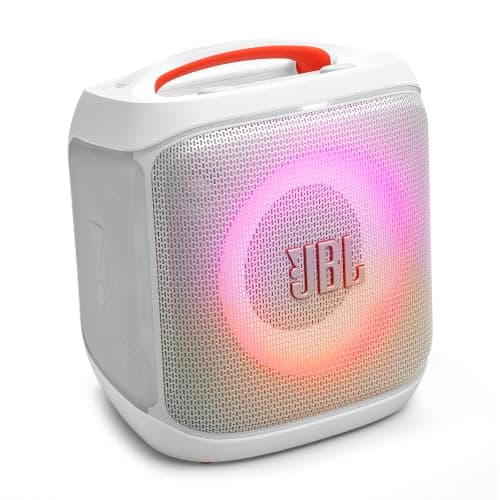 JBL PartyBox Encore Essential 2The only pick here with a real microphone input, which is the job. | Best for fitness classes | $329.95View on Amazon |
| 2 | 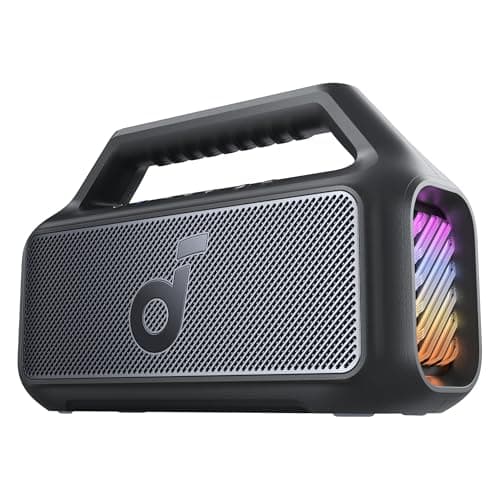 Soundcore Boom 2A real subwoofer and a strap, for a fraction of a PA. | Best value for a studio room | $99.99$129.9923% offView on Amazon |
| 3 | 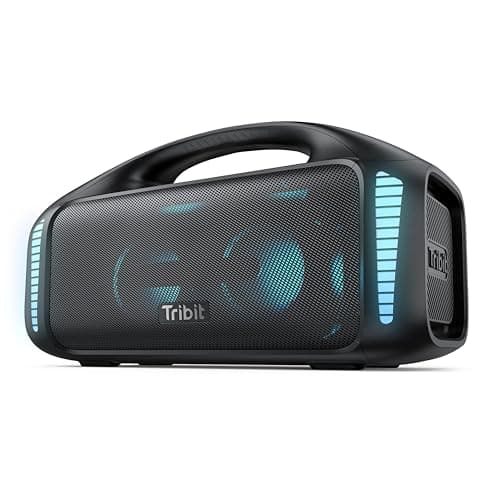 Tribit StormBox Blast96.7 dB measured, 32 hours and an aux input for the studio tablet. | Best for a big room | $179.99$199.9910% offView on Amazon |
| 4 | 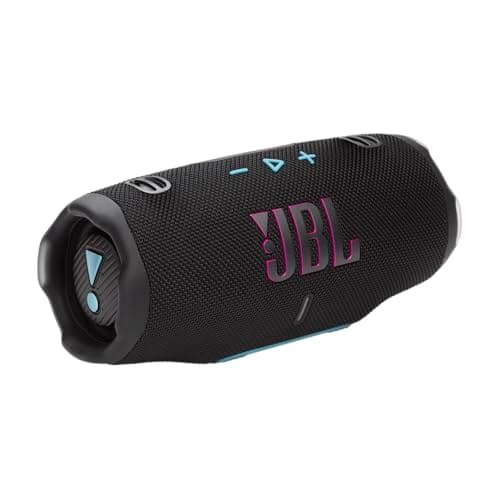 JBL Charge 6IP68, 24 hours and a power bank, in one hand. | Best if you teach in several places | $199.95View on Amazon |
| 5 | 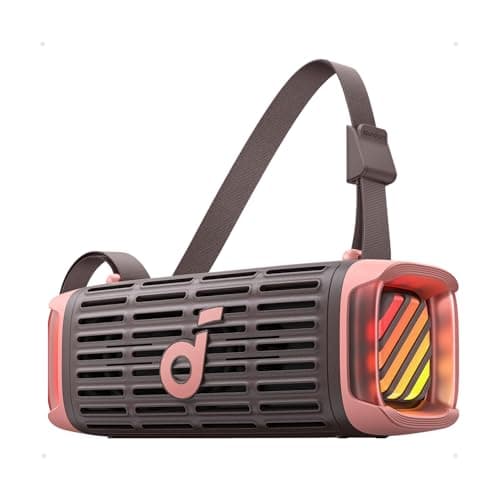 Soundcore Boom 3iIP68, salt-rated and it floats upright — bootcamp weather included. | Best for outdoor classes | $129.99View on Amazon |
#ad — buy links go to Amazon and we earn a commission on qualifying purchases. Prices change constantly, so the live listing is always the price of record. Full disclosure.
The JBL PartyBox Encore Essential 2 is the best speaker for teaching fitness classes, and the reason has almost nothing to do with how it sounds: it is the only genuinely portable speaker we recommend with a real 3.5 mm microphone input and a karaoke EQ behind it, so your voice goes through the same box as the music instead of competing with it. If you cue with your own voice unamplified, the Soundcore Boom 2 is the value answer for a normal studio room, and the Tribit StormBox Blast is the pick for a large hall or an outdoor bootcamp — 96.7 dB measured, 32.1 hours of measured battery and a 3.5 mm aux input for the studio's own tablet.
Advice for this use case almost always collapses into "buy something loud", which is how instructors end up with a party speaker they shout over for a year. A class is a specific and fairly unforgiving acoustic problem, and it is not the same problem as a home gym. The best speaker for a gym is written for one person in a hard, empty, reflective room where the risk is harsh treble bouncing off concrete. A class is the opposite: fifteen to thirty bodies, mats, and often soft flooring, all of which absorb sound rather than reflect it. Add a fan, a sprung floor, and footfall from the whole room landing on the same beat, and the speaker is working against a noise floor the empty room never had.
What a class actually demands
These are the criteria the list below is ordered by, roughly in the order that they decide the purchase. None of them is wattage.
- A route for your voice. This is the single biggest decision and most buyers never consider it. Either the speaker has a microphone input, or you spend every class projecting over your own playlist. A Bluetooth microphone paired to your phone does not solve it — the phone is already sending music to the speaker, and a phone cannot send audio out and take microphone audio in from the same Bluetooth link without the latency and dropouts that make cueing impossible. A wired mic input is the only reliable fix.
- Headroom, not maximum volume. Bodies absorb. A speaker that sounds loud in an empty studio loses several dB the moment the room fills, and a speaker already at the top of its dial starts compressing — which is heard as the beat going soft exactly when the class needs it hardest. Buy a speaker that is comfortable at seventy percent.
- Battery across back-to-back sessions, with no socket in reach. Studios rarely have an outlet where the speaker needs to be. Quoted playtimes assume moderate volume with the lights off, and a class is neither. Treat any quoted figure as roughly half of what you will see, then check it covers your longest teaching day.
- Sweat, spills and the floor. Sweat is saltier and more corrosive than tap water, water bottles get knocked over constantly, and the speaker lives at ankle height where it gets kicked. A water rating and a drop rating are both worth more here than in a living room.
- A carry that works between rooms. If you teach in more than one place, the speaker goes in a car, through a door, and onto a bench several times a day. Weight and the presence of a handle or a strap matter more than any audio specification once you are past the first week.
- A connection that holds from across the room. You will be ten to fifteen meters away with your phone on a bench and thirty phones in the room competing for the same 2.4 GHz band. Bluetooth 5.3 or newer helps; so does keeping the playlist on a dedicated device. If yours is cutting out, why a Bluetooth speaker keeps cutting out is the diagnostic page.
The picks
Best Bluetooth speaker for fitness classes
JBL PartyBox Encore Essential 2
The cheapest genuinely portable speaker here with a real microphone input.
- What it does well
- A real 3.5 mm microphone input at 20 mV RMS, with a karaoke EQ built around it and a guitar input beside it — so your voice and your playlist come out of the same box and you stop shouting. There is a 370 mV RMS aux input for a studio tablet, 100 W RMS measured to the stricter IEC60268 standard, a grab-and-go handle, and Auracast to pair two of them if the room is long. JBL's app controls EQ and lighting so nobody has to babysit it mid-class.
- Where it cuts corners
- IPX4 is the weakest water rating on this site: splashes and light rain only, nothing submersible, no dust rating — so it is an indoor speaker that tolerates a knocked bottle, not an outdoor one. Fifteen quoted hours is the shortest battery here and a full teaching day will test it. It weighs 13.67 lb, and no microphone is included despite the mic input being the entire reason to buy it. Budget for a wired dynamic mic.
- Who it is for
- Instructors who cue, count or coach out loud — which is most of them — teaching in a fixed studio.
- Battery: Up to 15 hours
- Water rating: IPX4 — splash-resistant only. Not submersible, no dust rating
- Output: 100 W RMS (IEC60268)
#ad — we earn a commission on qualifying purchases. How this is funded · Price as of November 11, 2026
Best value for a normal studio room
Soundcore Boom 2
The value answer to a party speaker: it floats, it is loud, and it lasts a day.
- What it does well
- A dedicated 50 W subwoofer plus two 15 W tweeters, so the beat comes from hardware rather than an EQ lift — which is exactly what a room full of absorbent bodies takes away first. Up to 80 W peak is plenty of headroom for a class of twenty-five, the carry strap makes a bulky speaker something you can actually move between rooms, it is IPX7 against spilled bottles, and it floats if your class is poolside.
- Where it cuts corners
- No microphone input and no aux input at all, so your voice is unamplified and the studio's tablet cannot be wired in. The quoted 24 hours assumes BassUp and the light ring are off; run it the way a class needs and expect considerably less. It is bulky enough that it tends to live in the car rather than a bag.
- Who it is for
- Instructors whose voice carries unaided, in a studio of twenty to thirty people.
- Battery: Up to 24 hours at 50% volume with BassUp and lights off
- Water rating: IPX7 — submersible to 1 m for 30 minutes, and it floats
- Output: Up to 80 W peak output (a 50 W subwoofer plus two 15 W tweeters)
#ad — we earn a commission on qualifying purchases. How this is funded · Price as of November 11, 2026
Best for a large hall or an outdoor bootcamp
Tribit StormBox Blast
The loudest thing we are willing to call good value.
- What it does well
- RTINGS measured 96.7 dB at maximum volume and 32.1 hours of battery — the most output and the most runtime per dollar of anything we cover, which is what a hall or an open field asks for. It has a 3.5 mm aux input so the studio's own tablet or laptop can drive it without pairing, a USB-A port that will top up your phone between classes, IPX7 sealing, a 9-band app EQ for taming the room, and large illuminated top controls a cover instructor can find without a tutorial.
- Where it cuts corners
- 11.6 lb, which is a both-hands, one-trip speaker — if you teach in three places a day this is the wrong pick. No microphone input, so your voice is still your own problem. RTINGS measured 3.89 dB of dynamic range compression at maximum volume, so the top of the dial softens the beat; leave XBass off if you are going to run it hard. No dust rating.
- Who it is for
- Big rooms, sports halls, park bootcamps and anywhere the speaker stays put and the music has to cover ground.
- Battery: Over 32 hours in independent testing
- Water rating: IPX7 — submersible to 1 m for 30 minutes
#ad — we earn a commission on qualifying purchases. How this is funded · Price as of November 11, 2026
Best if you teach in several places
JBL Charge 6
The battery-life benchmark, with a power bank built into the back.
- What it does well
- IP68 — dust-tight and submersible, so sweat and spills are a non-event — with 24 hours plus 4 in Playtime Boost, a USB output that charges your phone between sessions, and Auracast if a second speaker is needed at the far end of a long room. It is one-handed and goes in a kit bag, which after a month of carrying is the specification that matters most.
- Where it cuts corners
- It is the most expensive thing here per watt and it does not have the cabinet to fill a hall of thirty — in a big absorbent room it will be working hard where the Boom 2 is coasting. No microphone input, no aux input, and the battery is not replaceable.
- Who it is for
- Instructors on a circuit: several studios, several bags, smaller classes.
- Battery: 24 hours, or up to 28 hours with Playtime Boost enabled
- Water rating: IP68 — submersible to 1.5 m for 30 minutes, dustproof
#ad — we earn a commission on qualifying purchases. How this is funded · Price as of November 11, 2026
Best for outdoor classes
Soundcore Boom 3i
A floating outdoor speaker that rights itself in chop, built for the water and the dirt.
- What it does well
- IP68 with a 1 m drop rating and 240 hours of lab salt-spray testing behind it, so a park bootcamp in the rain, a beach session or a poolside class is genuinely within spec rather than tolerated. It auto-corrects to float upright, weighs 1.7 lb with a detachable strap so it clips to a kit bag, and Buzz Clean shakes water out of the grille afterwards. Fifty watts with BassUp 2.0 is loud for the size and the midrange emphasis cuts through wind.
- Where it cuts corners
- Sixteen quoted hours is the real limit — it will not cover a full day of back-to-back classes. It will not charge your phone, there is no aux or mic input, and Soundcore does not publish the battery capacity or charge time, so you cannot plan around it precisely. The Voice Amplifier records and broadcasts a message; it is not live amplification.
- Who it is for
- Outdoor bootcamps, beach sessions, poolside classes and anywhere the speaker gets wet.
- Battery: 16 hours
- Water rating: IP68 — submersible and dust-tight, lab-tested to 240 hours of salt spray, and it floats upright
- Output: 50 W with BassUp 2.0
- Weight: 1.7 lb (780 g)
#ad — we earn a commission on qualifying purchases. How this is funded · Price as of November 11, 2026
Side by side
| Output | Battery | Mic input | Water | Weight | |
|---|---|---|---|---|---|
| JBL PartyBox Encore Essential 2 | 100 W RMS (IEC60268) | Up to 15 hours | Yes — 3.5 mm, 20 mV RMS | IPX4 | 13.67 lb |
| Soundcore Boom 2 | Up to 80 W peak | Up to 24 hours | No | IPX7, floats | Not published |
| Tribit StormBox Blast | 90 W; 96.7 dB measured | 32.1 hours measured | No | IPX7 | 11.6 lb |
| JBL Charge 6 | Not published as RMS | 24 hours, plus 4 boost | No | IP68 | Not published |
| Soundcore Boom 3i | 50 W; 96 dB quoted | 16 hours | No | IP68, salt-rated, floats | 1.7 lb |
The microphone question, answered properly
If you take one thing from this page, take this: you cannot add a microphone to a Bluetooth speaker after the fact. Instructors try three workarounds and all three fail for the same underlying reason. A Bluetooth headset microphone pairs to your phone, not to the speaker, and the phone is already using its Bluetooth link to send music out; routing microphone audio back through that link introduces latency and drops that make counting impossible. A speaker's built-in call microphone is wired for speakerphone calls and cannot be used as a PA input. And a mixing app on the phone adds its own processing delay on top.
The only reliable answer is a speaker with a wired microphone input, which is why the PartyBox Encore Essential 2 leads this list despite being the weakest pick here on water resistance and battery. Speakers with a microphone input is the full short list, and the best Bluetooth speakers for teachers works through the same voice-versus-battery trade for a classroom rather than a studio. Note that no microphone is included with any of them — budget separately for a wired dynamic mic, and a headworn one if you need your hands.
Why not just buy the loudest one
Because a full class changes the room. Thirty bodies, thirty mats and soft flooring absorb mid and high frequencies far more than an empty studio does, so a speaker calibrated by ear in an empty room will sound thin and distant once the class arrives. The instinct is to turn it up, and that is where it goes wrong: pushed to the top of its dial, a speaker engages its own protection circuitry and compresses — which is heard as the beat losing definition at the exact moment the room needs the beat most. RTINGS' 3.89 dB compression figure for the StormBox Blast is that mechanism, measured.
The practical version: buy a speaker whose comfortable level covers your full room, rather than one whose maximum does. Getting the speaker off the floor and away from a corner is a free improvement most instructors never try, and watts and loudness explains why the wattage on the box tells you so little. If your current speaker seems quieter than it should be, several device-side settings cap output before the speaker is near its limit — how to make a Bluetooth speaker louder covers those first.
Two speakers, or one bigger one
In a long or L-shaped studio, two speakers at opposite ends beats one loud speaker at the front, because the person on the back mat is the one who cannot hear the count. The PartyBox Encore Essential 2 and the JBL Charge 6 both support Auracast; the Soundcore and Tribit models both support TWS pairing within their own brands. You cannot mix brands — can you connect two different speakers together explains why, and how to pair two Bluetooth speakers covers the how.
One caution: pairing two speakers as a stereo pair is usually the wrong configuration for a class. Half the room gets half the mix, which is noticeable when a track's hook sits in one channel. Set them as a linked mono pair where the app allows it. Mono vs stereo explains why mono is the right answer more often than people expect in a room people move around in.
Looking after a speaker that lives in a studio
Sweat is the thing that kills studio speakers, and it is not the same as water: it carries salt, which keeps attacking grilles, ports and charging contacts long after the speaker dries. Wipe the speaker down at the end of a day rather than at the end of a week, keep the port flap closed while it is in the room, and let it dry fully before charging. How to clean a Bluetooth speaker has the detail, including what not to put on a grille.
The other one is battery discipline. Running a speaker flat every day and charging it hot is the fastest way to lose capacity, which is the slow failure instructors mistake for a speaker getting quieter. Charging to a comfortable level rather than to empty-and-full extremes meaningfully extends the life of these cells — how long portable speakers last and can you use a speaker while charging cover the practical rules, and can you replace the battery covers what happens when you lose that argument.
Frequently asked questions
What is the best Bluetooth speaker for teaching fitness classes?
Can I use a Bluetooth microphone with a Bluetooth speaker?
How loud does a speaker need to be for a fitness class?
Will one speaker cover a whole studio?
What water rating does a studio speaker need?
How much battery do I need for a day of classes?
Is it legal to play music in a paid fitness class?
Do I need a speaker with lights for a class?
Update log
- First publication. Written around the microphone-routing problem, which decides this purchase and which almost no coverage of instructor speakers addresses.
Sources
Every specification quoted above comes from the manufacturer or retailer listing below. We publish no measurements of our own — see how we pick.
- JBL — PartyBox Encore Essential 2 specification sheet (PDF, manufacturer specifications)
- Soundcore — Boom 2 product page (manufacturer specifications)
- Tribit — StormBox Blast product page (manufacturer specifications)
- RTINGS — Tribit StormBox Blast measurements (independent test lab)
- JBL — Charge 6 product page (manufacturer specifications)
- Soundcore — Boom 3i product page (manufacturer specifications)
- Bluetooth SIG — Bluetooth technology overview (profiles, codecs, LE Audio)
- IEC 60529 — the international standard behind IP ratings
- Spotify — Using Spotify in a bar, restaurant, store or school (official support page)
- U.S. Copyright Office — Title 17, Chapter 1, section 110(5): the food service and drinking establishment exemption
Read next
Outdoor & Party
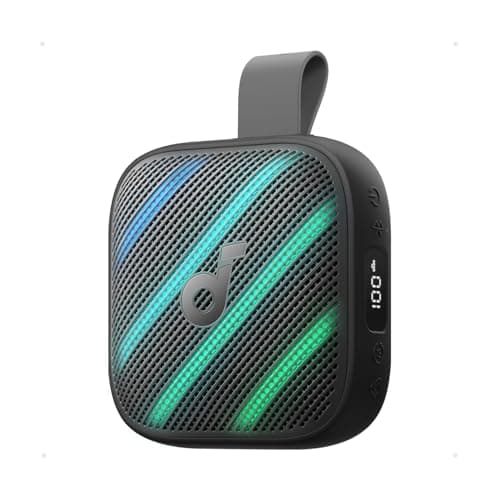
The best Bluetooth speaker for a gym
Why a garage gym punishes cheap treble, and the four speakers that hold up in one.
By Price
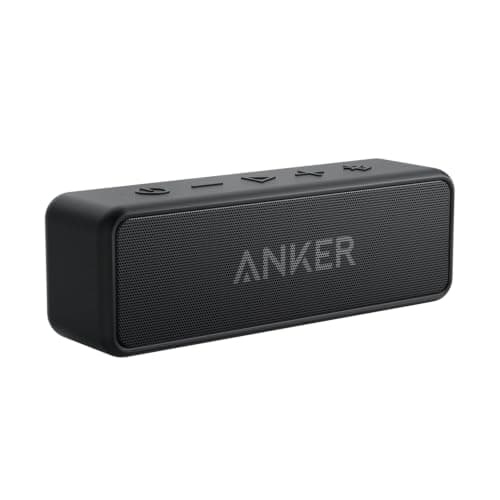
The best Bluetooth speakers for teachers in 2026
Why a teaching day is a battery problem, and the five speakers that get through one.
Outdoor & Party
The best Bluetooth speakers with a microphone for karaoke in 2026
Speakers that take a real microphone, and an honest account of how few of them there are.
By Price
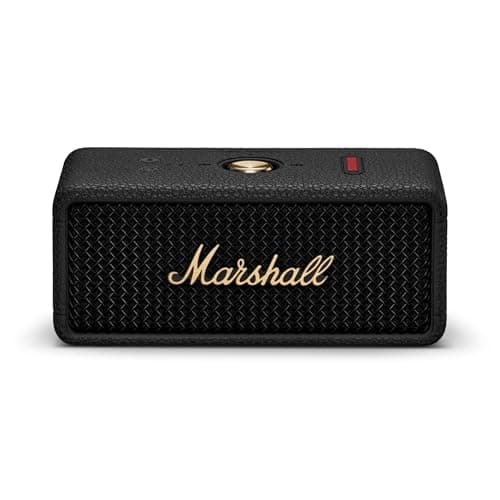
The best Bluetooth speakers for a restaurant or café in 2026
Why a dining-room speaker is a runtime and licensing problem first, and the five that solve the hardware half.
Reviews
90 W, 32.1 measured hours, a 3.5 mm aux input and a 9-band EQ — against 11.6 lb and bass that softens when you push it.
Reviews
JBL PartyBox Encore Essential 2 review
Mic in, guitar in, aux in and 15 hours off the battery — against IPX4 and 13.67 lb.
Guides
How many watts is loud for a speaker?
Why wattage figures cannot be compared across brands, and what genuinely predicts loudness.